You are standing in Japan with a list of people who stayed home, and in a few days you land in the United States or Great Britain with whatever you bought for them. Two questions, in the order you’re actually asking them: what is worth buying, and will it still be yours when you land.
This page ranks five kinds of food souvenir on one rule — it clears your border and it survives your suitcase — and puts the rule on the item: the United States in APHIS’s and CBP’s words, Great Britain in gov.uk’s. It names three things to leave behind. And it tells you, from APHIS, what declaring a box actually costs you at a US desk.
Two limits, so you know whose page this is. The border here is yours — the one you fly into — not Japan’s; what Japan lets out is a different question, and there’s a pointer at the end. And the people are at home, not in an office here.
Your border, not Japan’s: what the United States and Great Britain actually stop
Neither border writes its rules for Japan by name. APHIS sorts by what a thing is made of — meat, egg, dairy, fruit, tea leaves — and has no page for a box of cakes or a bag of candy. gov.uk gives a short list of categories it lets in from any country, and a short list it doesn’t. So the box in your hand gets read against those words. That happens below, item by item; first, the words.
United States: declare it, and the worst case is the item
Start with the sentence that answers the fear. APHIS, on its traveling-with-agricultural-products page: “As long as you declare all the agricultural products you are bringing with you, you will not face any penalties—even if an inspector determines that these products cannot enter the country.” Declared and refused, you lose the box. Declared and cleared, you walk. Declaring is not optional — CBP requires every traveler entering the United States to declare meats, fruits, vegetables, plants, seeds, soil, animals, and plant and animal products — and the how of it is in the desk section near the end.
For the shopping you’re doing, the US border turns on two things.
Meat. CBP’s words: “almost anything containing meat products, such as bouillon, soup mixes, etc., is not admissible,” and food “prepared with meat” is out. That’s an ingredient line, not a kind of shop — a seasoning sachet can carry it.
Packaging. For baked goods and confectionery, APHIS’s rule is a packaging rule: “Commercially packaged and labeled, cooked, shelf-stable, fully finished food items in unopened packages are allowed.” Sealed at the factory, unopened, made to sit on a shelf — that’s the test, and it doesn’t depend on where the box came from.
Great Britain reaches the same meat test from its own law, written differently. That’s next.
Great Britain: the list gov.uk gives, and the words it doesn’t define
gov.uk’s page on bringing food into Great Britain says you can bring these in “from any country without any restrictions,” and this is the list as written:
- “bread, but not sandwiches filled with meat or dairy products”
- “cakes without fresh cream”
- “biscuits”
- “chocolate and confectionery, but not those made with a lot of unprocessed dairy ingredients”
- “pasta and noodles, but not if mixed or filled with meat or meat products”
- “packaged soup, stocks and flavourings”
- “processed and packaged plant products, such as packaged salads and frozen plant material”
- “food supplements containing small amounts of an animal product, such as fish oil capsules”
Read the “but not” clauses; they are the whole story. Two of them do the work on the shelves you’ll shop: “fresh cream” and “a lot of unprocessed dairy ingredients.” gov.uk defines neither. “Biscuits” is the one line with nothing after it.
From outside the EU, gov.uk says you cannot bring in “meat or meat products” — and there is no exception for a tin, a can, or a factory seal; those words do not appear on the page. You also cannot bring in “milk or milk-based products, except powdered infant milk, infant food or special food needed for medical reasons.”
Great Britain is the scope on purpose. gov.uk: “There are different rules if you’re bringing food or animal products into Northern Ireland.” If you land in Belfast, the Great Britain lines on this page are not yours.
So below, each item gets gov.uk’s line and its own label side by side, and you read the two together. Where the line has a “but not,” the label is what you hold against it.
The rule this page ranks on: it survives your border, and it survives your suitcase
Two clauses.
Border first. The rule for the box is published — APHIS and CBP for the United States, gov.uk for Great Britain — and it’s quoted above. You read the label against it at the shelf, with the box still in your hand.
Suitcase second. Does it arrive as the thing you bought? Wrapped piece by piece or loose. Flat and rigid or soft. Chocolate that melts, glass that breaks, sponge that crushes, a printed date that runs out on the way. All of that is visible through the cellophane, which is the point: nothing in this rule needs you to take anyone’s word for it.

The order, then the reasons:
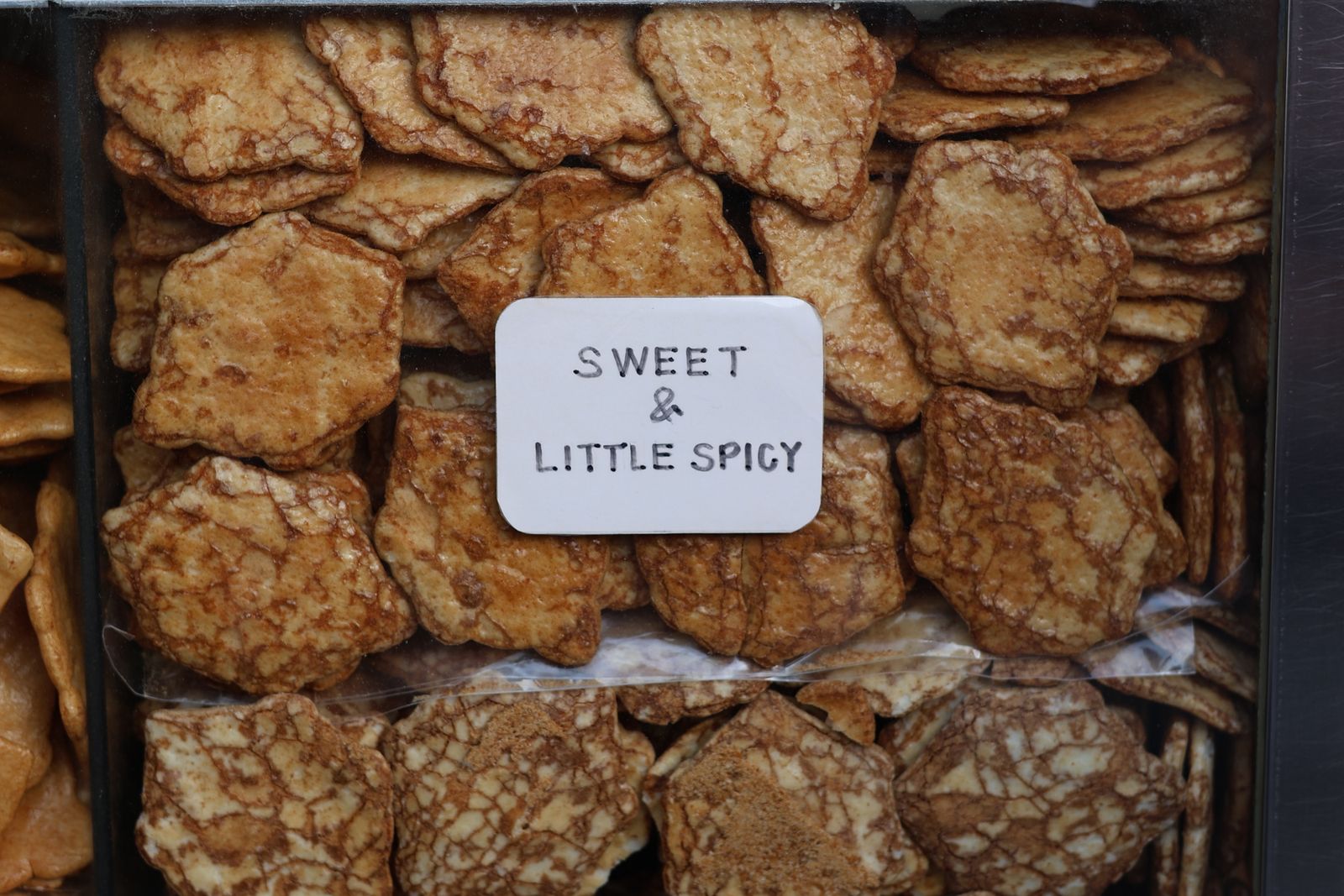
- Individually wrapped biscuits — Shiroi Koibito
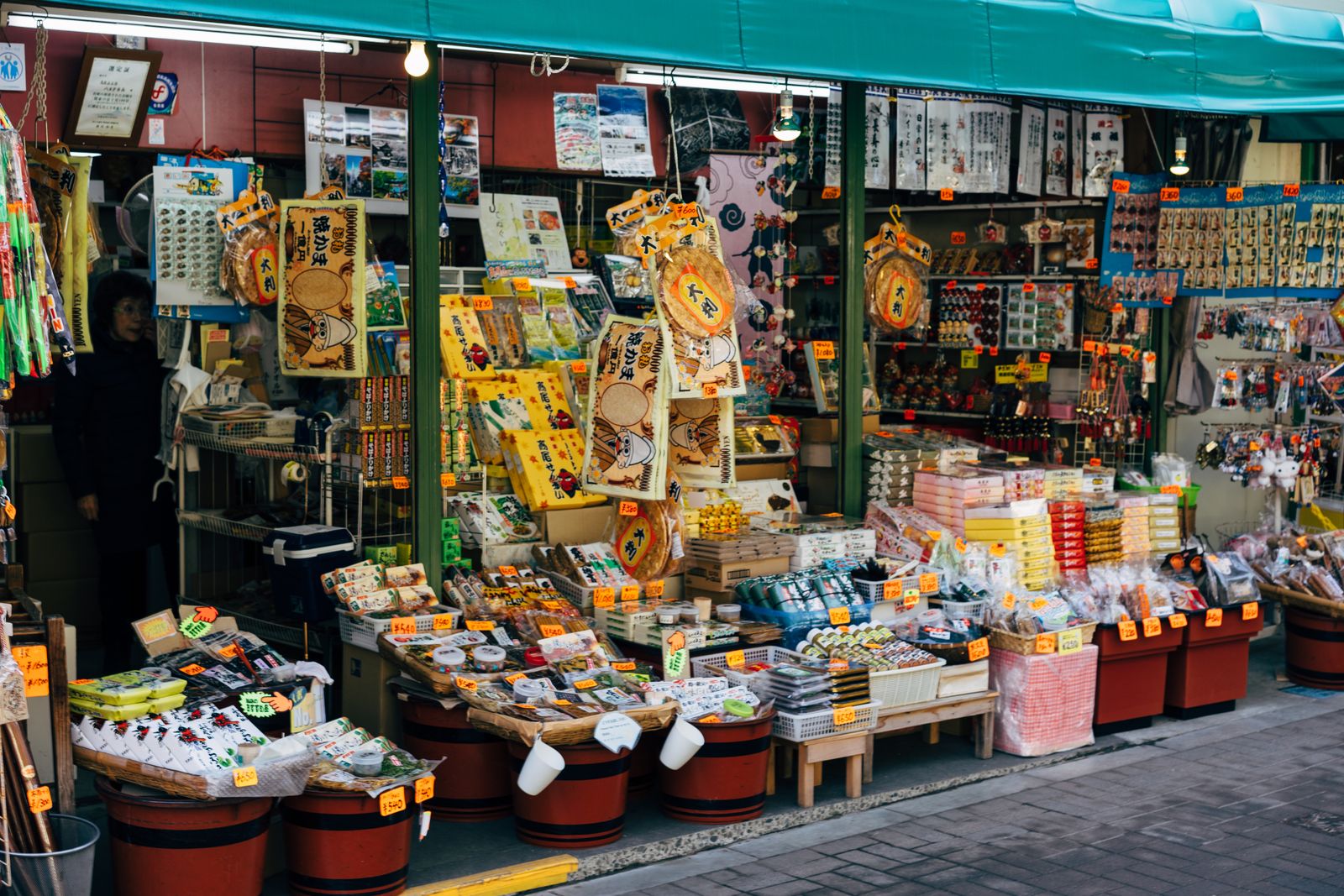
- Tea, leaves only — matcha, sencha, hojicha
- Chocolate confectionery — the regional Kit Kat
- Cream-filled sponge cakes — Tokyo Banana
- Sake and whisky — with conditions
JBJ'S TAKE
Ranked on what you can look up. Not on how Japanese it looks.
This page ranks on two things, and you can check both before you pay. Whether the box clears your border is written down by the people who run the border — APHIS and CBP for the United States, gov.uk for Great Britain — and the page quotes them above. Whether it survives your suitcase you can see through the cellophane: wrapped one by one or loose, flat or stacked, a printed date you can read. That's the whole rule.
Not uniqueness. Not "the most Japanese thing in the shop". Not value. All three are real, and none of them can be checked against anything but the word of whoever is telling you — and JbJ isn't going to rank on its own say-so while a published rule is sitting right there. Price is out for a plainer reason: this page won't put a number it can't stand behind next to a box and call that a ranking.
And the border clause goes first, even though the suitcase is where things are usually lost — melted, crushed, past their date — and not the customs desk. The suitcase you find out about at home. The border you can settle at the shelf, before you pay, because the rule already exists. Settle the thing that can be settled. Then buy for the bag.
The five, ranked

Each item carries the same six lines, so the rule sits on the thing in your hand with the border named on every line. Where the two borders differ, you get two sentences, not a blend.
1. Individually wrapped biscuits — Shiroi Koibito
What it is. Two thin baked biscuits with a layer of white chocolate between them, each one sealed in its own wrapper, packed flat in a box, with a best-before date printed on the box. The ingredients panel is where the dairy content is written; it matters for the Great Britain line.
United States. Clears on the packaging rule, flat: commercially packaged and labeled, cooked, shelf-stable, fully finished, unopened. Declare it and walk.
Great Britain. gov.uk’s list has “biscuits” with nothing after it, and, one line down, “chocolate and confectionery, but not those made with a lot of unprocessed dairy ingredients.” Hold what the box calls itself, and its ingredients panel, against those two lines. gov.uk does not say which line a white-chocolate biscuit belongs to.
In the suitcase. A flat, rigid box that packs on top of everything and stacks. Each piece is sealed on its own, so one broken biscuit is one broken biscuit, not a box of crumbs.
Keeps. ISHIYA’s own figure: 120 days from the day it was made, that day included. The clock started at the factory, not at the register, so the printed date is what tells you what’s left.
Who it’s for. The many. A family, a table, the friends who each get one — the wrappers do the dividing for you.
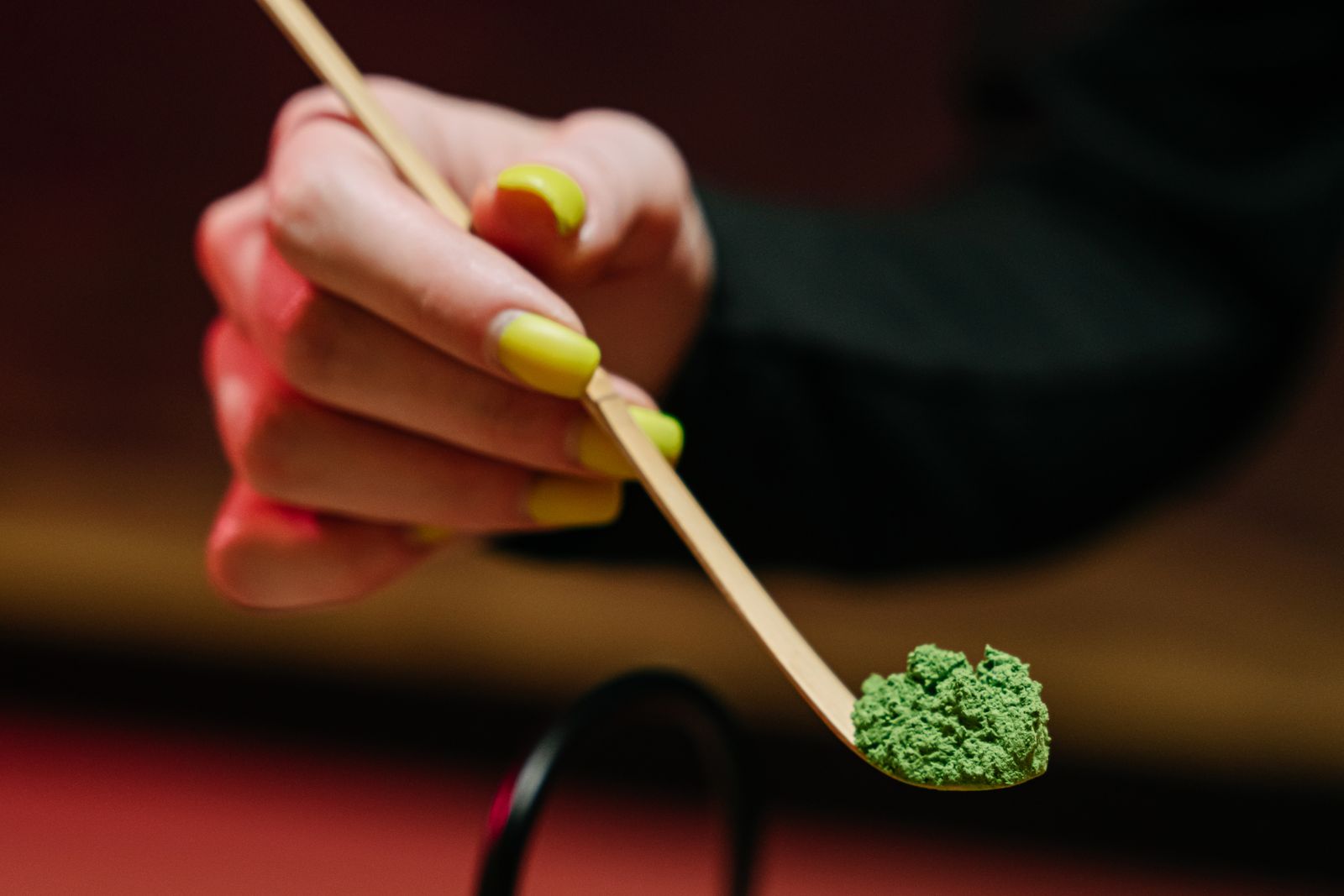
2. Tea, leaves only — matcha, sencha, hojicha
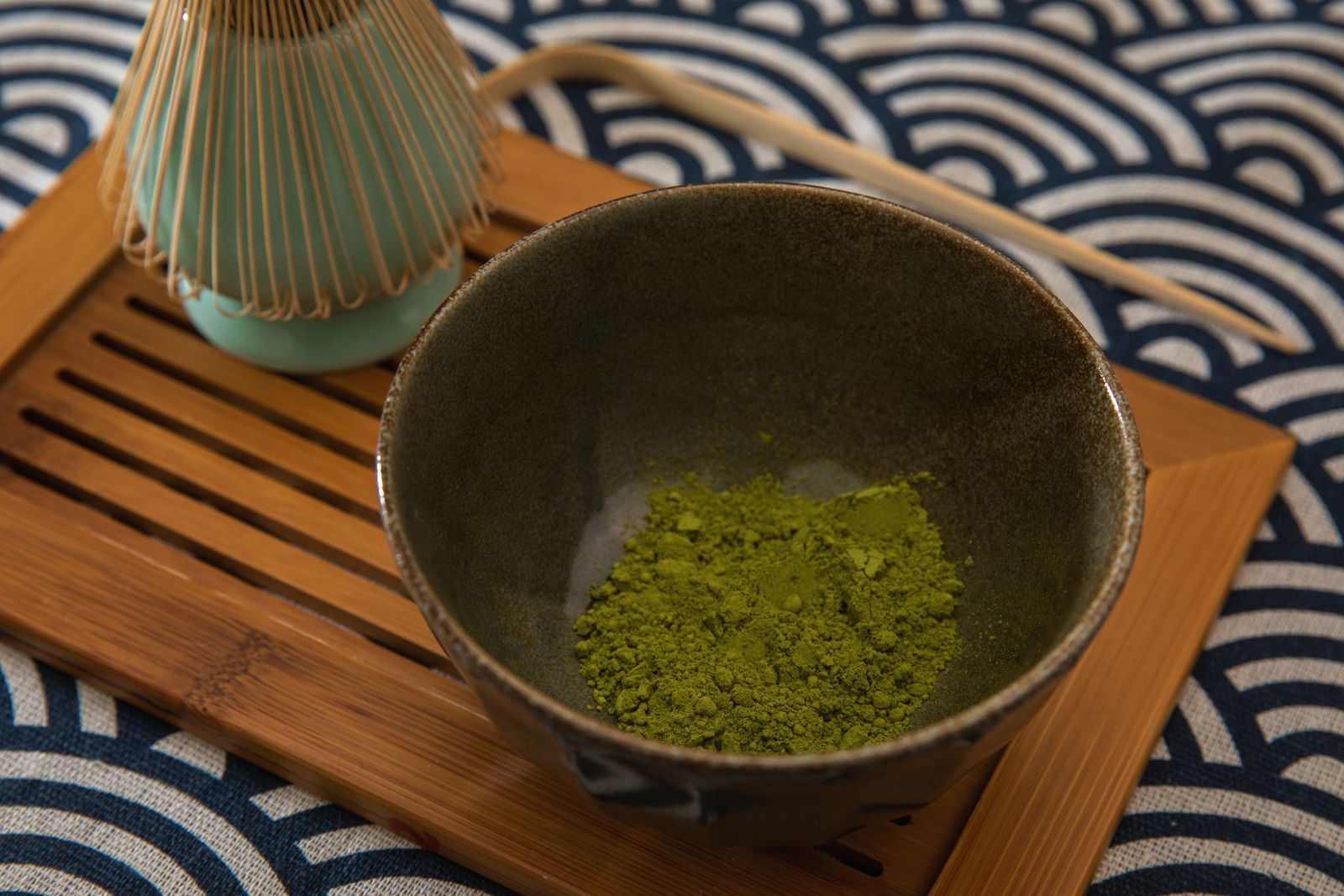
What it is. Tea leaves and nothing else: matcha is ground leaf, sencha is dried leaf, hojicha is roasted leaf, sealed in a tin or a foil pouch. Not genmaicha, which has rice in it; not a blend; not a matcha-flavored sweet — those are different products, and the tea sentence below doesn’t cover them.
United States. APHIS: travelers “are permitted to bring without restriction any quantity of products composed solely of tea leaves,” green tea named on its list. Flat. Declare it with the rest; it’s a plant product.
Great Britain. gov.uk’s pages for travelers don’t use the word tea. What its from-any-country list does say is “processed and packaged plant products, such as packaged salads and frozen plant material” — gov.uk’s words, and whether a tin of sencha is one of those is not something gov.uk writes. The plant-health certificate that Great Britain requires for some plant products has one tea entry, and it is written for tea leaves that are “fresh, whole, not cut, not fermented” and unflavored (legislation.gov.uk). No certificate requirement is written for dried tea; the requirement names fresh whole leaf only.
In the suitcase. Light and small; nothing to break, nothing to melt.
Keeps. Read the printed date on the tin.
Who it’s for. One person who will actually drink it. Reading the tin is covered on the matcha-at-home page.
3. Chocolate confectionery — the regional Kit Kat
What it is. Chocolate confectionery: a bag or box of individually wrapped minis, sealed, dated. The regional editions are the ones on this list.
United States. The packaging rule again — packaged confectionery, sealed, shelf-stable, unopened. Flat.
Great Britain. gov.uk’s line is “chocolate and confectionery, but not those made with a lot of unprocessed dairy ingredients.” The ingredients panel is the other half of that sentence; gov.uk doesn’t define “a lot.”
In the suitcase. It melts. Of the packaged goods on this list, it’s the one the bag can ruin without breaking anything.
Keeps. Read the printed date.
Who it’s for. Many hands — the minis divide themselves — as long as the bag doesn’t get warm on the way.
4. Cream-filled sponge cakes — Tokyo Banana
What it is. A soft sponge around a custard-cream filling — egg and dairy, both — each cake in its own wrapper, boxed, with a best-before date printed on it.
United States. One sentence covers both the egg and the dairy in it: APHIS’s “Commercially packaged and labeled, cooked, shelf-stable, fully finished food items in unopened packages are allowed.” Those are conditions you check on the box in your hand — factory-sealed, unopened, dated for the shelf. Check them, declare it, and it’s flat.
Great Britain. gov.uk’s line is “cakes without fresh cream.” The label says custard cream. gov.uk defines “fresh cream” nowhere, and that is the whole Great Britain problem — the take after item 5 is about exactly this box.
In the suitcase. Soft cake in a light box: it crushes, and it’s the item on this list where the printed date decides which day you buy it.
Keeps. The maker’s instruction, not a number: every box carries a printed best-before date; the number of days may vary by the store you buy it in, so read the date on the box in front of you.
Who it’s for. Many hands, if it goes from the last shop straight to the flight. Bought on day one, it’s the box that runs out of days.
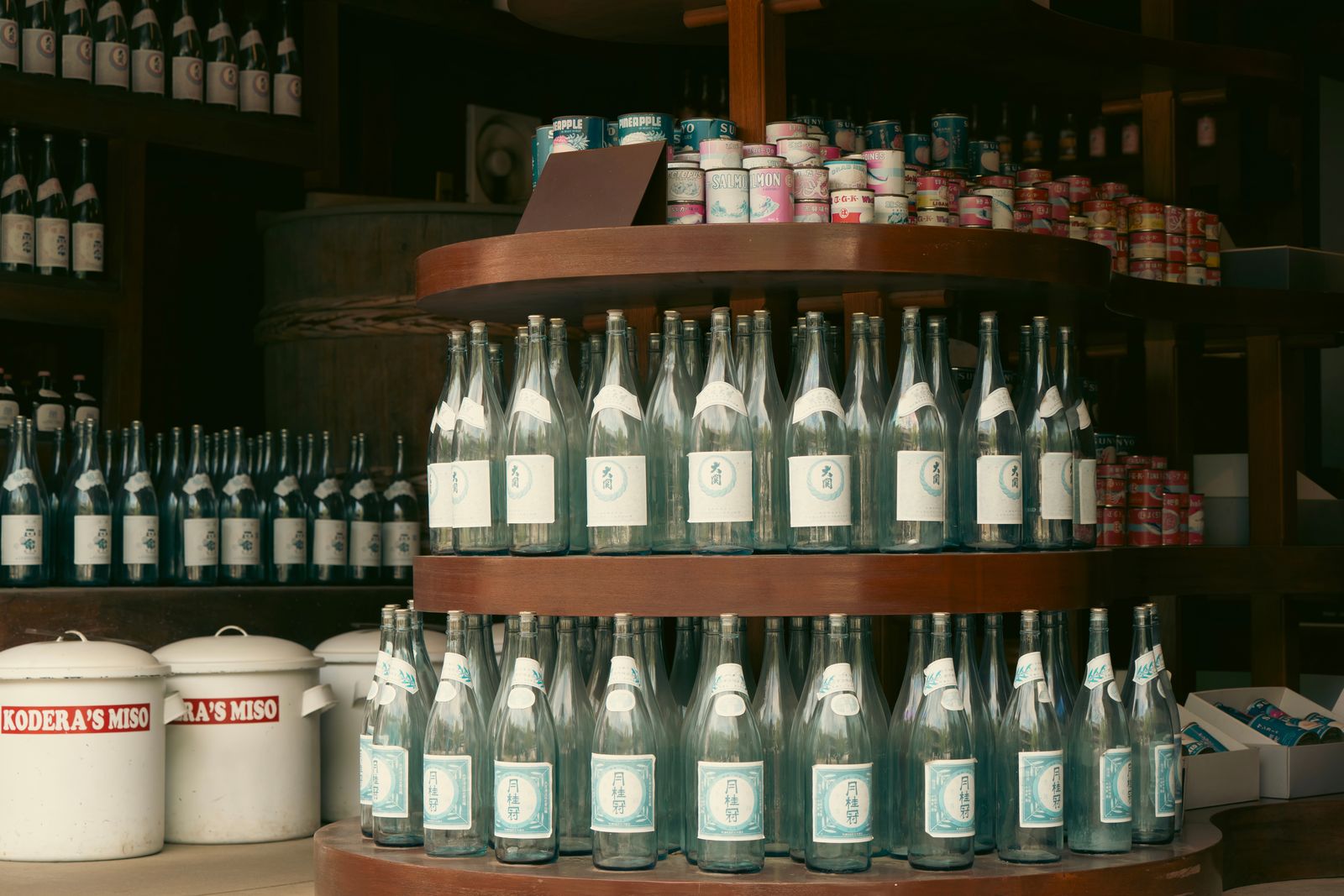
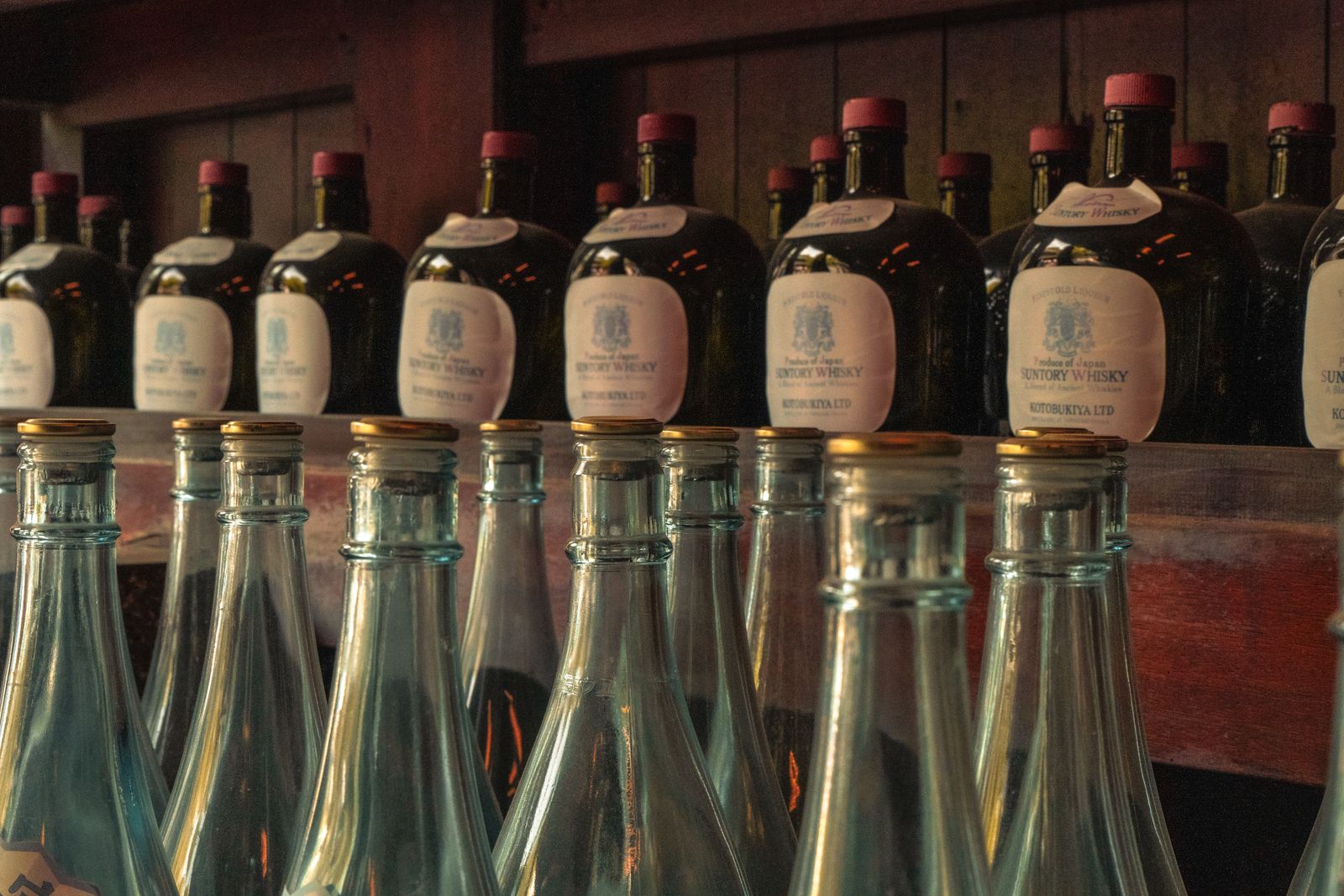
5. Sake and whisky — with conditions
What it is. Glass, liquid, sealed, with the alcohol percentage on the label — the percentage is what Great Britain’s line turns on.
United States. CBP: “One American liter (33.8 fl. oz.) of alcoholic beverages may be included in your returning resident personal exemption if” you are at least 21. That is an exemption, not a limit: more can come in, it’s dutiable, and the state you land in can be stricter — CBP enforces state law at the desk.
Great Britain. gov.uk’s allowance rows, by the number on the label: spirits and liquors over 22% ABV, 4 liters; other alcohol up to 22% ABV, 9 liters.
In the suitcase. Glass and liquid, in a bag that isn’t gentle. If you buy it duty-free after security and connect through a US airport, TSA has four conditions, all four together — they’re in the desk section.
Keeps. Whatever the label says; this isn’t the item the timing rule is for.
Who it’s for. One person, one bottle. A bottle is not a thing you divide.
JBJ'S TAKE
For Great Britain, buy the box gov.uk has a plain word for.
The Great Britain problem in one line: gov.uk lets in "cakes without fresh cream" and "chocolate and confectionery, but not those made with a lot of unprocessed dairy ingredients", and it defines "fresh cream" and "a lot" nowhere. So a custard-cream sponge is a box gov.uk's own page doesn't settle either way, and this page isn't going to settle it for gov.uk.
So when the box is for Great Britain and it's one of those, JbJ sends you to the other shelf. "Biscuits" is the one word on that list with no "but" after it. Buy from the category gov.uk wrote down plain, read the label to see that's what the box calls itself, and the only word that has to be right is one gov.uk chose. That matters more here than anywhere else on the page, because the box isn't for you. An argument at a border is yours to have. A box that doesn't arrive is theirs to go without.
The other road — carry the cream-filled one and declare it — is a plan this page can describe for the United States, in APHIS's own words about what declaring costs you, and only for the United States. Nothing on this page carries that sentence into a Great Britain arrivals hall, and JbJ won't stretch it there. Two borders, two sets of words. For Great Britain, use the words gov.uk wrote, and buy the box they cover without a "but".
Left in Japan, by name
Three classes, each on a border rule, none on quality. All three are things worth wanting; that’s why they get named.
Anything with meat in it: instant ramen with a meat sachet, retort curry, jerky, meat-filled buns
United States. CBP: food “prepared with meat” is out, and “almost anything containing meat products, such as bouillon, soup mixes, etc., is not admissible.” The ingredient line on the seasoning sachet is where “meat product” lives or doesn’t — read that, not the front of the pack.
APHIS does write an exception for meat, and it’s narrow: “Boneless meat in commercially packaged, labeled, and contained in unopened hermetically sealed containers or packages that are cooked by a commercial method after such packing to produce articles that are shelf-stable without refrigeration.” Sealed, then cooked, then shelf-stable — in that order. That’s the test a retort pouch would have to meet; hold the pouch against APHIS’s words. It is a different and stricter sentence from the packaging rule for cakes — cooking after sealing is the extra step — and the two don’t swap.
Pork specifically: APHIS’s regulation treats classical swine fever as present everywhere except the regions APHIS has declared free, and Japan is not on that declared-free list. That’s how the US regulation is written, not a statement about the food.
Great Britain. From outside the EU, “meat or meat products” cannot come in — and gov.uk writes no exception for a tin, a can, or a factory seal. For noodles, gov.uk’s line is “pasta and noodles, but not if mixed or filled with meat or meat products.” The sachet’s ingredient line, again, beside those words.
Jerky and a meat-filled bun need no reading. They are what the words mean.
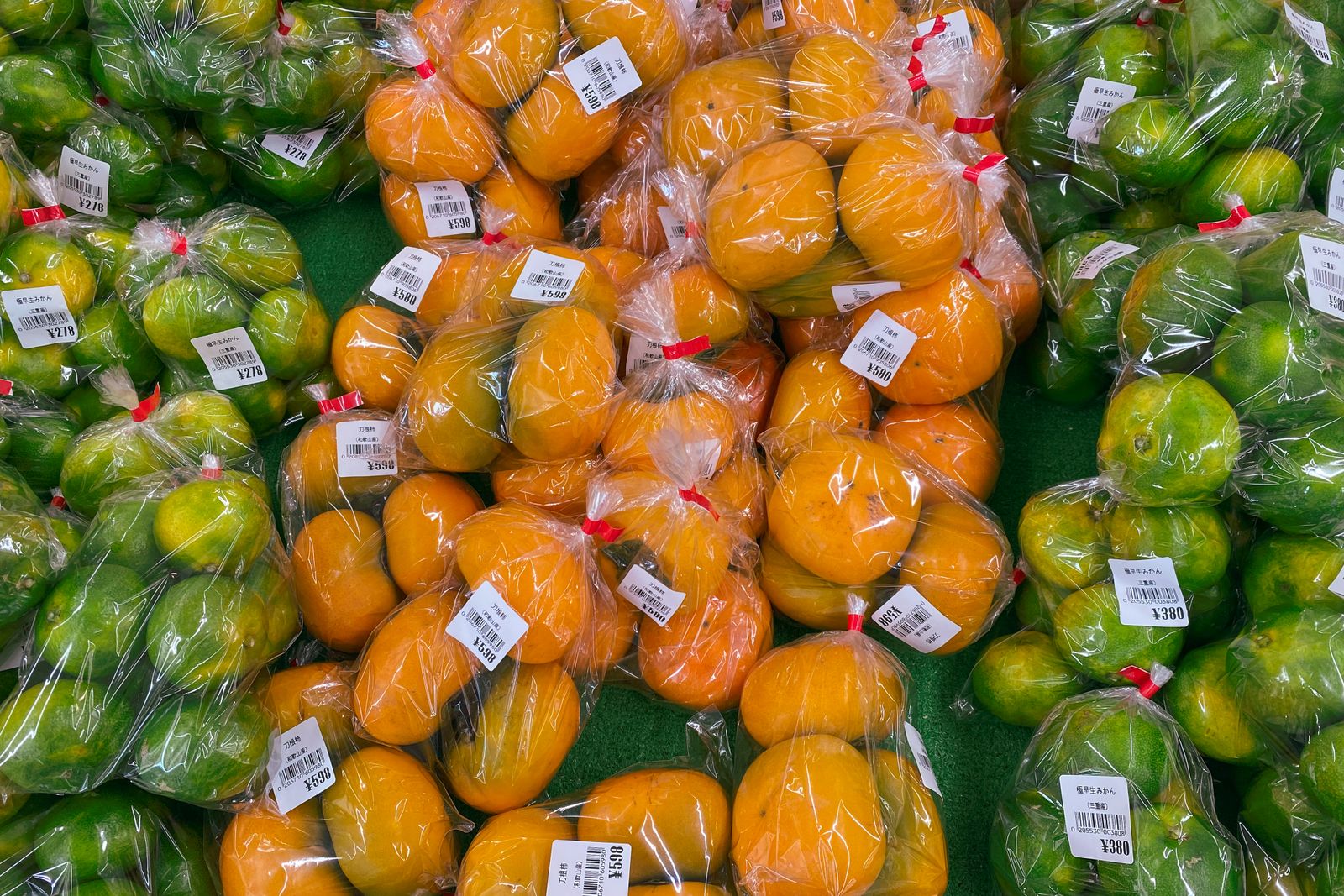
Fresh fruit: the gift melon, the grapes, the strawberries
United States. APHIS: “Almost all fresh fruits and vegetables (whole or cut) are prohibited from entering the United States.” Frozen too — “Almost all frozen fruits and vegetables are prohibited.” Commercially canned fruit is permitted if declared. A gift melon is fresh fruit.
Great Britain. A different mechanism. gov.uk: “You cannot bring in most fruit or vegetables unless you have a ‘phytosanitary’ (plant health) certificate for them,” and then it lists what you can bring without one — pineapple, kiwi, coconut, citrus fruits (oranges, lemons, limes, grapefruit), kumquat, persimmon, durian, curry leaves, banana, plantain, mango, dates, passion fruit, guava. Persimmon, kumquat, citrus and kiwi are on that list. Melon, grapes and strawberries are not.
Dairy: cheese, fresh-cream cakes, milk desserts
Great Britain. From outside the EU, “milk or milk-based products, except powdered infant milk, infant food or special food needed for medical reasons” cannot come in. That sentence does not reach the things gov.uk lists as unrestricted — biscuits, “cakes without fresh cream,” chocolate and confectionery with its dairy qualifier — and the list does not stretch to cover what isn’t on it: a cheesecake, a milk pudding, cream.
United States. APHIS names what is exempt: “Butter” and “Solid hard or soft cheeses (as long as the cheese does not contain meat or pour like a liquid such as ricotta or cottage cheese).” Beyond those, it is the packaging rule — “Commercially packaged and labeled, cooked, shelf-stable, fully finished food items in unopened packages are allowed” — the same sentence as for eggs.
JBJ'S TAKE
The sure box goes to the many. The risk goes to one person, on purpose.
For the people at home who come as a group — a family table, the friends who each get one — JbJ carries the individually wrapped biscuits, and it isn't close. Into the United States it clears on the packaging rule, flat. For Great Britain, "biscuits" is the only word on gov.uk's list with nothing after it, and item 1 puts the label beside that word so you read the two together. Its maker states a date this page can quote — counted from the day it was made, not the day you bought it, so the number that counts is what's left when you pay. And it's wrapped one piece at a time in a flat box, which is what many hands actually needs. On both axes this page ranks on, it's the box with the fewest open questions.
For the one person — the one who gets the real present — JbJ goes the other way and takes the suitcase risk on purpose: a bottle. Sake or whisky is the item on this list where both borders put a quantity in writing, and item 5 carries their terms, conditions and all. So "will it still be mine" is settled by two governments' printed rules instead of by a word nobody defines. What's left is glass and liquid in a suitcase that isn't gentle. That's a physical risk, and physical risks you can do something about. A border risk you can't, once you've paid.
And what stays in Japan, by name, even though it's exactly the kind of thing worth carrying: the curry pouch and the ramen whose sachet lists meat — both borders have a meat rule, and the page put them side by side above — and the gift melon, fresh fruit for the United States and the certificate Great Britain asks for on most fruit. None of that is a quality call. They stay because a gift that can't come through the border with you was never a gift. The person at home gets the biscuits. They don't get the melon. That's the whole trade.
Where to buy it, and when in the trip
Four shelves, and on most trips they turn up in this order:
- The depachika — the food floor under a department store.
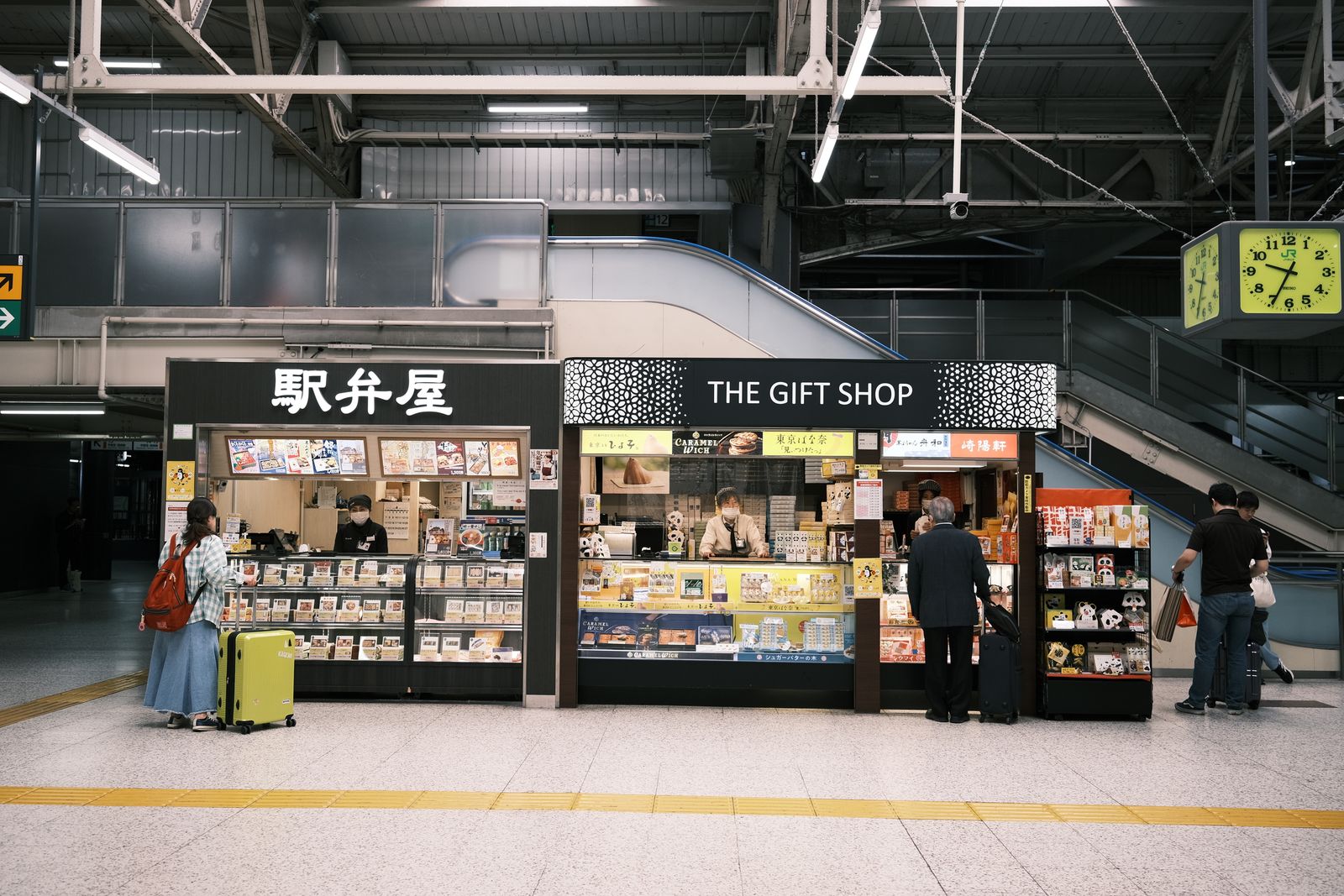
- The station gift corridor — the counters between the ticket gates and the platforms; the one in the photo at the top of this page.
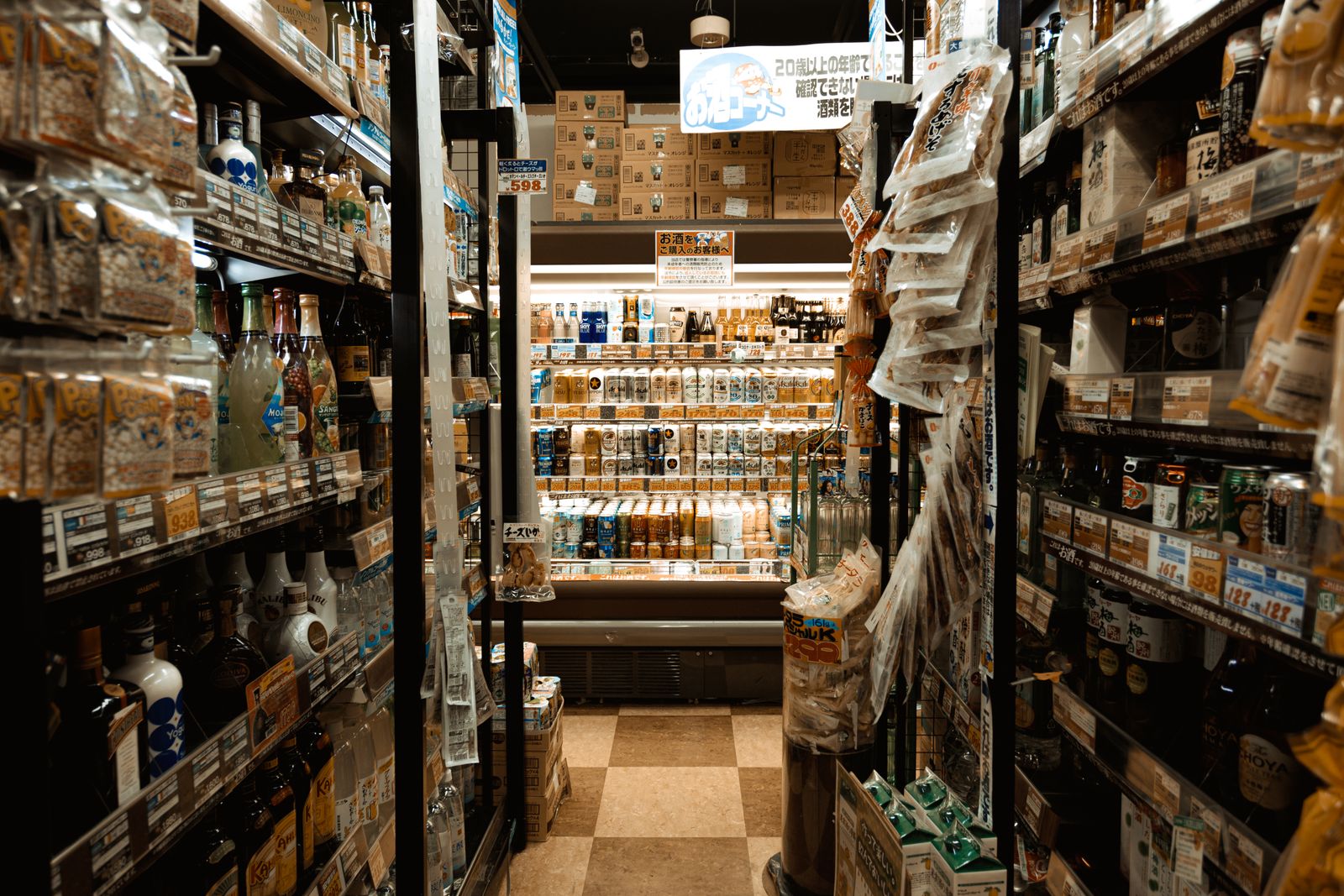
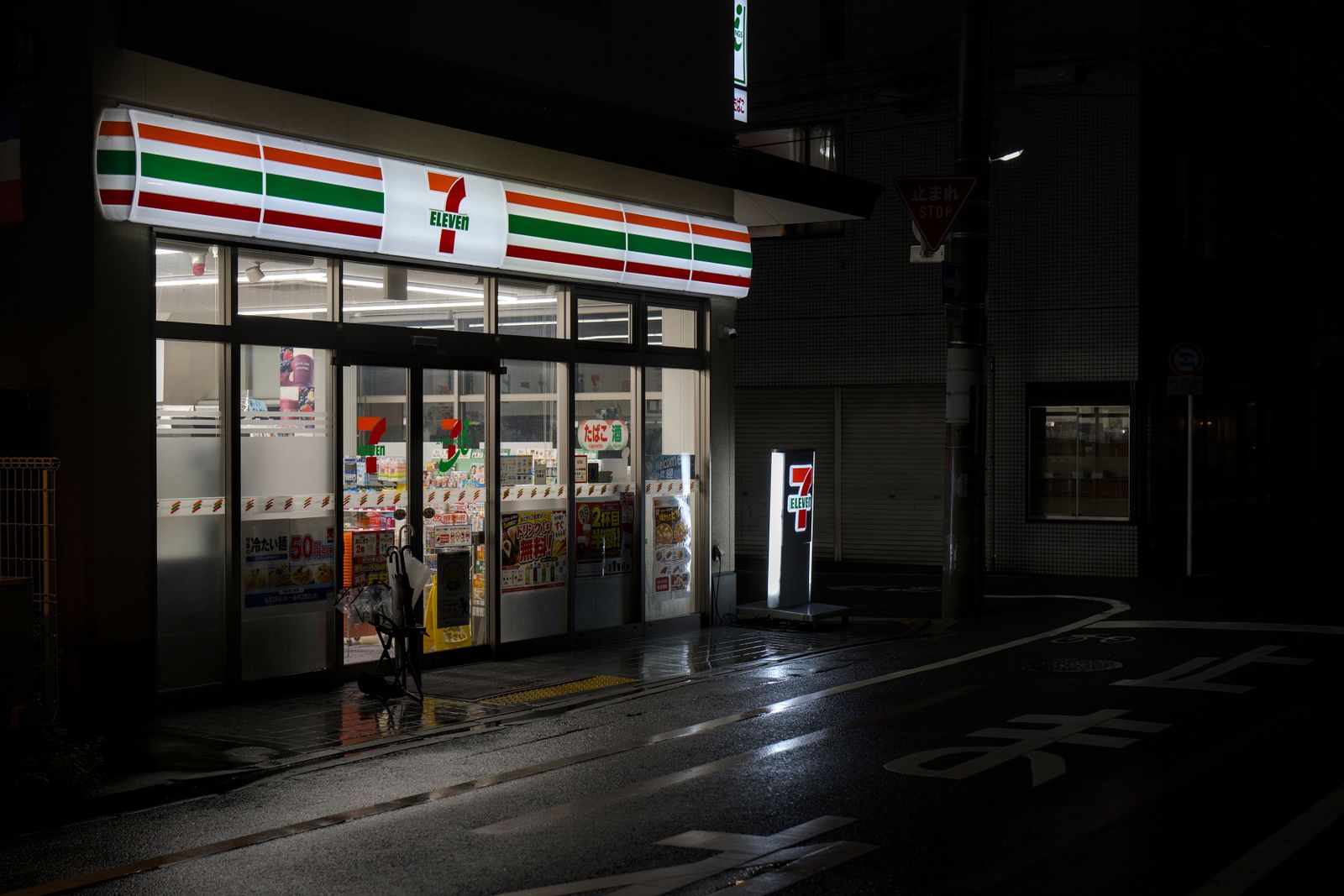
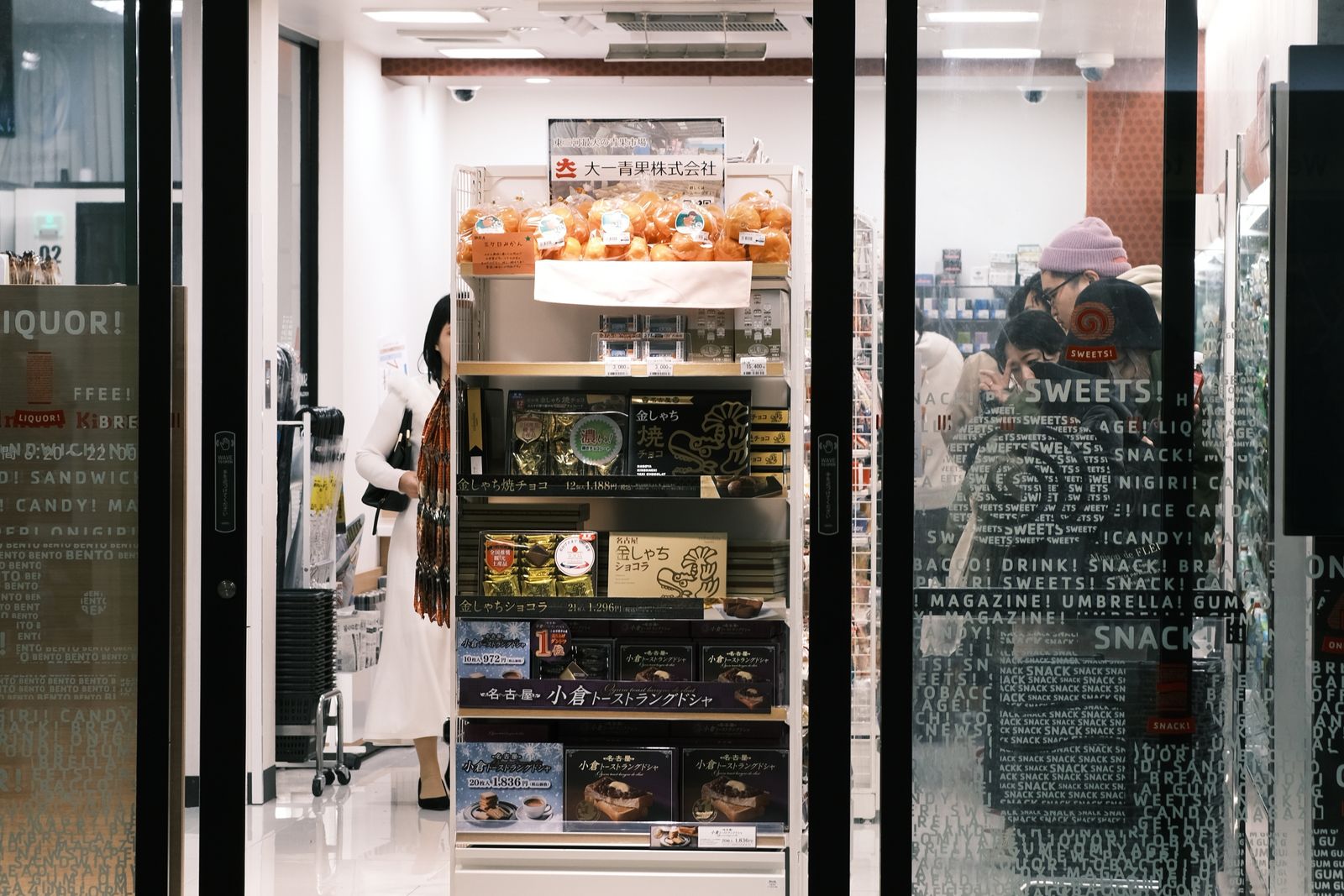
- The konbini — including the boxed regional rack near the door of a station-building store, like the one below. What else on that shelf is worth carrying is in the convenience-store guide.
- The airport — the last shelf you pass.
The timing follows from the rule. The box with the shortest printed date is bought last — last day, last shelf — and the long-dated ones whenever you pass them. On this list, that means item 4 comes from the last shelf, and item 1 and the tea can come from the first one you like.
Tax-free at departure is its own subject: the tax-free refund page.

At the desk (United States)
Landing in the United States, you declare all of it. CBP’s instruction is to “Always Declare agricultural items by checking ‘Yes’ on Question 11 of the CBP Declaration Form 6059B.” Then the officer decides, and the APHIS sentence from the top of this page is the one that governs: declared, you face no penalty even if the item is refused. Refused means the box stays at the desk. You don’t.
Not declaring is a different thing. Federal law caps the civil penalty at $1,000 for a first violation by an individual who isn’t moving the goods for money (7 U.S.C. § 7734(b)). Declare, and that number never comes up.
The bottle from item 5, bought duty-free and carried through a US connection: TSA’s conditions, all four together — the liquid was bought internationally and you are traveling to the United States with a connecting flight; it is packed in the retailer’s transparent, secure, tamper-evident bag with no sign of tampering; the original receipt is with it and the purchase was within 48 hours; and the bag’s contents are screened and cleared. Miss one and the exception doesn’t apply.

Getting it home, and what this page is not
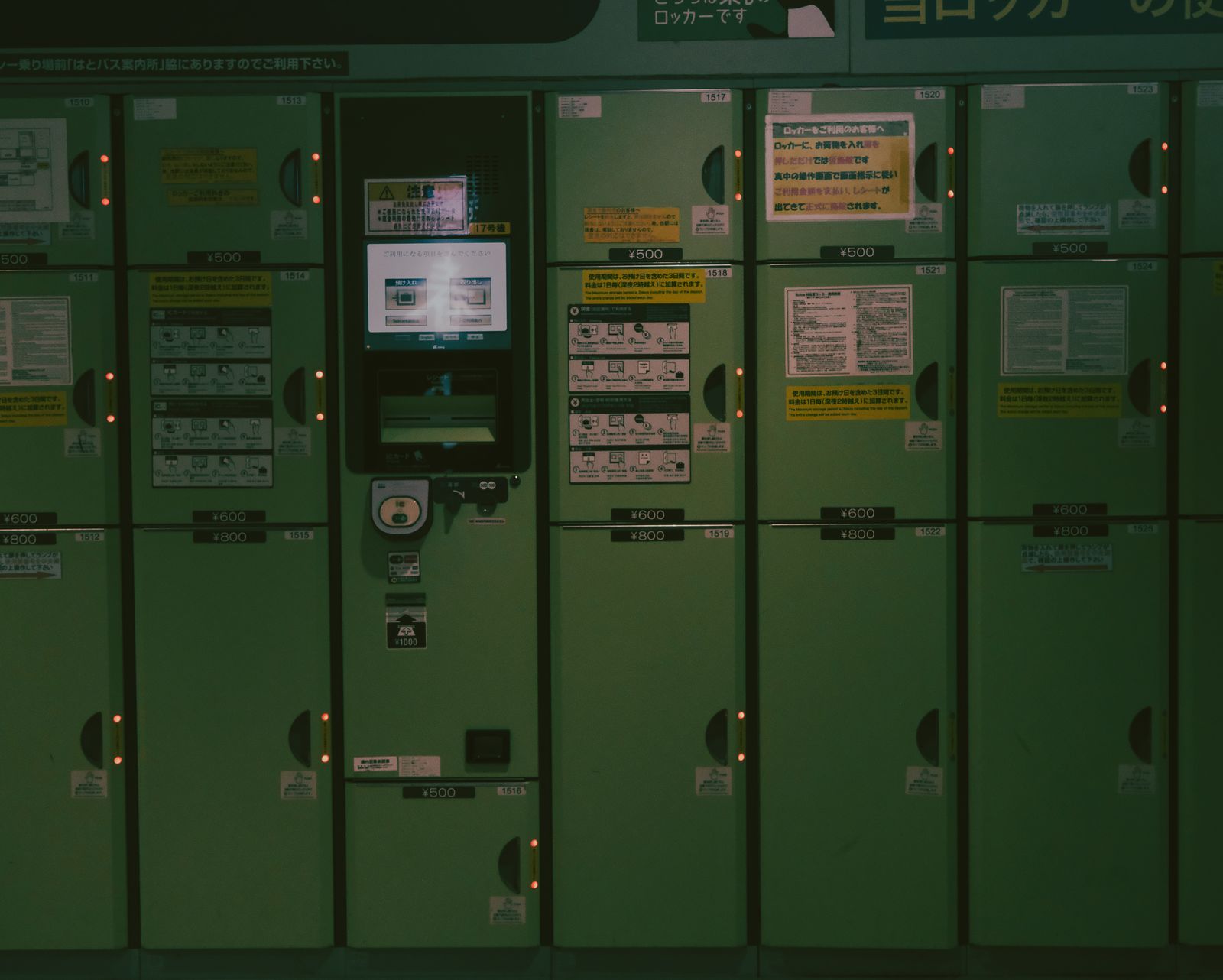
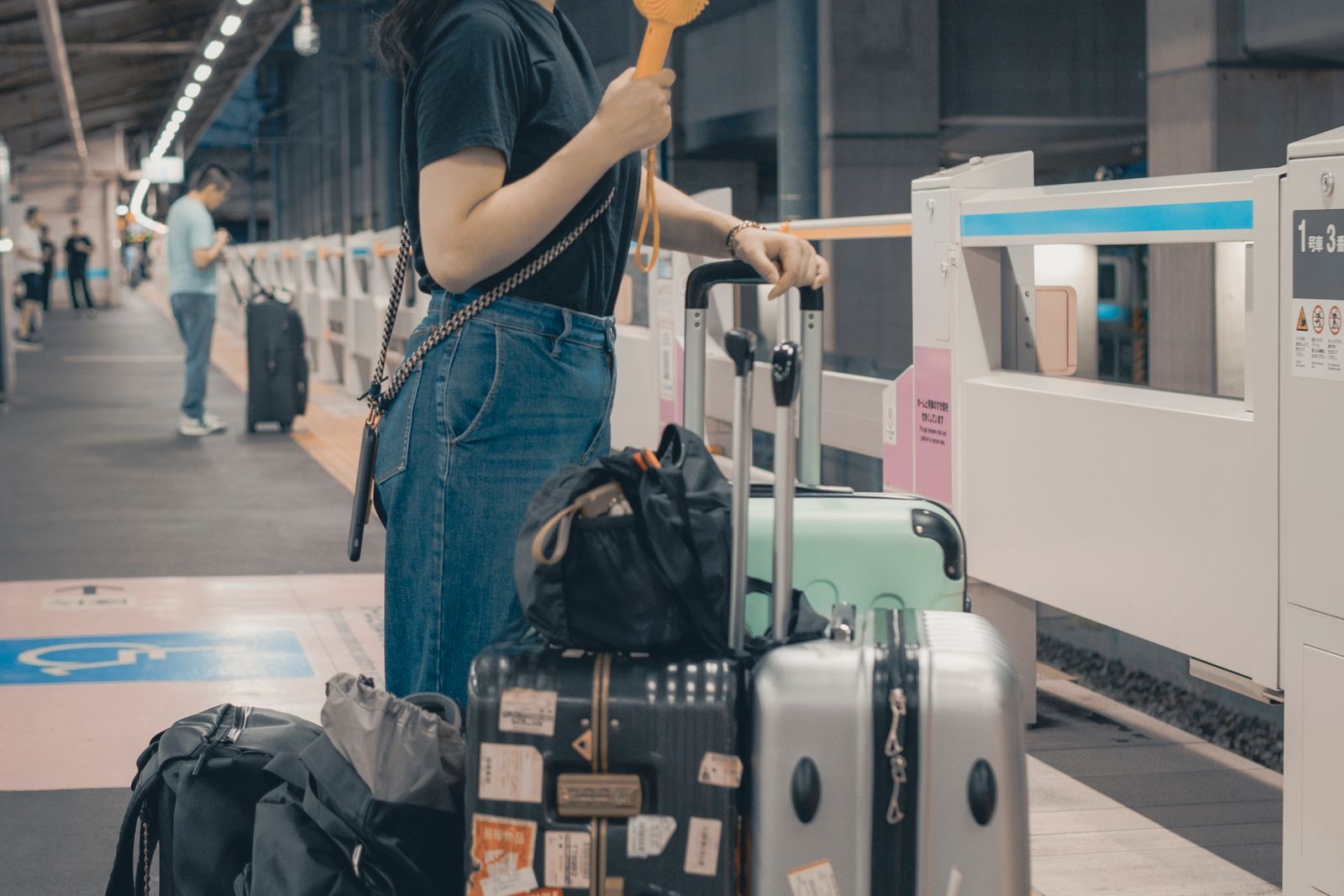
The next question is physical: the bag. For the last day, when the boxes and the suitcase are in different places, where to leave luggage in Japan. For sending a bag ahead inside Japan, the forwarding counter at the konbini is in the convenience-store guide.
Non-food on your list has its own pages, and this one doesn’t rank it: a first Japanese kitchen knife, choosing a whetstone, and the drugstore guide for medicine and cosmetics.
If your question was what Japan lets out — swords, live plants, the export side — that is JNTO’s own departure post, which names categories and no destination: 7 Things You’re Not Allowed to Take Home from Japan in 2025.
The method here — a criterion stated, then a ranking — is the same one under Fukuoka, Osaka and Nagoya. If the trip isn’t booked yet, start at the first-trip guide.
Checked 2026-09-06. United States rules and wording from APHIS — traveling with agricultural products, meats, poultry and seafood, milk, dairy and eggs, fruits and vegetables, coffee, tea, honey, nuts and spices, and the animal health status of regions read with 9 CFR 94.9 — and from CBP — bringing agricultural products into the United States, prohibited and restricted items, customs duty information; the duty-free liquids conditions from TSA; the penalty cap from 7 U.S.C. § 7734. Great Britain rules and wording from gov.uk — bringing food into Great Britain, meat, dairy, fish and animal products, fruit, vegetables, nuts and seeds, arriving in Great Britain — and the tea certificate entry from legislation.gov.uk, Annex XI Part B. Shelf life from the makers’ own pages: ISHIYA and Tokyo Banana.