Most of what the internet tells you to check in matcha — the color, the smell, the way it whisks — is a test you can only run after you have paid, opened the tin and put a spoonful in water.
This page is about the shorter list you can run before that.
What you can check before you pay, and what you cannot
Four things are printed on a packet of matcha sold in Japan, and all four are readable before you spend anything:
- 名称 — the name.
- 原材料名 — the ingredients, in order.
- 原料原産地名 — where the main ingredient came from.
- 賞味期限 — the best-before date.
Four lines, printed together in one block. Everything else the market offers you is either a claim you cannot test until the tin is open, or a word with nothing behind it.
The word is worth clearing first, because it is short.
“Ceremonial grade” is not a Japanese grade
No Japanese standard defines the term. Not the JAS system, not the tea industry’s own naming standard, not a prefectural tea body, not the agriculture ministry’s consumer guidance, not the international technical report on matcha. Five official sources classify Japanese tea and none of them contains a quality ladder of any kind.
Not illegal, though, and not fake. The term means something in the market you are buying in and has nothing to correspond to in the one the tea comes from. Most sellers will tell you this themselves — several say it in their own page titles.
So: settled. The useful question is what Japan does instead.
What Japan actually classifies
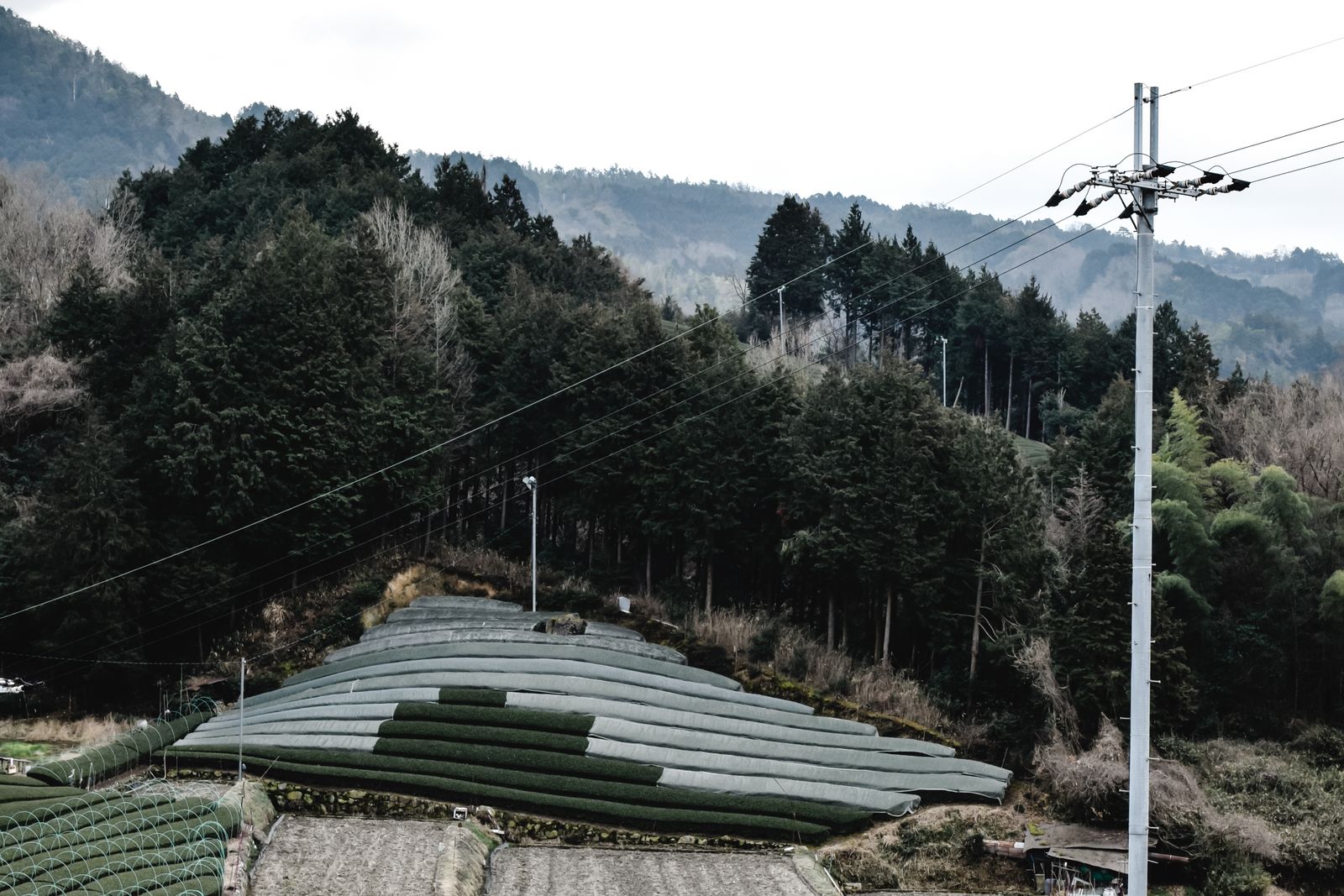
Japan sorts tea by what was done to the leaf.
碾茶 (tencha) is the raw material: leaf from a garden covered — reed screens, straw matting, cloth — for two to three weeks before picking, then steamed, not rolled, and dried in a tencha furnace.
抹茶 (matcha) is tencha milled to a fine powder on a tea mill.
粉末茶 (funmatsucha) is the category next door: tea put through a pulveriser. Any tea. That is the entire definition.
So the line between the two powders is not quality. It is shade, no rolling, and a mill — three production facts, present or absent.
These definitions sit in 緑茶の表示基準, the green tea labeling standard written by the national tea industry body. It is voluntary rather than statutory, with one exception: since July 2026, compliance with it has been a condition of using the 日本茶 (Nihoncha) geographical indication, registered that month for tea grown from Japanese leaf and processed in Japan.
Whether that GI covers matcha is not settled by the registration documents. So the mark is not offered here as something to look for.
JBJ'S TAKE
Watch what fills the empty space.
There is a move worth learning to see. A page tells you 'ceremonial grade' means nothing — correctly — and then hands you what to look for instead. Read a few side by side and the pattern surfaces on its own: the replacement is usually a criterion that page's own product meets.
Not fraud, and JbJ is not calling it that. Someone has to fund a matcha blog. But an empty word replaced by a criterion with an owner is a different transaction from the one the concession seemed to promise.
Apply that here too. 抹茶 and 粉末茶 are the industry's own naming categories and they point at no product. They will not tell you which tin to buy. They will tell you what a tin is claiming to be.
What a Japanese packet has to tell you
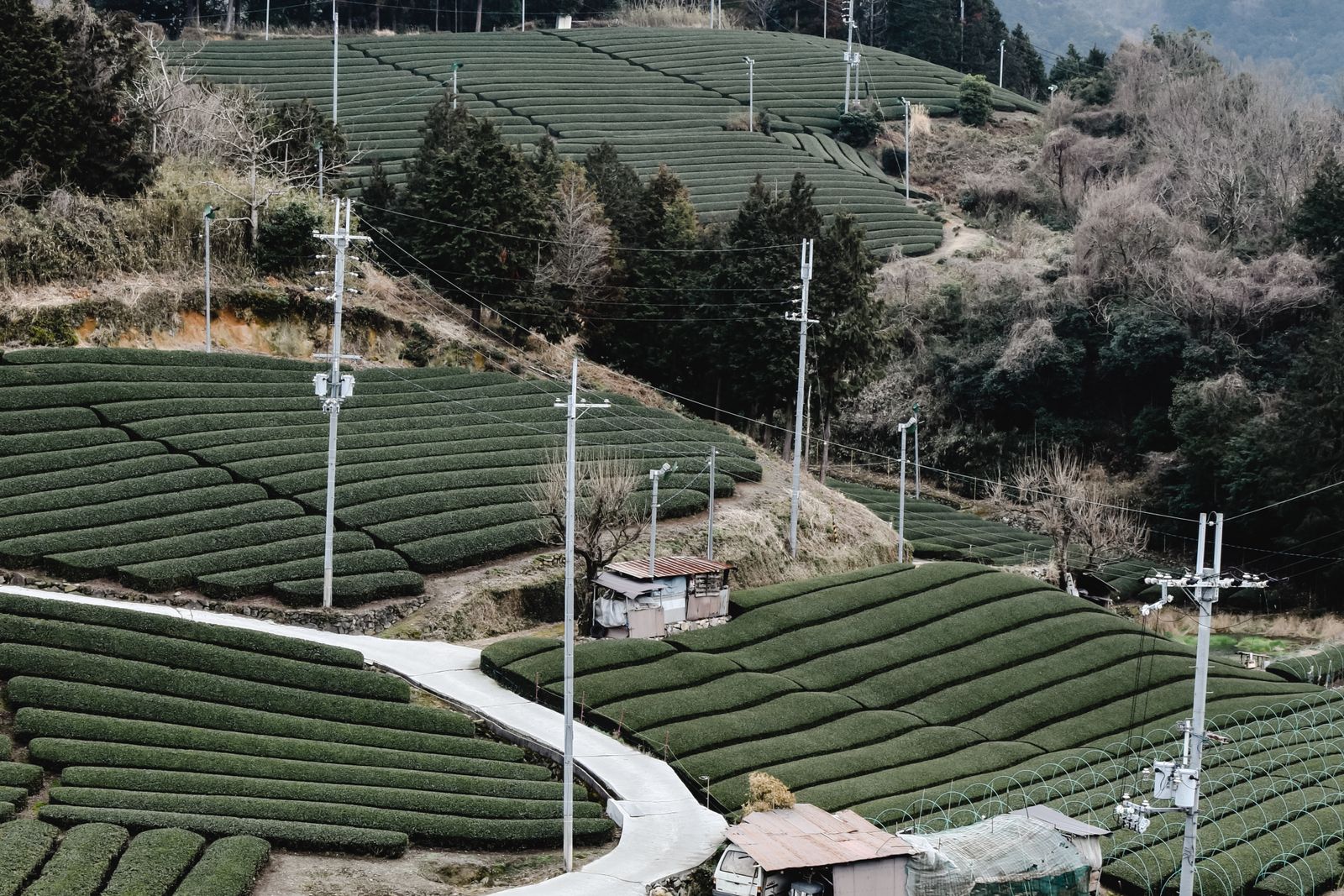
A packet of matcha sold in Japan is a processed food for general sale, and the labeling rules require a fixed set of items, normally in one block.
- 名称 — the name. 抹茶 or 粉末茶 is a naming decision, and this is where it lands.
- 原材料名 — ingredients in order. A single-ingredient matcha shows one line.
- 原料原産地名 — the origin of the heaviest ingredient. For a one-ingredient matcha, that is the tea itself.
- Plus 内容量 (net weight), 賞味期限 (best before), 保存方法 (storage), and the maker’s name and address.
One caution on the origin field, because it is the one most often over-read: the permitted forms are broader than people expect, and it can be less specific than a prefecture. It tells you the rule was followed. It does not always tell you the village.
There is also a rule for blends — where tea types are mixed, the one there is most of goes at the end of the name. Word order carrying information.
And now the clause that decides whether any of this reaches you. These are obligations for food sold in Japan. If you are buying outside Japan, your packet is labeled under your own market’s rules, and none of the above is guaranteed to be on it.
Which leaves it useful in two specific ways. It is what Japanese-market stock must disclose — so in a shop in Japan, or looking at an imported tin, the panel is readable and these are the fields. And it is what you can ask for: the panel exists, and whether a listing shows it is a choice someone made.
If reading a Japanese panel turns out to be a skill you want twice, the drugstore guide does the same job for a medicine box, where the class printed on the outside decides who may legally hand it to you.
濃茶 and 薄茶 are a use, not a ladder
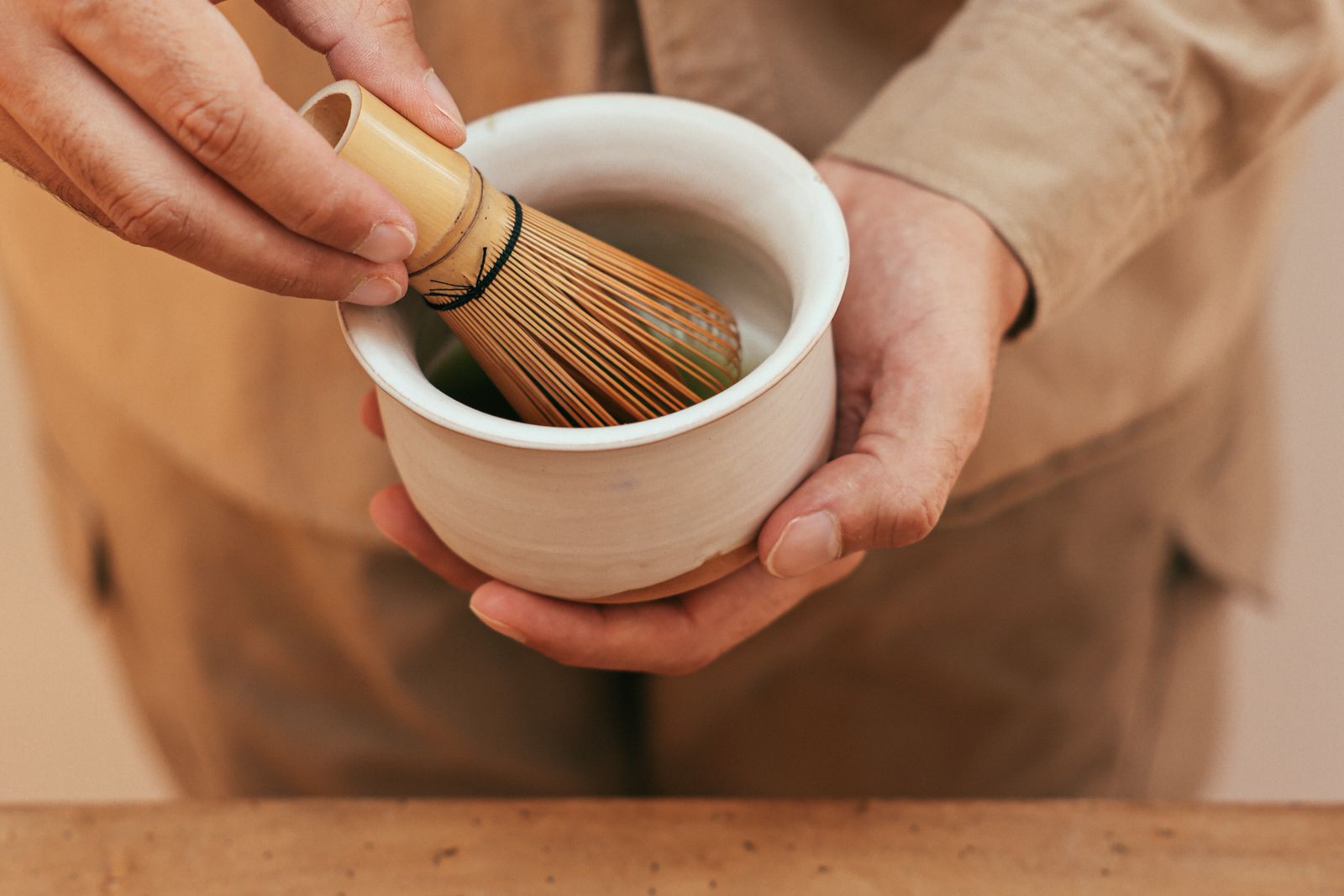
濃茶 (koicha), thick tea, and 薄茶 (usucha), thin tea, are two ways of preparing matcha rather than two qualities of it. Usucha is whisked — 点てる, tateru — to a fine foam with no large bubbles left. Koicha is kneaded — 練る, neru — with the same whisk, to a thickness you can drink, and is not foamed at all.
The agriculture ministry adds that better matcha is used for koicha. That is a statement about which preparation suits which tea. It is not a rank, and neither word is a grade you can buy.
Worth saying plainly, because the hole left by “ceremonial grade” is exactly the shape of a two-tier Japanese-sounding ladder, and this is not one.
The shortage is not the shortage you have read about
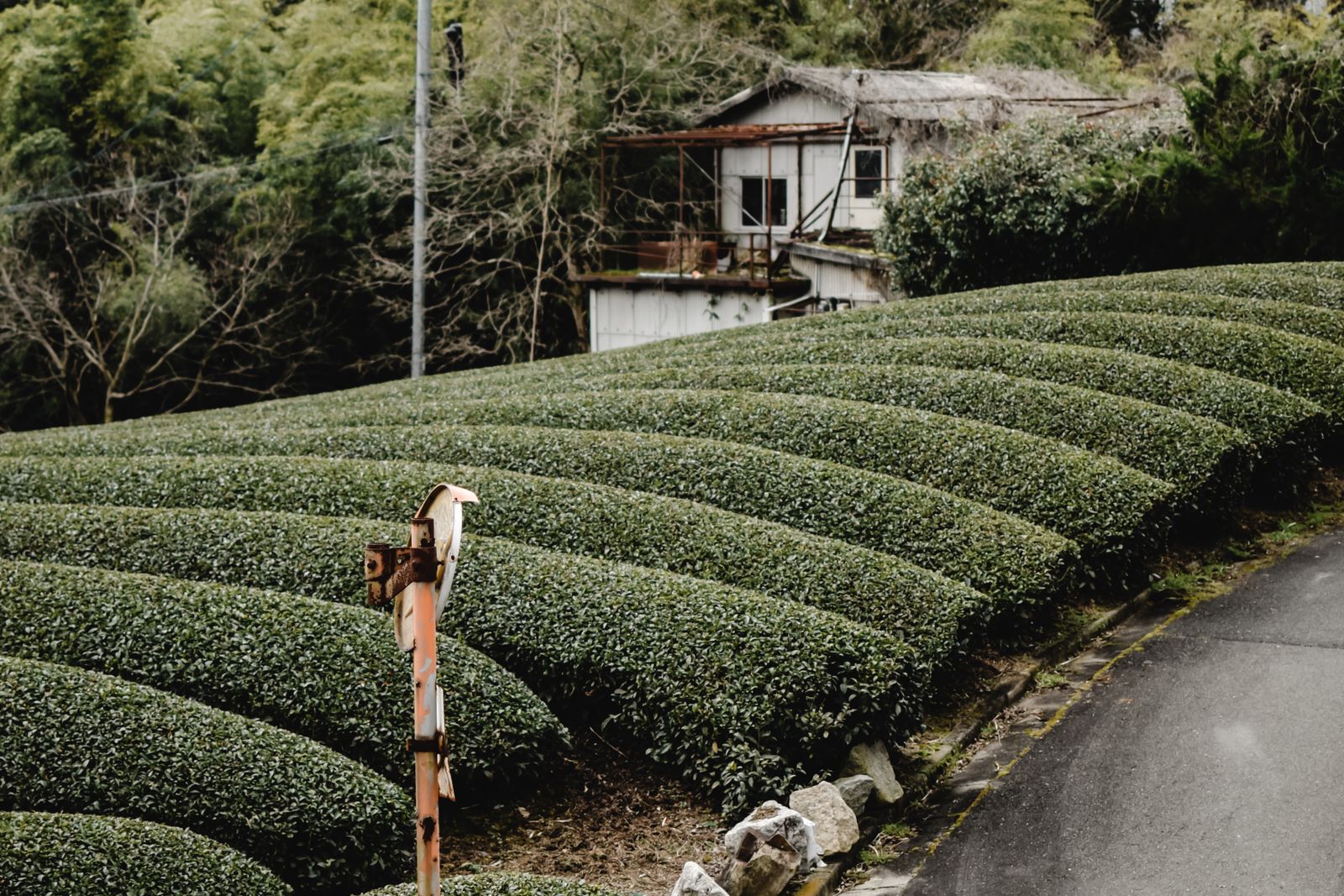
The shortage is real. The explanation attached to it usually is not.
The circulating version is that production is falling. The record says the reverse: tencha reached 5,336 tonnes in 2024, roughly 2.7 times its level ten years earlier — reported independently by the agriculture ministry and by a parliamentary research office. It is still only about 7.3% of Japanese tea, but it is the part that has been growing.
Demand grew faster. Green tea exports hit a record 364億円 in 2024 — about ¥36.4 billion — on rising demand for powdered tea including matcha, and the parliamentary paper’s conclusion is that domestic supply cannot keep up.
Then the bottleneck, which is the part that rarely gets printed. Matcha needs shading, and a process different from 煎茶 (sencha), Japan’s everyday green tea. Forty-five tencha processing facilities were installed across ten years, and milling capacity is limited. Underneath that sits something slower: tea-growing businesses in the main producing areas fell from 53,687 in 2000 to 12,325 in 2020, and 39.6% of tea bushes were over thirty years old as of 2024.
One more number, and then what it actually means. The freshest official figure, published August 2026, covers the first flush across the main producing prefectures: 24,100 tonnes of 荒茶 (aracha, tea processed but not yet finished), up 21% year on year. A real rise — and you will see it quoted at you as proof the shortage is over.
It isn’t. That figure is first-flush tea across those prefectures, and the release carries no tencha figure at all — tencha being the leaf matcha is actually made from. A rise in the wrong number is not the end of a shortage, and anyone waving it at you is hoping you won’t check which number it is.
JBJ'S TAKE
A shortage is not a countdown.
The shape of a shortage changes what to do about it. A bad harvest is a year you wait out. A demand-led squeeze on a crop whose processing plants number in the dozens, worked by a grower base that has been shrinking for twenty years, is not a year. It is a structure.
So JbJ will not treat it as a reason to hurry. Nothing in the official record above tells you to buy this week. The figures that imply otherwise come from the shops — which is not a secret, and is also not a source.
And do not go looking for a fair price per gram. Nobody official publishes one, which is precisely why every seller can tell you their number is the reasonable one. Judge the tin by its label block, not by where its price sits.
Making it, without the numbers nobody actually sets
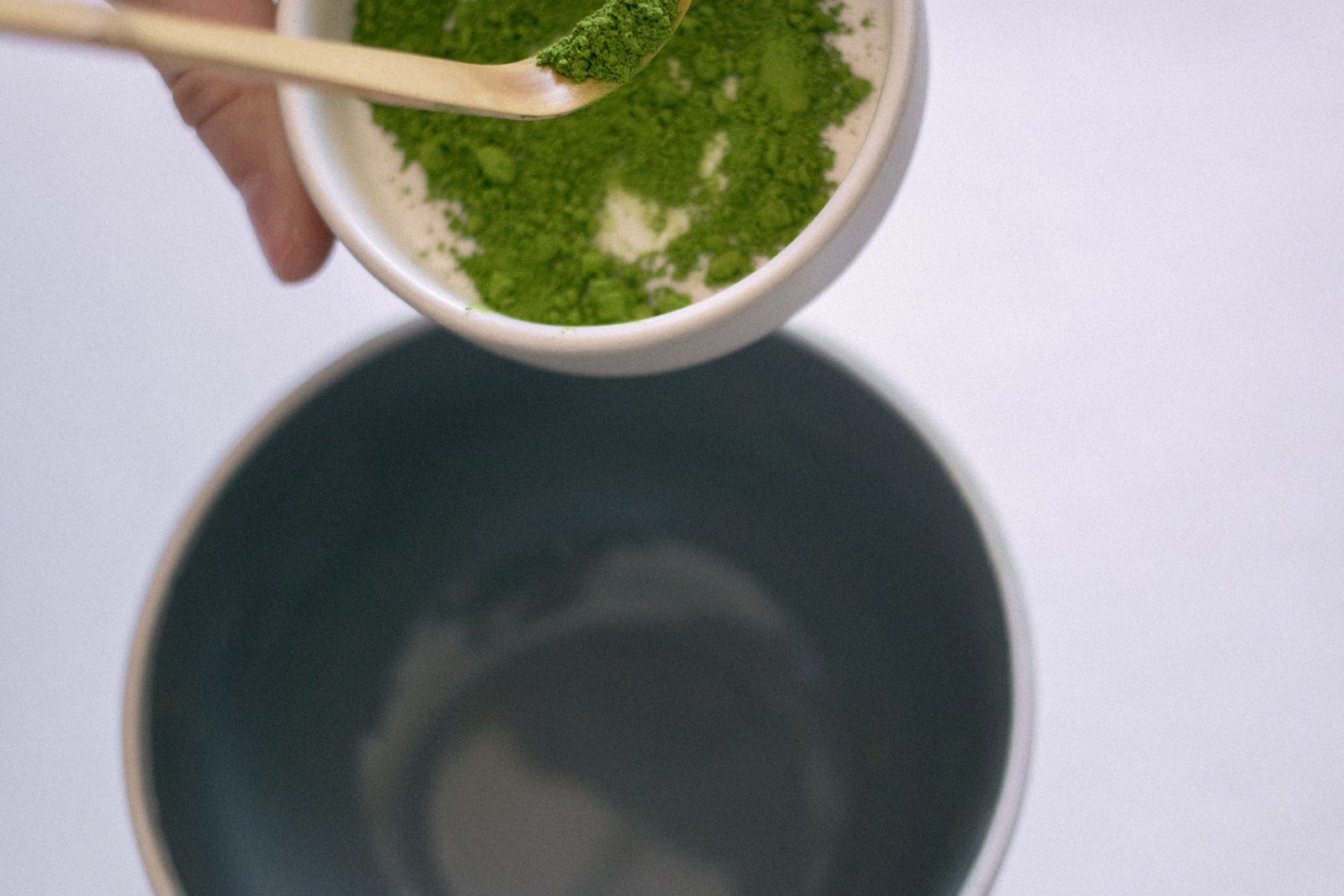
Sift the powder first.
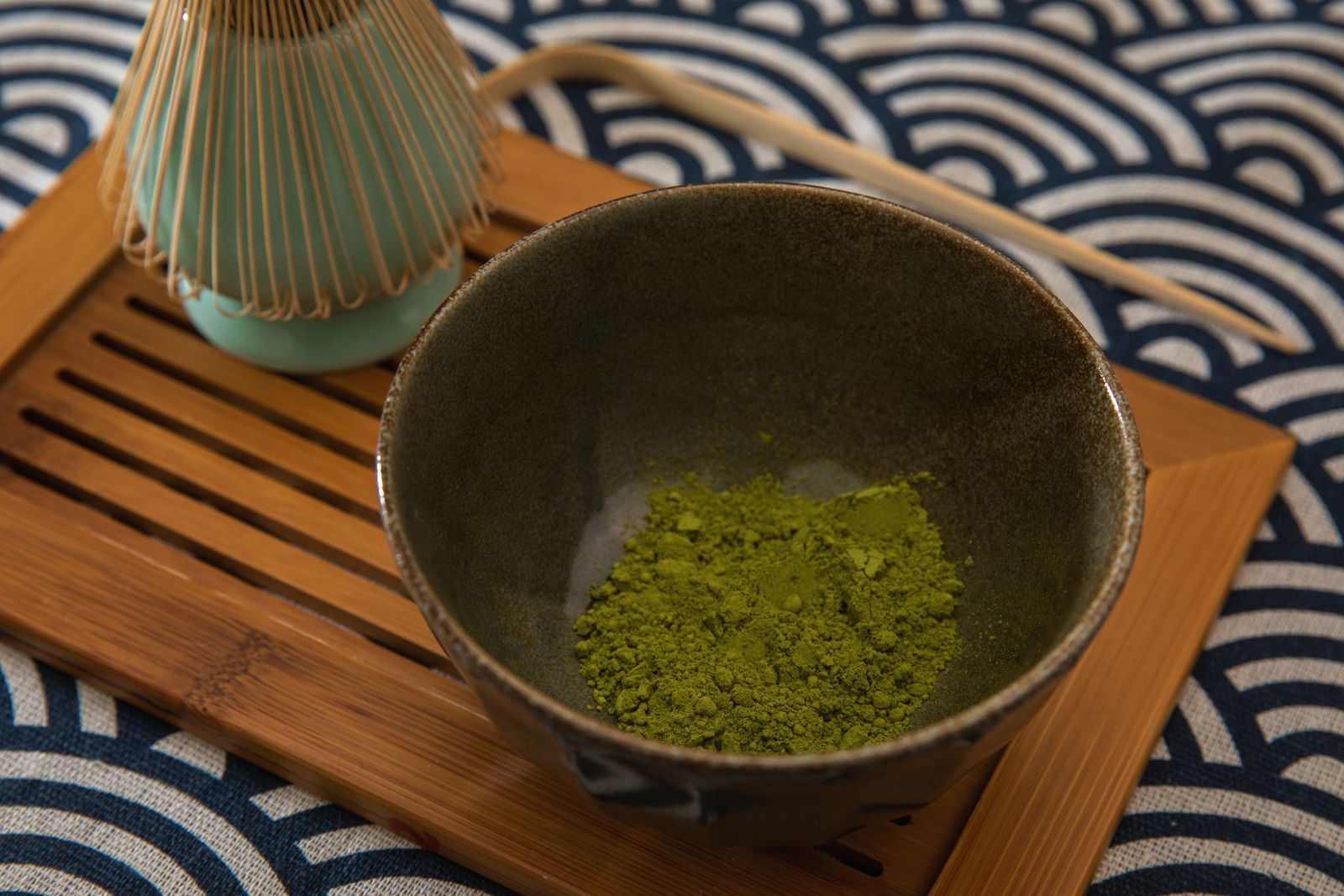
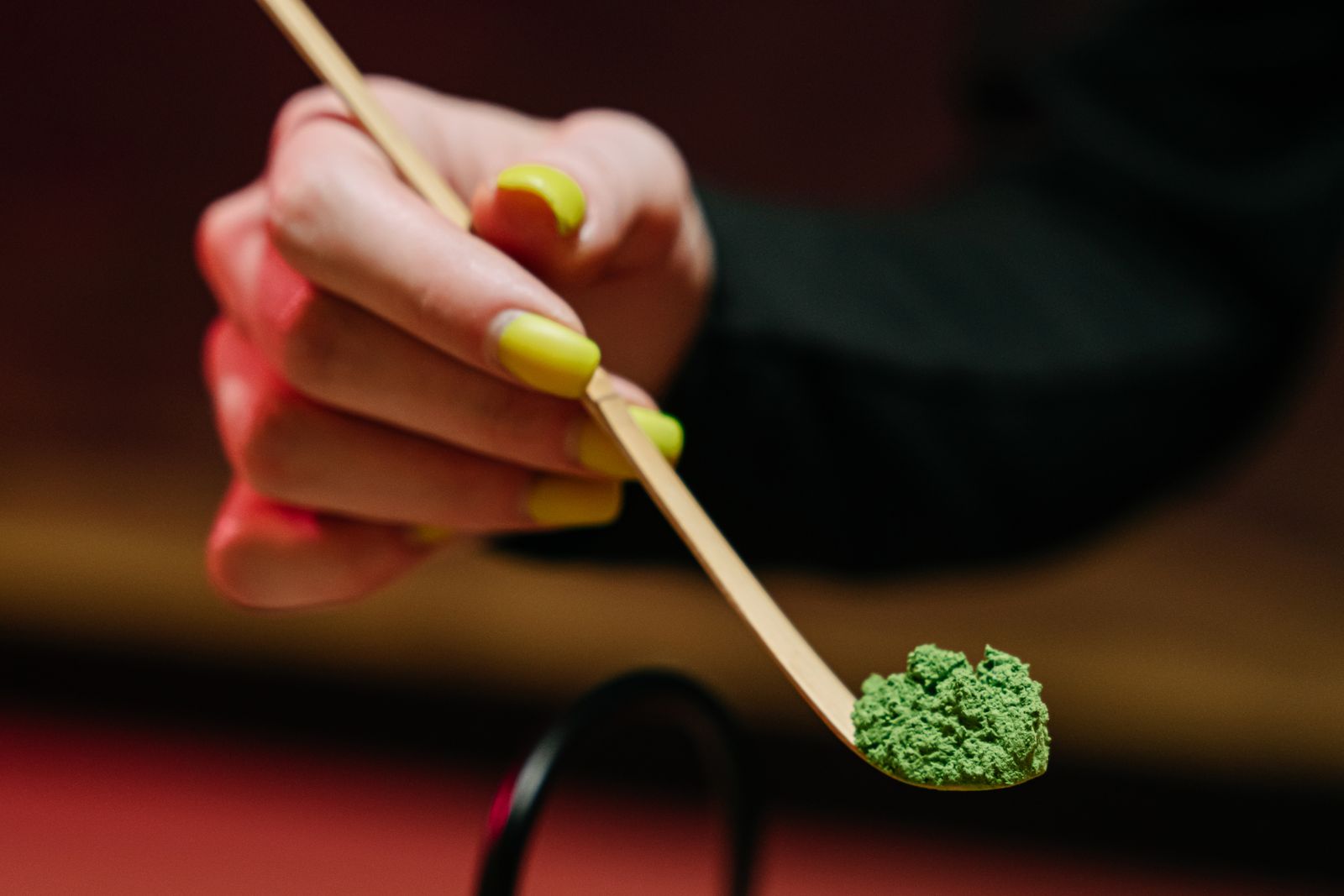
Then the quantities, which do exist. Urasenke, one of the head schools of the tea ceremony, publishes about 1.8 g of powder for usucha and about 3.75 g per person for koicha — the school’s own conversions from traditional Japanese weights, and roughly double for the thick one. Technique too: usucha whisked to a fine foam, koicha kneaded thick.
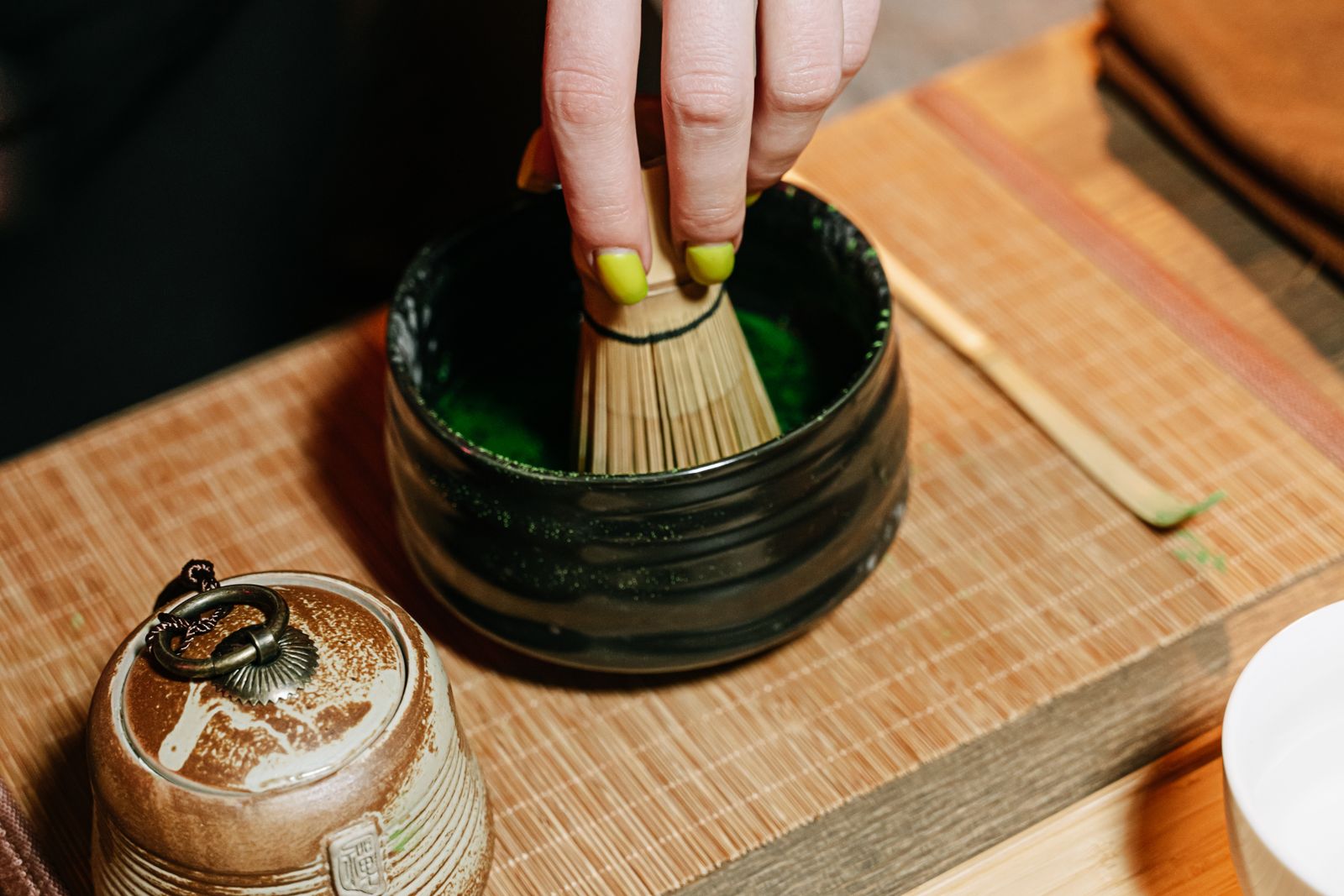
What Urasenke does not publish is a water volume or a water temperature. Where the number would go, it writes 適量適温 — tekiryō tekion, the right amount at the right temperature. The national tea instructors’ association publishes brewing temperatures for several other Japanese teas and does not cover matcha at all.
So those precise millilitres and degrees you keep seeing do not come from either school, and they do not agree with each other across sources. Stop chasing them. What the head school actually specifies is the weights and the two techniques. The water it leaves to you on purpose — because that is the part you are supposed to adjust by taste, not by thermometer.
Four things to distrust when you shop
Brand rankings. Matcha lists go stale faster than almost anything else in Japanese food writing — harvests change, blends change, and the tin that topped a list two years ago may not be the same product today. Buy on the label block, not on somebody’s ranking.
Per-gram price as a quality signal. Price in this market tracks scarcity, packaging and story at least as much as it tracks the tea. A high number is not evidence, and a low one is not a warning.
Tasting notes from people who haven’t drunk it. This is the most-copied content in the category, and most of it is rewritten from the seller’s own description. If a tasting note reads like a wine label, it came from marketing.
Health claims. Caffeine, L-theanine, focus, calm — that is a different subject with a different standard of proof, and it is where matcha marketing does its heaviest lifting. Anyone confident about your nervous system and vague about the label block has told you which one they care about.
And this is not a guide to buying matcha in a Kyoto tea shop. Standing in front of a person who grew the stuff is a better problem to have, and a different one.
JBJ'S TAKE
Ask for the panel.
Almost everything in this subject is an argument. The color is an argument. The grade is an argument. The shortage is an argument. Each one is made by somebody, to somebody, for a reason.
The label block is not. 名称 is a category with a written definition behind it. 原料原産地名 is a place. Neither is trying to persuade you, and that is why JbJ would build a first purchase on those two lines and on nothing else here.
So, the one thing worth doing: if a listing does not show the Japanese panel, ask for a photograph of it. Small request, ordinary answer — and it arrives before your money does, which is more than the rest of the checklist can say.
Information checked: August 2026. Definitions, labeling requirements and production figures come from Japanese government, industry-body and head-school sources dated to that check.
FAQ
Is “ceremonial grade” matcha a real Japanese grade?
No. No Japanese standard, JAS specification or industry classification defines the term, or any quality ladder for matcha — Japan sorts tea by production method instead. That is not the same as the term being illegal or fake. It means something in the market you are buying in, and nothing in the one the tea comes from.
How much matcha should I use?
Urasenke publishes about 1.8 g for 薄茶 (usucha, thin tea) and about 3.75 g per person for 濃茶 (koicha, thick tea) — roughly double. It publishes no water volume and no temperature; where the figure would be, it says 適量適温, the right amount at the right temperature. A precise millilitre-and-degree instruction is somebody’s preference, not a Japanese standard.
Is there a matcha shortage in 2026?
There is a supply gap, and it is not a production collapse. Tencha reached 5,336 tonnes in 2024, about 2.7 times its level a decade earlier. The constraint is that demand grew faster, that processing and milling capacity is limited, and that the grower base has been shrinking for twenty years. The most recent official figure — the 2026 first flush across the main producing prefectures, up 21% — covers first-flush tea generally and carries no tencha number, so it does not say matcha supply has eased.