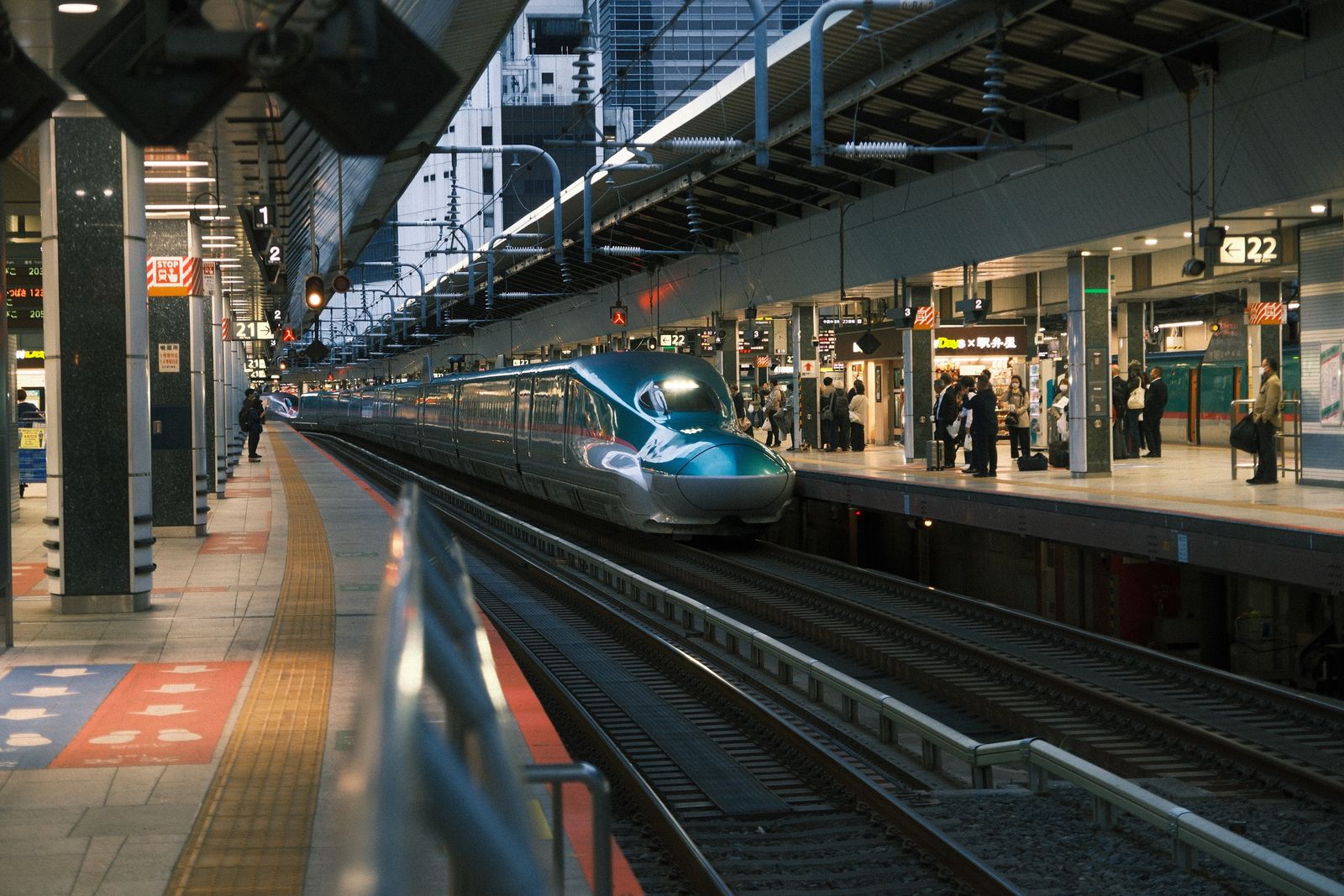
A first trip to Japan gets stuck at the planning stage. Not because there isn’t enough information. Because all the decisions arrive at once.
You can’t choose where to go until you know how many days you have. You can’t book until you know where you’re going. There’s an order. This is that order.
How many days do you actually need?
The general range people use
Most first-time itineraries land somewhere between one and two weeks.
Five to seven days is enough to see Tokyo properly, with a day trip or two. Ten days to two weeks is the range most guides recommend if you want to add Kyoto, Osaka, and possibly one more stop. Under five days, you’re realistically looking at one city.
There’s no single correct number. It depends on how many places you want to see, and how much of each day you’re willing to spend moving between them.
Thinking in terms of cities, not just days
The more useful question isn’t “how many days do I have” — it’s “how many cities am I trying to cover.”
Japan’s cities are far enough apart that each additional stop costs you real time. Checking out. Getting to the station. The ride itself. Checking in again. That’s why a lot of first-timers end up with itineraries that look full on paper but feel rushed in practice.
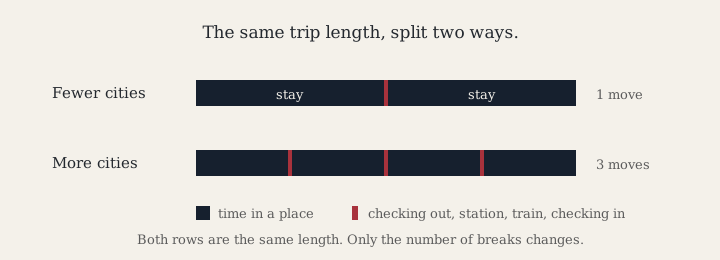
So the first thing to work out is how many places you actually want, and then check whether your days support that number.
MY TAKE
But!!
Now, this is just me.
Only six days. But you want to see Tokyo and Kyoto and Osaka — all of it.
Then two days each. I think that absolutely works.
It'll be insanely busy, though. Haha.
That said — if you have time, different story.
I wouldn't rush like that.
If you're coming all the way to Japan, I'd take it a little slower.
When to go
Spring and autumn get recommended most often, and for good reason — the weather is mild and comfortable in both. They’re also the busiest and most expensive periods.
Summer, roughly July and August, is hot and humid, particularly in the cities. It’s also festival season, so there’s a trade-off rather than a straight downside.
Winter is cold but drier in much of the country, with fewer crowds and generally better accommodation availability.
One caveat worth taking seriously: cherry blossoms and autumn leaves don’t run on a fixed calendar. Peak timing shifts year to year and varies by region, sometimes by a week or more. If either is the reason for your trip, treat published averages as rough guidance and check the current year’s forecast rather than booking flights around last year’s dates.
Where to go on a first trip
The standard first-timer route
The common first-trip route runs Tokyo → Kyoto → Osaka, sometimes with Hiroshima added, and it’s popular for practical reasons: the three are connected by fast, frequent trains, and they cover noticeably different things. Tokyo is the big modern city, Kyoto is where most of the traditional sights are concentrated, Osaka is known for food and a different street-level feel.
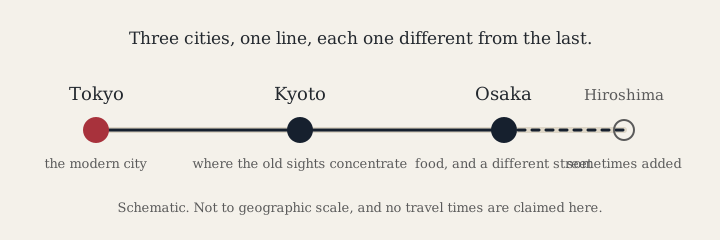
It’s a well-worn route, but “well-worn” here mostly means “it works.”
How much to try to fit in
This is where most first itineraries go wrong. Adding a fourth or fifth city sounds like more trip, but each one eats into the time you have in the places you were actually excited about.
If you’re deciding between one more city and two more days somewhere you already picked, the second option is usually the better trip.
What to book, and when
Flights and entry requirements
Book flights first, since everything else depends on the dates.
For entry, many nationalities can visit Japan for short-term tourism without a visa, but the eligible countries and the length of stay granted vary. The Ministry of Foreign Affairs maintains the authoritative list — check it for your own passport rather than relying on a travel article, including this one.
Separately, Japan operates an online service called Visit Japan Web, run by the Digital Agency, which lets you complete immigration and customs procedures online before you land and generates a QR code to use on arrival. Registering ahead of time is a small task that makes the airport faster.
Accommodation
Book earlier than you think, especially for spring and autumn. Popular areas fill up months ahead in peak season, and Japanese hotel rooms are small enough that the good-value options tend to go first.
Location matters more than star rating here. Being near a station on a line you’ll actually use will do more for your trip than a nicer room.
Some cities, including Kyoto and Osaka, charge a lodging tax per person per night. It scales with the room price, and in Kyoto it sits on top of the room rate.
Rail passes
The nationwide Japan Rail Pass is worth understanding, but it is not automatically worth buying. Whether it pays off depends on how much long-distance travel you’re doing — a trip that’s mostly one city won’t come close to justifying it, while a multi-city route with several shinkansen legs might.
Two things to know: from October 1, 2026, prices increase for passes bought through overseas designated sales agents (the 7-day ordinary pass moves from ¥50,000 to ¥53,000, with the longer passes rising too, though not all by the same percentage), and that increase doesn’t apply to the official Japan Rail Pass website, where JR Group has said prices are held for the time being with no end date announced. Check the official site for current pricing and terms before you buy — this is exactly the kind of detail that goes stale.
There are also regional passes, which are often the better fit if your trip stays in one area.
Tickets and experiences worth booking ahead
Most of Japan works fine without advance booking. The exceptions are the ones with hard capacity limits — certain museums, popular seasonal experiences, and a handful of well-known attractions that sell timed entry. If something is genuinely on your must-do list, check whether it needs a reservation before you arrive.
Getting around and staying connected
Trains and IC cards
Trains cover almost everything you’ll want to do, and the system is reliable enough that you can plan around it. Google Maps handles Japanese transit well and is what most visitors end up using.
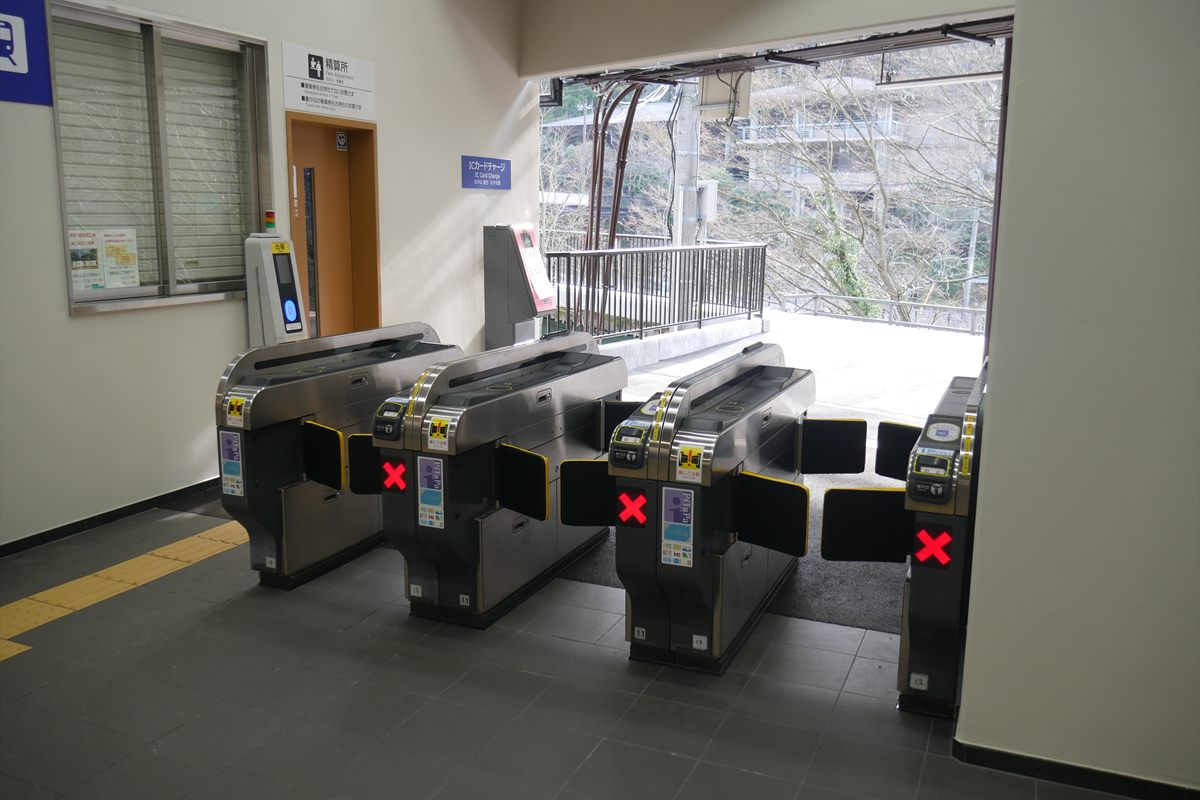
For local trips, get a rechargeable IC card — Suica, PASMO, ICOCA and the regional equivalents all work the same way. You tap in and out at the gate, and the same cards work at convenience stores and vending machines. There are tourist versions available at the major airports, and phone-based options if you’d rather not carry a card. Either is fine; the point is not buying a paper ticket for every ride.
Wi-Fi / eSIM
Sort out connectivity before you go. You’ll be using maps and translation constantly, and public Wi-Fi is not dependable enough to build a trip around.
The two options are a pocket Wi-Fi device or an eSIM on your phone. An eSIM is simpler if your phone supports it — nothing to pick up, nothing to return. Pocket Wi-Fi makes more sense if several people need to share one connection.
Money
The “Japan is cash-only” advice is out of date, but so is assuming you can leave cash at home entirely.
Cards and contactless work at hotels, chain restaurants, department stores, convenience stores, and stations without much trouble in the cities. Where you’ll still hit cash is the smaller end: independent restaurants, small shops, market stalls, shrine offerings, some entry fees. That category includes a lot of what people travel for.
Carry some cash, but you don’t need to carry a lot. Convenience store ATMs are everywhere and generally accept foreign cards.
One change worth knowing about if you plan on shopping: from November 1, 2026, Japan’s tax-free system switches from an exemption at the register to a refund at departure. Instead of paying the tax-free price in the store, you pay the full tax-inclusive price, have your purchases confirmed by customs when you leave, and get the tax back from the retailer after that — which may not be before you fly.
Etiquette basics
Skip the long etiquette lists. A handful of things account for most of the situations where visitors feel uncomfortable:
- Trains are quiet. Phone calls aren’t done, and conversations stay low.
- Don’t tip. It isn’t expected anywhere, and leaving money can create confusion.
- Shoes come off in homes, traditional accommodation, and some restaurants and temples. There will be a clear step or a shelf where this happens.
- Eating while walking isn’t common. Eat near where you bought it, or wait.
- Bins are rare in public. Expect to carry rubbish until you find one, often at a convenience store.
None of these are enforced rules. Getting them roughly right is enough.
Packing
Most of your packing list is the same as any trip. A few things are specific to Japan:
- Shoes you can slip on and off, because you’ll be doing it more than you expect.
- Comfortable walking shoes — first trips involve a lot of walking, more than most people plan for.
- A small bag for rubbish, given how few bins there are.
- Light layers for spring and autumn, when mornings and evenings differ noticeably from afternoons.
- Space for what you buy. Hotel rooms are small and suitcases fill up.
If you take prescription medication, check the rules before you pack. Japan restricts certain common medications, and larger quantities can require an import certificate arranged in advance. The Ministry of Health, Labour and Welfare is the authority on what’s allowed and what needs paperwork — worth ten minutes well before departure.
FAQ
Is Japan expensive?
Less than its reputation suggests. Flights and accommodation are the real costs. Once you’re there, eating well is genuinely affordable — convenience stores, chain restaurants and conveyor-belt sushi are cheap and decent. Long-distance train travel is where costs add up.
Do I need to speak Japanese?
No. Signage in cities and on transport includes English, and translation apps handle the rest. Learning a few basic phrases is worth doing, but it’s a courtesy, not a requirement.
Is a rail pass worth it?
Only if you’re covering long distances. One-city trips almost never justify it. Multi-city routes with several shinkansen legs might. Add up the individual fares for your actual itinerary and compare — that’s the only way to know.
Should I take an organized tour?
You don’t need one. Japan is straightforward to navigate independently, and public transport is reliable enough that a first trip works fine on your own. Tours make sense for specific things — a particular region, a specific interest, or if you’d simply rather not plan.