Almost every guide to Japanese convenience stores is a ranked list of snacks. The snacks are genuinely good. They are also not the reason the konbini will matter to you.
For two weeks in Japan, it is the thing that makes the rest of the trip work. Cash at two in the morning. Breakfast on a platform. A printer. A counter that will send your suitcase to the next city.
So this page is about what it does, what it quietly stopped doing in 2022, and the one question at the register that costs money if you answer it without thinking.
The short version
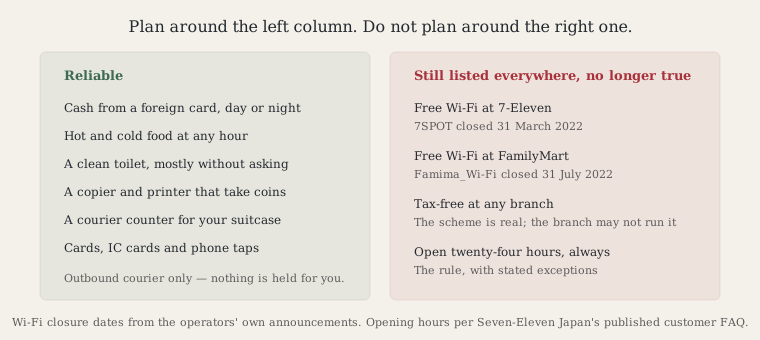
- Yen from a foreign card, on most of the major networks — this is the single most useful thing in the building.
- Food worth eating rather than food you settle for. Onigiri, sandwiches, the hot counter.
- A courier counter that sends bags onward, to an address rather than to a store. Separately, some branches now hold a bag for the day if you book it first.
- Free Wi-Fi is over. Two of the three big networks closed in 2022 and the guides have not caught up.
- If there are seats and you say you’ll use them, your food is taxed at 10% instead of 8%.
There are about 56,000 of them
The Japan Franchise Association counts its member chains every month. In its July 2026 figures the total came to 56,162 stores across seven member chains.
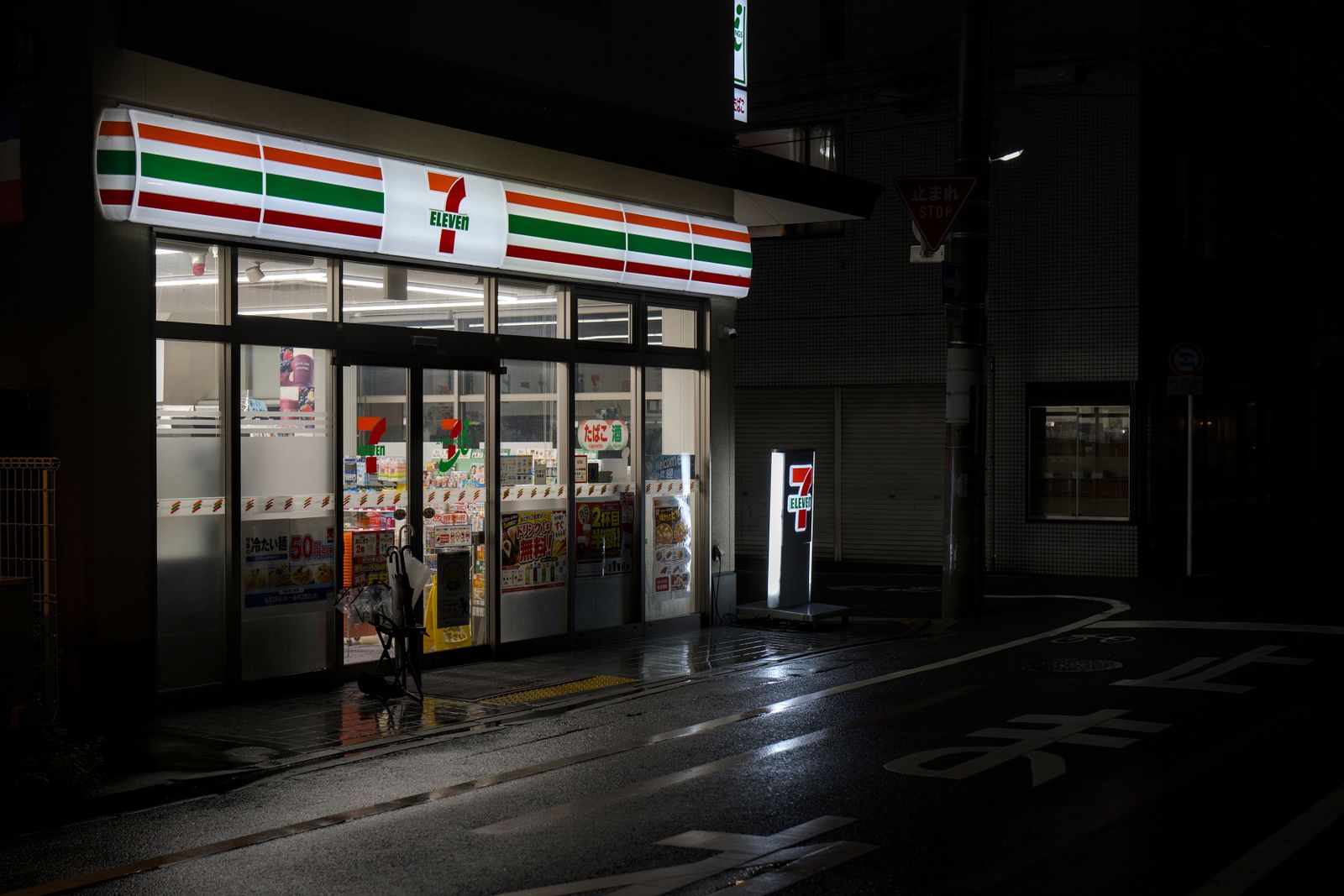
Three names cover most of what you’ll walk past: 7-Eleven, FamilyMart, Lawson.
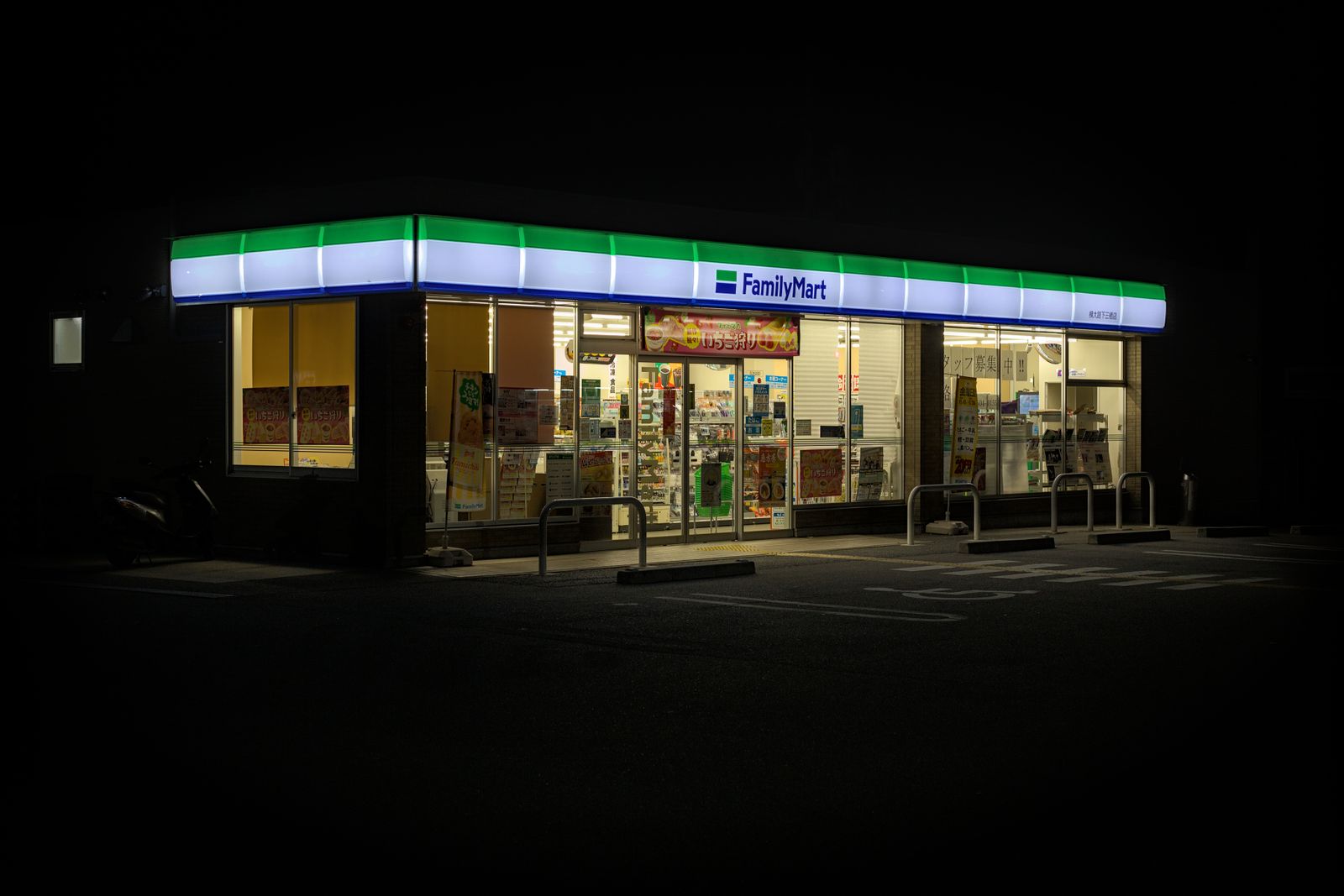
They are not identical, and the differences are real enough that Japanese people have preferences. Lawson’s fried chicken has a following. FamilyMart’s does too. 7-Eleven’s coffee is the one most people default to.
None of that should shape your route.
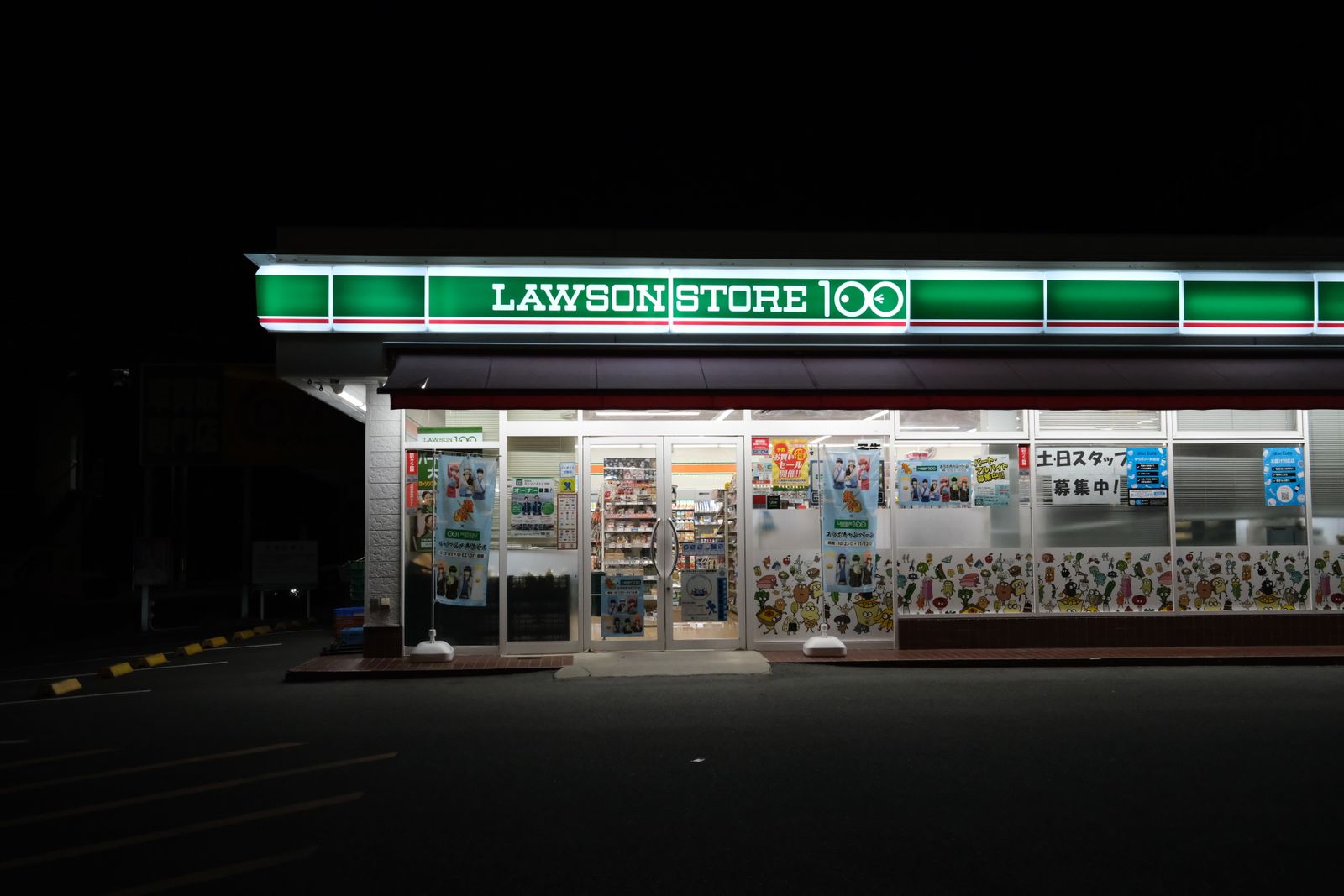
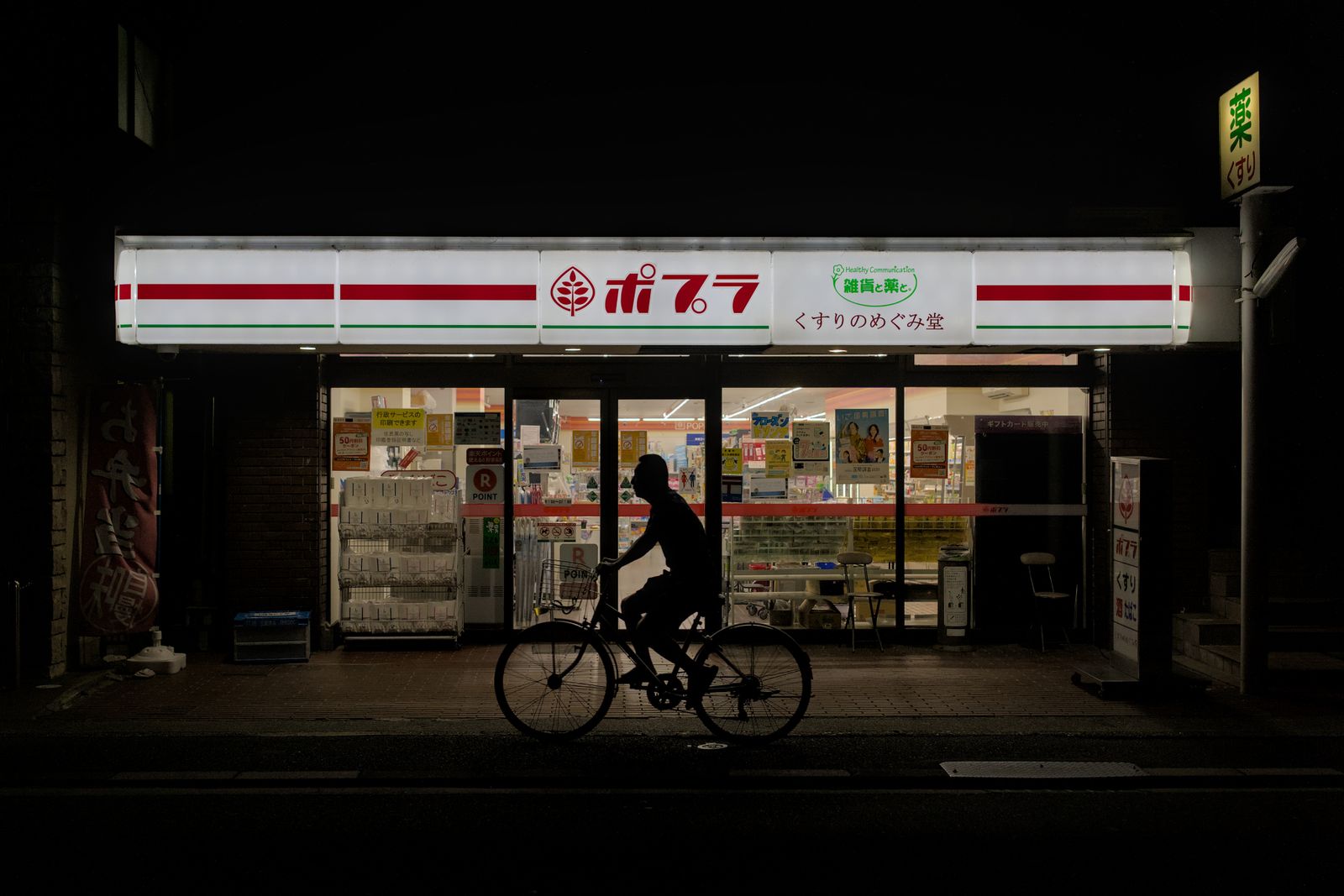
There are others. Ministop, Seicomart, Daily Yamazaki, Poplar. Seicomart in Hokkaido is a local institution with its own kitchen. Poplar you will probably never see named in English.
JBJ'S TAKE
Walk into the nearest one.
JbJ's position on the chain rankings is that they are entertainment, and reading them as a shopping list is how visitors end up walking eleven minutes past two open stores to reach a third.
The konbini is a reliability instrument. Its value is that there is always one, it is always stocked, and it is always the same. Optimizing which one you use throws away the only property that makes it worth anything.
If you are in Japan long enough to develop a favorite, you will develop one without our help. On a two-week trip, the nearest door wins.
What to eat
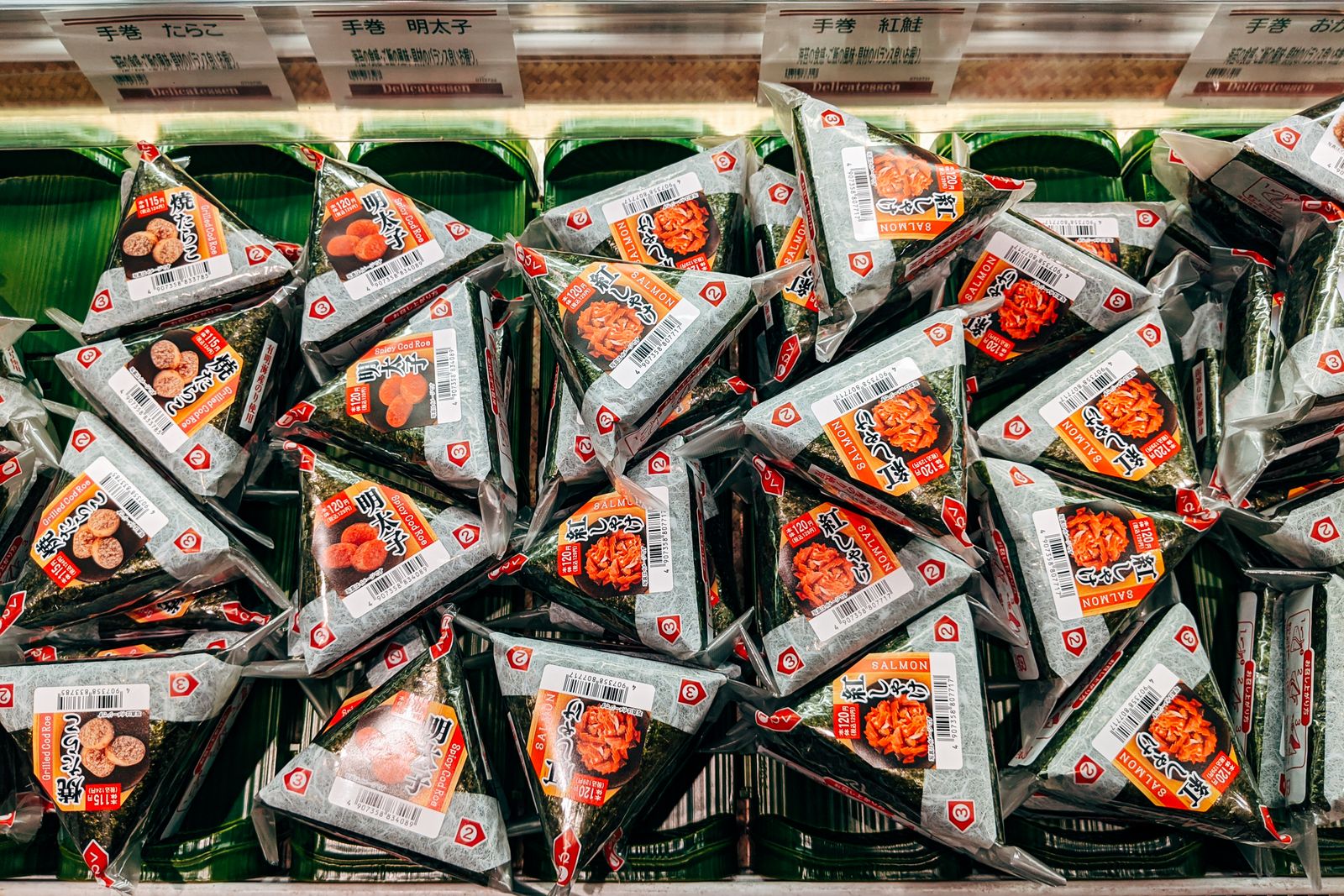
Onigiri first. A rice triangle with something in the middle, wrapped so the seaweed stays crisp until you open it — pull the top tab, then the two side tabs in order, and the sheet wraps itself around the rice. Fillings are printed on the front and the common ones are salmon, cod roe, tuna with mayonnaise, and pickled plum.
Sandwiches are the thing that surprises people. Crustless, soft, and much better than the format suggests. Egg salad is the one to try first.
The hot counter by the register runs all day: fried chicken, croquettes, steamed buns in winter. Point at it. Nobody expects the vocabulary.
Oden appears in the cold months — a pot of things simmering in light broth by the register. Daikon and boiled egg are the safe entries.
Dessert is where the chains actually compete, and it rotates constantly. Whatever is on the promotional stand is on it for a reason.
The question at the register
If the store has a seating area, staff may ask whether you’re eating in. That question is not small talk.
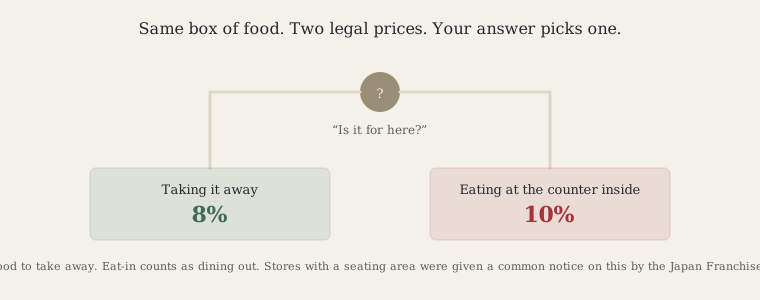
Japan’s reduced consumption tax rate applies to food you take away. Eating it on the premises counts as dining out, and dining out is charged at the standard rate. So the same bento is 8% out the door and 10% at the counter by the window.
The Japan Franchise Association issued its member chains a common poster explaining exactly this in October 2019, which is why the wording is so consistent across brands.
It is a couple of percent. It is not a scandal. But you should know that you are being asked a tax question rather than a friendly one, and you should answer it truthfully — the seats are not free.
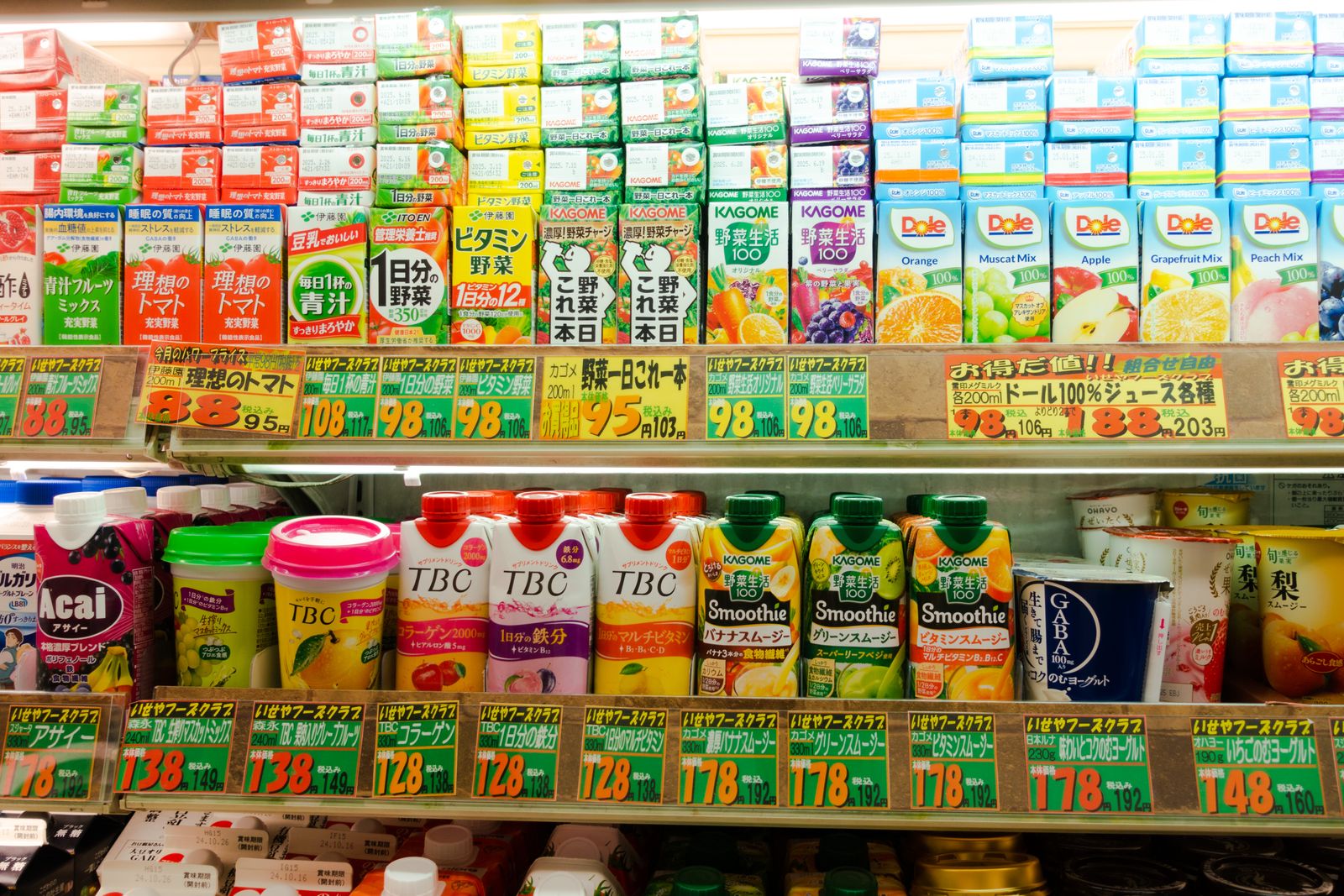
While we’re on price: the konbini is not where Japan is cheap. It is where Japan is open. A supermarket a hundred meters away will be less for the same drink, and if you are watching the budget closely, that is the trade you are making every time.
Alcohol, and the button you have to press
Beer, chuhai, wine and spirits are on the shelf next to the tea, at any hour.
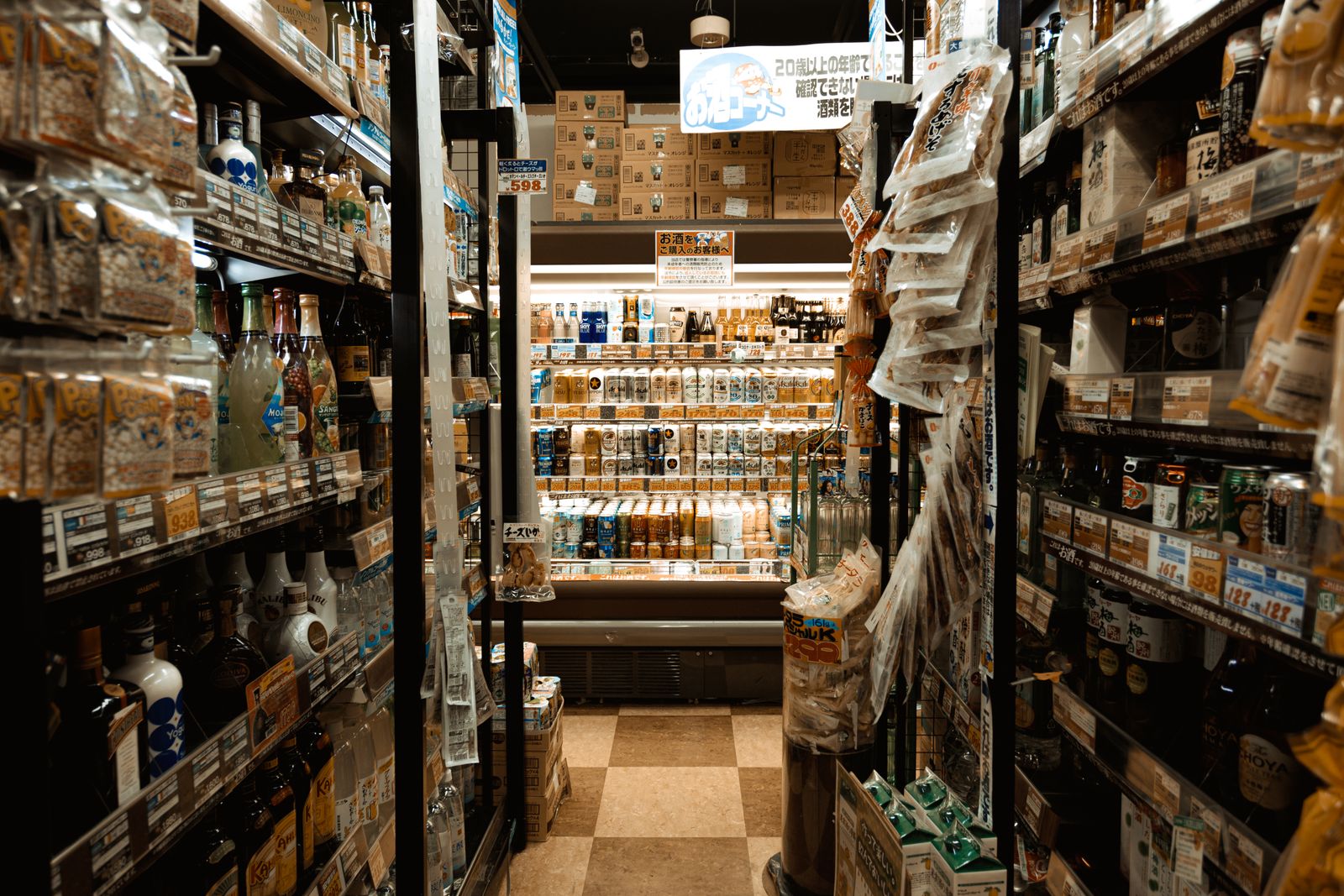
Two things to expect. The drinking age is 20, and the register will put a confirmation on the customer screen that you have to tap before it will take your money. That is normal. Everyone taps it.
And alcohol is excluded from the reduced rate. It is 10% whether you carry it out or not, so the eat-in question does not arise.
The cash machine is the real reason to walk in
This is the part that changes trips.
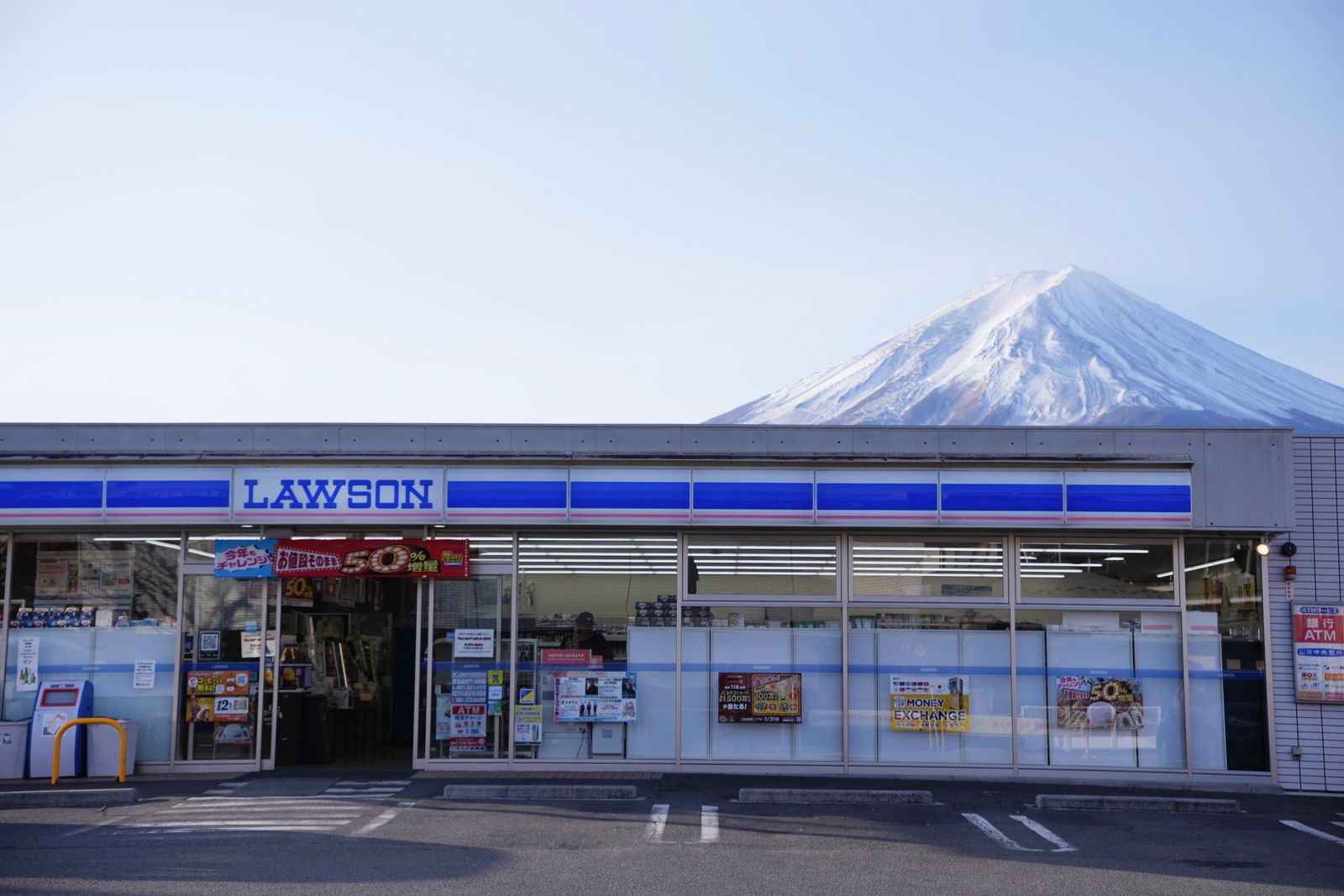
Seven Bank, the bank inside 7-Eleven, states that it runs over 28,000 ATMs at 7-Eleven stores across Japan, and that they take cards issued outside Japan on Visa, PLUS, Mastercard, Maestro, Cirrus, UnionPay, American Express, JCB, Discover and Diners Club — with the honest caveat, in their own wording, that some cards carrying those marks may still not be accepted.
Seven Bank describes withdrawal as available day or night. Treat that as the general case rather than a guarantee for your particular card and hour: individual machines go down for maintenance, some card issuers apply their own overnight limits, and a store that is not open around the clock takes its machine with it.
Two things worth settling before you fly: what your bank charges for a foreign ATM withdrawal, and what rate it gives you. Both are set by your card issuer, and both vary widely between banks — which is why the confident ATM-versus-exchange-counter comparison you will read online cannot be true for every card, and may well not be true for yours. Ask your own bank.
One more, for the same reason: if a machine offers to complete the transaction in your home currency, that rate is set by the operator rather than by your issuer. It is a second rate, and it is worth knowing which one you are agreeing to.
JBJ'S TAKE
Don't change a large sum before you know you need it.
The advice JbJ would actually give a first-time visitor about money in Japan is this: do not commit a big lump of cash at the airport on day one, and do not carry a fat envelope of yen around because you were told Japan is cash-only.
Take out a moderate amount when you land and top up from a konbini machine when you run low. There is one every few hundred meters in a city and one attached to the nearest 7-Eleven almost everywhere else, so running out is a ten-minute problem rather than a day-ruining one.
Whether the machine beats the exchange counter comes down to your bank's fee and your bank's rate, and those are two numbers only your bank has. What we will say is that a withdrawal itemizes what it costs you, and a counter quotes one number with the margin already inside it. Ask your issuer what its fee and rate are before you leave, and then you are comparing two knowns instead of one.
Japan is far less cash-only than its reputation. But cash still settles the small awkward things — a shrine office, a market stall, a locker — and the konbini machine is the reason you never have to plan for that in advance.
This is the single most useful sentence on this page. The snacks are a bonus.
Three things guides still say that stopped being true
Free Wi-Fi. This is the big one. 7-Eleven’s 7SPOT network was switched off on 31 March 2022. FamilyMart’s Famima_Wi-Fi was switched off on 31 July 2022, replaced by a carrier service that expects a Japanese mobile account. Lawson still offers Wi-Fi, and not at every store. Guides published this year still list konbini Wi-Fi as a reason to walk in. Do not build a day around it — rent a pocket router or buy a data eSIM.
Tax-free shopping. Real, and narrower than it sounds. 7-Eleven publishes its own tax-free terms: a minimum of ¥5,000 before tax in a single day at a single store, passport required, consumables sealed in a bag you must not open until you leave, and goods taken out of Japan within 30 days. What the scheme does not promise is that the branch in front of you runs it.
Open twenty-four hours. Mostly. Seven-Eleven Japan’s own customer FAQ puts it as a principle rather than a guarantee — 24-hour operation is the rule, with districts and stores where regulations or circumstances mean shorter hours. In a city center you will never notice. In the countryside at 1 a.m., check rather than assume.
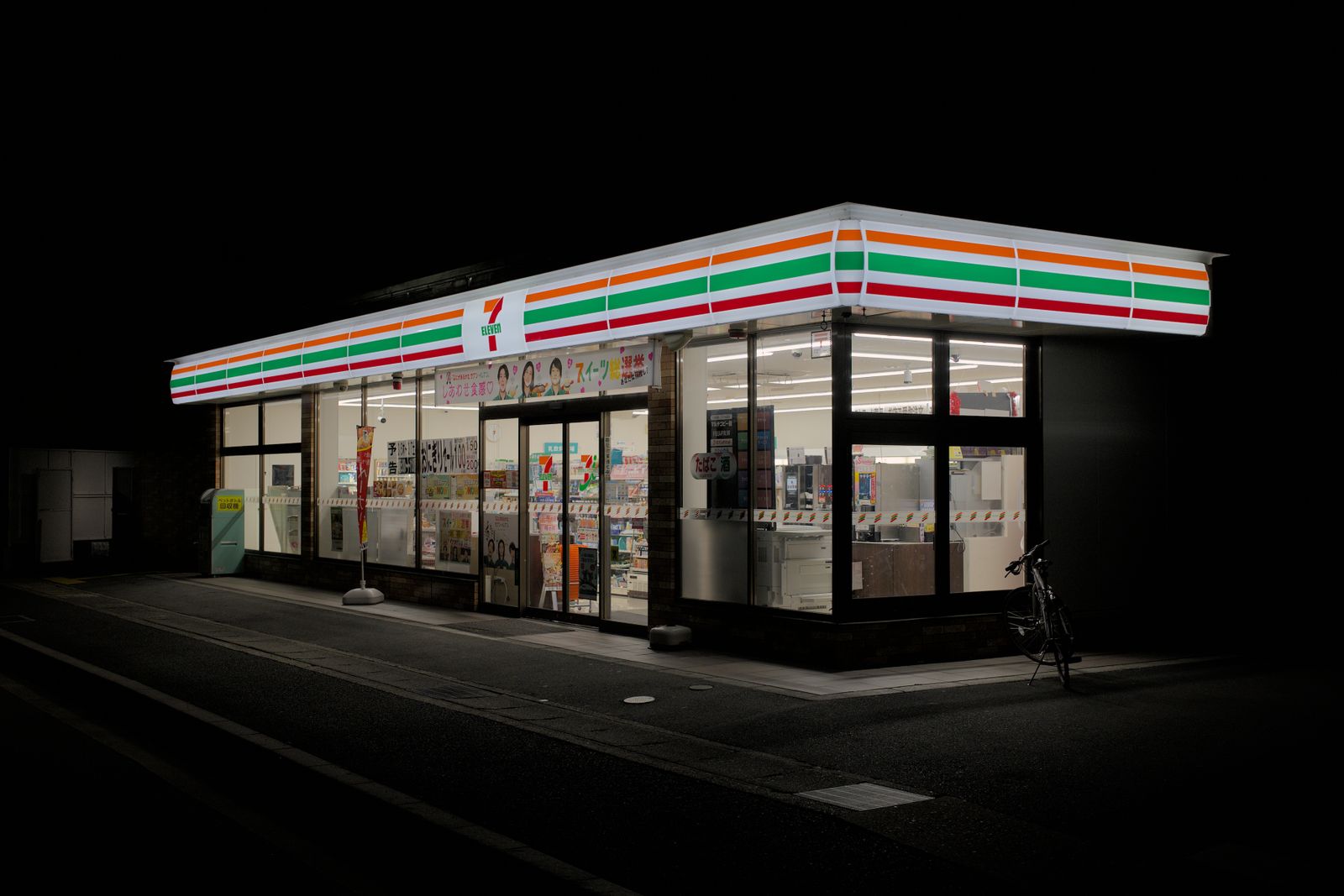
The other counter
Most konbini take courier parcels, and almost nobody finds this out until the day they wish they had.
Yamato Transport — the takkyubin company — confirms you can send from 7-Eleven, FamilyMart, New Days, Daily Yamazaki and Poplar, with two limits stated plainly: chilled Cool Ta-Q-Bin and international shipments are not handled at convenience stores, and some branches cannot take the largest sizes.
The direction matters. You send from a konbini, and the bag is delivered to a hotel or an address rather than waiting for you at the store you handed it over in. Ask your accommodation first — most hotels will take a bag that arrives before you do.
One thing has changed, and it is a separate service rather than a change to courier delivery: some konbini now rent out back-room space for same-day bag storage, booked and paid for in advance through an app. Seven-Eleven Japan and its partner ecbo put that at 1,261 stores across 42 prefectures as of 15 July 2026, up from 378 the previous December. You carry the bag in yourself and collect it the same day. That is storage, not delivery, and the two do not substitute for each other.
JBJ'S TAKE
Send the suitcase. Carry the day bag.
Foreign visitors haul luggage through Japanese train stations in a way Japanese travelers largely stopped doing, and it is the most avoidable discomfort of the whole trip.
JbJ's editorial position is that if you are changing cities and you are not moving the same day you need the bag, the case goes by courier and you get on the train with a backpack. Stairs, rush hour and the last hundred meters to the hotel all stop being a problem at once.
It is not expensive relative to what it removes, and the konbini counter means you can do it at ten at night from a street corner without finding an office.
The one thing that will catch you out is timing — it is a next-day service, not a same-day one. Send it the evening before you move.
Before you go
The konbini is not a destination and it does not need to be on your itinerary. It will be on your route regardless, roughly every four minutes on foot in any city.
Treat it as infrastructure. Get cash from it, eat from it when the timing is wrong for anything else, send your bag from it, and let the rankings be somebody else’s hobby.
Two pages that matter more than anything here: the first-trip guide if the shape of the trip is still open, and the cheapest time to visit if money is what’s driving it — airfare and accommodation dwarf every yen on this page.
FAQ
Which convenience store chain is best?
For a visitor, whichever one is closest. The chains do differ on hot-counter items and desserts, and Japanese people do have preferences, but the konbini’s value is that there is always one nearby and stocked. Walking past open stores to reach a specific brand throws that away.
Why did the cashier ask if I’m eating in?
Because the answer sets the tax. Food taken away is charged at Japan’s reduced 8% rate; eating it in a store’s seating area counts as dining out and is charged at 10%. The Japan Franchise Association gave member chains a common notice explaining this in October 2019.
Can I get cash at a Japanese convenience store with my card?
At 7-Eleven, usually. Seven Bank says it operates over 28,000 ATMs at 7-Eleven stores accepting cards issued abroad on Visa, PLUS, Mastercard, Maestro, Cirrus, UnionPay, American Express, JCB, Discover and Diners Club, and describes withdrawal as available day or night — while noting in its own wording that some cards bearing those marks may not be accepted. Your issuer’s fee and rate are separate from all of that and are worth asking about before you travel.
Is there free Wi-Fi at Japanese convenience stores?
Largely no, despite what most guides still say. 7-Eleven’s 7SPOT closed on 31 March 2022 and FamilyMart’s Famima_Wi-Fi closed on 31 July 2022. Lawson still offers it at some stores. Bring a pocket router or an eSIM instead.
Are convenience stores in Japan really open 24 hours?
As a rule, yes. Seven-Eleven Japan’s own FAQ states 24-hour operation as the principle while acknowledging districts and individual stores where regulation or circumstances mean shorter hours. Assume it in a city; check it in the countryside late at night.
Can I send my luggage from a convenience store?
Yes, outbound. Yamato Transport confirms parcels can be sent from 7-Eleven, FamilyMart, New Days, Daily Yamazaki and Poplar, excluding chilled and international shipments, with size limits at some branches. Delivery goes to an address — usually your next hotel. Store collection exists for registered Kuroneko Members, but it is not the default, it cannot be arranged after dispatch, and size and item limits apply. Separately, and not the same thing, some konbini now hold bags for same-day collection as a booked storage service.