Your dates are roughly set, you know who is coming, and you have several page-one answers to what a Japan trip costs open in tabs — answers that differ by a multiple, not a margin. You may already have a per-line budget built in your own currency, and what you want to know is which of those answers describes a trip like yours, and whether you can afford it. On the day this page was checked, page one’s figures for the same room word ran several times apart. That is not four estimates of one trip. It is four different trips, each priced with six settings the page never showed you. So this page names the six first, then prices your trip — in yen, from figures an operator or a city publishes, with the market prices left as your own inputs — and converts once, at the end. When to go is a different page: the cheapest months, and the fees that arrived in 2026. How much cash to carry is a different decision, not covered here. And if the trip itself is not shaped yet — route, nights, party — start with the first-trip planning order and come back with a shape.
Why page one disagrees with itself: six switches, set before any number
Every page-one figure was produced by six settings. The page set them; it did not show them. Set them on your own trip, and the disagreement resolves into something you can use.
1. Flights in or out. Does the number include the flight? A page that counts flights in is pricing where you live, not Japan — the flight is the one line the country you leave from decides. Page one splits on this without saying so, and it is the largest single reason two totals for “the same trip” sit far apart.
2. The pass, or the legs. Did the page buy you a rail pass, or price the trains you will actually ride? A 7-day pass bought for a 7-day trip is a purchase decision, and page one often makes it for you in silence. The tool-form version is worse: intercity travel disappears into a daily allowance, so the train from Tokyo to Kyoto costs the same as a day spent walking around Tokyo. Page one also carries the pass at a price no sales channel charges on any date.
3. Per person, or per room. A room price divided by one is not a room price divided by two. Some pages price one traveler in one room, some a couple sharing, some give a per-couple figure without a per-person one — and the same hotel comes out at two different per-person costs depending on which the page chose.
4. Which exchange rate, dated when. A page that shows a dollar figure applied a rate to a yen figure. Most do not say which rate, or when. The rate on the day the page was written is not the rate on the day you pay, and a total built on it moves every time the currency does.
5. What the page means by its room word. “Budget”, “mid-range”, “luxury” are words, not products. Across page one, the same word maps to different lodging types, and the same lodging type is priced about twice apart from one page to the next. No operator and no city sets a price for a tier word; they publish prices for rooms.
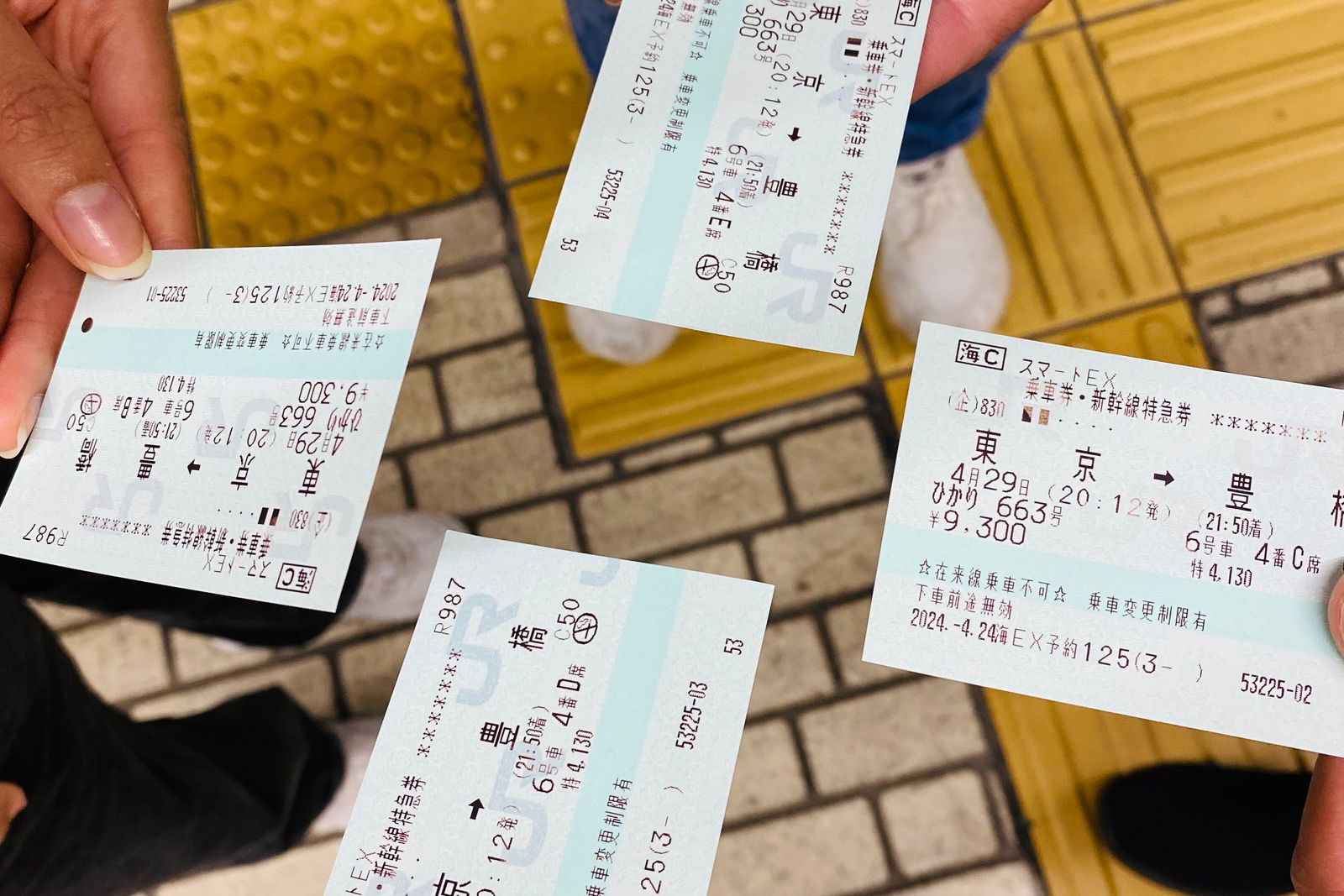
6. Which train, and which seat, on the same leg. The same Tokyo-to-Kyoto ride appears on page one at four different prices, and none of the pages says which train or seat it priced. The operator publishes it by seat: ¥13,320 non-reserved, ¥13,850 reserved on a Hikari, ¥14,170 reserved on a Nozomi — regular fares as of 2026-08-28, regular season. A fare without its qualifier is a different number on every page and a fact on none of them.
Now set those six against the pages themselves — headline figures and names left off on purpose, because the settings are the point:
- A cost guide that counts flights in, buys a 7-day pass for a 7-day trip, prices one traveler in one room, converts at a rate it never states or dates, prices a tier word instead of a room, and gives the Tokyo–Kyoto fare with no train named.
- A daily-budget page that leaves flights out, folds every train into a daily allowance, prices per person from a shared room without saying so, converts at a rate dated to the day it was written, uses a tier word, and never names a leg.
- A spend report that counts flights in, bought no pass, prices a couple as a couple, converts at the rate on its own travel dates, names its rooms by type, and names the train it rode.
- A calculator that leaves flights out, ships with the pass switched on, multiplies a per-person daily figure by days, outputs a currency it never dates, offers three tier words as the only room choice, and has no leg anywhere in it.
Four pages, four trips. Of the six settings, two are honestly yours to set and four are not — and the difference is not taste.
JBJ'S TAKE
Two of the six are yours. Refuse the other four.
Take the number you're holding and set two switches on it, because those two are honestly yours. Flights in or out is a fact about your trip, not about the page. Per room or per person is yours too, on one condition: it stays per room until it's been divided by the heads in that room — and the city tax on every night will make you do that division anyway.
Refuse the other four. The reason is the same for each: none of them can be checked against anything an operator or a city publishes. Arithmetic done in dollars first can't be checked, because every fare and every tax underneath it is published in yen. A rate with no date can't be checked, because the only rate that counts is the one on the day you pay.
A tier word standing where a room should be can't be checked either. No operator or city publishes a rate for a tier, and a tier can't be divided by two; a room rate can, and the tax in every city on this page is set by exactly that division. And a pass assumed for a loop isn't a setting at all — it's a purchase made for you, on legs the operator prices one by one. Line 3 prices them.
So the test for any page-one figure is short. Set its flights and its rooms to match yours, then ask whether the rest of it could be checked before you book. If it can't, the number was never about your trip.
What this page leaves out, and the one rule about currency
Before the first line, what the total will not include — so it cannot be misread the way page one’s totals are:
- Flights. Out. Line 8 is where you add your own booked fare if you want it inside the total.
- Travel insurance.
- Connectivity — a SIM, an eSIM, a rented router. Add a line of your own if you want it counted; it is not one of the nine.
- Souvenirs and shopping.
- Cash versus card. A different decision, not a cost line.
- Anything priced in a currency other than yen.

The one rule about currency: every figure on this page is in yen, and the page prints no exchange rate. A rate printed today is wrong on the day you book, and a wrong rate sitting under every line is how a careful budget drifts without anyone noticing. Keep the whole procedure in yen and convert once, at Line 9, at the rate you actually get on the day you pay.
One convention, stated once. Where the method needs a market price to show its arithmetic — a room rate, mostly — this page uses a round figure marked [example rate]. That is an illustration of the method, not a quote and not a claim about what rooms cost.
Price your own trip: nine lines, in yen
The order below is the order every cost page walks: rooms, food, intercity rail, city transport, the airport, entry fees, the fixed items, flights, the total. Here it is the order of your own sums, run on paper. Each line carries the class of its figure:
- [certified] — a figure an operator or a municipality publishes, carried with its date where it has one.
- [your input] — a figure only your own booking can supply.
- [example rate] — a labeled illustration used to show the arithmetic; never a price claim.
Each line ends with how the worked trip in the next section fills it.
Line 1: Rooms — per room, then per head, then the city’s tax
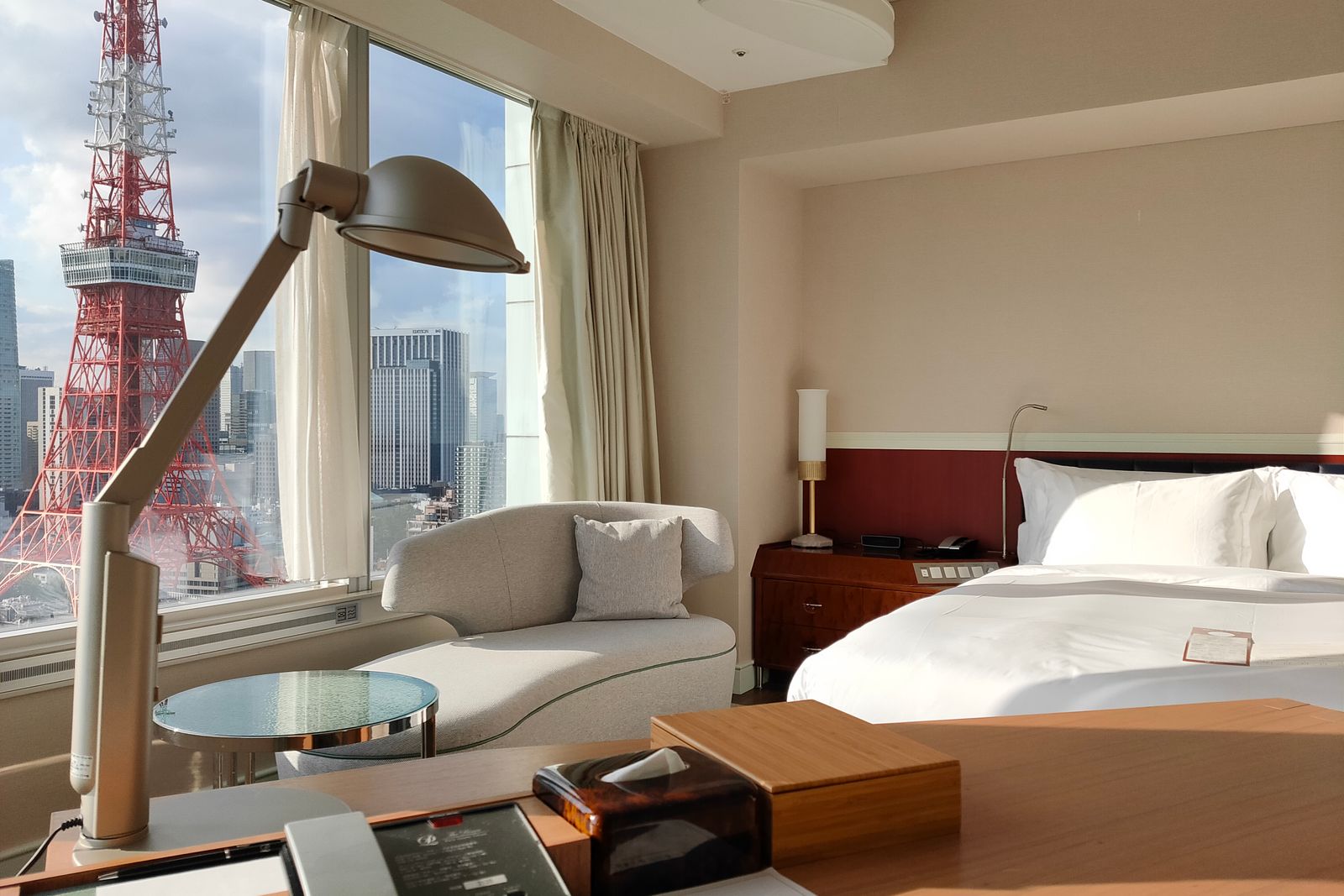
[your input] For each city, the room rate per night times the nights there, per room. Beside it, write the same figure per head: divided by the people sleeping in that room, not by the whole party. A twin at ¥24,000 is ¥12,000 a head; a single at ¥16,000 next door is ¥16,000 a head — both [example rate]. The per-head column is not a nicety. Every city on the standard route taxes the night per person, and the band your night falls in is read from that per-head figure. Booking sites show the room price; the tax is figured per head, so the division happens whether you meant to do it or not.
[certified] Three cities, three taxes, three definitions of the amount the band is read from. They do not merge, and a per-head figure that puts you in one band in Kyoto tells you nothing about the band in Tokyo.
Kyoto, since 2026-03-01: per person per night, ¥200 under ¥6,000; ¥400 from ¥6,000 to under ¥20,000; ¥1,000 from ¥20,000 to under ¥50,000; ¥4,000 from ¥50,000 to under ¥100,000; ¥10,000 at ¥100,000 and above. The amount is the room-only rate — room and service charge — with meals and consumption tax left out, per head, and the band is set by the date of the stay, not the date of booking. The City’s own table is at city.kyoto.lg.jp, page 0000236942. The trap: booking sites show a tax-inclusive price, so a ¥40,000 tax-inclusive rate for two is ¥36,364 before consumption tax and ¥18,182 a head — the ¥400 band, not the ¥1,000 one. The band table, and the other ways that division goes wrong, are on the Kyoto rooms page.
Tokyo, through 2027-03-31: per person per night, nothing under ¥10,000; ¥100 from ¥10,000 to under ¥15,000; ¥200 at ¥15,000 and above. The amount is the room charge plus service charge, without meals and without consumption tax, and the current tax applies to hotels and ryokan. From 2027-04-01 the tax becomes 3% of the charge, with nights under ¥13,000 per person exempt, and it reaches guesthouses and private lodgings too. Which part of Tokyo to sleep in is its own page.
Osaka, since 2025-09-01: per person per night, nothing under ¥5,000; ¥200 from ¥5,000 to under ¥15,000; ¥400 from ¥15,000 to under ¥20,000; ¥500 at ¥20,000 and above. The Prefecture defines the amount as the charges the guest is required to pay for the stay, whatever they are called — its own definition, not Kyoto’s and not Tokyo’s.
A night in a city with no line here — Nara, if you sleep there rather than day-trip — is your own check against that city’s rules.
In the example: three cities, two rooms, and the first seven rows of the table — the rooms, the consumption tax on them, and the three city taxes.
Line 2: Food — your figure, per person, per day

[your input] Per person, per day, times days, times heads. The line moves most on one choice: how many meals come from a convenience store rather than a restaurant, and what to eat there is its own page. The one certified thing on this line is the tax: eat in and the consumption tax is 10%; take it out and it is 8%, alcohol excepted.
In the example: ¥5,000 per person per day, marked example input.
Line 3: Intercity rail — the legs, then the pass question once
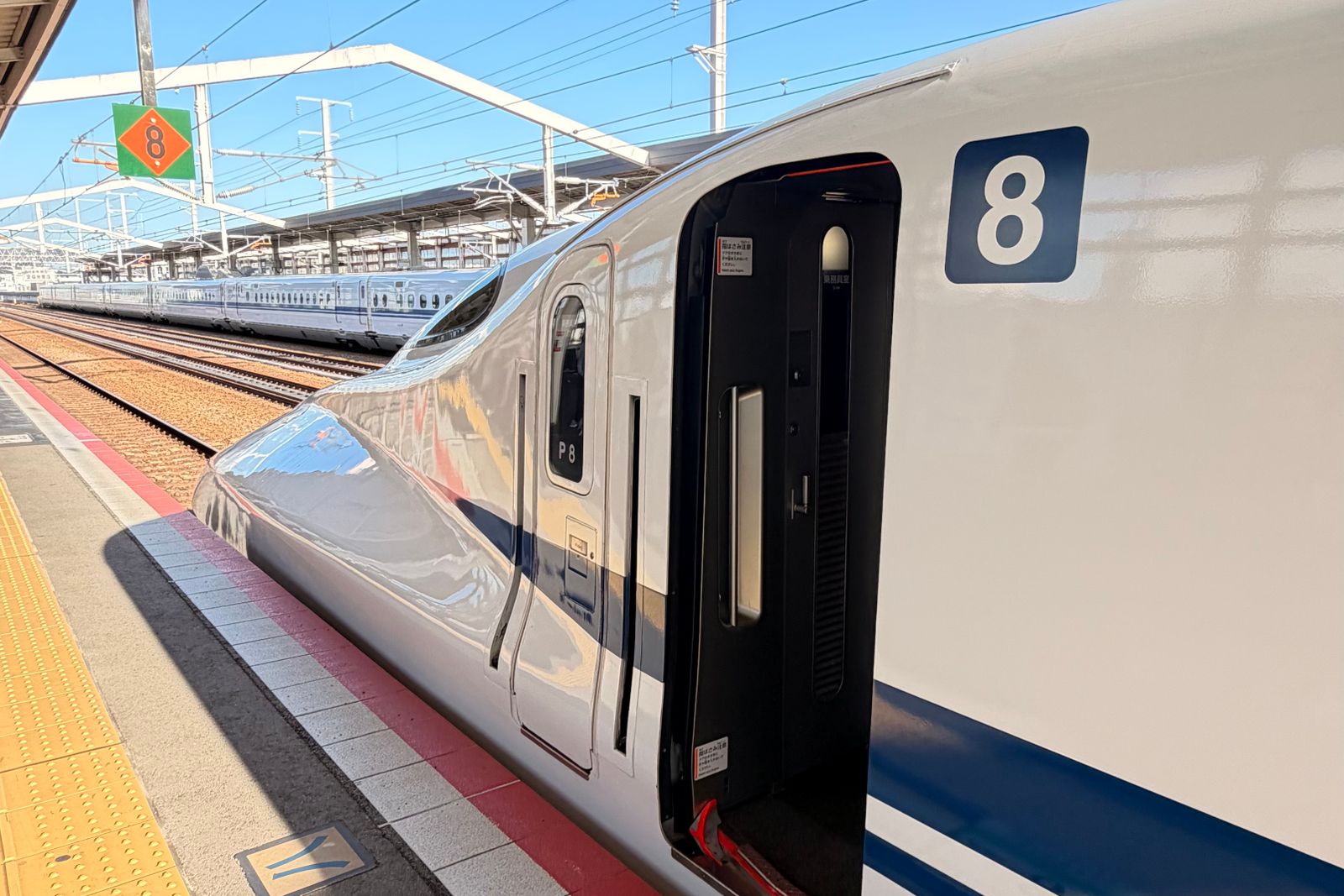
[certified] Legs, by name — never a daily allowance. A train from Tokyo to Kyoto is a fare, not a day. The standard loop’s legs, from the operators’ own tables:
Regular fares as of 2026-08-28, regular season, non-reserved unless stated:
Leg Fare Tokyo → Kyoto, Shinkansen ¥13,320 non-reserved · ¥13,850 reserved, Hikari · ¥14,170 reserved, Nozomi Kyoto → Osaka / Shin-Osaka, JR local ¥580 Shin-Osaka → Tokyo, Shinkansen ¥13,870 non-reserved Loop, computed: ¥13,320 + ¥580 + ¥13,870 ¥27,770 per person
Seat and train are a per-leg choice, not a trip-wide one. If you want the Nozomi, price that one of two ways: the ordinary Nozomi fare on the leg, as in the table, or — if you hold a pass — the pass plus a supplement ticket per ride, ¥4,960 between Tokyo or Shinagawa and Kyoto or Shin-Osaka, ¥6,500 between Tokyo and Hiroshima, the same price for every seat type. The pass on its own does not carry you on a Nozomi.
[your input] Any leg not in the table — the Nara day trip from Kyoto, anything west of Osaka — is your own fare, found the way the ten-minute method on the rail-pass page finds it.
In the example: the loop, ¥27,770 × 3, on individual tickets; the Nara day trip as an example input.
[certified] Then the pass, once. Add up the long-distance legs that fall inside one pass window and set the sum against the pass price — stated here in both of its states, because it has two. As of 2026-09-06: ¥50,000 for the 7-day ordinary pass, on either the official site or an overseas agent. For purchases made on or after 2026-10-01, local time at the point of purchase: ¥53,000 at overseas agents, while the official site keeps its current price for an unannounced period — “for a limited time”, in the words of the JR Group’s April 2026 announcement. The price at the moment of online purchase, or printed on the Exchange Order when it is issued, is the one that applies. For the loop in the table the comparison is not close, and the arithmetic is already done: Scenario 1 on the rail-pass page prices exactly these legs against the pass, carries the 14- and 21-day prices, and covers the regional passes for legs that sit west of Osaka.
Line 4: Getting around inside each city
[certified] Tokyo has three tickets that page one tends to blur into one, so they are named exactly. The Tokyo Subway Ticket, valid for 24, 48 or 72 hours on both Tokyo Metro and Toei lines, ¥1,000 / ¥1,500 / ¥2,000, sold to visitors from abroad and to residents of Japan living outside the Kanto region (a passport check applies). The Tokyo Metro 24-hour Ticket, ¥700, Tokyo Metro lines only, valid for 24 hours from first use, no eligibility rule. The common one-day ticket for Tokyo Metro and Toei Subway, ¥1,100, valid on the day of use only. Or pay as you go: on Tokyo Metro’s own fare table an IC-card ride is ¥178 to ¥324 by distance band (¥180 to ¥330 as a paper ticket) — Tokyo Metro’s figures, not Toei’s and not JR’s. Whether the card lives in your wallet or your phone is a separate decision.
[your input] Kyoto and Osaka: your own figure, and it depends more on where you sleep than on what the tickets cost — the stay-area decision is where that gets settled.
In the example: two 72-hour Tokyo Subway Tickets per person, and ¥1,000 per person per day in Kyoto and Osaka as an example input.
Line 5: Airport to city, and back
[your input] Narita and Haneda: your own figure — the operator you choose, at the fare it charges on the day, each way.
[certified] Kansai has one certified figure: JR West’s HARUKA One-way Ticket, Kansai Airport to Kyoto ¥2,200, to Osaka or Shin-Osaka ¥1,800, ordinary car non-reserved, sold only to holders of a passport issued by a foreign government who enter Japan as a Temporary Visitor, and current as of February 5, 2025 by the operator’s own stamp. That is the airport-to-city direction; the ride back to the airport is your own input.
In the example: in and out via Narita, ¥6,000 per person for both legs together, marked example input.
Line 6: Entry fees and the things you’ll book
[your input] Temples, museums, a show, a class, a ballgame — whatever you will actually book, per person. This is the one line where “per person” is unambiguous: nobody shares an entry ticket, so heads multiply it and nothing else does.
In the example: ¥30,000 per person for the whole trip, marked example input.
Line 7: The fixed departure items
[certified] The International Tourist Tax: ¥3,000 per person, per departure, for departures from 2026-07-01. Tax-free shopping is a cash-flow line rather than a cost line: from 2026-11-01 you pay the tax-inclusive price at the register and the refund follows customs confirmation within 90 days of purchase — how the refund works is its own page. The full box of fixed 2026 fees lives on the cheapest-time page and is not repeated here.
In the example: ¥3,000 × 3.
Line 8: Flights — out, unless you add them
[your input] The only line your origin changes, and out of this page’s total by rule. If you want it inside, add your own booked fare here — in yen, or carried as one figure to be converted with everything else at Line 9. Nothing else on the page moves when you do.
In the example: out.
Line 9: Add it up, divide it, then convert
Add the lines. That is the yen total for the trip. Divide by heads for the per-person figure, then by nights for the per-day figure — derived last, from the trip, not multiplied up from a daily allowance. Then, and only here, convert once, at the rate you get on the day you pay. Compare it with the page-one number you started with only after you have set the same six switches on that number; until then the two are not measuring the same trip.
Three adults, two rooms, fourteen nights: the same lines, filled in
The trip, declared before its total. Three adults: two sharing a twin, one in a single. Fourteen nights — Tokyo 5, Kyoto 5 with Nara as a day trip, Osaka 3, then one last night in Tokyo. In and out through Narita, both airport legs as inputs. Intercity on individual tickets, as the certified loop; flights out. Dated inside Tokyo’s current tax state (before 2027-04-01) and the pass’s current price state (before 2026-10-01). It is an example shape — chosen because page one prices nobody like it, and not a record of a trip taken. The room rates are example rates under the convention above; the rows marked as inputs are filled with round figures marked as example inputs, so that the procedure produces a number.
Three adults · one twin, one single · 14 nights: Tokyo 5 → Kyoto 5 (Nara by day trip) → Osaka 3 → Tokyo 1 · in and out via Narita · individual rail tickets · flights out
Line What was counted Class Yen 1 Rooms, Tokyo twin ¥24,000 + single ¥16,000 per night, room-only, × 6 nights [example rate] ¥240,000 1 Rooms, Kyoto twin ¥22,000 + single ¥13,000 per night, room-only, × 5 nights [example rate] ¥175,000 1 Rooms, Osaka twin ¥20,000 + single ¥12,000 per night, room-only, × 3 nights [example rate] ¥96,000 1 Consumption tax on the rooms 10% of ¥511,000 (Tokyo ¥24,000 · Kyoto ¥17,500 · Osaka ¥9,600) [certified] rate, on the example rooms ¥51,100 1 Lodging tax, Tokyo twin ¥12,000 a head → ¥100 × 2 people × 6 nights; single ¥16,000 a head → ¥200 × 6 nights [certified] ¥2,400 1 Lodging tax, Kyoto ¥11,000 and ¥13,000 a head, both the ¥400 band → ¥400 × 3 people × 5 nights [certified] ¥6,000 1 Lodging tax, Osaka ¥10,000 and ¥12,000 a head, both the ¥200 band → ¥200 × 3 people × 3 nights [certified] ¥1,800 2 Food ¥5,000 per person per day × 3 people × 14 days, example input [your input] ¥210,000 3 Intercity rail the loop ¥13,320 + ¥580 + ¥13,870 = ¥27,770 × 3 people [certified] ¥83,310 3 Nara day trip ¥2,000 per person for the round trip, example input [your input] ¥6,000 4 Tokyo city transport two 72-hour Tokyo Subway Tickets each, ¥2,000 × 2 × 3 people, assumed use [certified] price ¥12,000 4 Kyoto and Osaka transport ¥1,000 per person per day × 3 people × 8 days, example input [your input] ¥24,000 5 Narita, in and out ¥6,000 per person for both legs, example input [your input] ¥18,000 6 Entry fees and bookings ¥30,000 per person for the trip, example input [your input] ¥90,000 7 Departure tax ¥3,000 × 3 people [certified] ¥9,000 8 Flights out [your input] not counted
Total, the sum of the rows above: ¥1,024,610. Divided by 3 heads: ¥341,537 per person, rounded to the yen. Divided by 14 nights: ¥73,186 a night for the party, ¥24,395 per person per night. Nothing here is converted.
Two things the table shows that a daily figure hides. The per-person total is an even split, and the rooms rows show it is not one: the single-room traveler pays more per night than either twin-sharer, in room and — in Tokyo — in tax. And the Osaka per-head figures were chosen so that the band comes out the same whether or not consumption tax sits inside the Prefecture’s definition of the charge; on your own booking, check which side of a threshold your per-head figure lands.
JBJ'S TAKE
Realistic isn't something a total can be. A line can.
Look at what the example just did. Three kinds of line were fixed before anyone chose anything — the rail legs, the three city taxes, the departure tax — and every one of them can be checked to the yen against the operator or the city that publishes it. Everything else came from the rows labeled as yours. That's where the budget was decided, and it's the part no page can decide for you.
Then watch the single room. In the example's Tokyo nights, the person sleeping alone pays ¥200 a night in city tax and each person in the twin pays ¥100 — on a room that costs less per night than the twin does. Nothing about the tax changed. What changed is how many heads the room price was divided by, which is why "per person" means nothing until you've said per person in which room. In Kyoto and Osaka the example's two rooms happen to land in the same band; whether yours do depends on where the threshold falls, not on the city.
When you re-run this for your own party, notice which multiplier you're pulling. Heads multiply the legs, the departure tax and every per-person band. Nights multiply the rooms, the lodging tax and the food line, and never touch a leg. A fourth person costs another loop; a fifteenth night costs another room-night and its tax. A daily figure times days hides that difference, and the difference is most of the answer.
So "is this budget realistic" gets two answers, not one. For the certified lines it's checkable before you book, and the answer is on this page, dated. For your own lines — the rooms you'll accept, what you'll eat, what you'll pay to get in — nobody can answer, because those aren't forecasts. They're choices. JbJ won't rate them, and won't pretend a stranger's daily figure can.
FAQ
Fewer people, fewer nights, a different country of departure — what changes?
The same nine lines. Heads multiply the per-head room figure and its tax on Line 1, the food on Line 2, the legs on Line 3, the tickets on Line 4, the airport legs on Line 5, the entry fees on Line 6 and the departure tax on Line 7; nights multiply the rooms, the lodging tax and the food. Your country of departure changes Line 8 and nothing else. The pass question is re-run on your legs, not inherited from anyone’s.
Is Japan expensive compared with somewhere else?
This page prints no country comparison, because a comparison inherits every one of the six switches above — flights, the pass, the room division, the rate, the room word, the fare — and a figure that inherits them silently is the page-one problem again with a second country attached. The usable form of the question is the six settings, run on your trip.
Before you compare this with page one again
The page-one numbers disagree because each was a different trip; set the six switches and they stop being a mystery. Your own number comes from nine lines in yen — the certified ones fixed by an operator or a city, the rest yours — divided last, converted once.
Where the next question lives:
- The pass, priced leg by leg: Is the Japan Rail Pass worth it?
- When to go, and the box of 2026 fees: the cheapest time to visit Japan
- The rooms and the band: where to stay in Kyoto and where to stay in Tokyo
- A trip that is not shaped yet: the first-trip planning order
- Dates not fixed at all: when to visit Japan
Information on this page checked 2026-09-06. Shinkansen fares are regular fares as of 2026-08-28, regular season, non-reserved unless stated. The figures marked [certified] come from these pages:
- Japan Rail Pass prices and channels: japanrailpass.net/en/purchase/price/ · japanrailpass.net/en/purchase/overseas/ · JNTO on the 2026 price change
- Nozomi supplement: global.jr-central.co.jp
- Kyoto accommodation tax: city.kyoto.lg.jp, page 0000236942
- Tokyo accommodation tax: tax.metro.tokyo.lg.jp, current · tax.metro.tokyo.lg.jp, the 2027 change
- Osaka accommodation tax: pref.osaka.lg.jp
- Consumption tax and the International Tourist Tax: nta.go.jp, No. 6303 · nta.go.jp, No. 7195
- Tax-free from 2026-11-01: mlit.go.jp, Japan Tourism Agency
- Tokyo tickets and fares: Tokyo Subway Ticket · 24-hour and one-day tickets · regular fares
- HARUKA One-way Ticket: westjr.co.jp