Kyoto comes with a long must-eat list and, on a two- or three-day visit, about five meals to spend on it. This page places five dishes on one rule you can check, makes the two expensive calls instead of comparing them, and names the famous ones that do not earn a seat, with a reason you can look up.
The order, and the rule it runs on
- Kyo-tofu — counter money at a shop, lunch money as a course. The smallest gap on the page buys the most certified Kyoto-only thing: the tofu itself.
- Nishiki Market — counter money, which buys the market association’s own Kyoto list on one lane; whether it costs a meal is decided below.
- Kyo-kaiseki — the big bill. The largest gap on the page buys the least certain Kyoto-only element; seated for the form the city names, at the tier where the gap is smallest.
- Nishin soba — counter money to lunch money. A small gap and a certified Kyoto-only element: the broth.
- Obanzai — lunch money. No gap to test; the seat for the day you decide nothing.
The rule: what the Kyoto version costs over the same thing elsewhere, and whether that gap buys something that exists only here. Tofu passes cheapest. Kaiseki pays most for the least certain answer, so it sits third, not first.
Two or three days here is about five meals. The order says which dishes earn one; where a call has to be made, the take below it says what it costs you in meals, the same rule on a skewer as on the biggest bill of the trip. No restaurant is named on this page, on purpose: the dish decides the meal, the venue does not.
1. Kyo-tofu — the course, or the shop
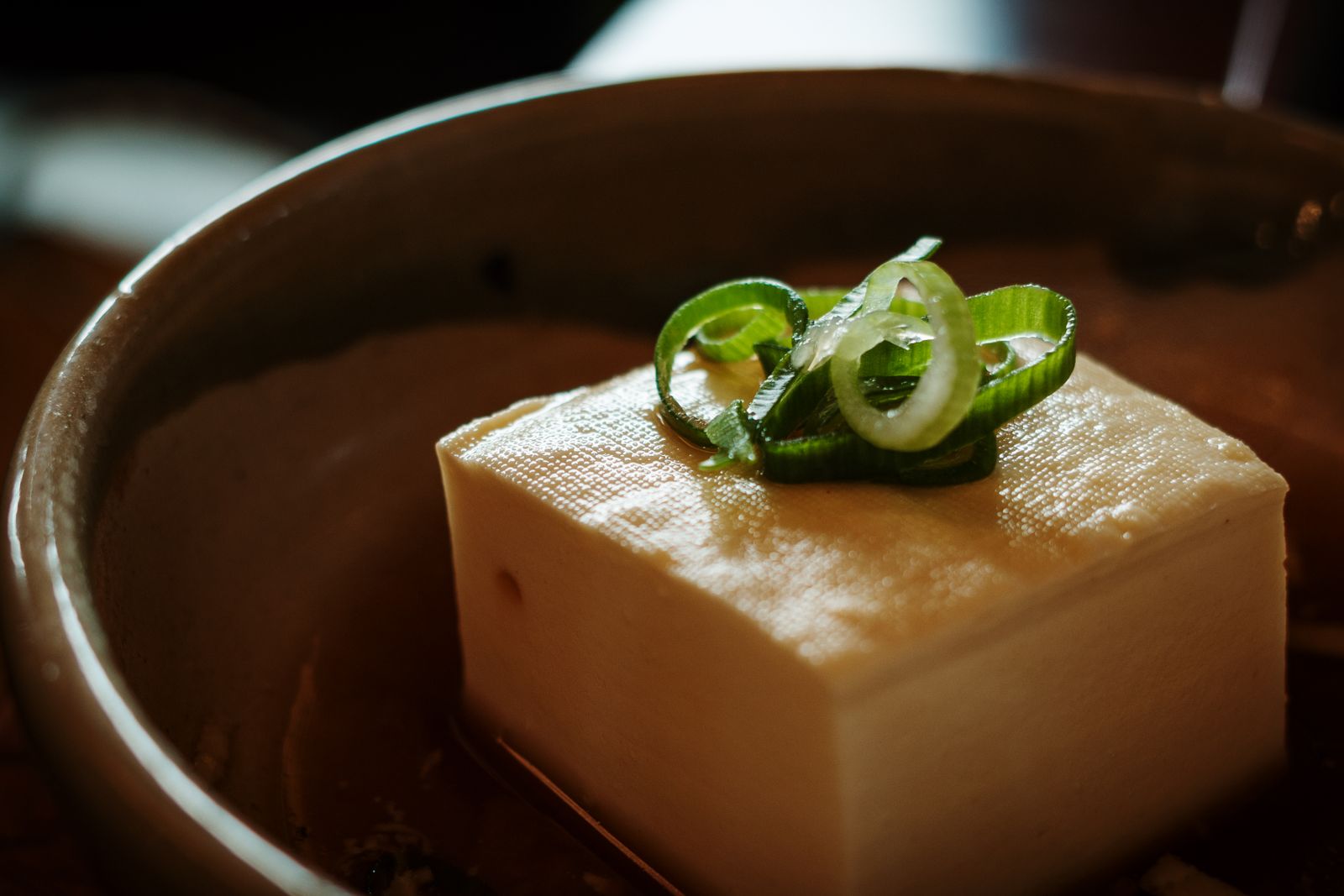
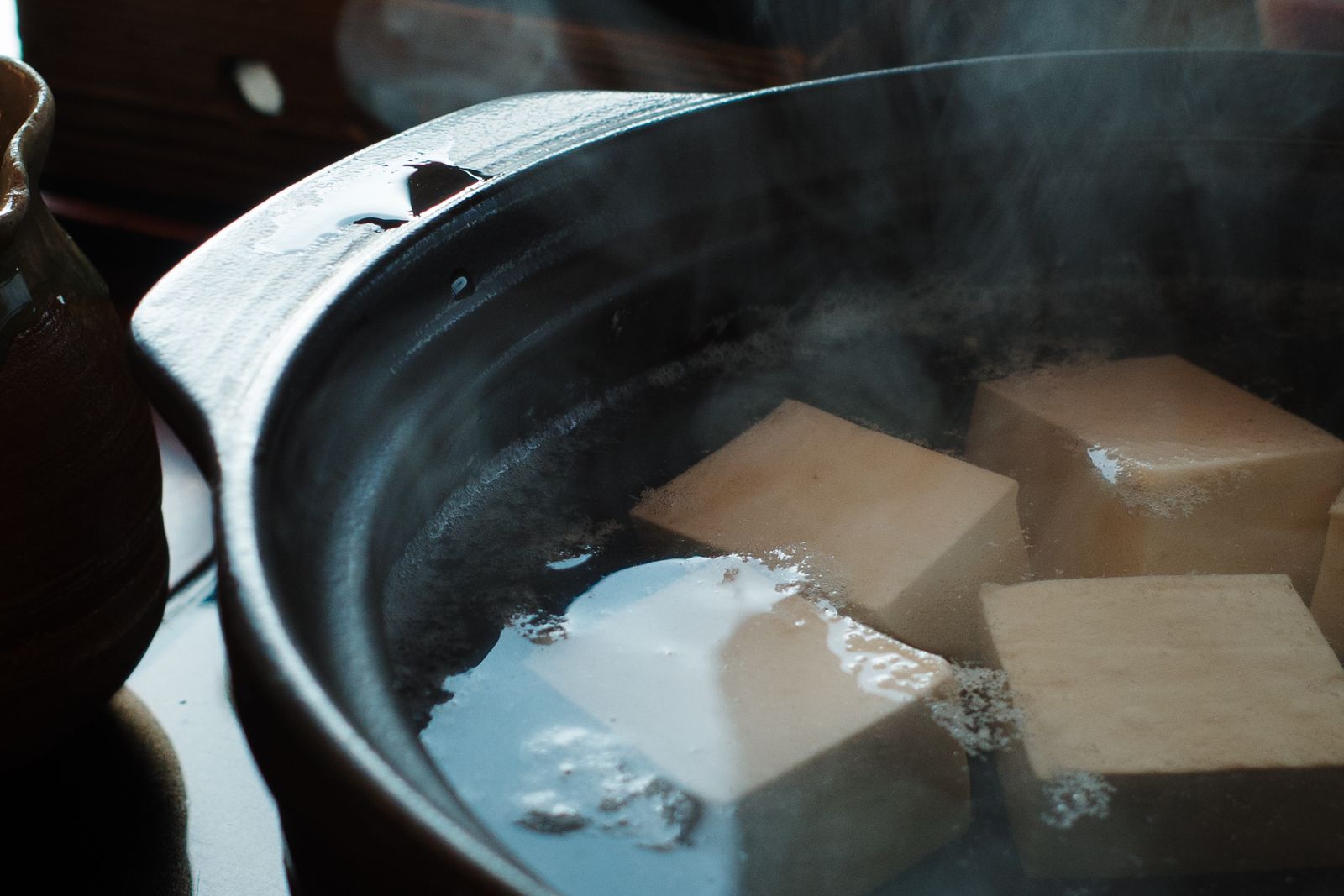
Kyo-tofu is the city’s tofu; yudofu is that tofu simmered at the table in a pot of water. The agriculture ministry’s account is plain: many of Kyoto’s tofu shops use the city’s well water, the curd is generally set with sumashi-ko rather than nigari, and the momen has a texture the ministry calls specific to Kyoto. That is the Kyoto part, and it is already in the block a shop sells you for counter money.
The course is the same tofu in a pot in a room, for lunch money. Yudofu shops around Nanzen-ji were known nationally by the Edo period, the ministry’s record suggests, and the city’s tourism body calls yudofu one of Kyoto’s signature winter dishes. Yuba, the skin off heated soymilk, is on the ministry’s Kyoto list too.
JBJ'S TAKE
The shop. The course is a season.
Kyoto's claim is on the tofu, and the shop already sells you that. The course adds the pot. And the price. Not more Kyoto.
So the shop takes the meal. One exception: winter, when yudofu is one of the city's signature dishes and the pot is the point. Take the course then. Otherwise you're paying course money to watch tofu get warm.
2. Nishiki Market — a position, and what it does to your five
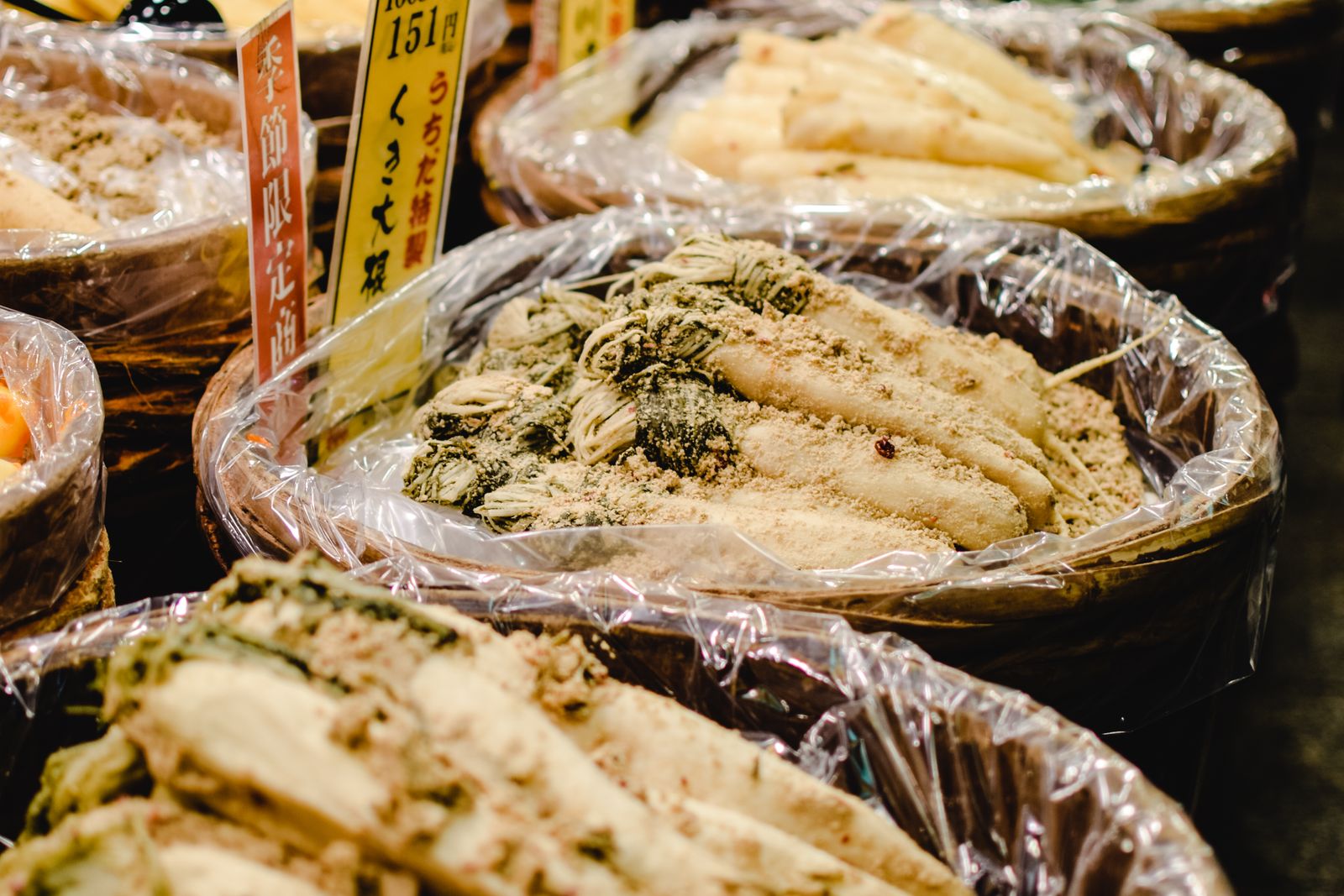
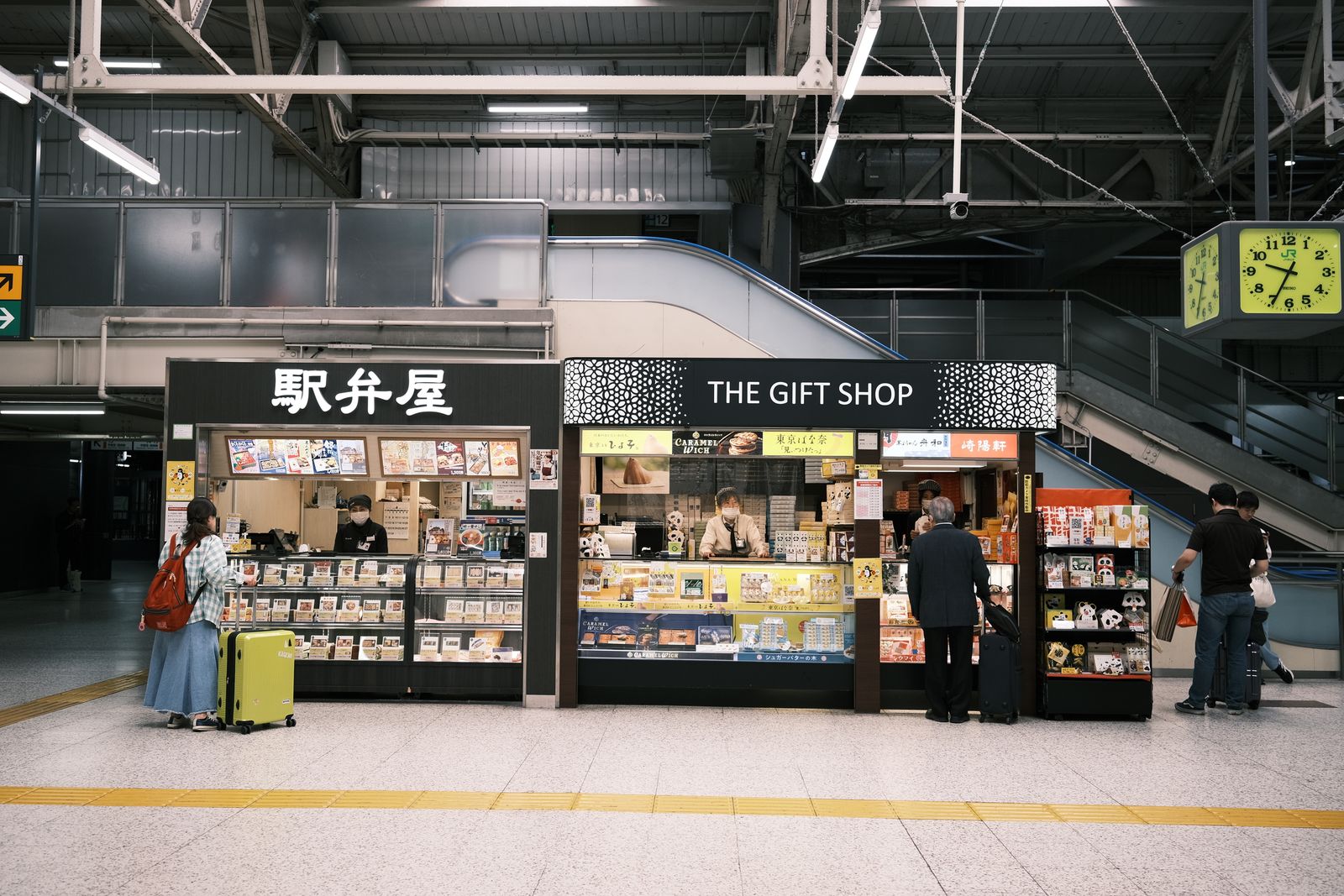
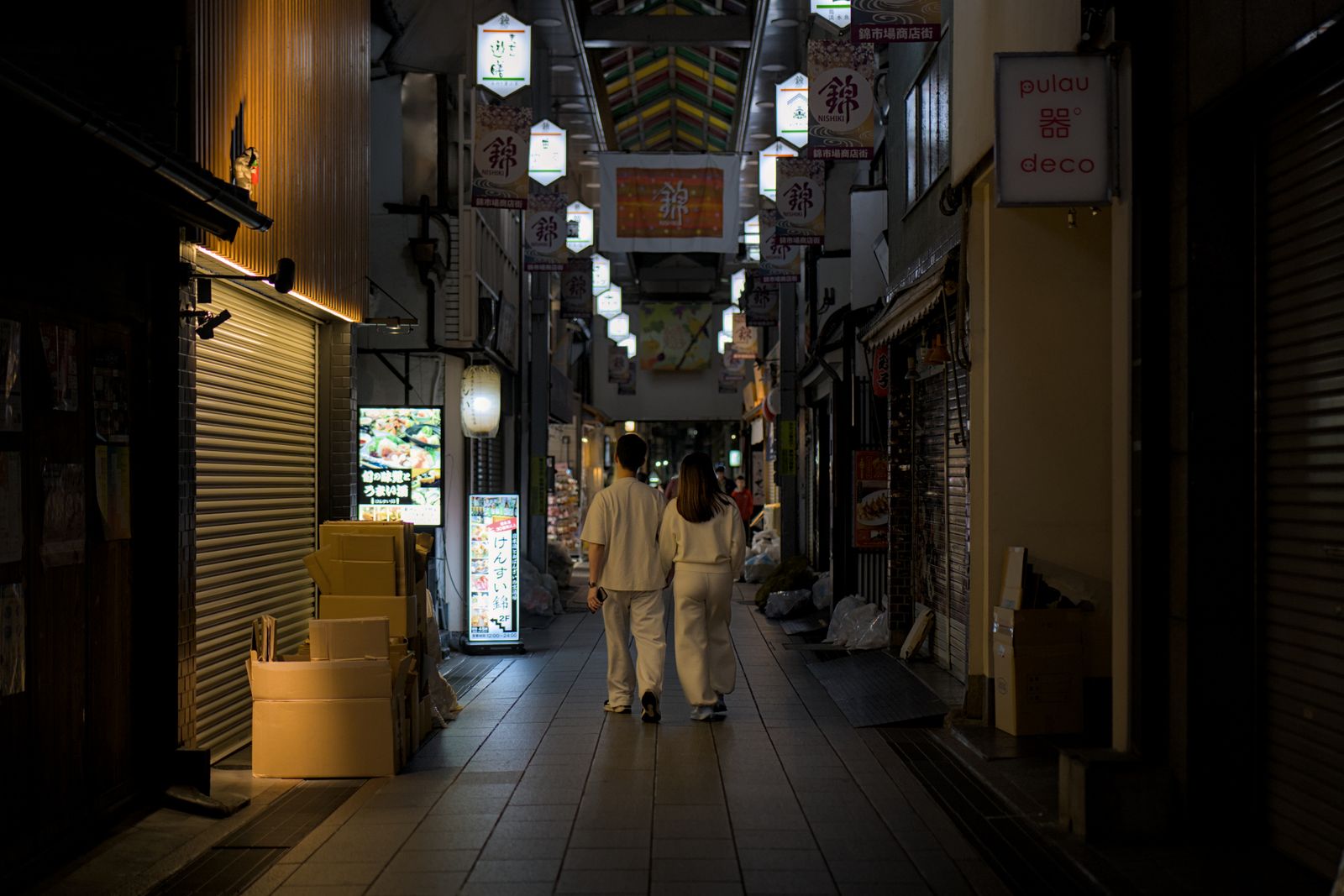
Nishiki is a covered lane about 390 meters long and 3.3 to 5 meters wide, and the market association dates its birth to 1615, when the Edo shogunate officially recognized its fish wholesalers. What it sells, in the association’s own words: Kyoto vegetables, freshwater fish from Lake Biwa, hamo, guji, yuba, fu. Much of the ministry’s Kyoto on one lane, for counter money.
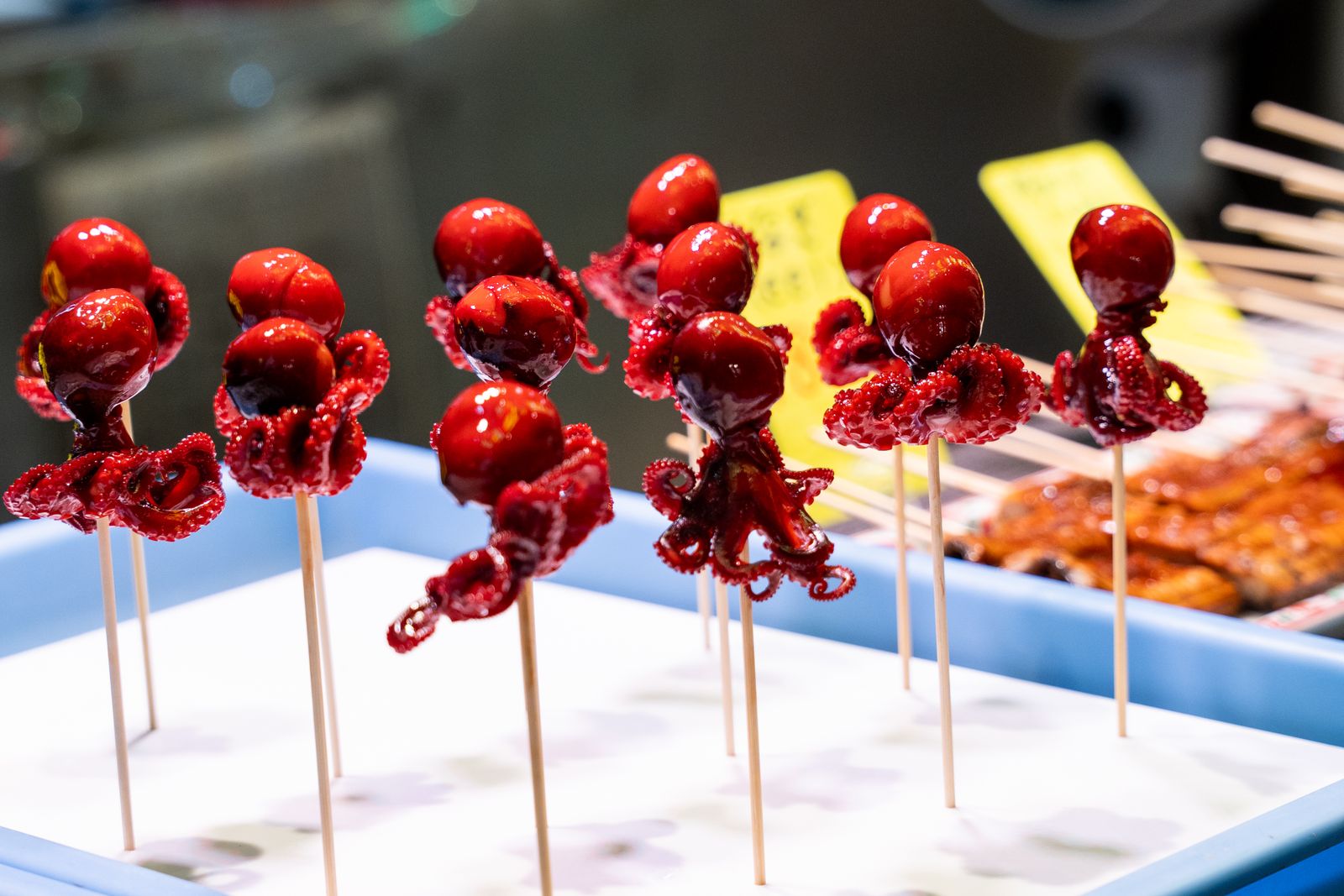
Two conditions come with the item, in the association’s wording: “Please refrain from walking in the market while eating,” and “Please eat the food in front of or inside the shop where you bought it.” The city’s tourism body adds: or bring it home. The association posts no market-wide hours and no common closing day, says many shops close on Wednesdays, and JNTO’s advice is to aim for around 11. The pickles are the part that travels: what to bring home from Japan.
JBJ'S TAKE
It takes a meal. Plan the day that way.
Two requests: no eating on the move, and eat where you bought it. Obey them and Nishiki stops being something you graze past. Buy, stand, finish, move on. That's lunch, one counter at a time.
So it spends one of your five. Spend it on the day with nothing booked, and don't eat lunch twice. Arrive hungry or don't arrive.
3. Kyo-kaiseki — one meal, and the call nobody makes
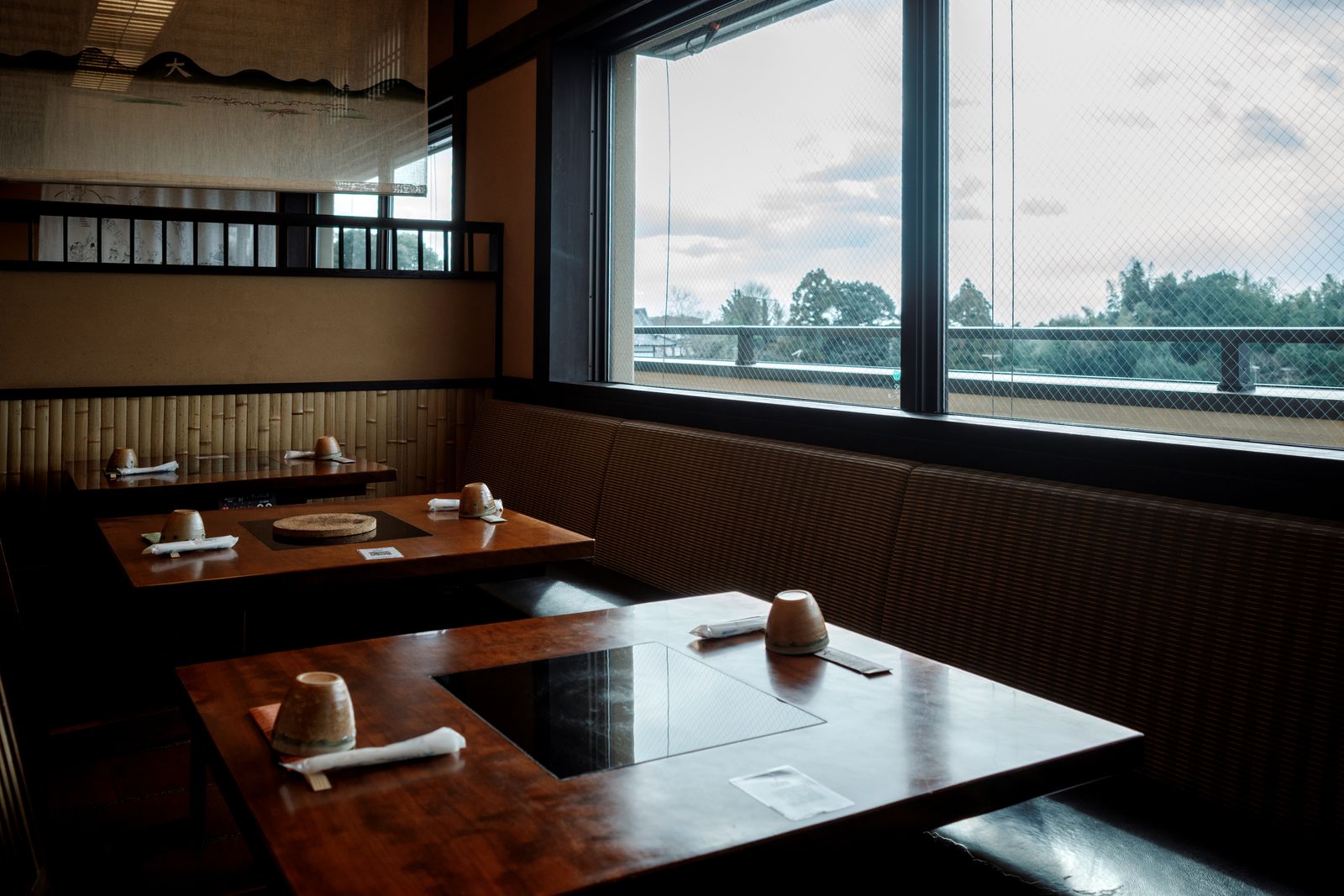
Kaiseki is a national genre, served in Tokyo according to Tokyo’s own visitor guide and to JNTO, of which Kyoto’s tourism body names a Kyoto form, kyo-kaiseki; the agriculture ministry lists kaiseki among Kyoto’s historical cuisine systems. That is why kaiseki is seated rather than declined, and it is the whole of the Kyoto claim: a form the city names.
The premium is the largest on the page. The gap between a kaiseki lunch and a kaiseki dinner is the biggest single decision your five meals contain, so this page fixes one pair: a ¥5,000 lunch and a ¥20,000 dinner — example rates fixed 2026-09-07 for the arithmetic; not a menu; a real menu may sit well above or below either.
A dinner in Gion ends with a walk, and where to stay in Kyoto ranks the areas on how late you can get home to bed.
JBJ'S TAKE
Lunch. Dinner is four lunches.
One seat. The rule asks what the dinner premium buys that exists only in Kyoto, and JbJ can't name it. Kyoto's claim is on the form, kyo-kaiseki, not on the hour you eat it.
At the example rates, one dinner is four lunches. You have five meals. Take the lunch. The three lunches you didn't buy are three meals you still get to eat. Dinner would have eaten them.
4. Nishin soba — Kyoto’s, by the broth
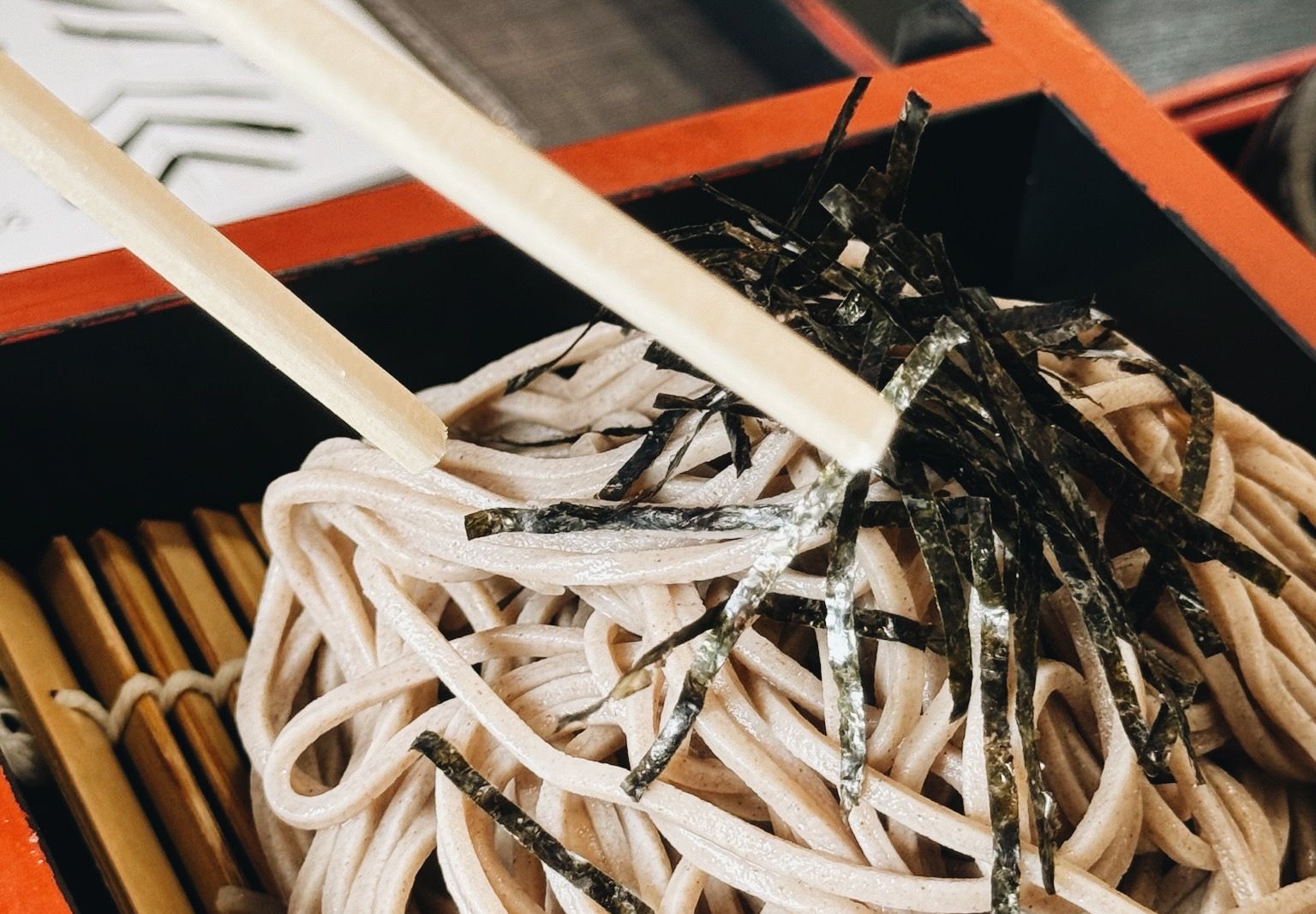
Soba in hot broth under a piece of sweet, simmered herring that came south dried, by Kitamae ship. Kyoto’s tourism body states that the dish originated here; the agriculture ministry records it as “said to” have. The Kyoto part is small and certain: the broth, seasoned with kombu and light soy sauce where Hokkaido’s version is seasoned strongly. Counter money at the low end, lunch money at the top, and almost no gap to decide. The seat is here because the rule has to hold at this tier too.
5. Obanzai — the Kyoto meal with nothing to decide
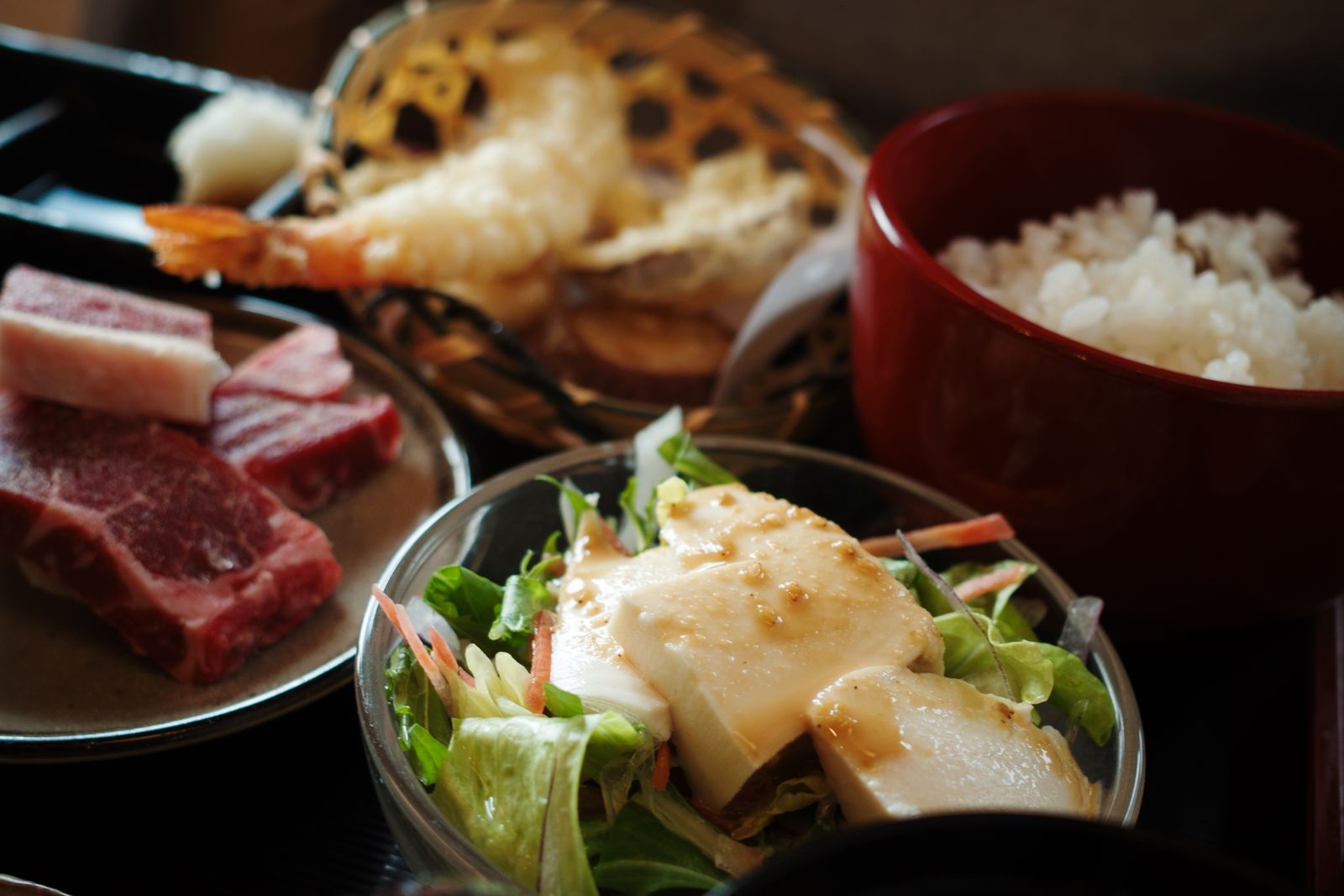
Obanzai is not a dish. The city’s tourism body defines it as the everyday dishes passed down through Kyoto households, built on seasonal ingredients, especially vegetables, and on using them up with minimal waste. So stop looking for “the obanzai”: what you order is a way of eating. Lunch money, and no gap to test. The rule has nothing to say about it, which is why it sits last, and why it is here at all: this is the meal for the day you have not planned one, the ordinary Kyoto household’s plate.
Famous, not seated — the ministry’s Kyoto is a calendar
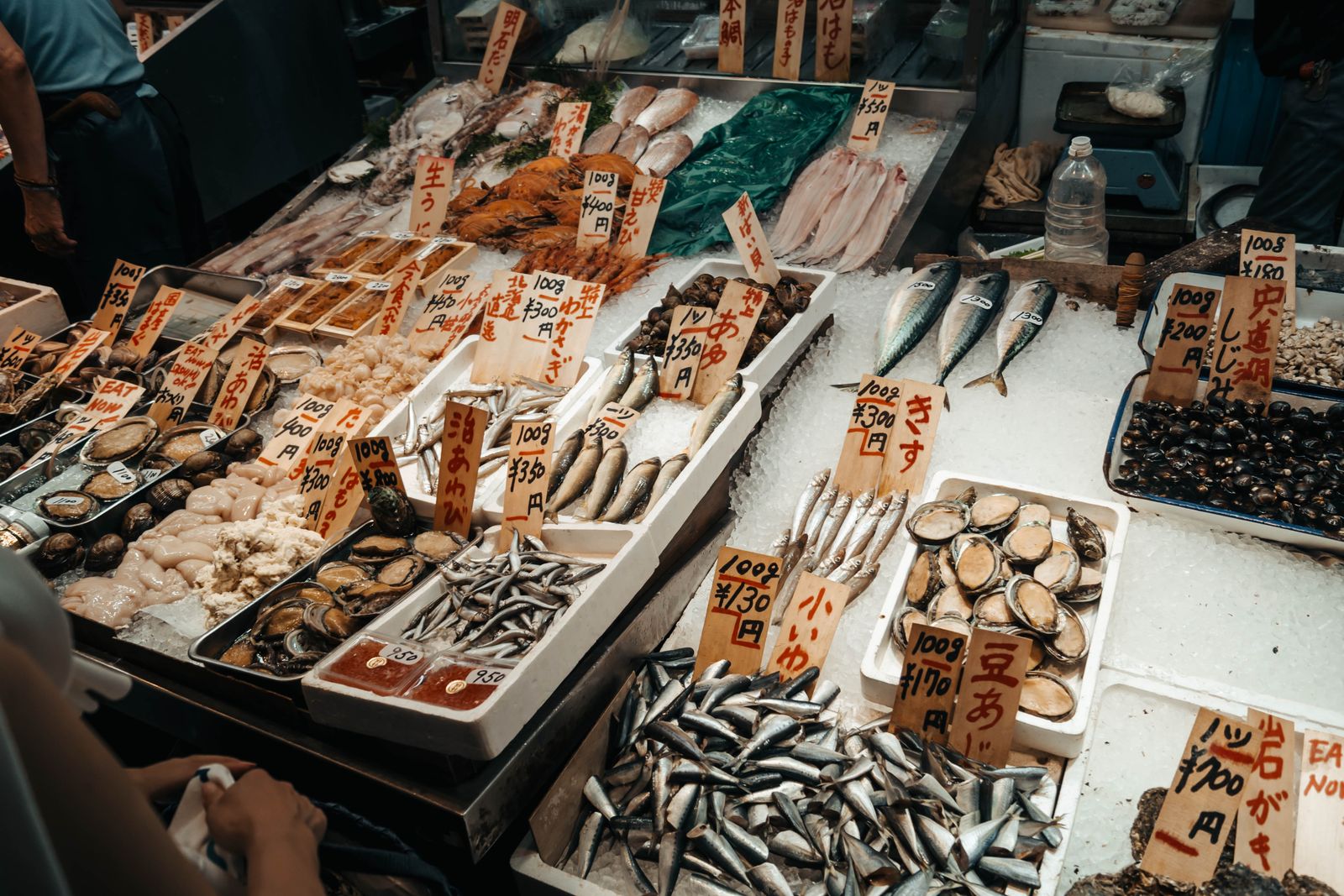
Two dishes the ministry lists as Kyoto’s, and the must-eat lists mostly skip: hamo, a sea eel, and saba-zushi, mackerel sushi. Neither is seated, because of a date. Hamo is in season from early summer through late summer into autumn, and the Gion Festival, July 1 to 31 on Yasaka Shrine’s calendar, is also called the hamo festival, the ministry says. Most hamo eaten in Kyoto, the ministry adds, is Seto Inland Sea or Genkai Sea fish: what is Kyoto’s is the bone-cutting, honekiri, not the catch. Saba-zushi is festival food, eaten at the Aoi, Gion and Jidai festivals and at autumn festivals, from Wakasa Bay mackerel carried two or three days inland. A seat here must work in any month; these two enter by month, below.
The Kyoto label — what is Japan’s, and the one that goes the other way
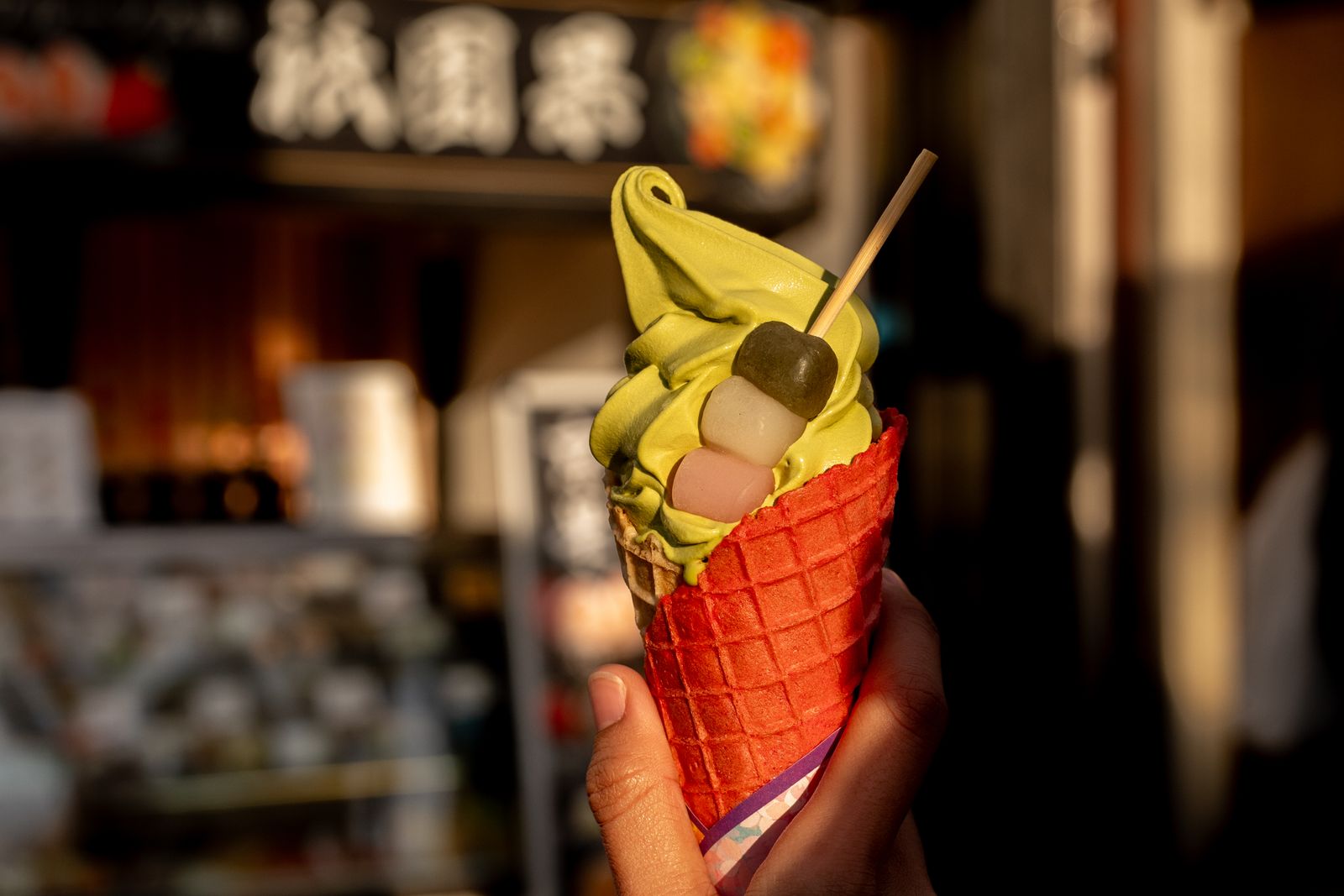
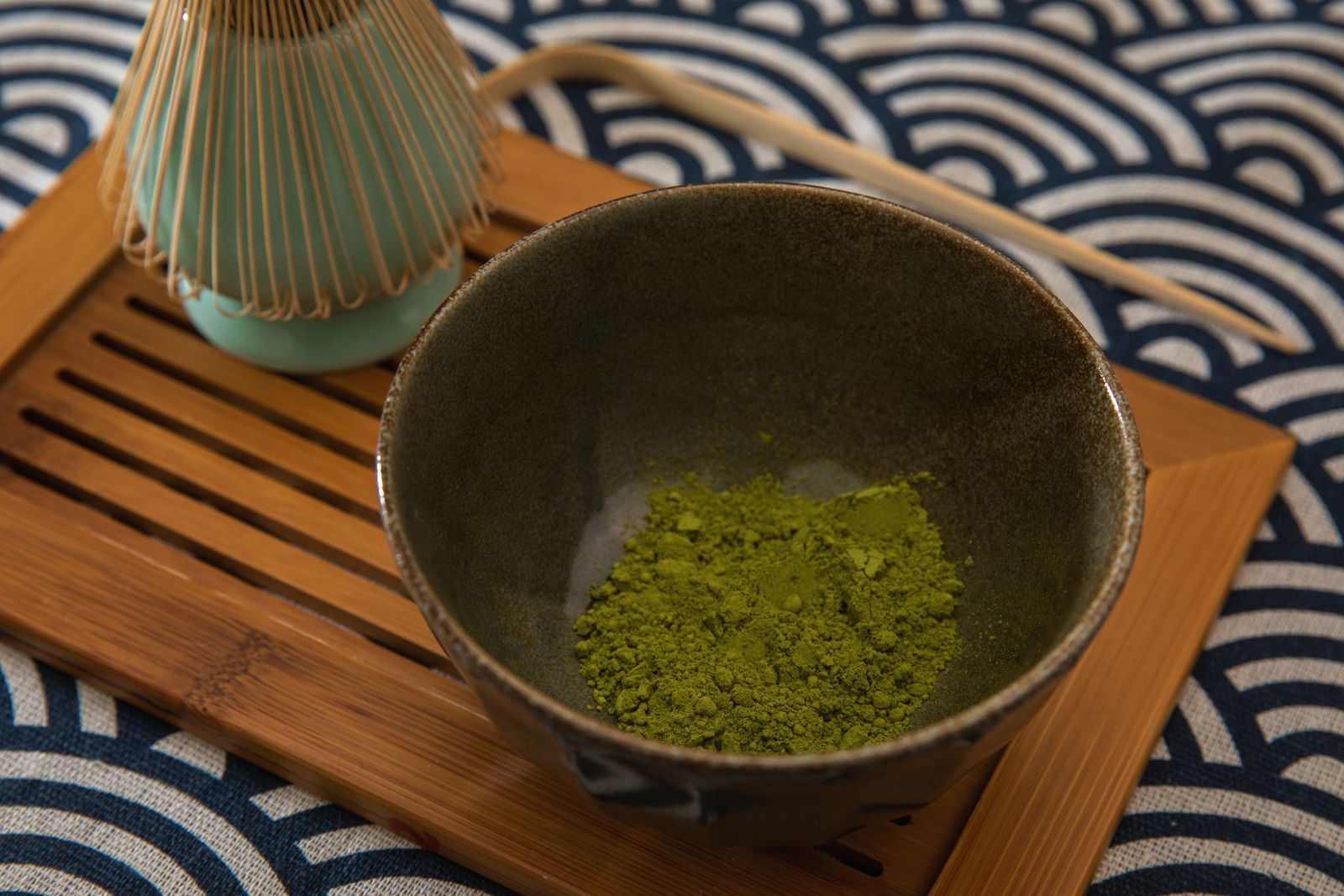
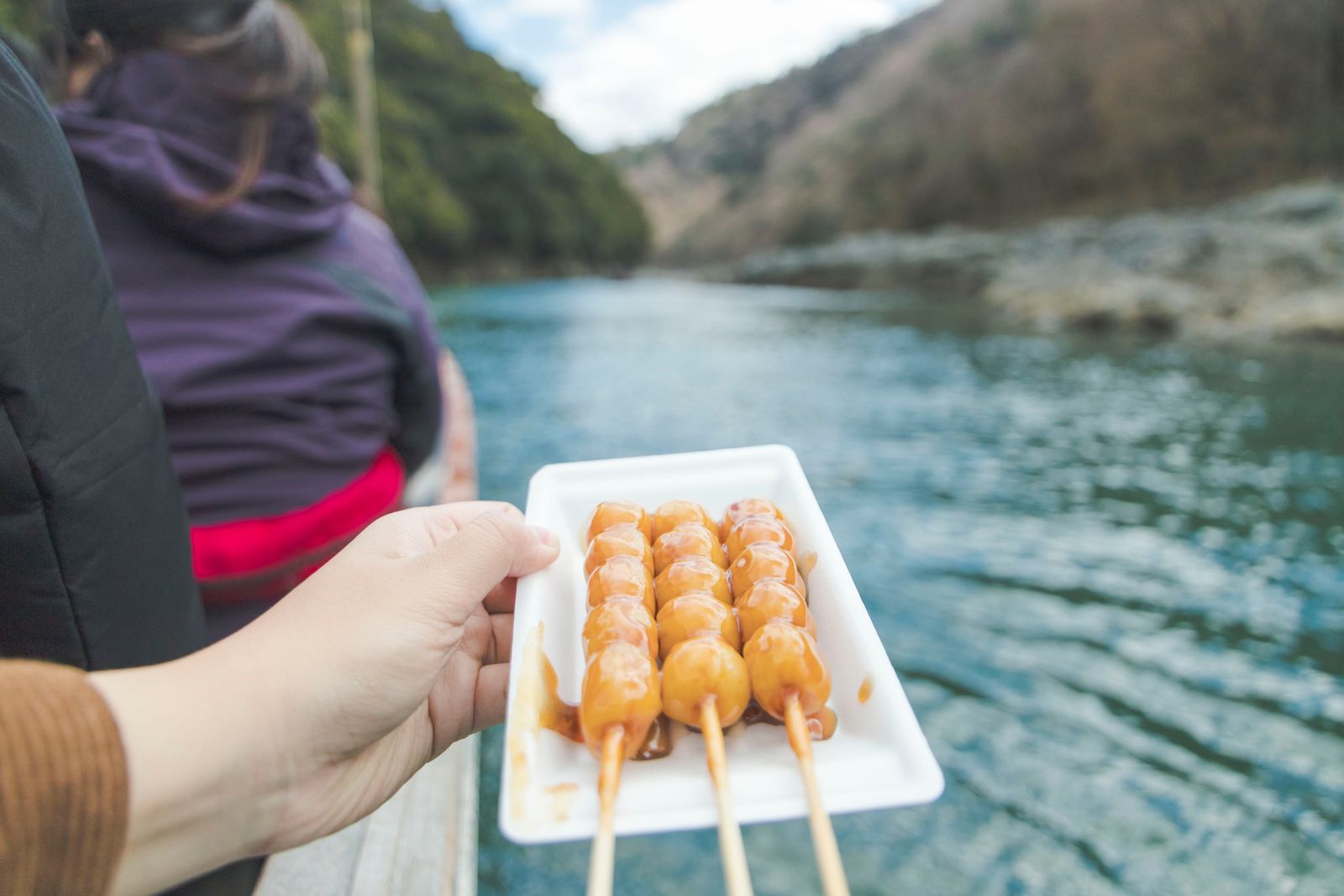
None of these earns a Kyoto meal: the city’s tourism body names sushi, tempura and soba only as things Kyoto has specialty eateries for, it claims none of the rest as Kyoto’s, and the ministry’s Kyoto lists leave them all out. Udon (Kansai’s, the tourism body says), soba except nishin soba, sushi except saba-zushi and mushi-zushi, tempura, unagi, okonomiyaki, inarizushi, and tofu dengaku, an Edo-period story the ministry hedges. Generic wagashi and matcha desserts are purchases, not meals: the Kyoto items are kyo-gashi and Uji tea, and Uji is Kyoto Prefecture, not the city — matcha at home and what to bring home. Mitarashi dango began as a Shimogamo Shrine offering, Kyoto City says, and is everyone’s now: no seat. Shojin ryori is for a different reader.
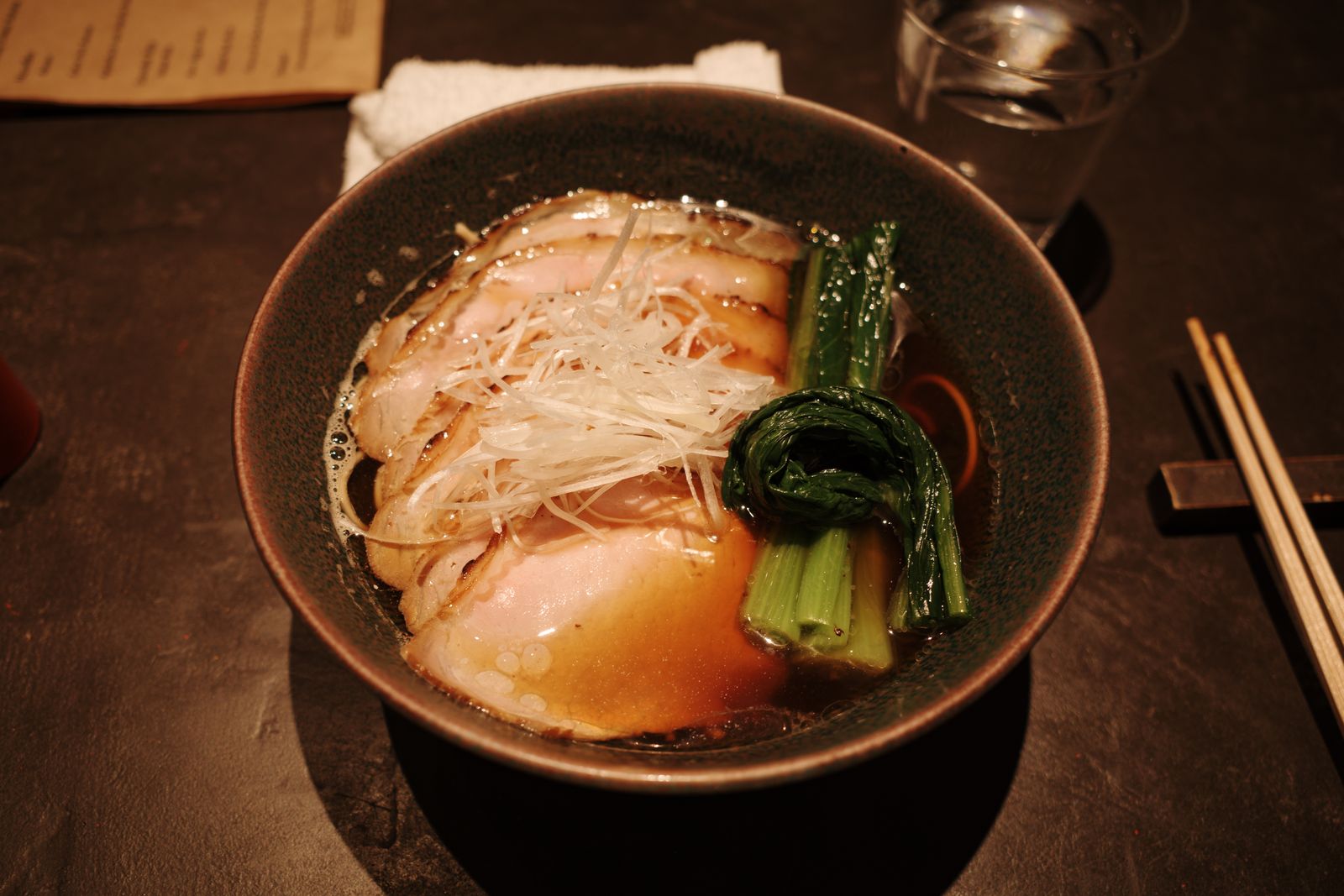
Ramen goes the other way. The lists file it under ordinary Japanese food; Kyoto’s own tourism bodies call Ichijoji the city’s ramen district, and the local railway sells a ¥2,000 day-pass-plus-bowl ticket, on sale 2026-04-01 to 2027-03-31.
JBJ'S TAKE
Real district. Not one of the five.
Ramen money is ramen money, and the Kyoto part here is a district the city names, not a dish the ministry lists, so Ichijoji takes none of the five; if ramen was already in your week, eat it there and don't count it.
By the month you are here
- Early summer through autumn. Hamo is in season, July is the Gion Festival month, and Kamo-nasu eggplant, on the City’s and the Prefecture’s traditional-vegetable lists, is summer. The hamo decline lapses: it is in its own season, though it still has no seat here.
- Winter. Yudofu is one of the city’s signature winter dishes; senmaizuke is made from about November, suguki from November to January; mushi-zushi is eaten mainly in winter. The tofu seat moves to the course, and the sushi decline gains the Kyoto exceptions that are in season.
- Year-round. Shibazuke, so the pickle to carry home does not depend on the month. Nothing else in the declines moves.
The decision you leave with
Osaka is the other half of the question and has its own ranking, on a different rule. The meal that costs almost nothing is the convenience store. Five meals on one rule, and the question the lists never answer: what this trip actually pays Kyoto for.
JBJ'S TAKE
One premium. Two in winter. That's it.
This trip pays for Kyoto once, on purpose: the kaiseki lunch. Everything else here, the Kyoto is in the plate, not the price.
Winter adds one: the tofu pot. The dinner premium is the biggest on the page and the one it walked past. Walk past it too. If lunch didn't convince you, dinner is the same argument with a bigger bill.
Attributions and seasons: the Ministry of Agriculture, Forestry and Fisheries, Kyoto City’s tourism body, Kyoto City and Kyoto Prefecture. Nishiki: the market association’s own pages. Festival dates: Yasaka Shrine. The ramen ticket: Eizan Railway. Kaiseki in Tokyo: Tokyo’s official visitor guide and JNTO. No restaurant’s account was used. Checked 2026-09-07.