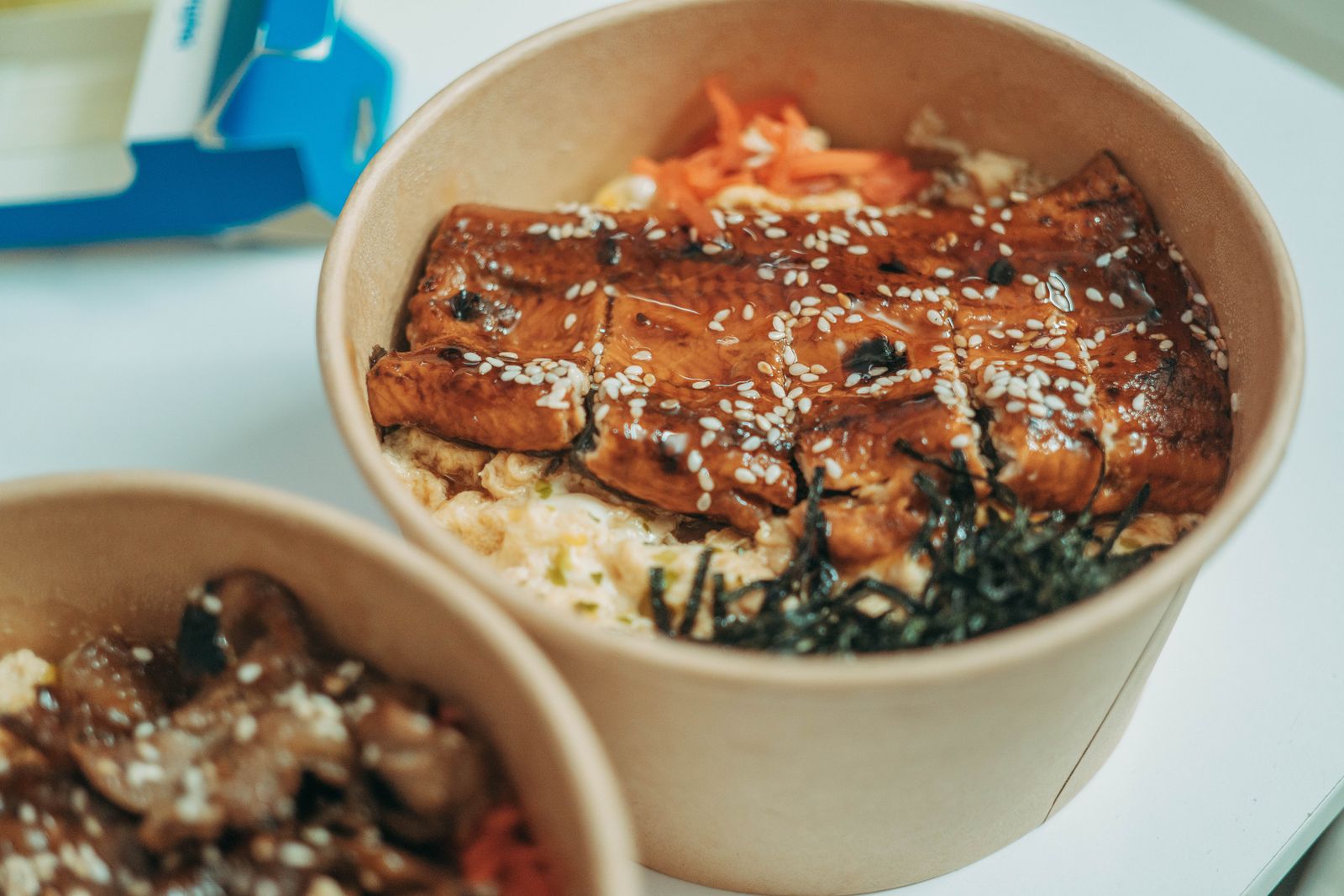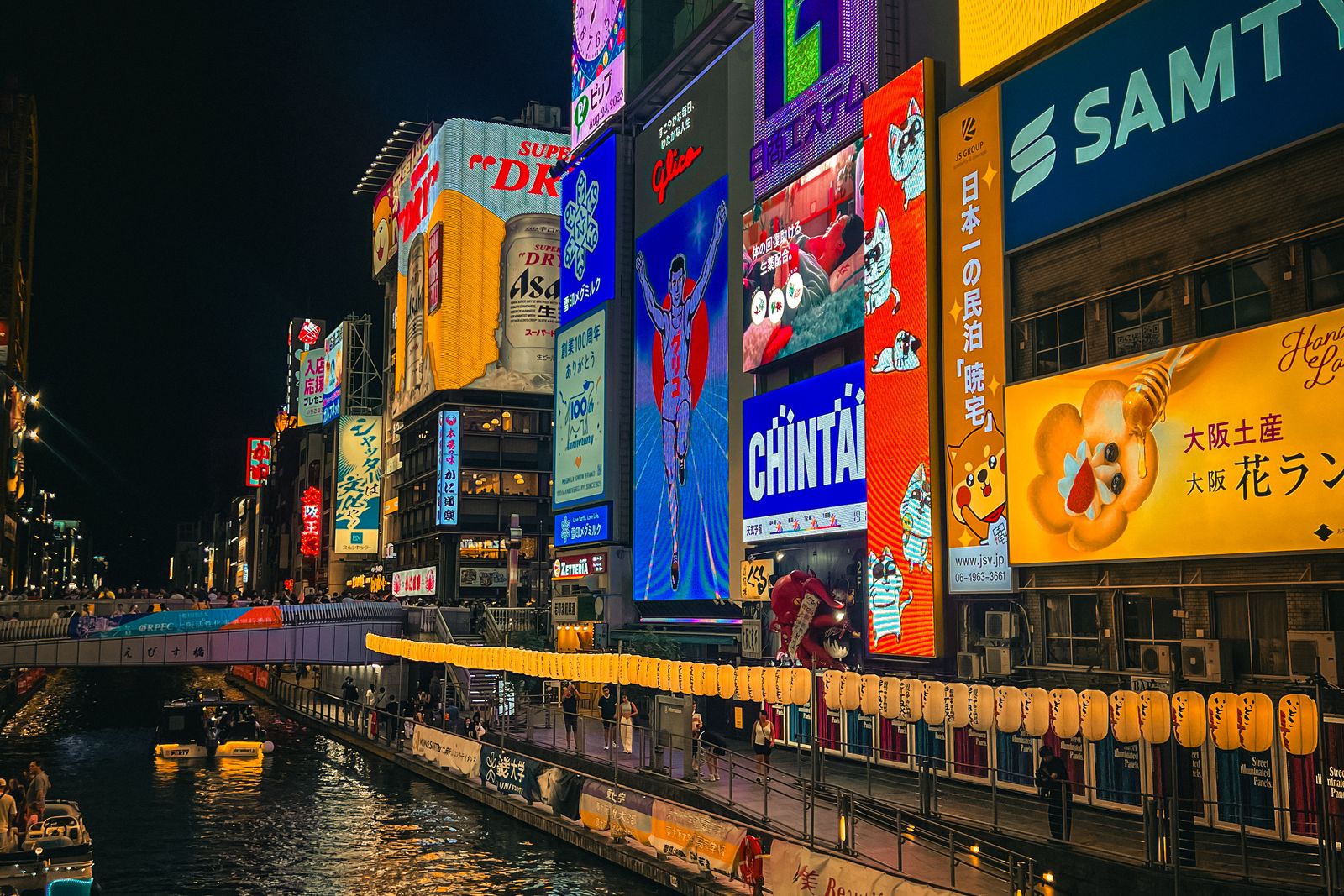
Three days in Osaka is four or five meals you actually sit down for. Every guide hands you ten dishes and ranks none of them.
JbJ’s position, before the reasoning: only two of the famous items are worth a seat, most of the rest are things you eat standing up between other plans, and the single best-documented Osaka dish is one almost nobody puts on a list.
Nobody ranks this city, and Osaka does not either
Start with the absence, because it is the more useful half.
Nagoya publishes a definition. Its city material describes nagoya meshi as dishes widely accepted and eaten in Nagoya and its surroundings — a stated criterion, which is why our Nagoya ranking could argue with it.
Osaka has nothing equivalent. Four official schemes exist, and none of them defines a dish:
- The Osaka Convention & Tourism Bureau groups ten items under 大阪ローカル料理 — and states no criterion at all for what qualifies.
- 大阪産(もん) is a production-origin certification. Its own definition covers agricultural, livestock, forestry and marine products grown in the prefecture, and processed goods made from them. It certifies where an ingredient came from, not what counts as an Osaka dish.
- なにわの伝統野菜 certifies vegetable varieties.
- No 「なにわ名物」 scheme exists.
The agriculture ministry separately lists thirty dishes for Osaka in its regional-cuisine database. The two official lists do not agree with each other. The tourism list omits どて焼き, 紅しょうが天 and いか焼き. The ministry list omits omurice, 割烹 and conveyor-belt sushi. And five of the tourism bureau’s ten items are sit-down restaurant formats, not street food at all.
So there is no canon to defer to. Which means a ranking has to state its own basis, and be checkable against it.
The three questions this ranking asks
Not “is it really from here.” That test belongs to Nagoya, whose canon is largely 20th-century restaurant invention with contested provenance. Osaka’s problem is the opposite — the famous things are everywhere, at wildly different quality, and the guides treat a four-minute snack and a ninety-minute sit-down as interchangeable list entries.
So:
- Does it cost you a meal slot? A seat, a table, an hour. This is the scarce resource.
- Does the version you get vary enough to matter? If every stall does it adequately, planning around it is wasted effort.
- Will you meet it anyway? Some of these arrive whether you plan or not.
Worth a seat
お好み焼き — and not for the reason you have been told.
Here the record contradicts the marketing outright. The agriculture ministry traces okonomiyaki’s root to 麩の焼き, a tea sweet from the Azuchi-Momoyama period, and hedges even that. On Osaka’s role it is explicit that the city made the dish famous, not that it invented it: okonomiyaki became widely known nationally as an Osaka specialty from the end of the Shōwa 30s into the Shōwa 40s — roughly 1962 to 1974. The Osaka tourism bureau’s own okonomiyaki entry makes no origin claim whatsoever.
It still earns a seat, because it is the item where the format genuinely requires one. It arrives on a hot griddle, it takes time, and it is the only thing on this list where sitting down is the point rather than the overhead.
串カツ, in 新世界, with the rule.
The ministry places kushikatsu’s origin in the 新世界 district in the late Taishō to early Shōwa period — cheap, filling, fast food for labourers working nearby — and marks it as said to be, which we are keeping. It names no founding shop and no year, so neither will we.
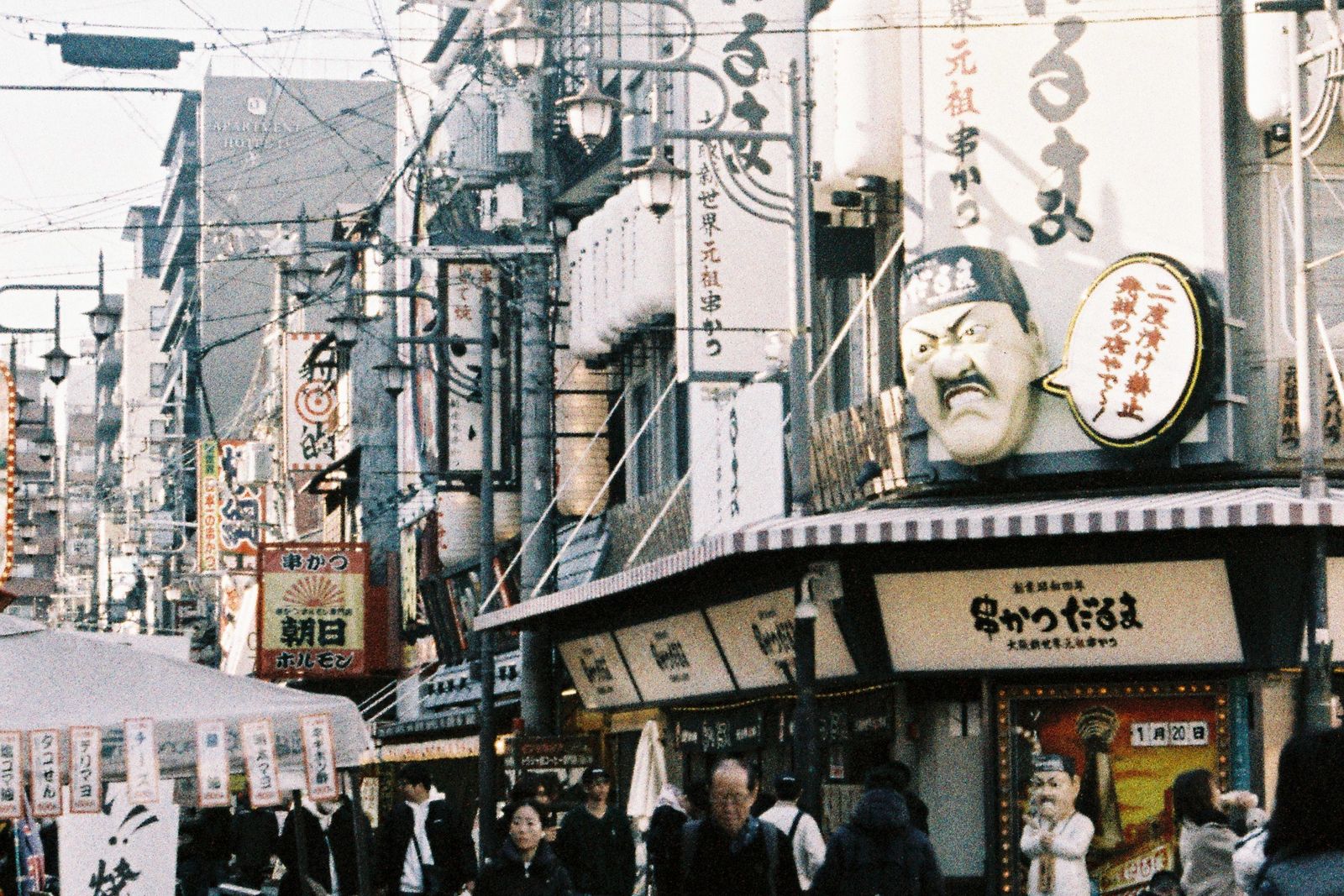
The famous rule is real, and it is neither folklore nor law. Two official bodies state it independently: the agriculture ministry calls it an 鉄則 — an iron rule — on its own kushikatsu page, and the Osaka tourism bureau prints it as the thing kushikatsu is known for. The trade association publishes the wording: dip a skewer in the shared sauce once, and never something already bitten. It is a documented house rule, codified by an association. Nobody will fine you.
One thing worth knowing before you sit down: Osaka’s indoor smoking rules changed in April 2025, and only restaurants with more than 30 m² of seating are covered by the in-principle indoor ban. Small old counters — exactly this format — may still permit smoking.
JBJ'S TAKE
Two seats. That is the whole sit-down list.
Okonomiyaki needs a griddle and an hour. Kushikatsu needs a counter and a shared sauce pot. Everything else on this page works fine standing up, which means it is not competing for the same resource.
So JbJ would spend two of the four or five slots here and stop looking for a third.
Eat it standing, between other things
たこ焼き. This is the one where Osaka’s claim actually holds. The ministry traces a real lineage — チョボ焼き in late Meiji and Taishō, ラジオ焼き at the end of Taishō, then octopus takoyaki sold within Osaka City in the early Shōwa years — and marks it said to be, which is the ministry’s own hedge and stays in.
The 1935 story you will read everywhere — a named founder, a named shop, a customer’s remark about Akashi octopus — comes from that shop’s own website. No government source names it. It may well be true. But it is the shop’s account of its own founding, which is a different thing from a documented origin — and it is repeated everywhere as though it were the second.
Buy it from a stall, eat it walking, do not build an afternoon around it.
豚まん. On the tourism bureau’s official ten. The best-known maker’s own site says only that its pork bun was born the year after founding — and does not state that founding year, or explain the name. So: a real Osaka item with an undated origin story, and worth the queue if you pass one.
いか焼き. On neither official list, which tells you something about how lists get made. The Hanshin department store’s own page says the counter has grown alongside the store since 1957 — and notably does not claim to have invented the dish, which is more restraint than most origin stories in this city manage.
The one nobody ranks
紅しょうが天.
Pickled red ginger in tempura batter, deep-fried. It is on the ministry’s list and absent from the tourism bureau’s, and it is the only item in this entire ranking with dated documentary evidence behind it: the ministry states it was already a common Osaka popular food in early Shōwa, and cites its description in Oda Sakunosuke’s 『夫婦善哉』, published in 1940.
Every other origin story here is a shop’s recollection or a ministry hedge. This one points at a book.
どて焼き belongs in the same bracket. Beef sinew simmered in miso and mirin — the ministry says the name comes from banking the miso around the pot rim like an embankment, a 土手 — and it names Shinsekai as where the shops cluster. Note it is miso and mirin with beef sinew, not the red-bean-miso doteni you may have met in Nagoya. Different dish, similar name.
Where this actually happens
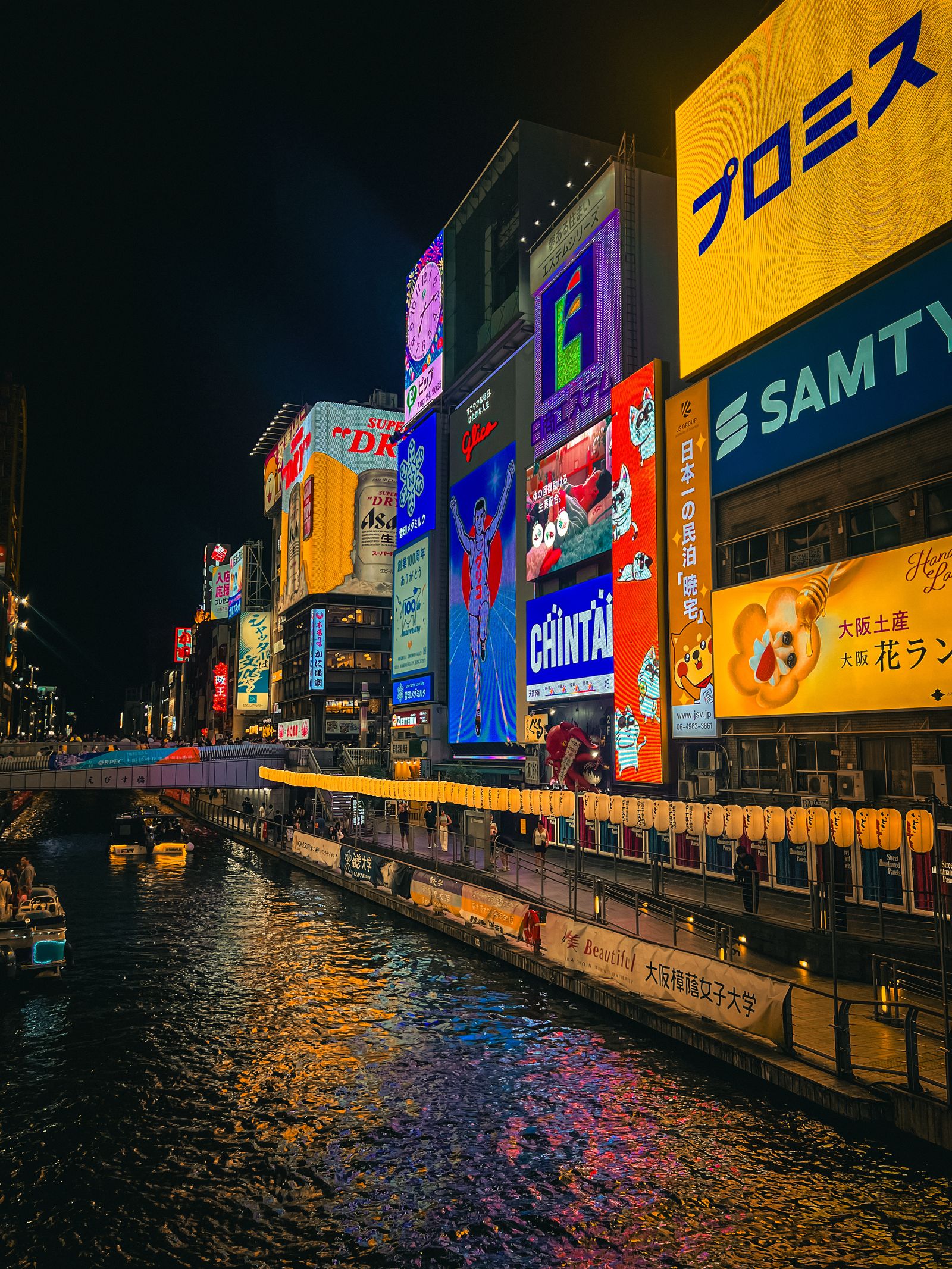
Dotonbori is named for Yasui Dōton, who put his own money into digging the canal from 1612 and was killed around 1614 in the Siege of Osaka; the canal was finished in 1615 and named for him by the first castellan. It has been an entertainment district ever since, and that is precisely what it still is.
Kuromon Market runs from the late Edo period and holds roughly 150 shops, wholesale and retail together.
Neither publishes opening hours, and both official listings say the same thing: hours vary by shop. So treat any single opening time you see quoted for these markets as somebody’s guess. Go late morning to early afternoon and you will find the place working — that is when a market that feeds local restaurants is actually busy.
Two rules that are actually enforced
Since January 2025, street smoking is prohibited across all of Osaka City in public places the city manages, with a ¥1,000 non-criminal fine. That is city-managed public space — not literally every square meter, and there are designated smoking areas.
Littering is prohibited under a separate and much older ordinance, in force since 1995. It carries no published fine. The stated ladder is advice, then an order, then publication of your name. The ¥1,000 figure belongs to the smoking rule, and the two get conflated constantly.
And there is no rule against eating in the street. Not in the city’s environmental ordinances, not in the prefecture’s, and not in the city’s own February 2026 statement on improving the Minami area — which lists litter, street smoking, toilets, abandoned bicycles and dumped suitcases, and never mentions eating while walking. The tourism bureau positively describes takoyaki as something you buy at a stall and eat on a street corner.
One caveat worth carrying: that clears the city and the prefecture, but individual shopping streets set their own house requests, and those are posted rather than legislated. Read the signage at the entrance to any covered market, Kuromon included, and follow what it asks. A house request outranks a city ordinance in the only way that matters — the people around you are going by the sign.
JBJ'S TAKE
Rank it anyway.
Sit down twice. Okonomiyaki and kushikatsu. Eat everything else standing up, and eat the ginger one on your feet between other plans.
Nobody ranks Osaka because Osaka never said what counts. Fine — somebody should still choose, and choosing is the entire job.
Our criteria are up there and you can argue with them. That is the difference between a ranking and a list, and it is why this one is worth more to you than the ten-item grid you were handed everywhere else.
Checked 2026-09-02. Dish origins, definitions and the regional-cuisine list come from the Ministry of Agriculture, Forestry and Fisheries; the ten-item local-food grouping and district descriptions from the Osaka Convention & Tourism Bureau; the smoking and littering ordinances from Osaka City and Osaka Prefecture; the double-dip rule from the ministry, the tourism bureau and the trade association’s own published wording; the 1935 takoyaki account and the 1957 ikayaki date from those businesses’ own official pages, attributed as such. Market opening hours vary by shop, and neither official body publishes a single set.