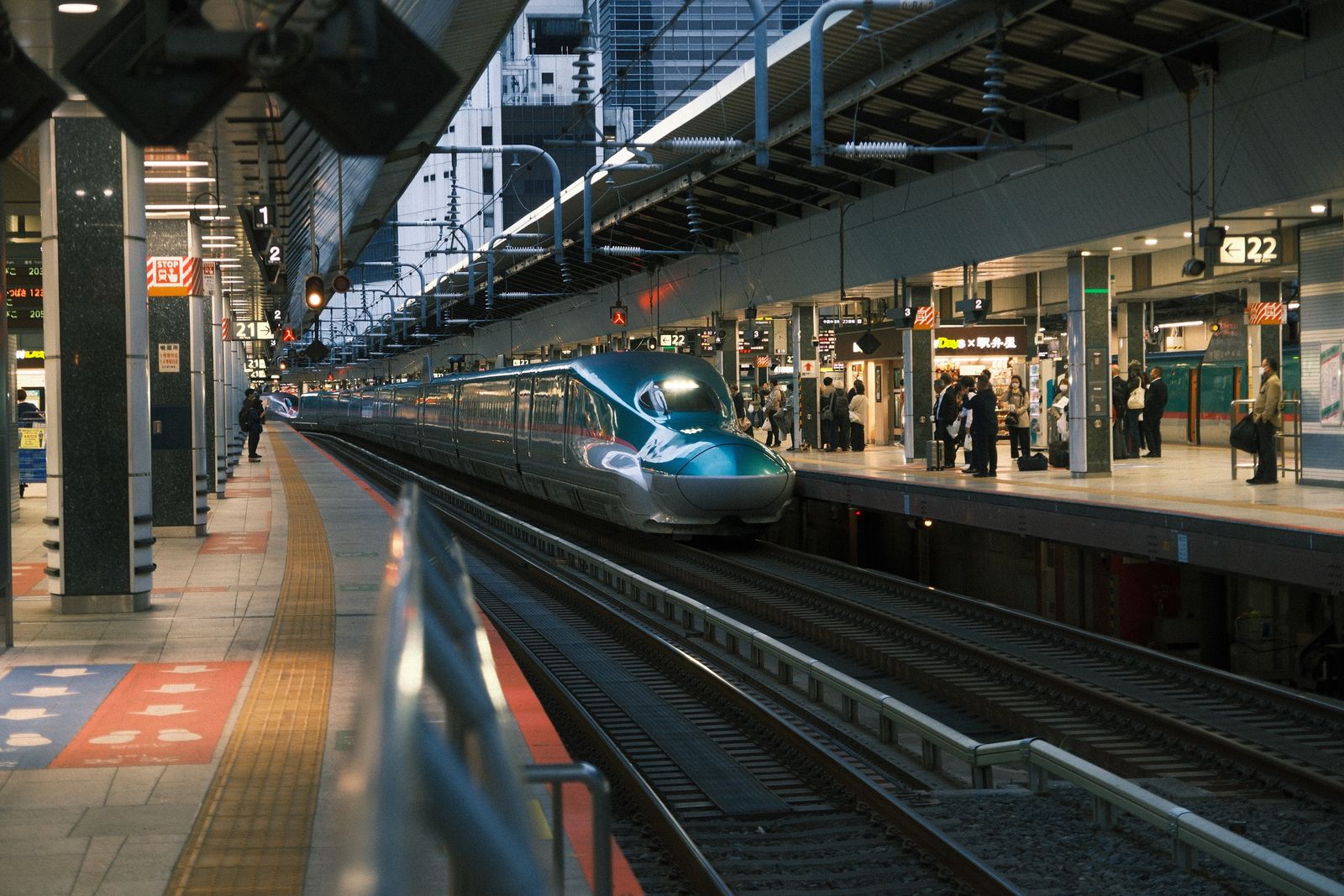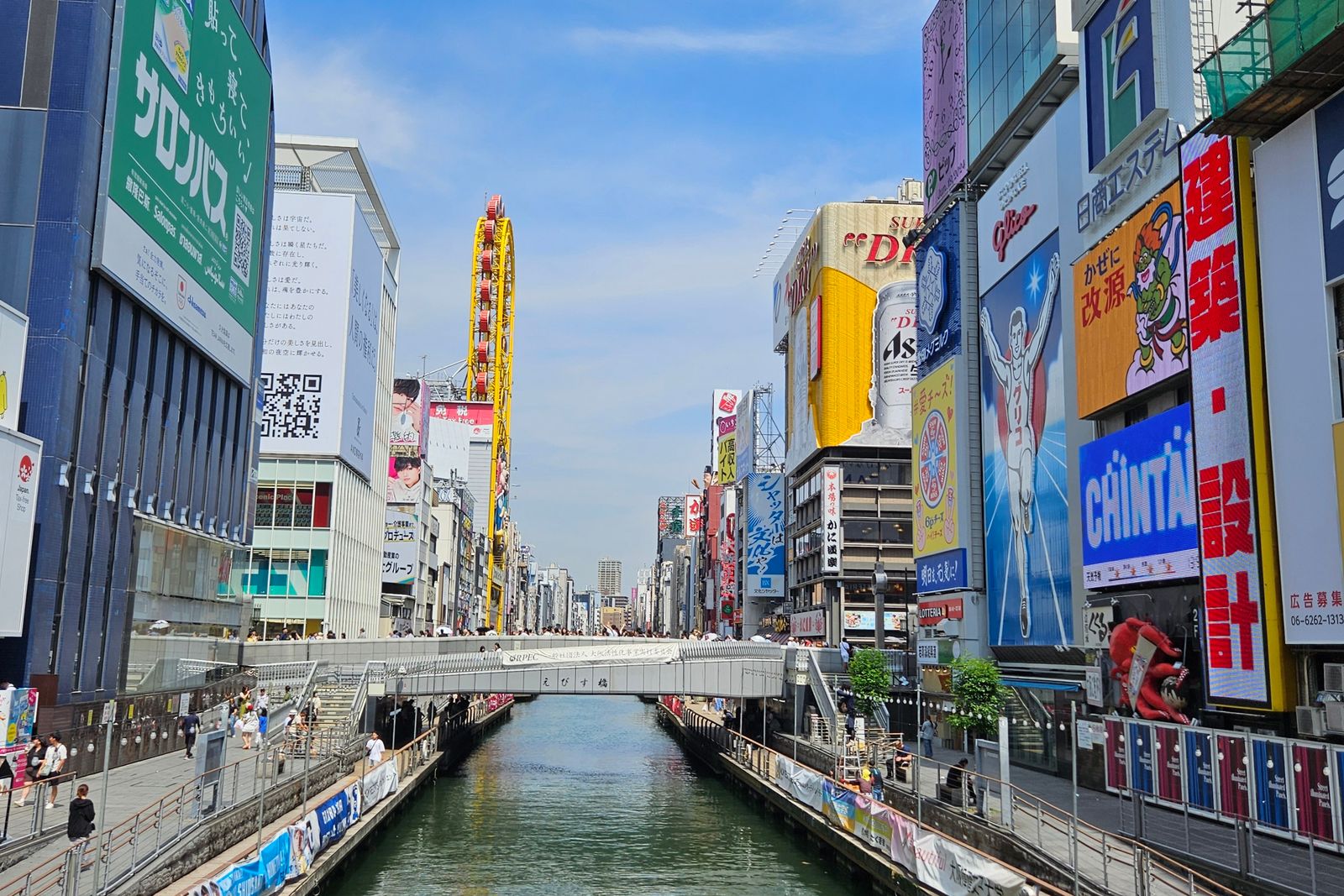
You have an Osaka hotel list open and three or four area names you’re supposed to have an opinion about. Every one of them sits on the same subway line, four to seven stops apart, so the thing those names are usually sold on — getting around Osaka — is already settled and can’t separate them. This page ranks three areas on what does separate them: which of the journeys already in your itinerary leaves from the area’s own station. Two names are declined outright, and the prior question is answered here too — whether Osaka is the right bed for a Kyoto trip at all.
Namba, then Umeda, then Shinsaibashi — and yes, you can sleep here for Kyoto
- Namba — the airport train leaves from its own station, direct. That is the one journey every reader on this page makes.
- Umeda — the widest set of onward trains here, from stations at the far end of the same line.
- Shinsaibashi — one stop from Namba, three from Umeda, and the answer if you cannot pick between them.
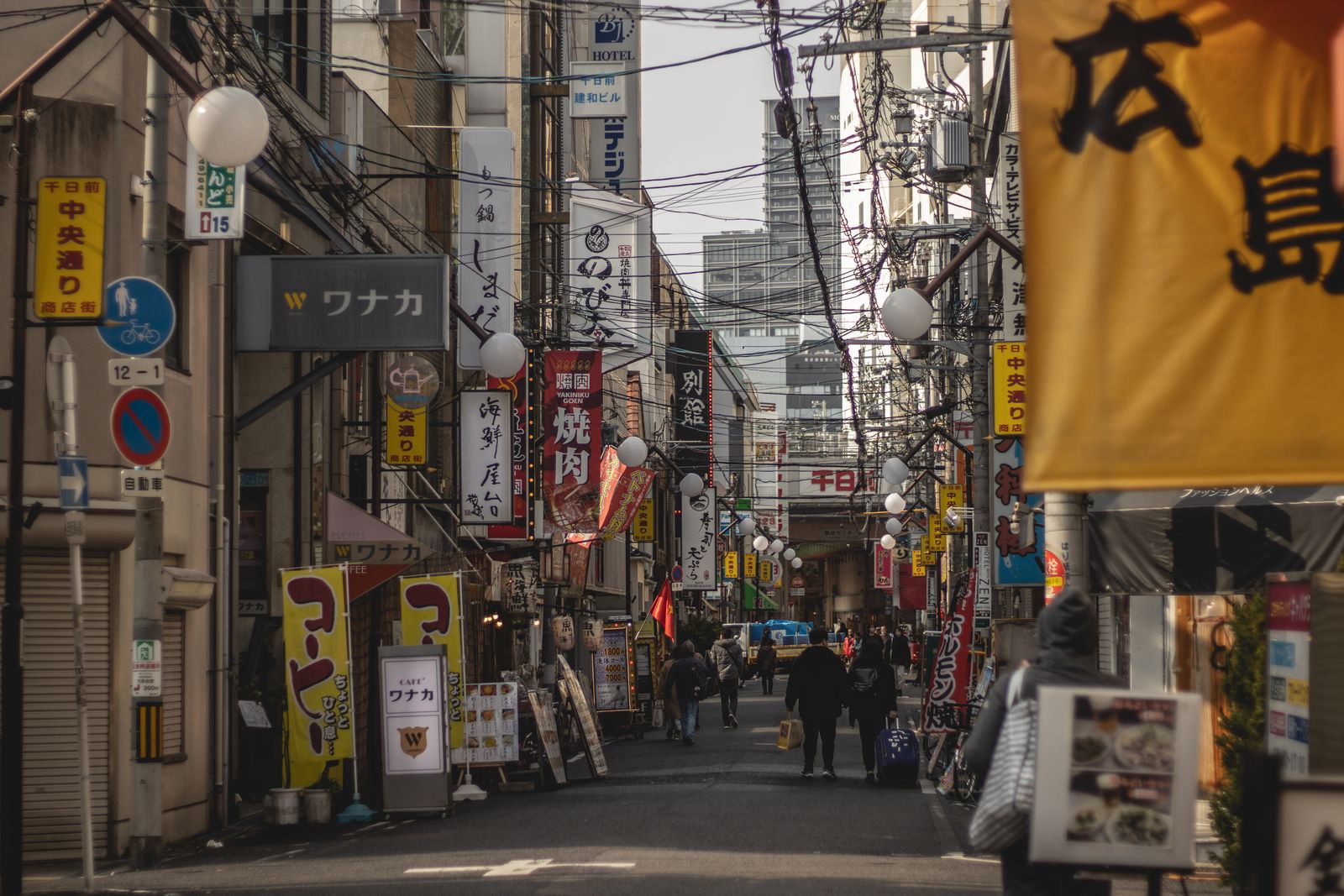
Declined by name: Dotonbori and Shin-Osaka, both further down.
Honmachi, Tennoji and the bay side are not ranked. That is a statement about this page’s criteria and not about those places: the criteria are about what you can board where you sleep, and none of the three clears them.
And yes — Osaka works as the bed for a Kansai trip. Two sections down is the evidence.
What this page ranks on, and what it refuses to rank on
Three criteria, in weight order. The weighting is a decision, and changing it changes the order.
1. Which of the journeys you have already booked leaves from this area’s own station, without a change. Scored on what the operators publish, never on minutes.
2. Whether you sleep at one end of the line or commute into it. Counted in Midosuji stops.
3. Tiebreak: does the area serve both the Osaka half of your trip and the Kansai half, or only one of them?
Two things this page will not rank on. There is no area price anywhere on it: none can be sourced, and this page will not invent one. And convenience for getting around Osaka is not a criterion, because every candidate below sits on the Midosuji Line, four to seven stops apart with no change — the answer comes out the same for all of them.
One condition flips it. If the airport is not one of your fixed moves — if you arrive and leave on the Shinkansen — criteria 1 and 2 swap, and the order below changes with them.
Two ends of one subway line — and where Kyoto sits from each
One line does the orienting. Osaka Metro’s Midosuji Line runs north to south through everything this page discusses: Shin-Osaka is M13, Umeda M16, Shinsaibashi M19, Namba M20, Tennoji M23. Umeda and Namba are four stops apart on it, no change, with Shinsaibashi between them. That is the whole map you need — a north end, a south end, and one line joining them.
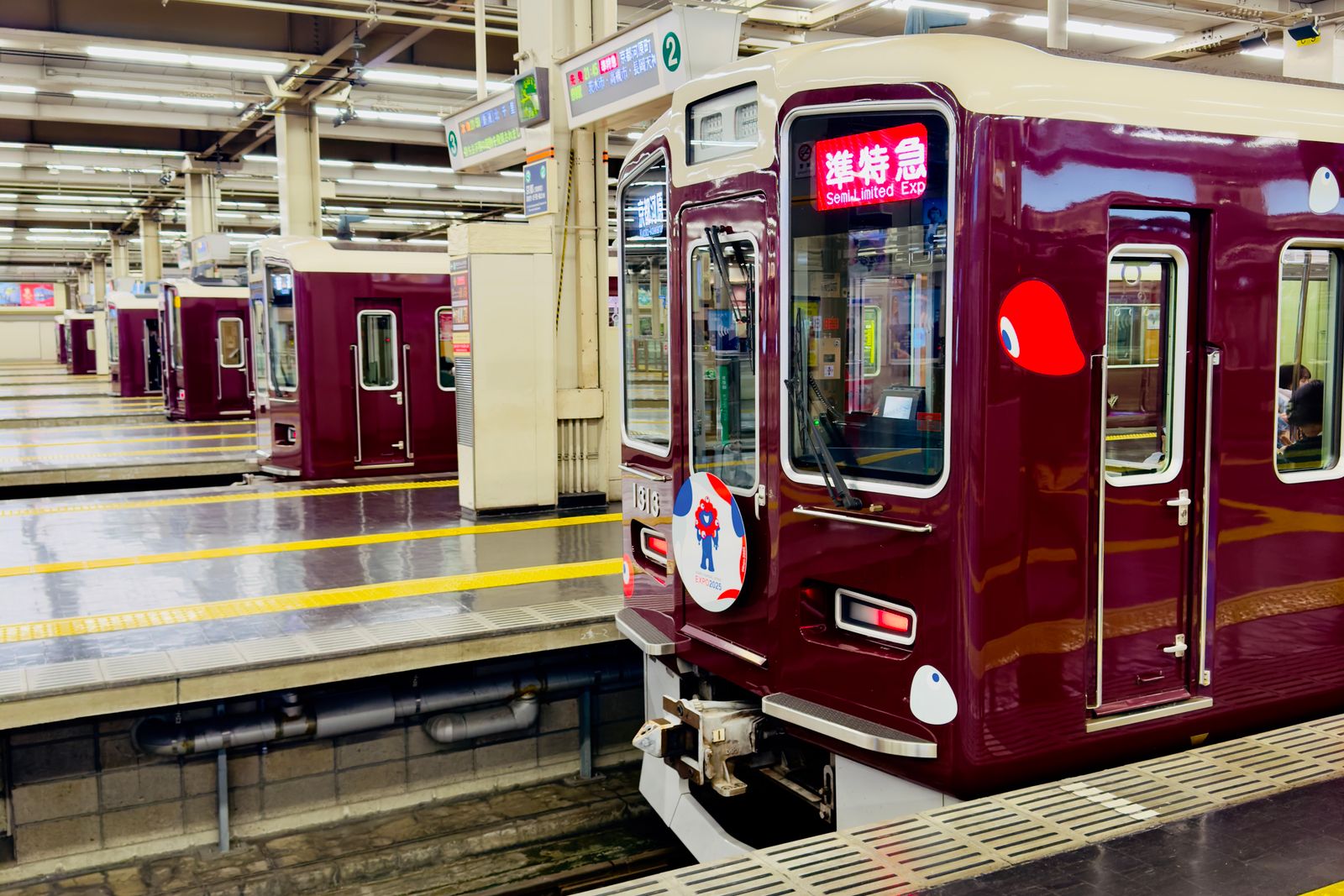
Now the question underneath the area choice. From the north end, Kyoto leaves from the door: Hankyu’s Osaka-umeda station is the terminus of three of its lines — the Kyoto Line, the Kobe Line and the Takarazuka Line — so a Kyoto train and a Kobe train both start where you are standing, no change involved.
The Shinkansen end of it is just as flat. The Tokaido Shinkansen stops at Shin-Osaka; the name “Osaka” is not on JR Central’s station list at all. Kyoto is the stop immediately before Shin-Osaka, and Shin-Osaka is three stops up the Midosuji Line from Umeda, seven from Namba, on the line you have already been reading about.
So an Osaka bed is not a compromise on Kansai. The trains to the rest of it leave from one end of your subway line, and the Shinkansen leaves from three stops past that end.
JBJ'S TAKE
Osaka gets all the nights.
Five pages that answer this publish a night count. Five different numbers, and not one shows its work. So JbJ isn't adding a sixth.
One thing moves you out of Osaka, and it's not arithmetic: a morning that has to start inside Kyoto, early, before the day does. Got one? Book Kyoto for it. Otherwise, unpack once.
1. Namba — the one journey every reader makes
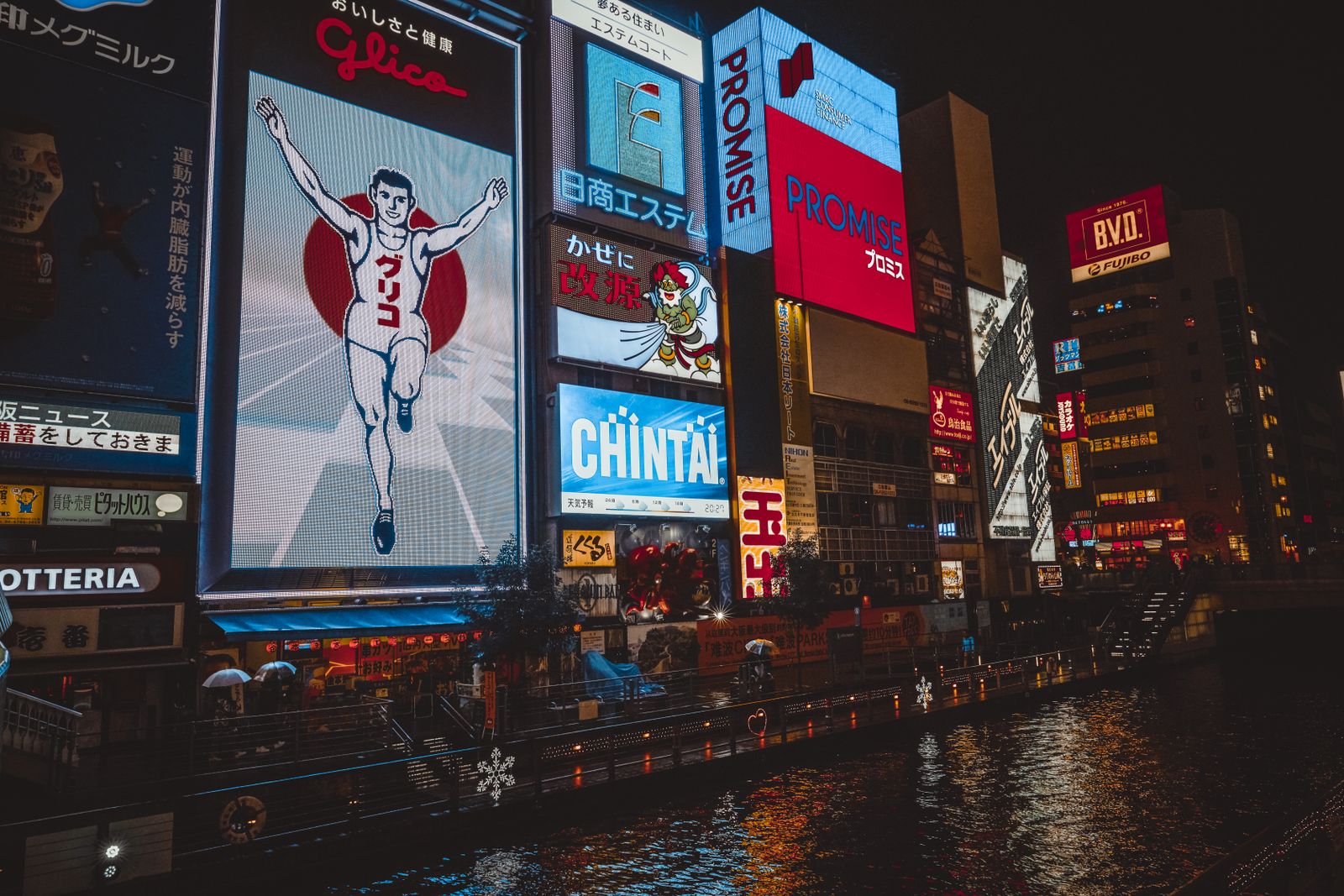
Namba is M20, the south end of the line, and Nankai’s own station there runs direct to Kansai Airport. The Rapi:t does it from 34 minutes — the operator’s floor, not a promise, so treat it as the best case rather than the timetable. It is a reserved limited express, which means a surcharge on top of the base fare: ¥700 for a regular seat, ¥910 for a super seat, adult, for the whole section. A cheaper non-reserved Nankai service runs on the same line to the same airport station.
That is why it is first. Every reader here lands and leaves; not every reader is doing Kyoto and Kobe. And the reason most people want the south end in the first place is what there is to eat down there.
Leaves from here without a change: Kansai Airport, on Nankai — the Rapi:t with its surcharge, or the cheaper service on the same line.
What it costs you: the Kyoto and Kobe trains start at the other end of the line, so a Kansai day out begins with four subway stops before the real train.
2. Umeda — the most trains out, and more stations than the name admits
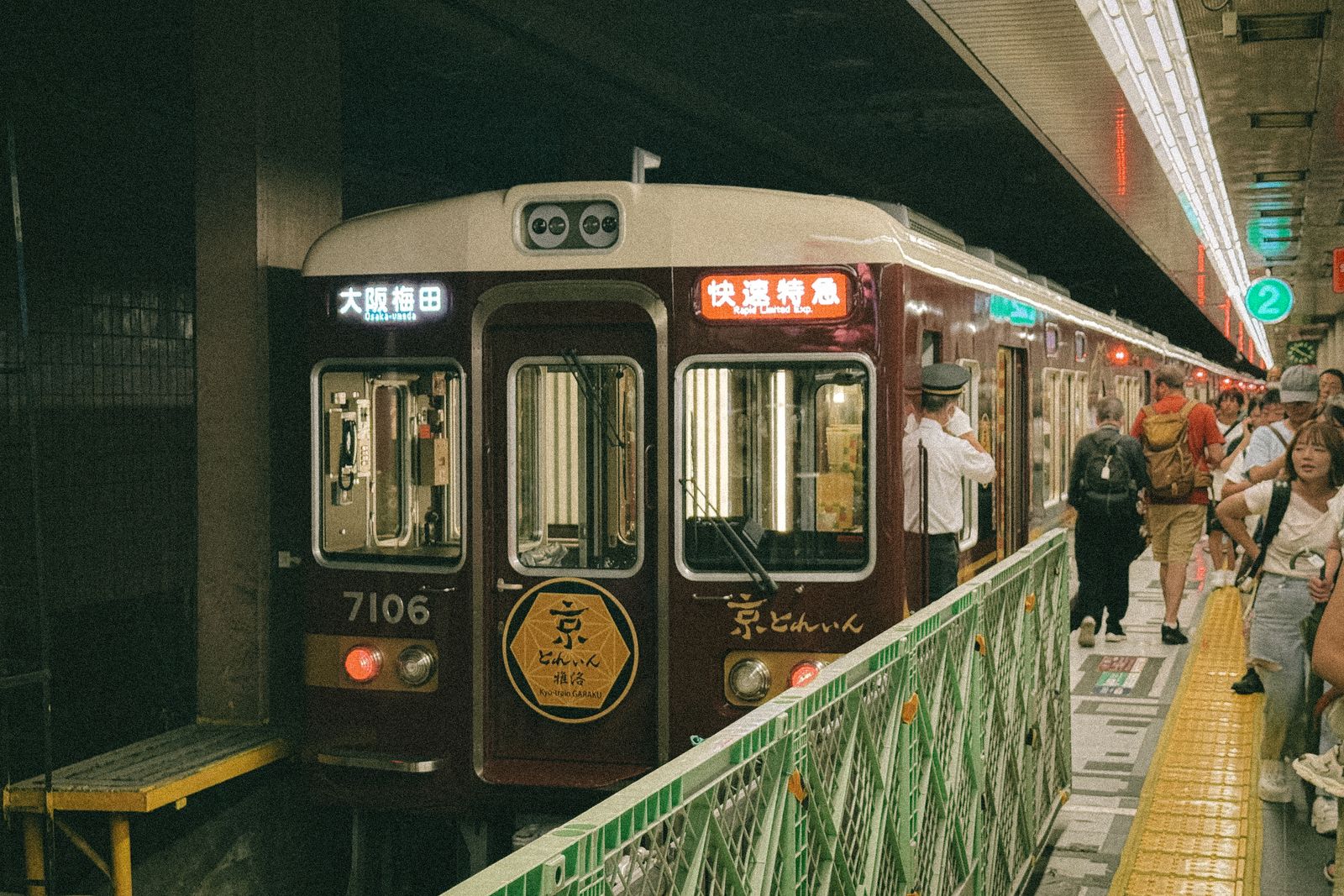
Umeda is M16, the north end, and it has the widest set of onward departures on this page: Hankyu’s three lines from its own Osaka-umeda station, and Hanshin’s Kobe and Himeji direction from its own — the Himeji service continuing onto another company’s track to get there. Nothing here beats that for a trip with Kyoto and Kobe days in it.
Then the fact that decides which room you book rather than which area. “Umeda” is at least six differently-named stations under four operators. Hankyu’s is Osaka-umeda and so is Hanshin’s; Osaka Metro alone has three — Umeda on the Midosuji Line, Higashi-Umeda and Nishi-Umeda on two others; and JR West’s station here is not called Umeda at all. It is called Osaka. Each operator lists the others as a transfer. So a listing that says “Umeda” has named a district, not a station. Which of the six you are beside is worth settling before you pay.
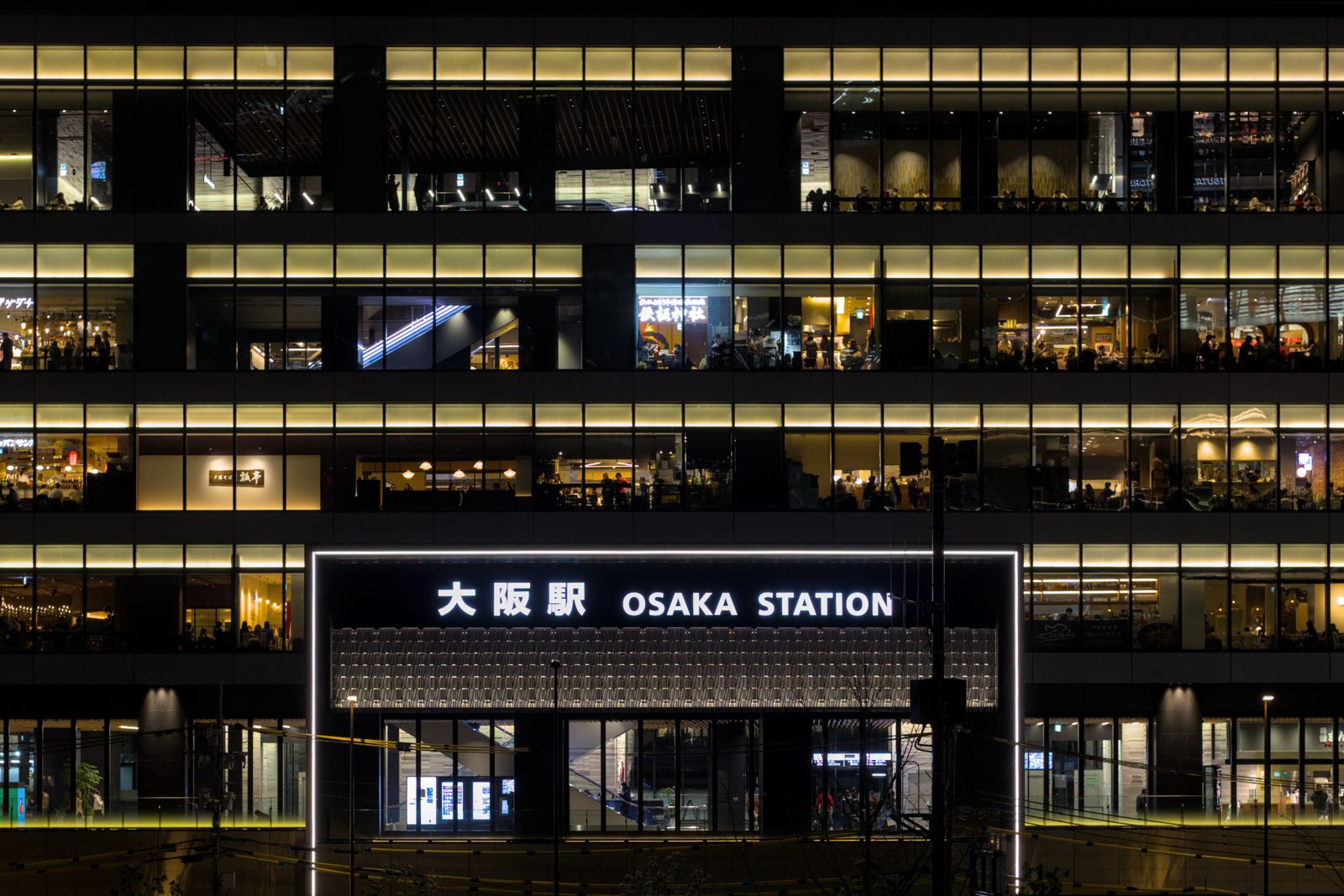
Leaves from here without a change: Kyoto, Kobe and Takarazuka on Hankyu; the Kobe and Himeji direction on Hanshin.
What it costs you: the airport train is not one of them — that leaves from the south end — and the address on your booking decides which of six stations you actually live next to.
3. Shinsaibashi — one stop from the answer you couldn’t pick
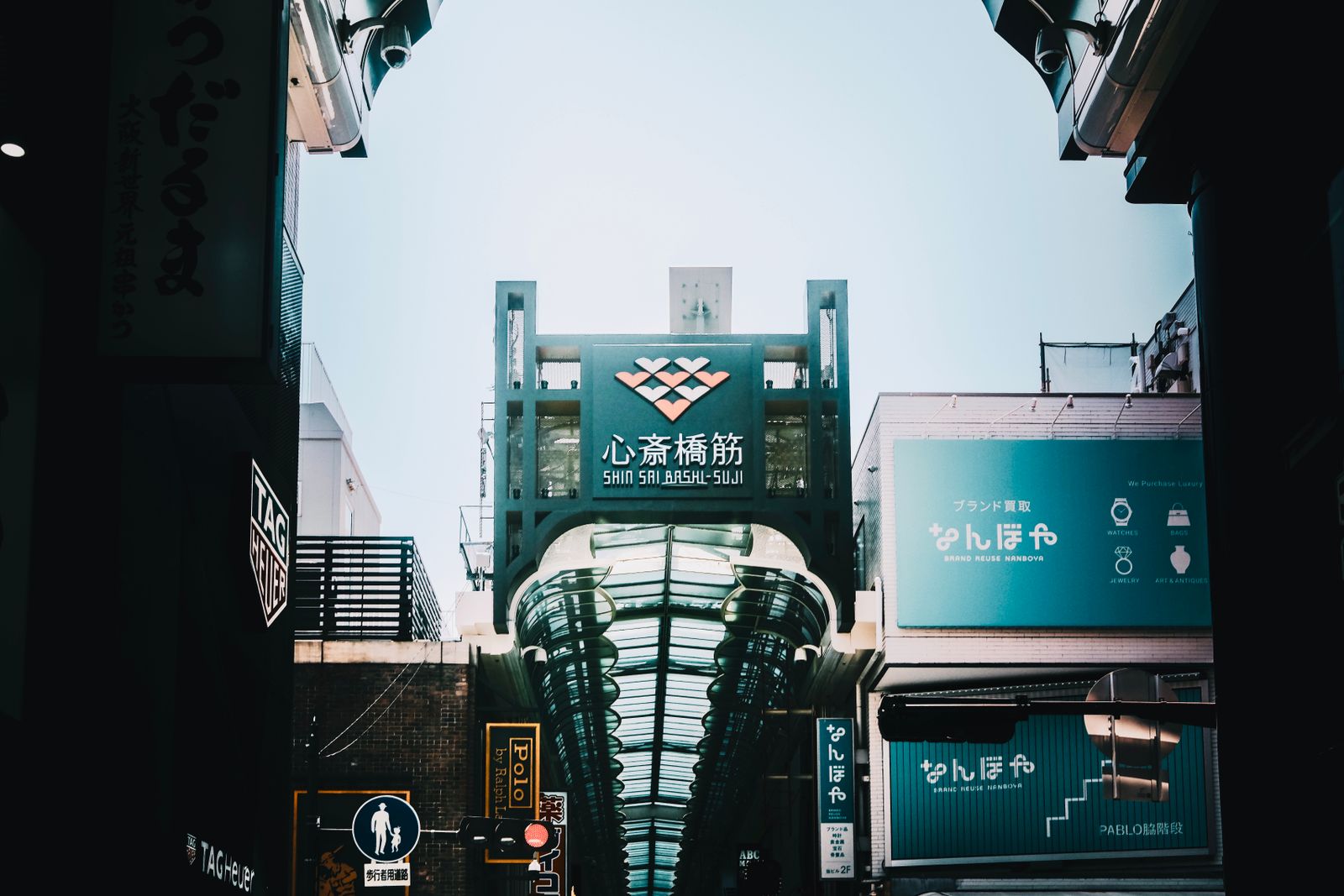
M19, between the other two: one stop from Namba, three from Umeda, same line, no change either way. If criteria 1 and 2 pull you in opposite directions, this is where the argument stops — you are not at either end, but both ends are on your own platform.
Leaves from here without a change: nothing this page scores. What Shinsaibashi has is the line itself.
What it costs you: the departures this page scores start somewhere else, so each end of the trip begins with a subway leg you would not otherwise make.
The two names this page will not book you into
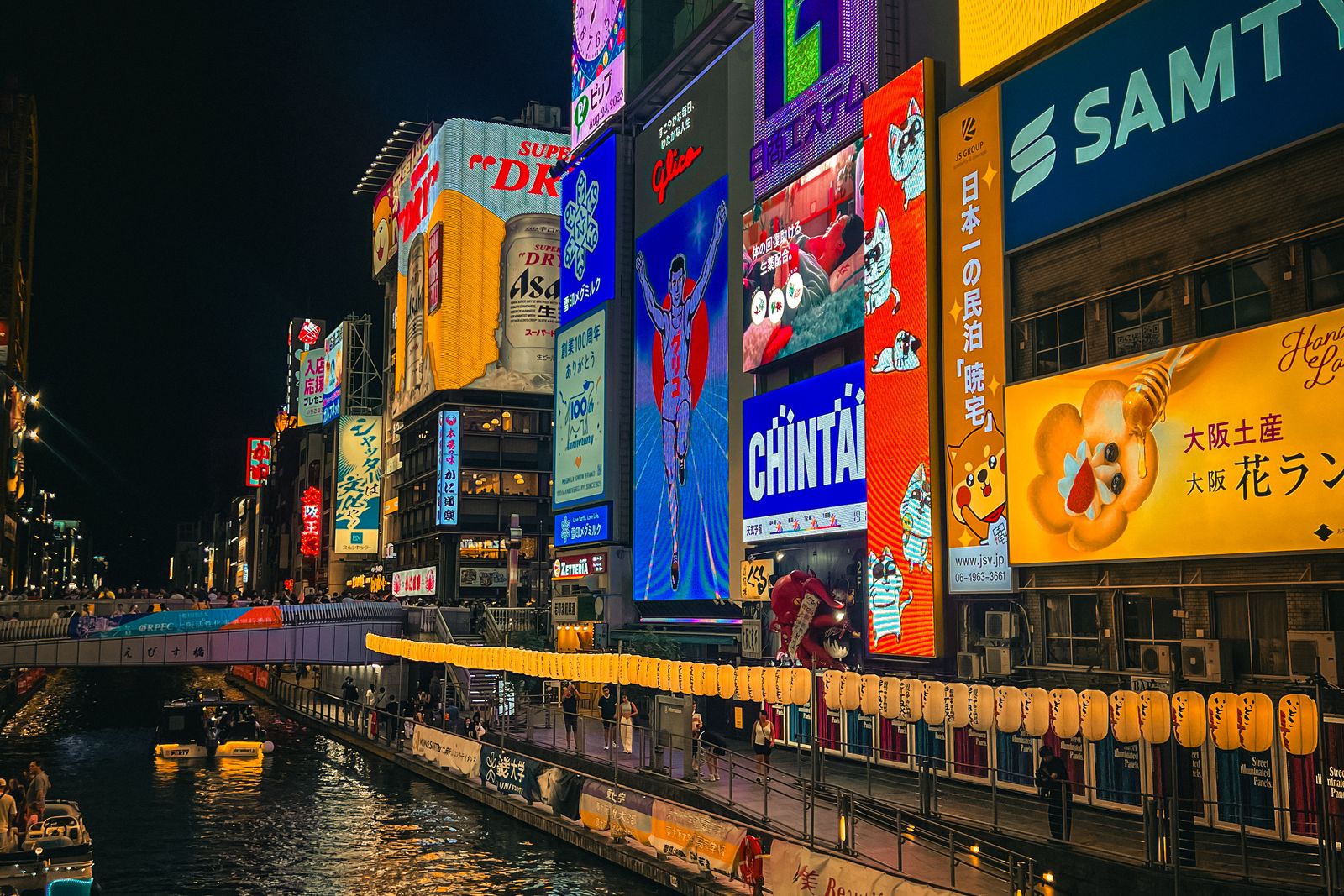
Dotonbori
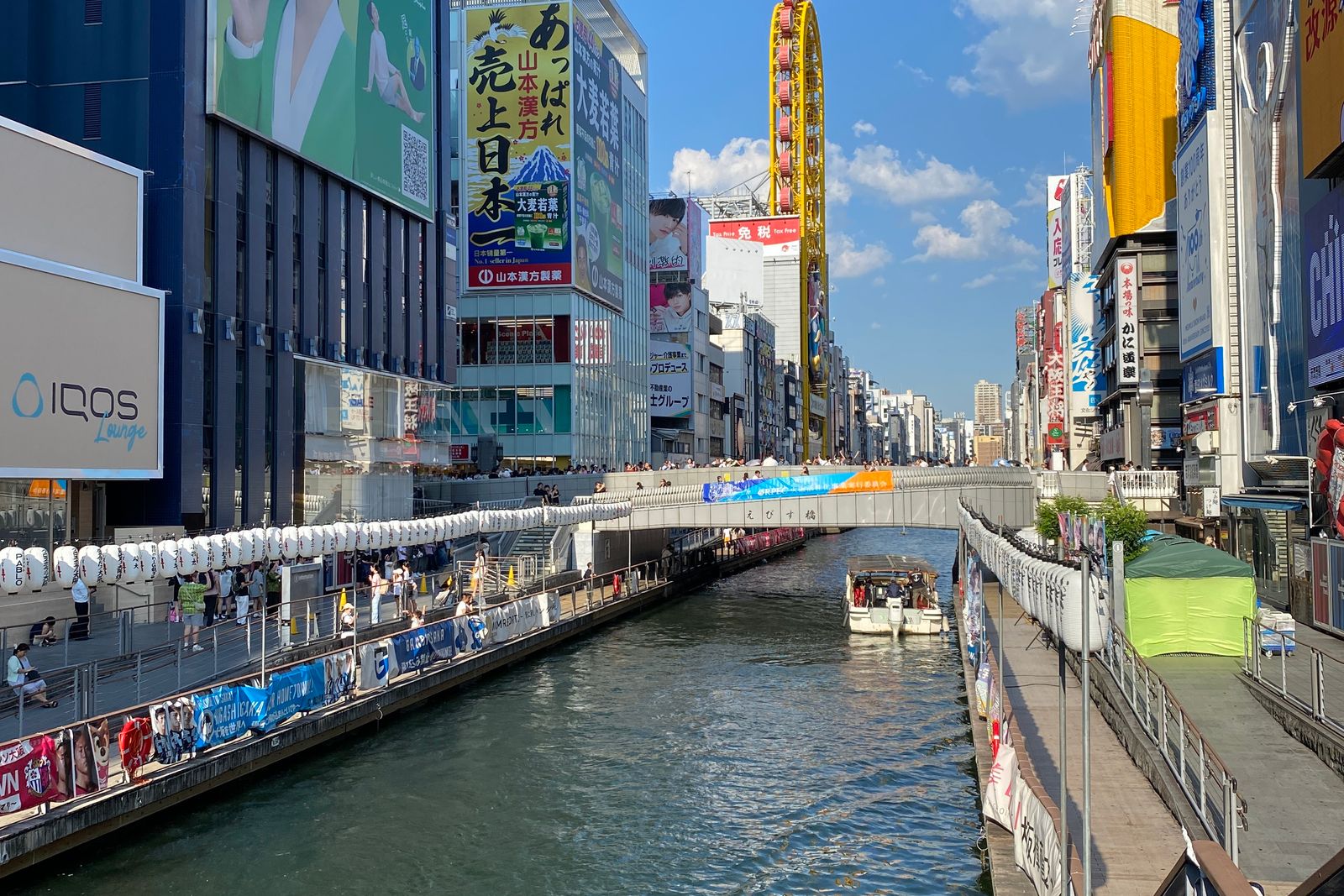
It is the most photographed name in Osaka and it appears on booking screens as if it were an area like the others. It is not a station. Osaka Metro’s Midosuji list goes Shinsaibashi, then Namba; no entry on it carries the name Dotonbori. So there is nothing on your itinerary that departs from it, and under the rule this page uses, a bed there scores zero — not badly, but zero, because the test does not reach it.
Shin-Osaka
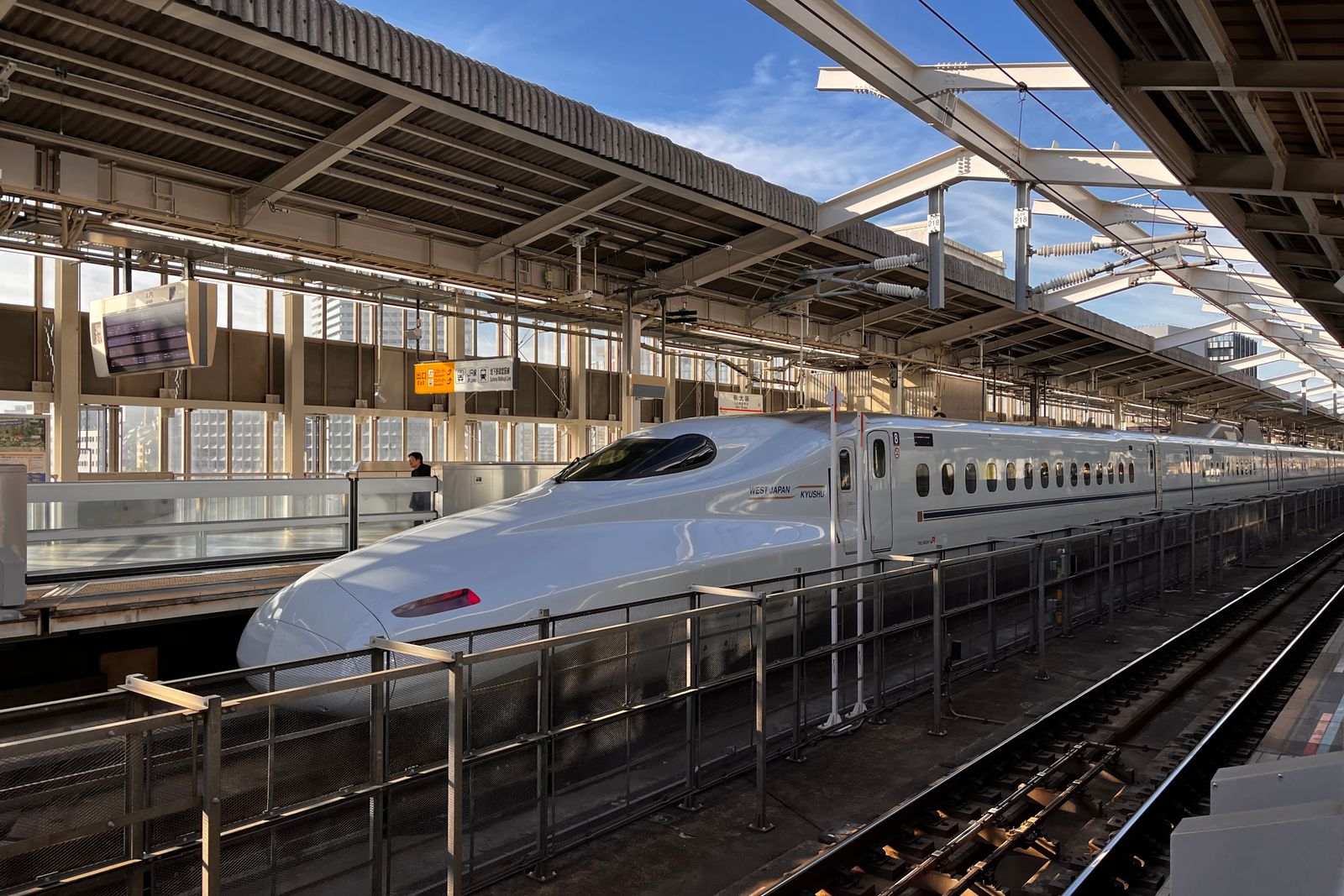
It is tempting for a good reason: the Shinkansen arrives here, and Kyoto is the stop before it. That wins criterion 1 outright — for a journey you make twice. Criterion 2 is every other day of the trip, and on that it is M13, three stops above Umeda and seven above Namba, which means commuting into both ends of the line rather than sleeping at one. The tiebreak is what puts it here rather than fourth.
JBJ'S TAKE
Dotonbori is where you go. It is not where you sleep.
The order on this page is built from journeys that leave from a station. Dotonbori isn't a stop on the line this page counts, so it can't be ranked — and it was never actually the base. It's the reason the base ranks first.
Go every night of the trip. Just don't book it. Book a station.
Three things the price on your screen isn’t telling you
The number you are looking at is one room, one night. Osaka Prefecture’s lodging tax is neither.
It is charged per person, per night. Three of you in one room pay it three times, against a screen showing a single room price. And because it is Osaka Prefecture’s, it lands identically on every area above — which is exactly why it sits down here and not among the criteria.
Whether the displayed price already contains it is up to the operator. Two properties at the same rate can show you the same number and mean different things by it, and nothing about the area you pick changes that.
On a private-lodging booking, the cleaning fee is part of the charge the band is read from. The Prefecture says so directly for minpaku: the fee your apartment listing shows as a separate line is inside the figure the tax is calculated against.
The bands themselves, and a worked example for a party over several nights, are on what a Japan trip actually costs.
JBJ'S TAKE
Check it once. Then forget it.
This isn't a budgeting problem. Whether the tax is already inside the price on your screen is the operator's call, not the Prefecture's — so the question isn't how much, it's whether it's in there. Ask the property before you pay.
The one place that check earns its keep is an apartment booking, where a cleaning fee counts toward the band. Small money. Irritating way to learn it.
Before you book
Namba, then Umeda, then Shinsaibashi — and Osaka is a fine bed for Kansai. If Kyoto is the other end of the trip, the Kyoto version of this page ranks on a different axis entirely. If the days between check-out and the train are the part you have not solved, the lockers and counters are the answer to that. And if none of it is planned yet, start with the trip.
Information checked: 2026-09-08. Station names and stop counts are Osaka Metro’s own station list; the Umeda station names come from Osaka Metro, Hankyu and Hanshin; the airport service and its surcharge are Nankai’s published figures; the Shinkansen station list is JR Central’s; the lodging tax is Osaka Prefecture’s own page. Fares and timetables get revised — check the operator before you build a morning on one.