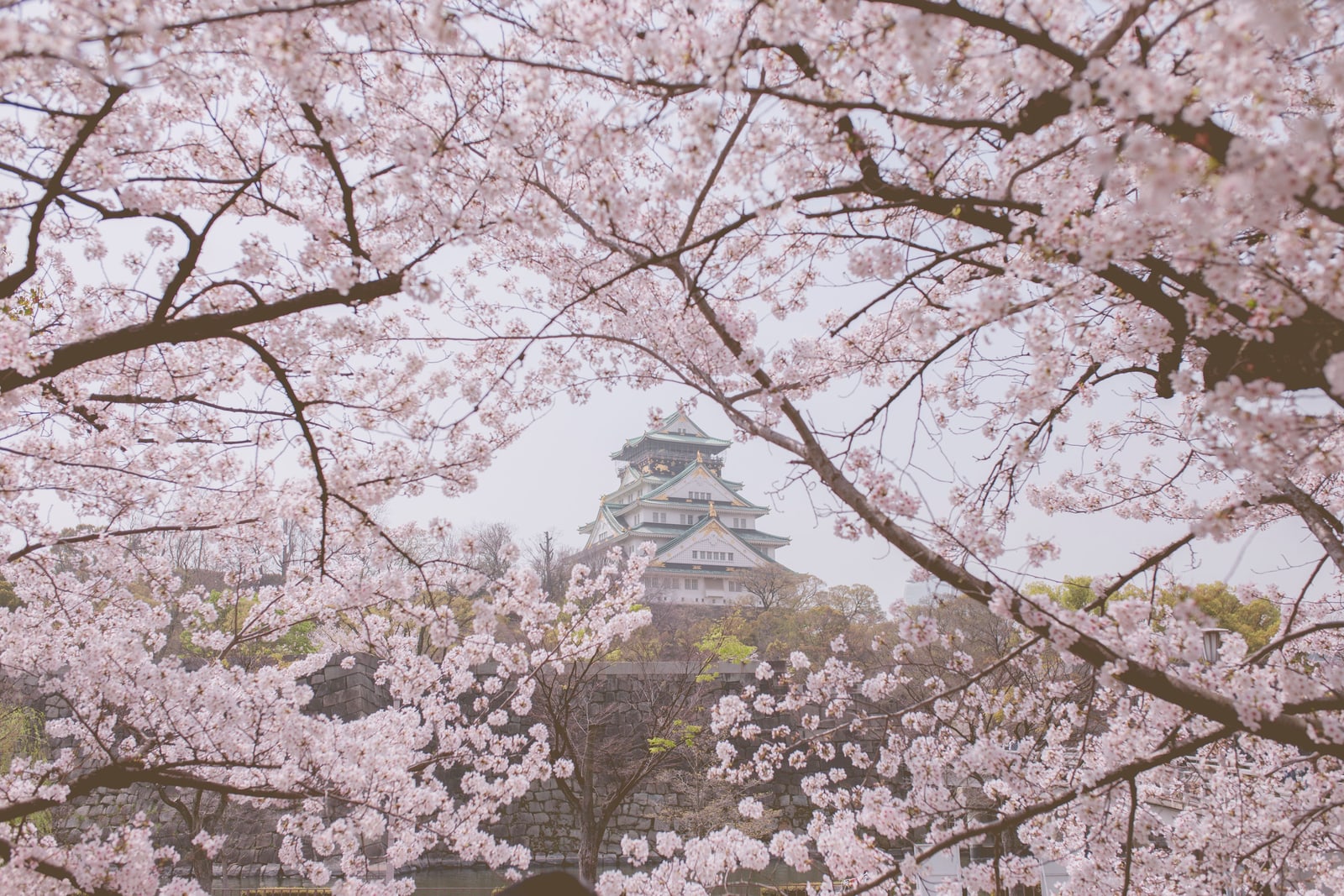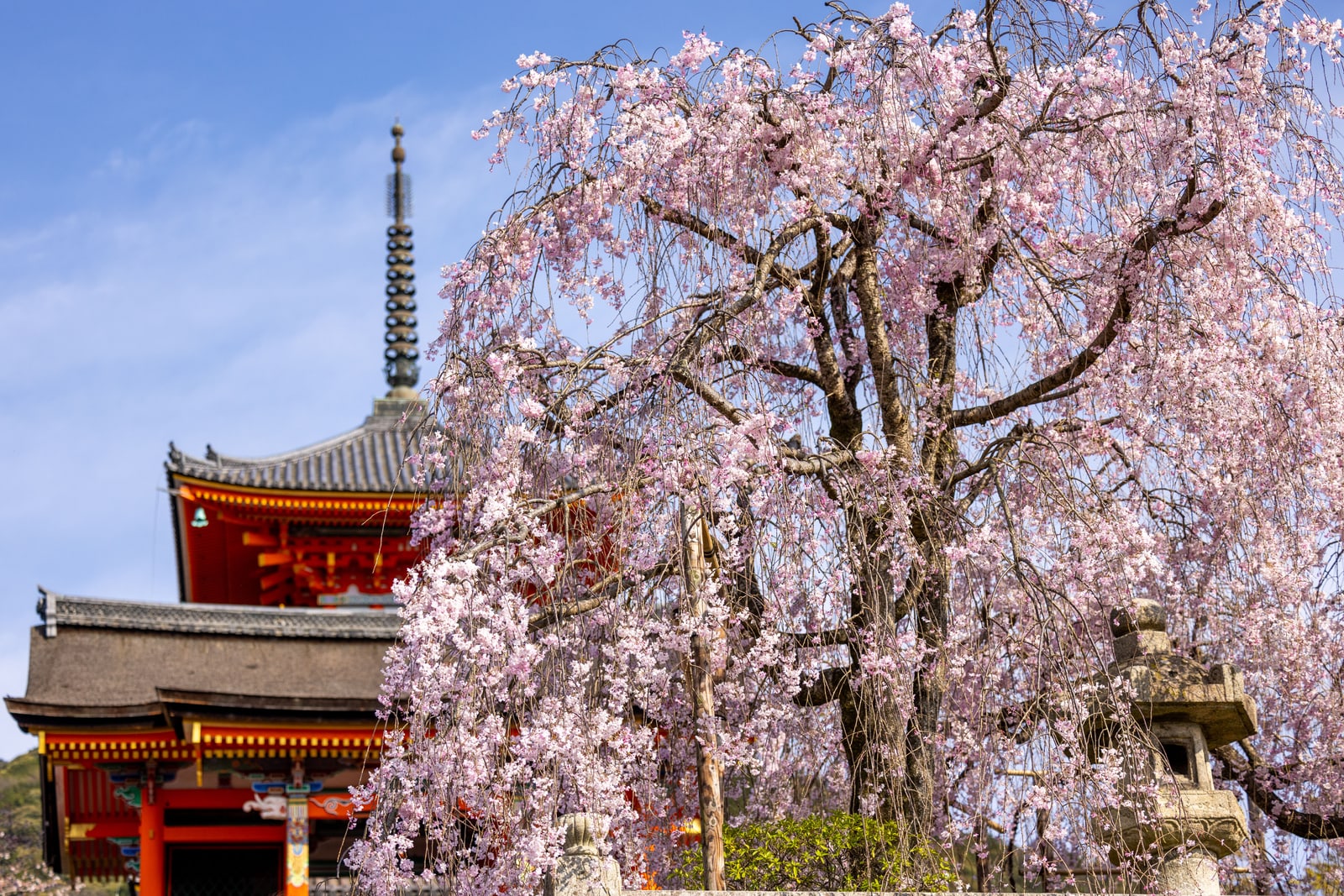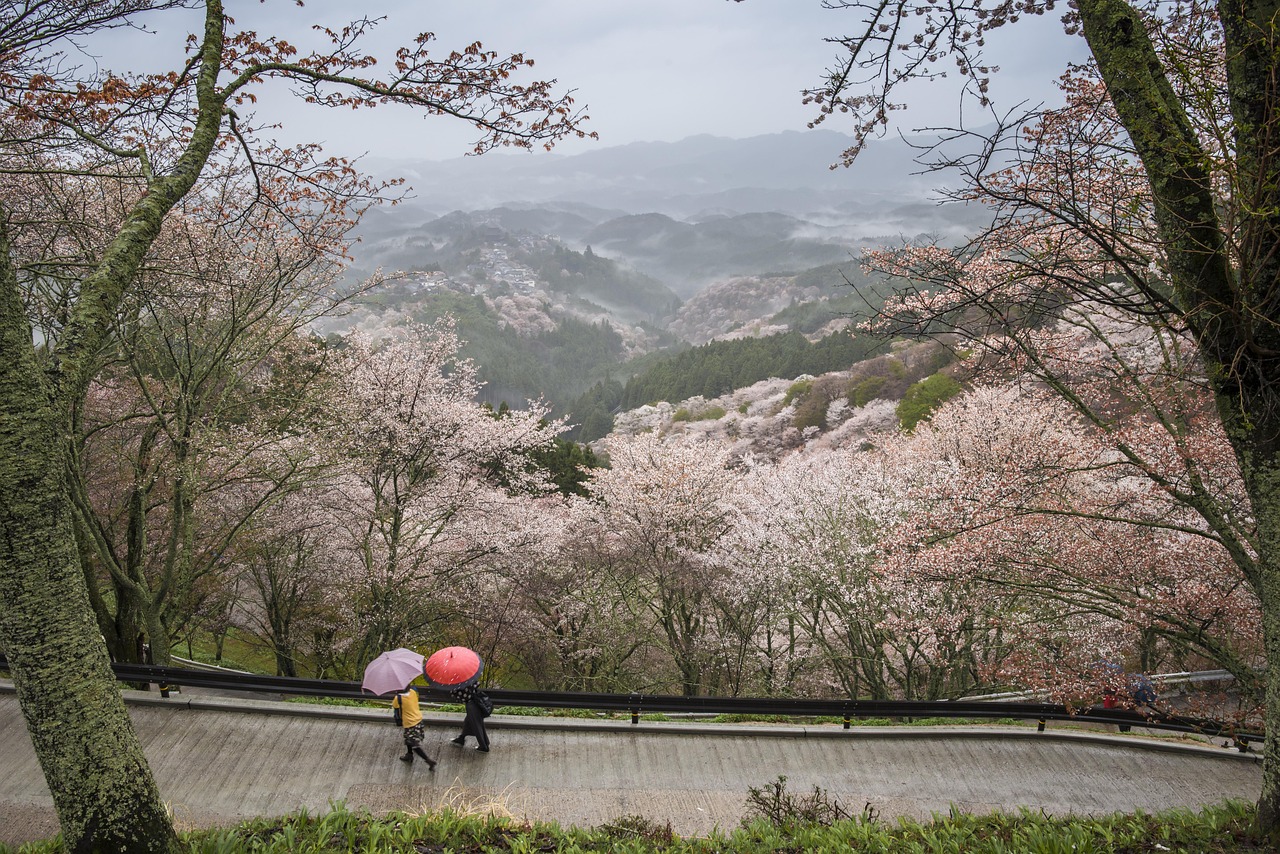
In April, Mount Yoshino turns pale pink from the bottom up. About 30,000 cherry trees cover its slopes, most of them white mountain cherries. They open in order of height: the lower slope first, the paths near the top last.
Nobody planted them for the view. For centuries people set cherry trees here as offerings to Zao Gongen, the mountain’s deity. The local tourism association calls them proof of faith. The view came anyway. Its Japanese name is hitome senbon: a thousand trees at a glance.
Is it worth a full day from Osaka or Kyoto? Yes, if your trip lands in the first half of April. One direct limited express from Osaka gets you there in about an hour and a quarter. Go on a weekday if you can, and pick your slope by the date, because the bloom climbs.
Yoshino one day, Nara the next?
Kintetsu Rail Pass (1 Day / 2 Days / 5 Days / Plus) on Klook
Kintetsu's 2-day rail pass covers its trains across Osaka, Nara and Kyoto prefectures, the Yoshino Line included. From Kyoto, those two days cost more in single fares than the pass. For Yoshino alone, single tickets are cheaper.
Check the Kintetsu Rail Pass on Klook →Sold on Klook (Klook Travel Technology Limited), an online travel agency; the pass and the trains are Kintetsu Railway's, and the pass is for foreign visitors only. For Mount Yoshino, choose the 2-day or a 5-day version: the 1-day zone doesn't include the Yoshino Line. Limited express seat tickets are separate. Before you pay, check on the listing which version you are buying, how the digital ticket is activated, the cancellation terms and the price in your currency.
Pick your slope by the date
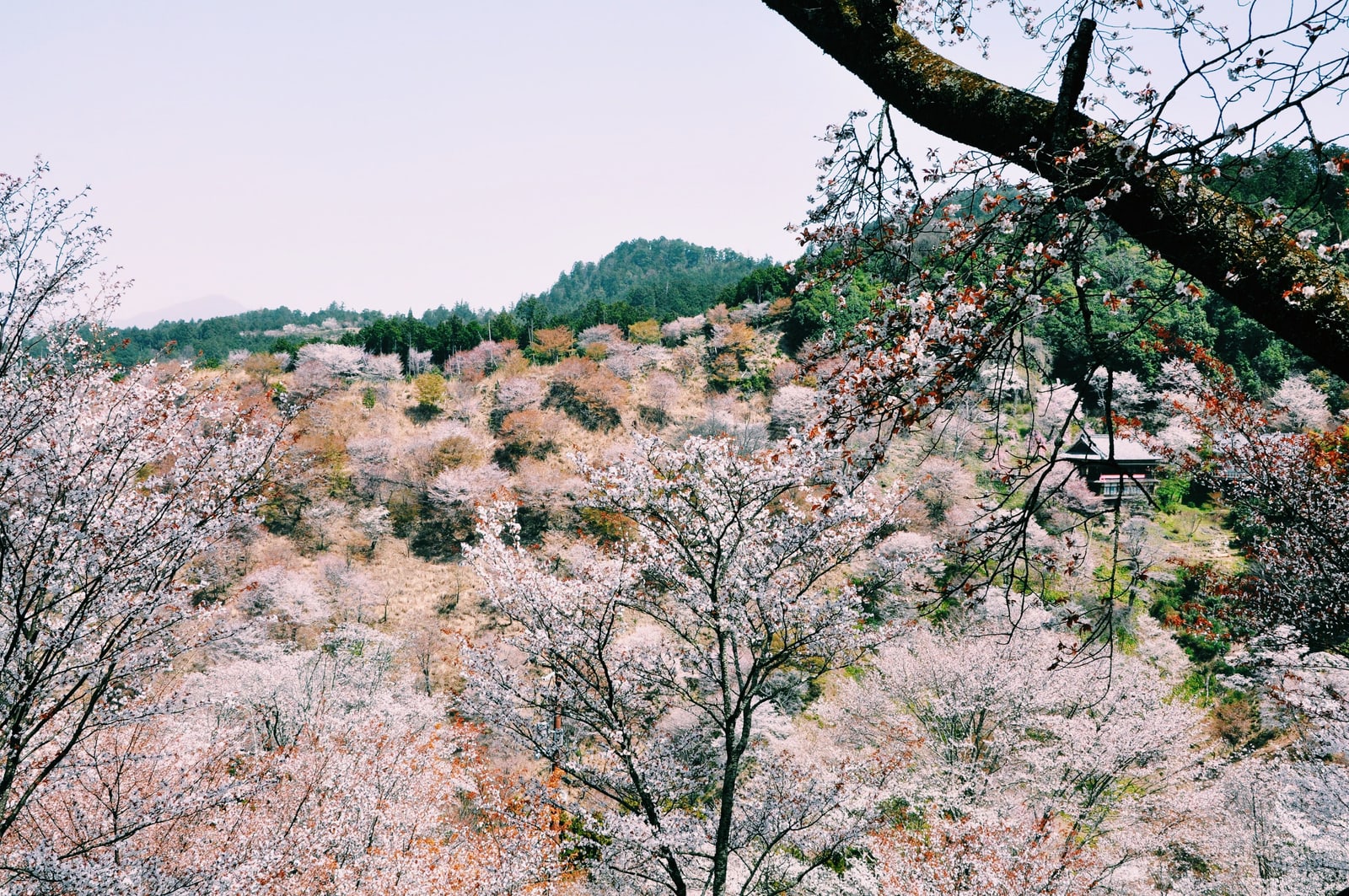
The mountain has four areas, stacked one above the other: Shimo Senbon at the bottom, then Naka Senbon, Kami Senbon, and Oku Senbon at the top. The tourism association says the bloom usually starts in early April and takes about a month to climb from the first to the last.
In 2026 it climbed faster. The association’s bloom table put full bloom on April 1 in Shimo Senbon and April 9 in Oku Senbon. The two middle areas fell in between. Osaka’s sample tree hit full bloom on April 3 that year.
So the lower mountain can peak the same week as the cities. Arriving in the first days of April? Aim for Shimo and Naka Senbon, which Japan’s tourism board singles out for their abundance of trees. A week later, ride up. The top of the mountain is where the bloom still is.
Nobody can date 2027 yet. Weathernews says its bloom pages return in February 2027, and the association posts each area’s status through the season. The city calendars are in the Osaka and Kyoto guides.
Up from the station: the old ropeway or the winding slope
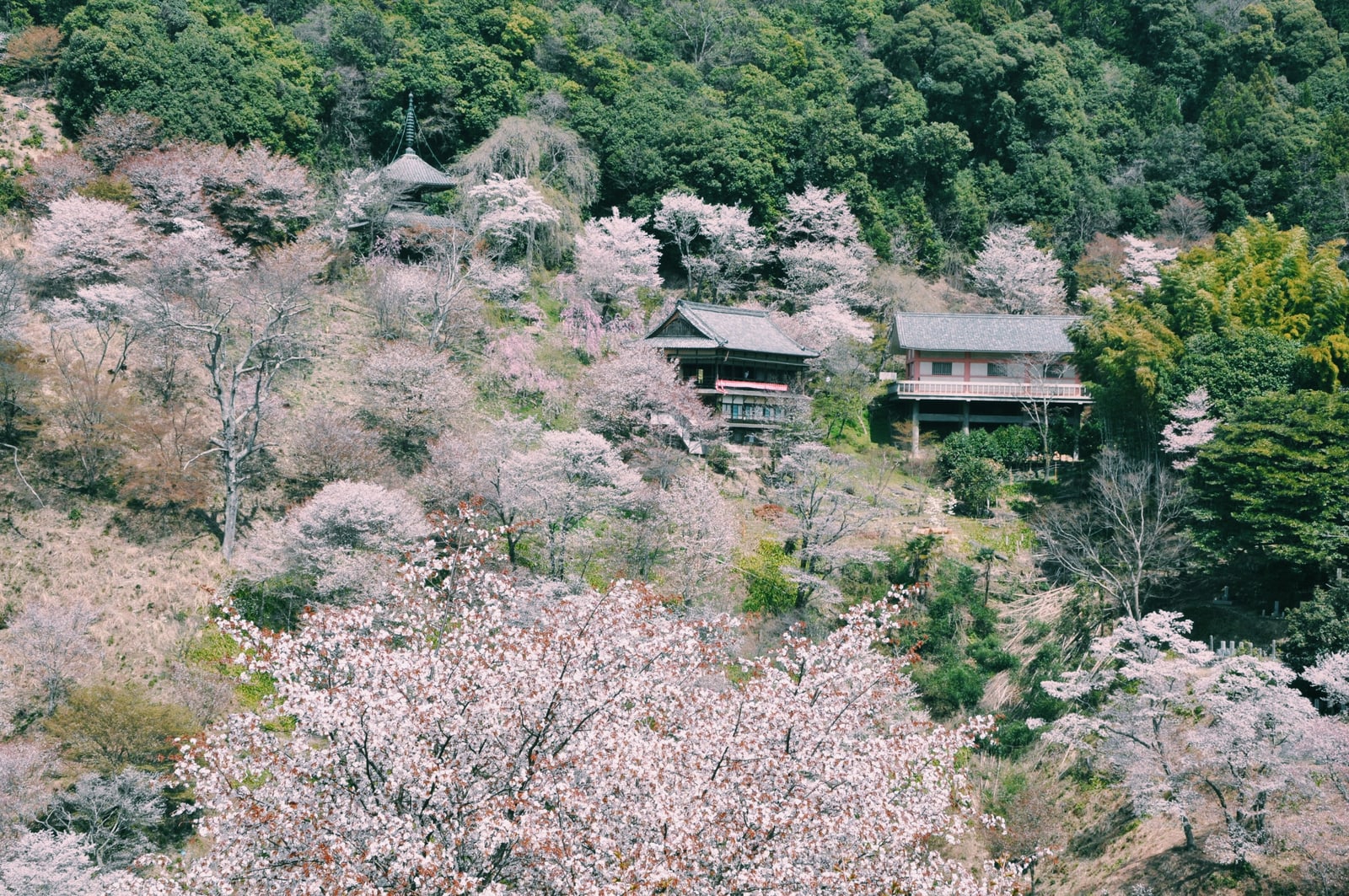
Yoshino Station sits at the foot of the mountain, and from there you choose. The ropeway, which its operator calls Japan’s oldest, lifts you to the upper station in about three minutes. Or walk the Nanamagari slope, the winding path up through Shimo Senbon. It’s about twenty minutes uphill.
At the top, the bus route strings the sights together. It passes Kinpusen-ji’s Zao-do hall, then Katte Shrine, the turn for Nyoirin-ji, and Chikurin-in, where Naka Senbon’s bus stop is. The association lists places to eat in the lower, middle and upper areas, so lunch can wait until you’re up there.
In cherry season a temporary Nara Kotsu bus also runs from the station to Naka Senbon. It saves the climb on a date that calls for the upper mountain.
Higher up: Hanayagura and Oku Senbon
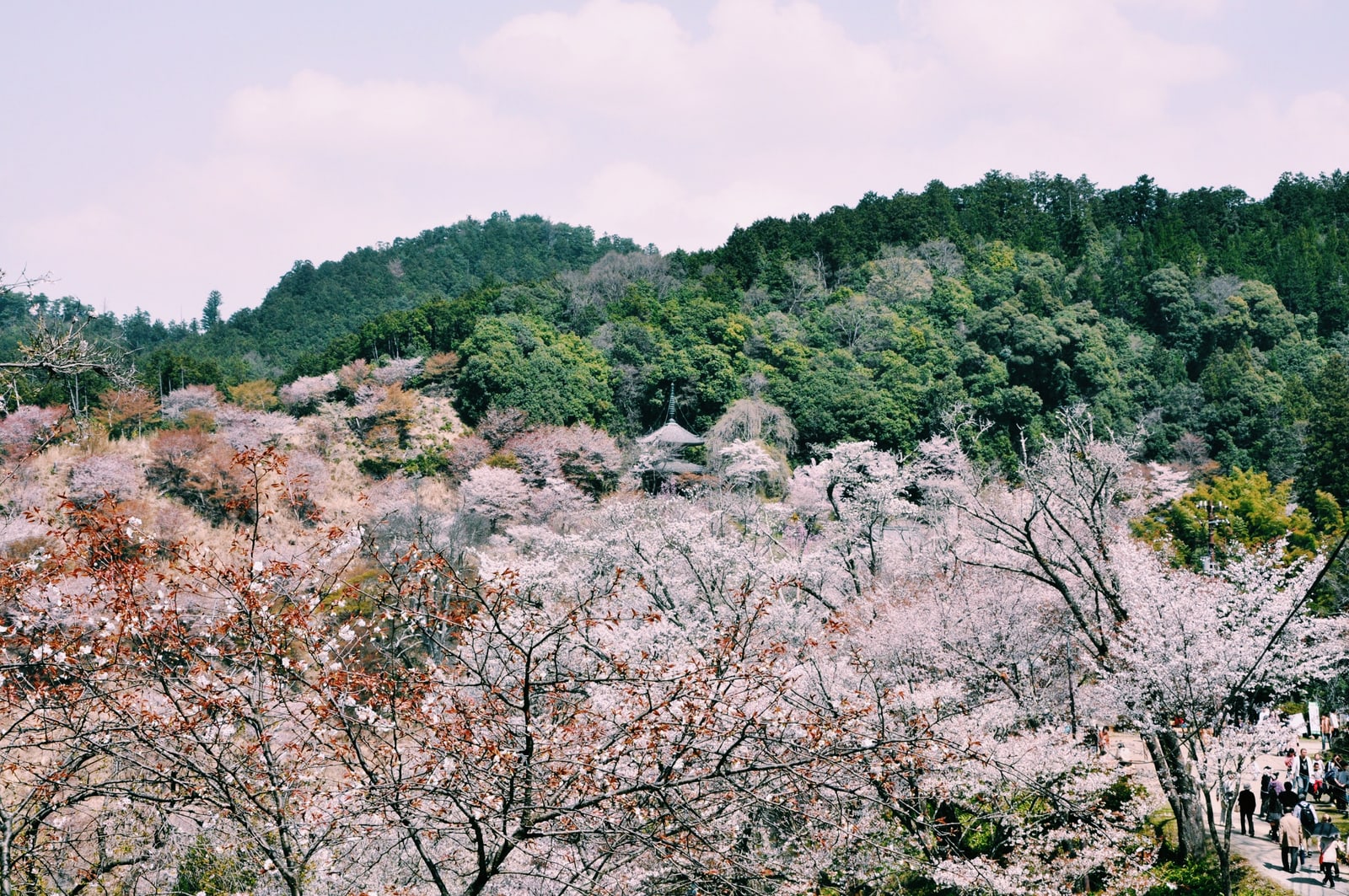
Kami Senbon is the next area up from Chikurin-in, and its lookout is the Hanayagura observation deck. Wear shoes made for hills. The association points out how much height separates the station from the top.
Oku Senbon blooms last and sits farthest in. In cherry season a bus runs there from Chikurin-in-mae, and the trees stand around Saigyo-an, the site of the poet Saigyo’s hermitage.
Bring coins. The ropeway and the Oku Senbon bus take cash only.
Stay for the lights, or ride back for dinner
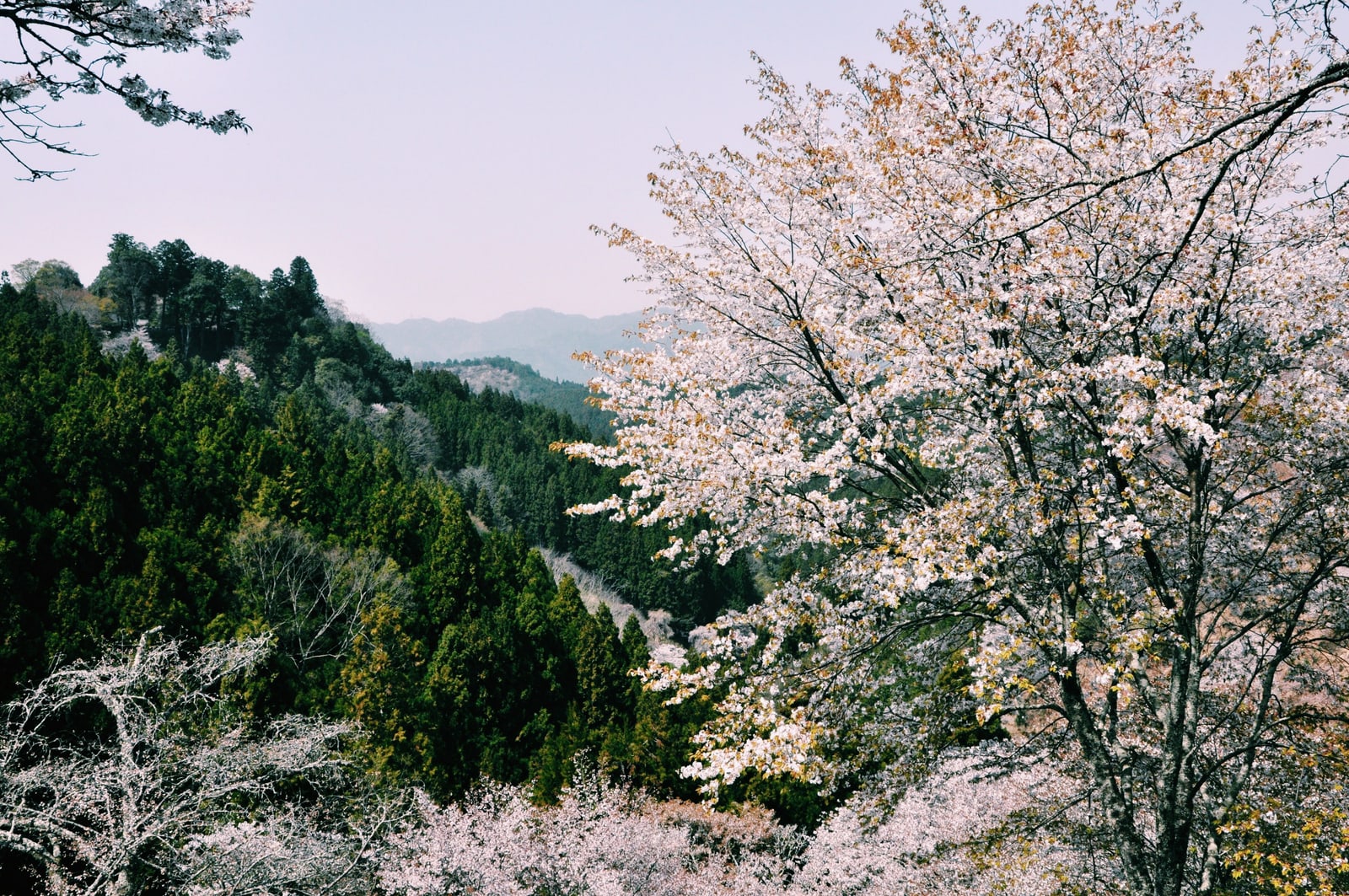
From Osaka the train is short enough for a day trip: the climb, one or two areas, and the ride back.
A night adds the dark. In 2026 the trees were lit after dark through the season, around the Nanamagari slope and in Kami Senbon. The association lists inns in the lower, middle and upper areas, and temple lodgings too. Sleep up there and you’re among the trees before the morning trains pull in.
Keeping your city hotel? Where to stay in Osaka and where to stay in Kyoto sort the bases by train line. Nara raises the same day-or-night question, and its own page works through it.
Single tickets, or the Kintetsu Rail Pass?
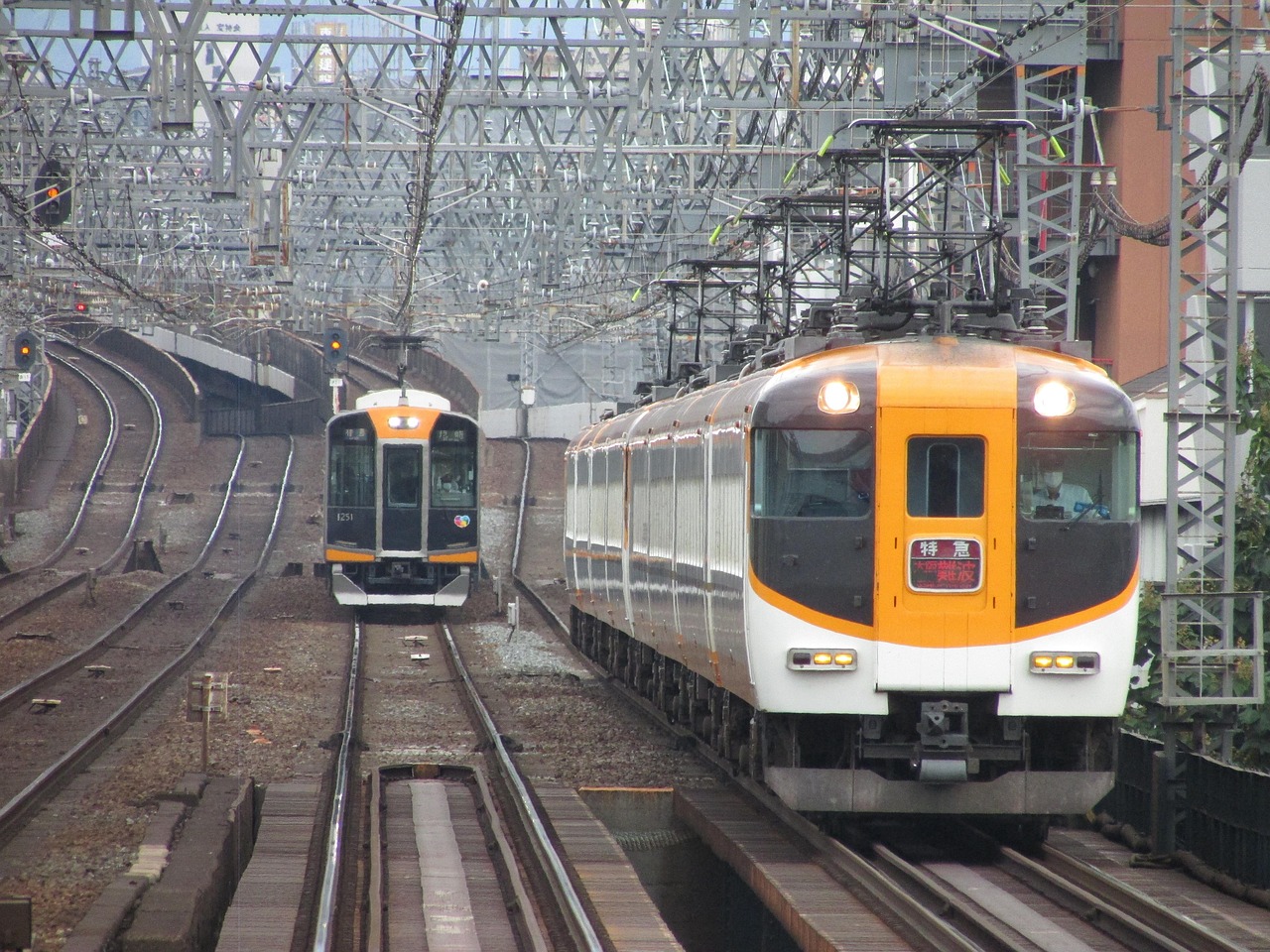
For Yoshino alone, buy single tickets. The 1-day Kintetsu Rail Pass doesn’t cover the trip, because its zone ends short of the Yoshino Line. The 2-day pass does reach Yoshino, at ¥3,700, and a round trip from either city costs less than that.
It earns its price when the next day is on Kintetsu too. Yoshino one day and Nara the next comes to ¥4,480 in single fares from Kyoto, ¥780 more than the pass. From Osaka those two days cost exactly the pass price. The full math is in the table below, and the Kintetsu Rail Pass page prices the longer trips.
Yoshino and Nara on back-to-back days
Kintetsu Rail Pass (1 Day / 2 Days / 5 Days / Plus) on Klook
The 2-day Kintetsu Rail Pass covers Kintetsu trains across Osaka, Nara and Kyoto prefectures for two days in a row, the Yoshino Line included. Pick the 2-day on the listing: the 1-day zone doesn't reach Yoshino.
See the Kintetsu Rail Pass on Klook →Sold on Klook (Klook Travel Technology Limited), an online travel agency; the pass and the trains are Kintetsu Railway's, and the pass is for foreign visitors only. For Mount Yoshino, choose the 2-day or a 5-day version: the 1-day zone doesn't include the Yoshino Line. Limited express seat tickets are separate. Before you pay, check on the listing which version you are buying, how the digital ticket is activated, the cancellation terms and the price in your currency.
Bloom dates, fares and times at a glance
| Area | Where it is | Full bloom in 2026 | Getting up there |
|---|---|---|---|
| Shimo Senbon (lower) | Above Yoshino Station, along the Nanamagari slope | April 1 | About 20 min uphill on foot, or the ropeway |
| Naka Senbon (middle) | Around Chikurin-in | April 2 | On foot along the bus road, or the cherry-season bus from Yoshino Station |
| Kami Senbon (upper) | Around the Hanayagura observation deck | April 4 | On from Naka Senbon |
| Oku Senbon (inner) | Around Saigyo-an | April 9 | Bus from Chikurin-in-mae to Oku Senbon-guchi |
Full-bloom dates are from the Yoshinoyama Tourism Association’s bloom table, as reported on April 14, 2026. Areas and access: the association’s cherry and access pages and Yoshino Omine Cable. Checked November 15, 2026.
| On the mountain | Last published (2026 season) |
|---|---|
| Ropeway, Senbonguchi to Yoshinoyama | ¥500 one way, child ¥250; about 3 minutes; one-way tickets only in cherry season |
| Bus, Chikurin-in-mae to Oku Senbon-guchi | ¥400, child ¥200 (March 21–May 6, 2026); cash on board |
| Night lighting | March 20–April 19, 2026, 18:00–22:00 |
| Peak days named for tour-bus parking | March 28–29, April 4–5, April 11–12, 2026 |
Sources: Yoshino Omine Cable (ropeway and bus pages), Yoshinoyama Tourism Association, Yoshino Visitors Bureau notice updated May 8, 2026. Checked November 15, 2026.
| From | Route | By limited express | Fare, one way | Limited express seat |
|---|---|---|---|---|
| Osaka-Abenobashi | Direct to Yoshino | About 1 h 15 min | ¥1,170 | ¥520; ¥730 on the Blue Symphony |
| Kyoto | Change at Kashihara-jingu-mae | About 1 h 30–40 min | ¥1,480 | Extra, priced when you book |
| Plan | Single fares | 2-day pass | Cheaper |
|---|---|---|---|
| Yoshino and back, from Osaka | ¥2,340 | ¥3,700 | Single tickets, by ¥1,360 |
| Yoshino and back, from Kyoto | ¥2,960 | ¥3,700 | Single tickets, by ¥740 |
| Yoshino, then Nara the next day, from Osaka | ¥3,700 | ¥3,700 | Even |
| Yoshino, then Nara the next day, from Kyoto | ¥4,480 | ¥3,700 | The pass, by ¥780 |
Nara days are priced at ¥680 each way from Osaka-Namba and ¥760 from Kyoto. The 1-day pass (¥1,900) isn’t in the table because its zone doesn’t include Yoshino. The 5-day pass (¥4,900) covers every Kintetsu line. Sources: Kintetsu Railway’s fare table of March 14, 2026, its Blue Symphony and rail pass pages, Yoshino Town’s access page and the tourism association. Checked November 15, 2026.
Getting there from Osaka and Kyoto
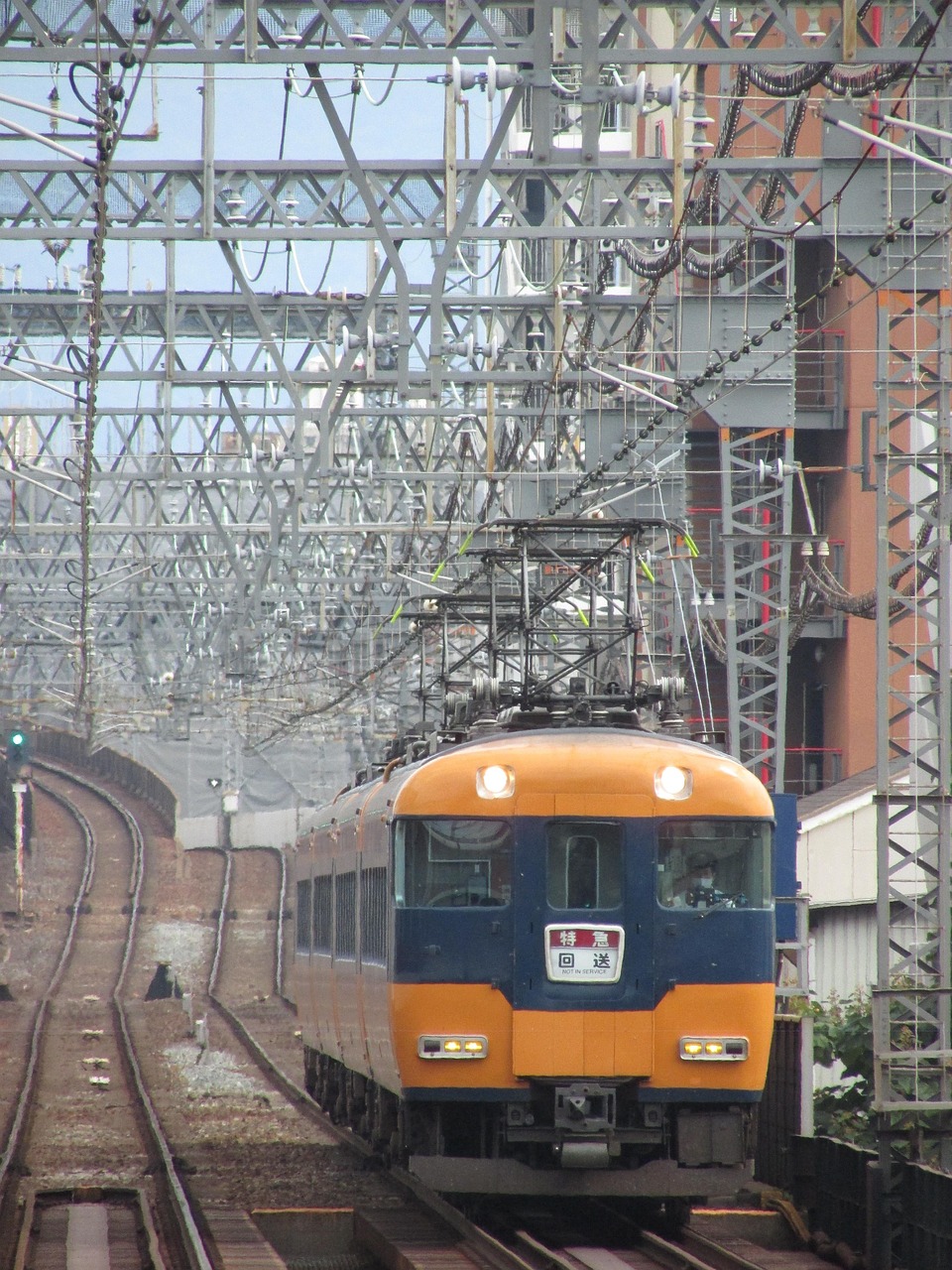
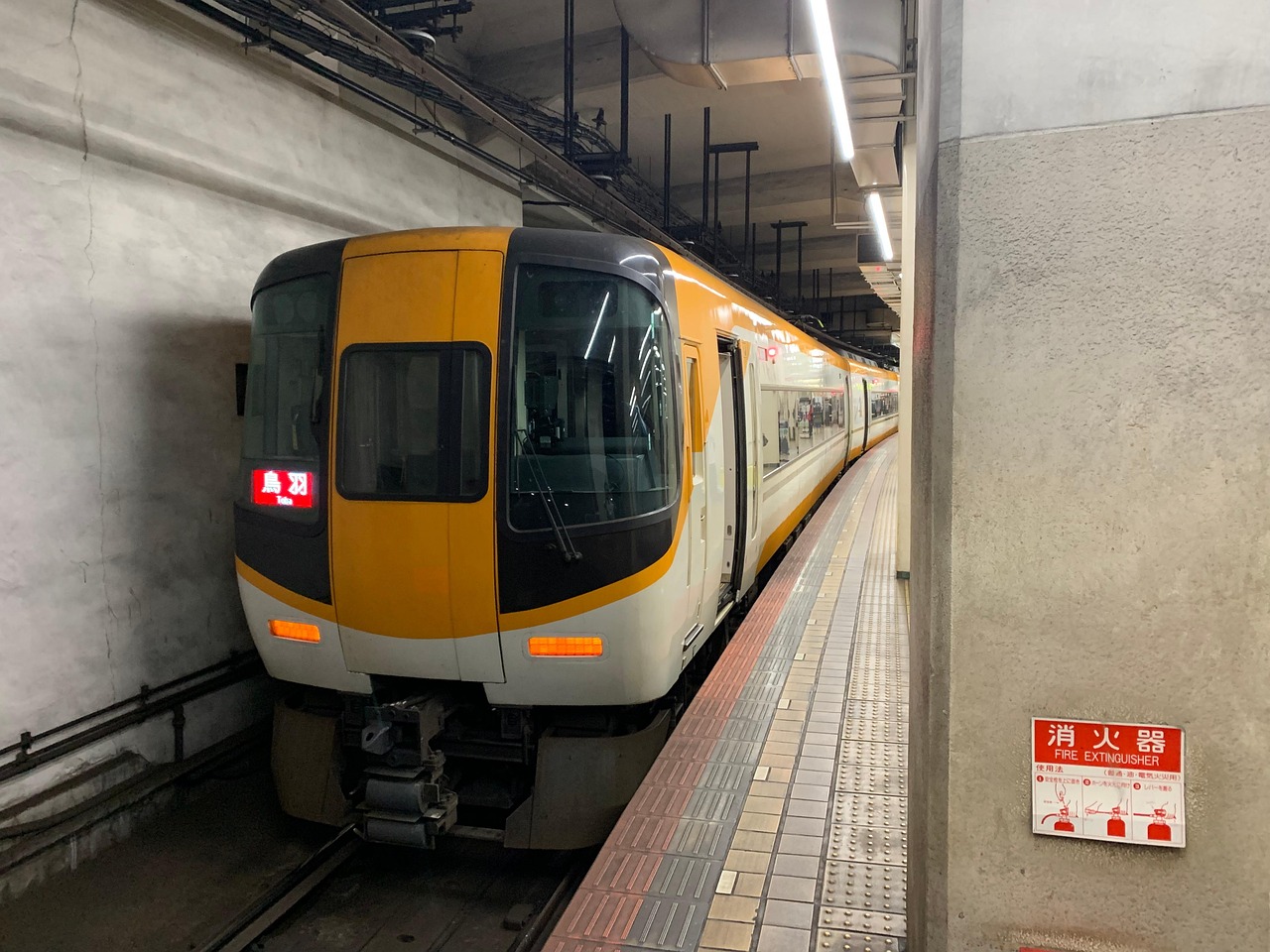
From Osaka, Yoshino limited expresses leave Osaka-Abenobashi, the Kintetsu station under the Abeno Harukas tower, and run direct. A limited express needs a seat ticket on top of the fare. Buy it online, where you pick the seat, or at a station counter or machine.
The Blue Symphony is the sightseeing version. It makes two round trips a day on the same line, every day but Wednesday.
From Kyoto, ride Kintetsu to Kashihara-jingu-mae and change to the Yoshino Line. Yoshino Town puts the trip at about an hour and a half by limited express. The tourism association says an hour and forty.
The ropeway is running as of November 15, 2026: daily through November 30, then Friday to Monday from December 7 to March 5, 2027. For the 2026 cherry weeks it ran special timetables from March 28 to April 19. The 2027 ones will go up on the operator’s site.
Questions
When do the cherry blossoms bloom on Mount Yoshino?
The local tourism association says from early April to the end of April, lower slope first. In 2026 its table dated full bloom from April 1 in Shimo Senbon to April 9 in Oku Senbon. Japan’s tourism board names early to mid-April as the best time.
Is Mount Yoshino a day trip from Osaka or Kyoto?
Yes. A direct Kintetsu limited express from Osaka-Abenobashi takes about 1 hour 15 minutes. From Kyoto it’s about 1 hour 30 to 40 minutes by limited express, with one change at Kashihara-jingu-mae.
Does the Kintetsu Rail Pass cover Mount Yoshino?
The 2-day pass (¥3,700) and the 5-day passes do. The 1-day pass (¥1,900) has a smaller zone that doesn’t include the Yoshino Line. Limited express seat tickets are separate on every version.
Is the Yoshino Ropeway running?
Yes, as of November 15, 2026. It runs daily through November 30, then Friday to Monday from December 7 to March 5, 2027. Cherry-season timetables are posted by the operator, Yoshino Omine Cable.
Which days are busiest on Mount Yoshino in cherry season?
In 2026 the Yoshino Visitors Bureau named three weekends as peak days for tour-bus parking: March 28–29, April 4–5 and April 11–12. The ropeway added departures on April 4 and 5. Weekdays in those weeks were outside the peak list.
Is Mount Yoshino lit up at night?
In 2026 the cherry trees were lit from March 20 to April 19, 18:00 to 22:00, around the Nanamagari slope in Shimo Senbon and in Kami Senbon. Dates can shift with the bloom.
When will the 2027 Mount Yoshino forecast come out?
No 2027 date is published yet. Weathernews says its bloom pages return in February 2027, and the Yoshinoyama Tourism Association posts each area’s status during the season.
Next
Mark the first half of April, then check the bloom pages in February before you fix the day. Spending the other days in the city? The Osaka cherry blossom guide runs on a calendar that overlapped with Yoshino’s lower slope in 2026.