Kyoto’s cherry season is measured on one tree. On the Japan Meteorological Agency’s 1991–2020 average, its Kyoto sample tree opens on March 26 and reaches full bloom on April 4. In the last ten years full bloom fell between March 24 and April 7. There is no 2027 forecast yet. The first ones arrive around the turn of the year, after most rooms are booked, so you book against the record.
Four conditions, in order:
- Your dates against that record.
- Which spots bloom that week. Daigo-ji’s cherries open one variety after another. Ninna-ji’s are late.
- The hour each one opens. A 9:00 gate can’t be beaten by getting up early. A path with no gate can.
- How you move. It decides whether the south side fits a day on your own, or a day tour does it better.
Want the south-side cherry spots in one day?
Kyoto Cherry Blossom Day Tour: Fushimi boat, Sewaritei, Keage tunnel and Daigo on Klook
The listing covers Daigo-ji, the Sewaritei embankment in Yawata, the Keage incline and a Fushimi boat, with car transfers between them and departures from Osaka or Kyoto.
Check the Kyoto cherry blossom day tour on Klook →Sold on Klook (Klook Travel Technology Limited), an online travel agency. Before you book, check on the listing: the tour dates against the bloom forecast, the departure point (Osaka or Kyoto), whether the Fushimi boat ride and Daigo-ji admission are included or booked separately, the cancellation terms and the price in your currency.
First: put your dates against Kyoto’s record
The agency’s two dates mean specific things. First bloom is the first day five or six flowers are open on the sample tree. Full bloom is the first day about 80% are open. In Kyoto the gap between them ran from 6 to 10 days in the years below.
| Year | First bloom | Full bloom |
|---|---|---|
| 2017 | March 31 | April 7 |
| 2018 | March 22 | March 28 |
| 2019 | March 27 | April 6 |
| 2020 | March 22 | March 30 |
| 2021 | March 16 | March 26 |
| 2022 | March 24 | March 30 |
| 2023 | March 17 | March 24 |
| 2024 | March 29 | April 5 |
| 2025 | March 27 | April 5 |
| 2026 | March 23 | March 30 |
| 1991–2020 average | March 26 | April 4 |
Read your trip against the right-hand column. In eight of the ten years full bloom landed between March 28 and April 7. A stay that covers March 30 through April 5 would have contained the full-bloom day in five of these ten years. Land before March 20 and you are early for first bloom in eight years out of ten (only 2021 and 2023 opened sooner). Arrive on April 10 or later and full bloom has already passed in every one of them.
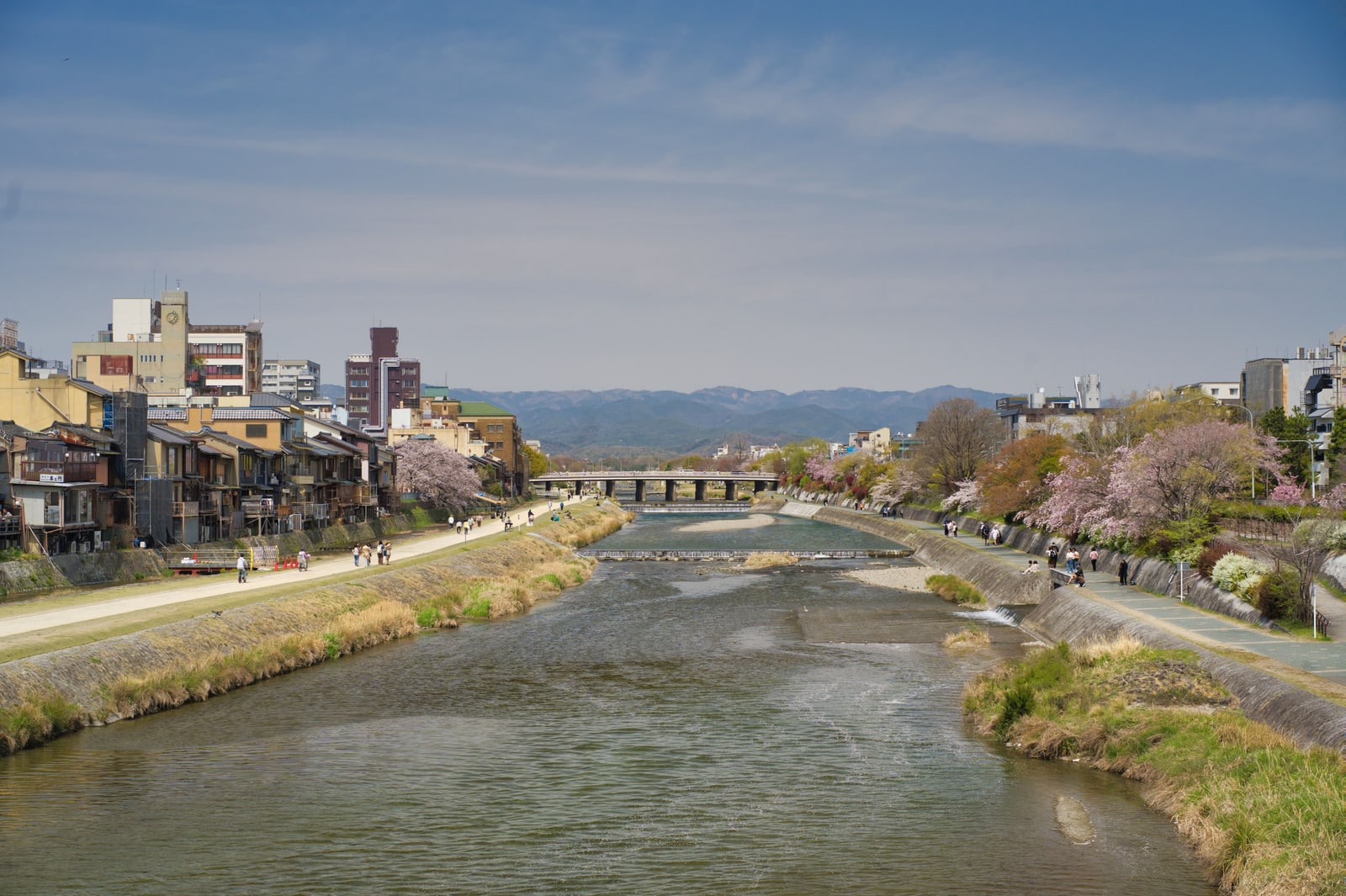
The forecasts come later and in rounds. For the 2026 season, Japan Meteorological Corporation’s first round came out in December 2025, and Weathernews put out its first on January 8, 2026, with a second in late January. Japan Meteorological Corporation issued fourteen rounds, the last on April 23, 2026. Weathernews says its spot-by-spot bloom pages for the next season go up in February 2027. Use those to fine-tune a plan, not to make one.
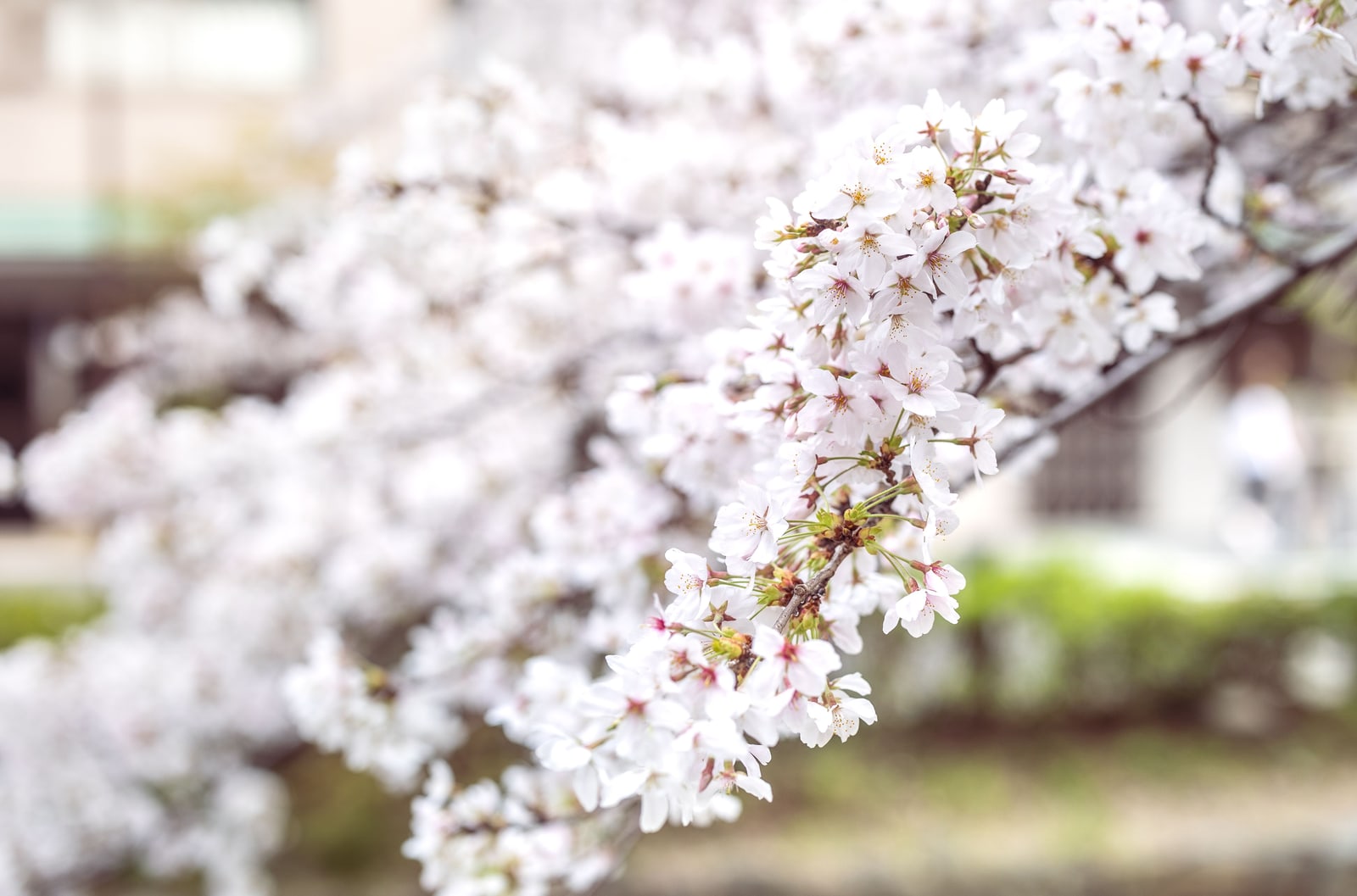
Then: which spots are in bloom that week
Spots don’t bloom on the same day, and the difference is what moves your week.
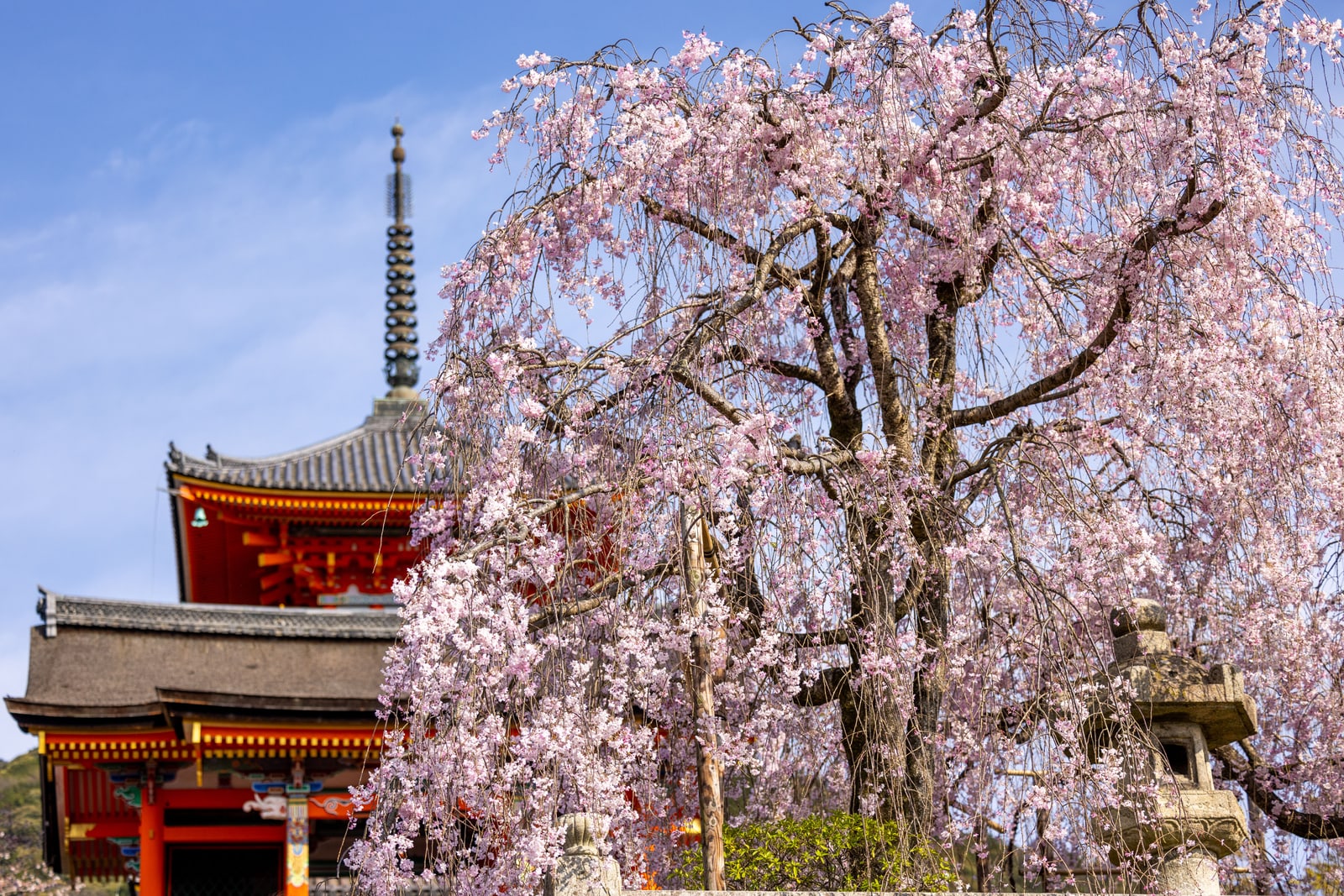
Daigo-ji has weeping cherries, Somei-yoshino, mountain cherries and double-flowered cherries, and the temple says they flower one after another through the season. It also charges its spring rate from March 20 to the third Sunday of April. If your dates are uncertain, this is the spot least likely to be all buds or all leaves.
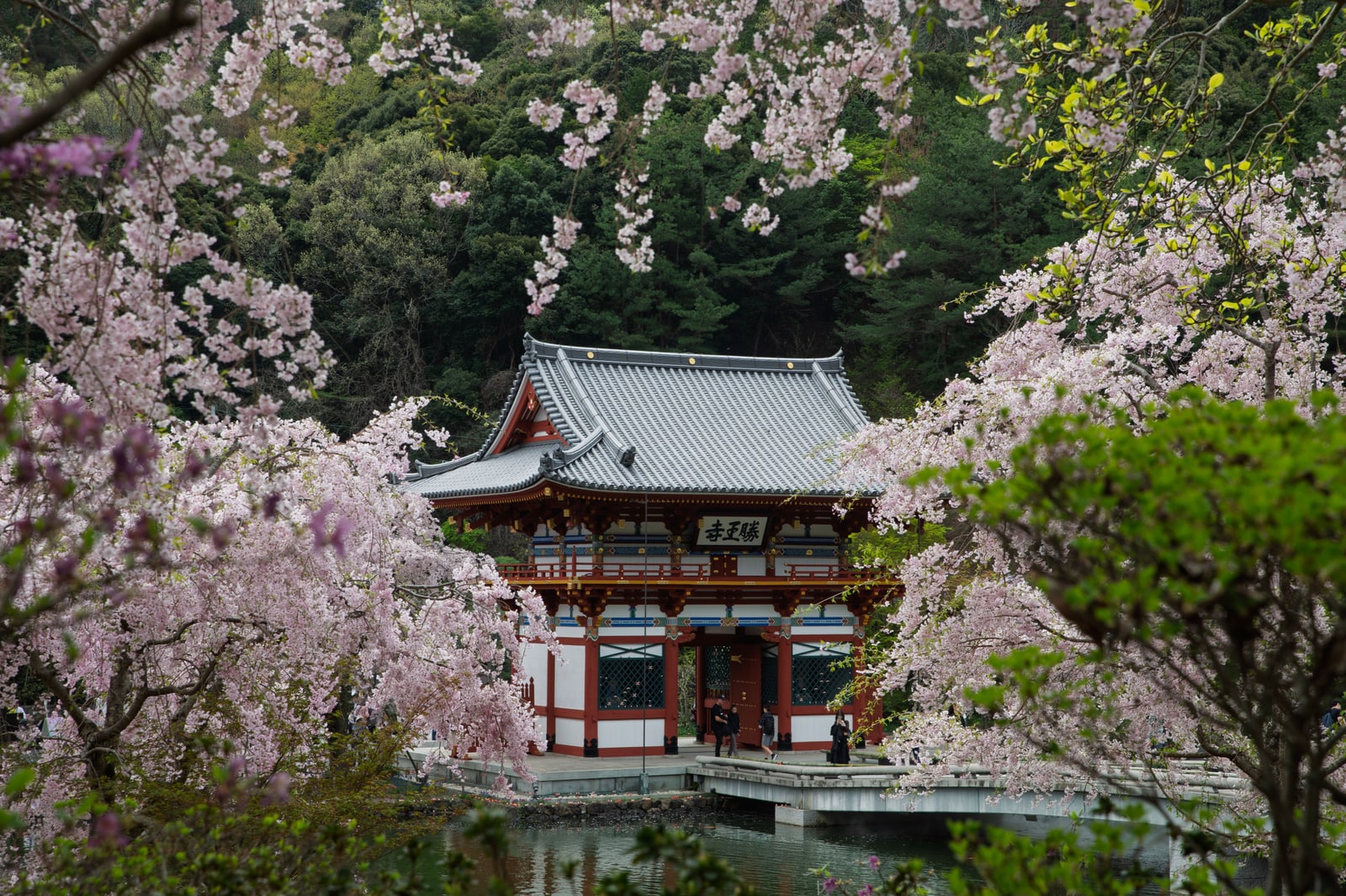
Ninna-ji in the northwest is the late side. The temple calls its Omuro cherries late-blooming and short, and charges a special entry during its Omuro Hana Matsuri. If you land in the second week of April, start here.
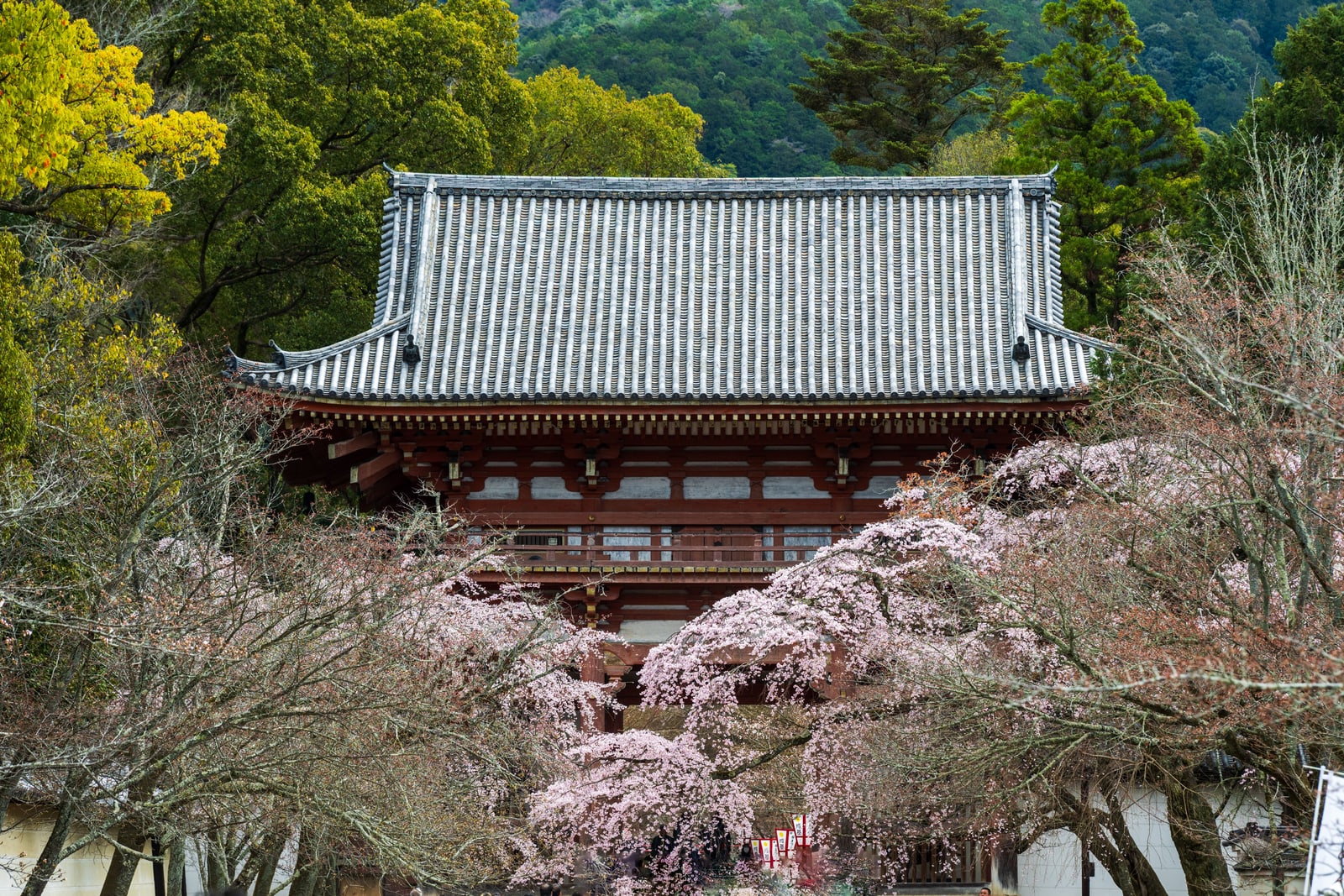
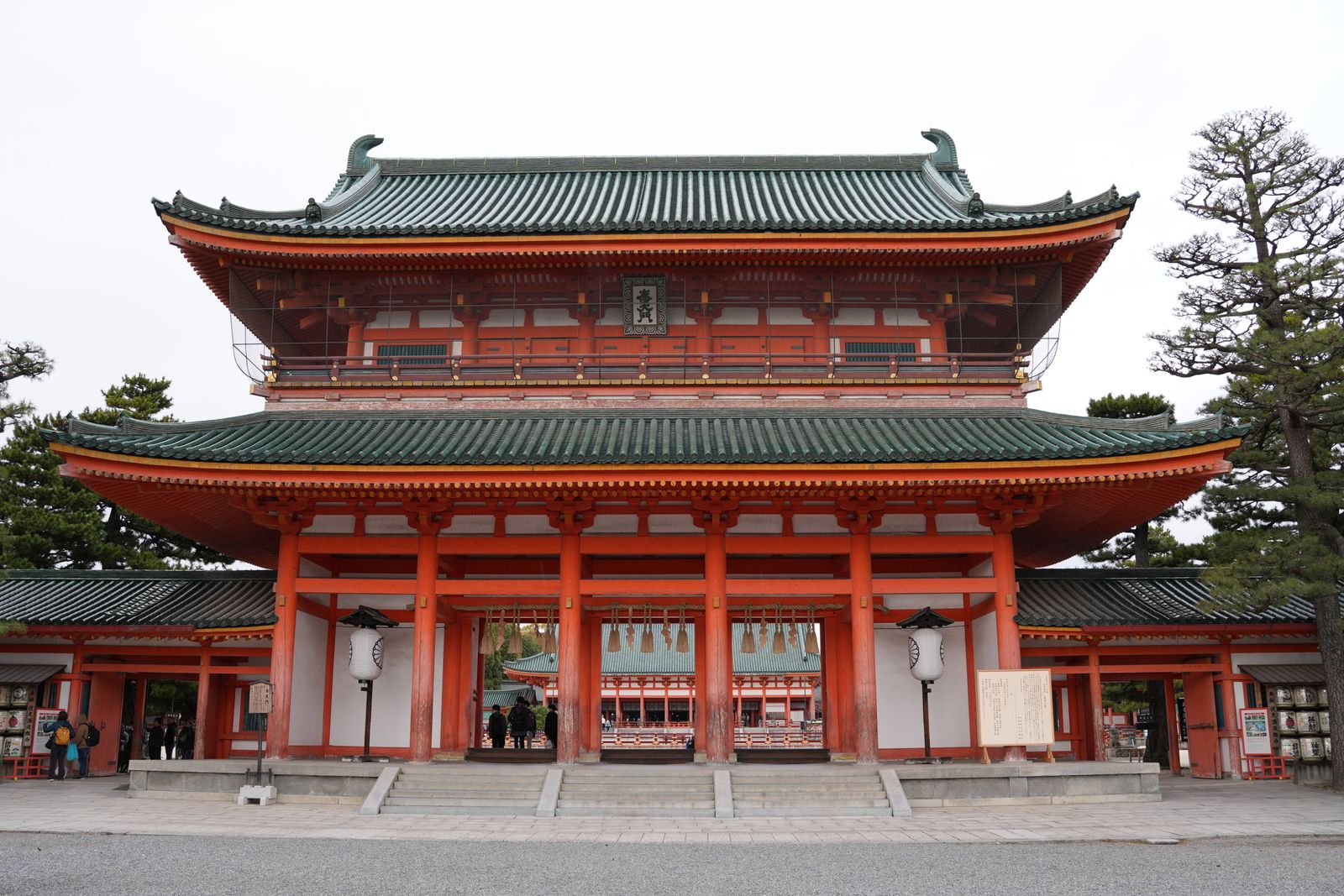
Heian Shrine’s garden has a red weeping cherry over its south garden. The shrine gives its cherry season as late March to mid-April and says that is when the garden is most crowded.
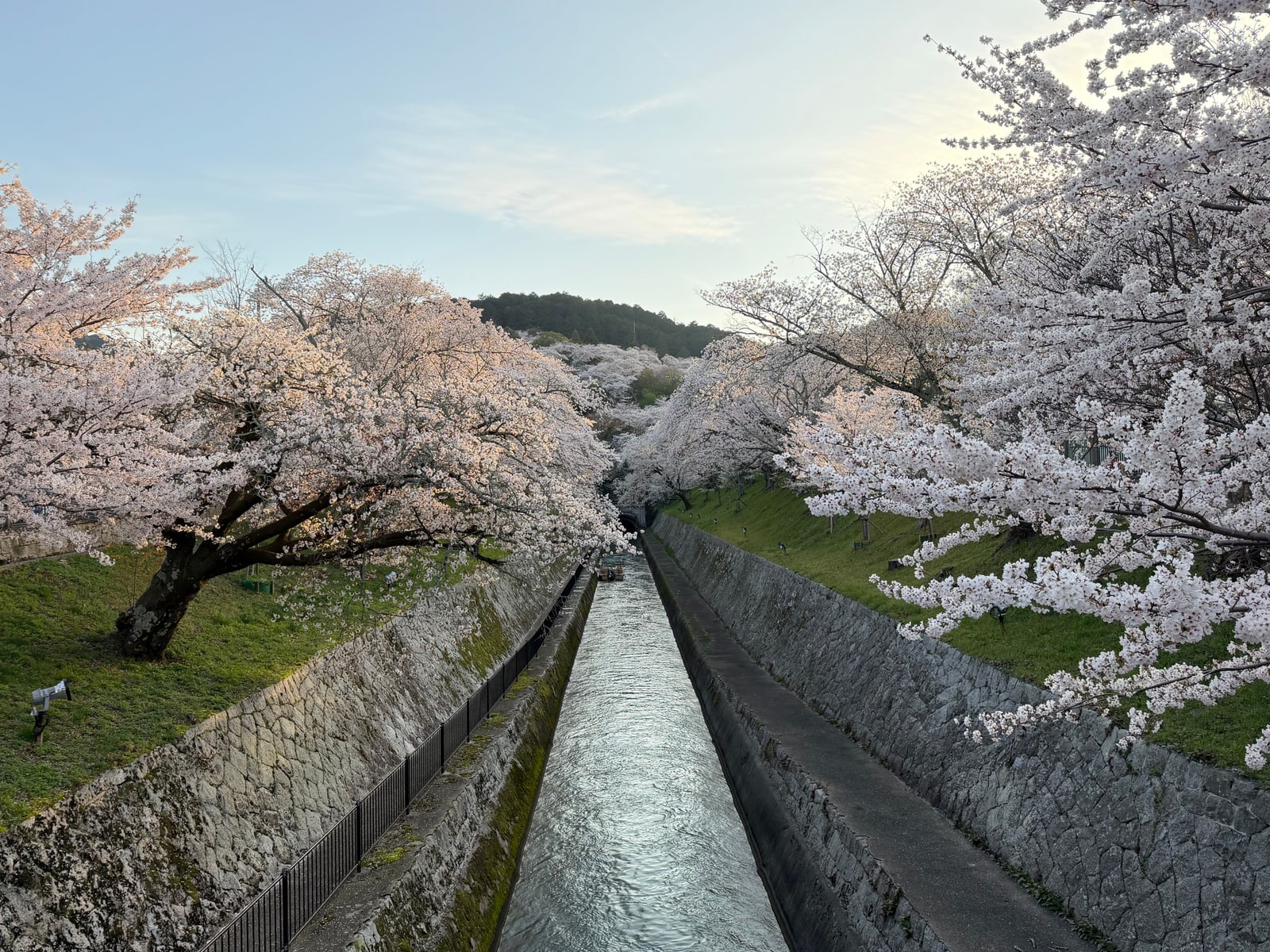
Sewaritei sits outside Kyoto city, on a river embankment in Yawata. The visitor center, Sakura Deai-kan, has an observation tower.
| Spot | Adult entry | Hours | Getting there |
|---|---|---|---|
| Daigo-ji | ¥1,800 for all three areas, ¥800 for one (spring rate) | 9:00–17:00, last entry 16:30; the temple says spring hours can change | Daigo station (Tozai line), exit 2, about 10 min walk |
| Ninna-ji | ¥800 special entry during Omuro Hana Matsuri | 9:00–17:00 (March–November), last entry 16:30 | Omuro-Ninnaji (Randen), about 3 min walk; city bus 26 from Kyoto Station, about 40 min |
| Heian Shrine garden | ¥600 | 8:30–18:00 (March 1–September 30), last entry 17:30 | Okazaki, east Kyoto |
| Kiyomizu-dera | not covered here | 6:00–18:00; spring night opening (2026: March 27–April 5) to 21:30, last entry 21:00 | Bus 206 or 100 to Gojozaka, then 10 min walk |
| Sewaritei (Yawata) | Tower free; may charge at busy times | Sakura Deai-kan 9:00–17:00, tower 9:00–16:30 | Keihan line, Iwashimizu-hachimangu station |
Fees and hours were checked on each operator’s site on October 21, 2026. Ninna-ji doesn’t list its festival dates yet, and Daigo-ji’s Hideyoshi blossom-viewing procession, held on the second Sunday of April, was canceled in 2026.
The hour you reach each one
The gate sets the first possible minute. Heian’s garden opens at 8:30, and Daigo-ji and Ninna-ji at 9:00. At those three, the crowd and you arrive on the same clock.
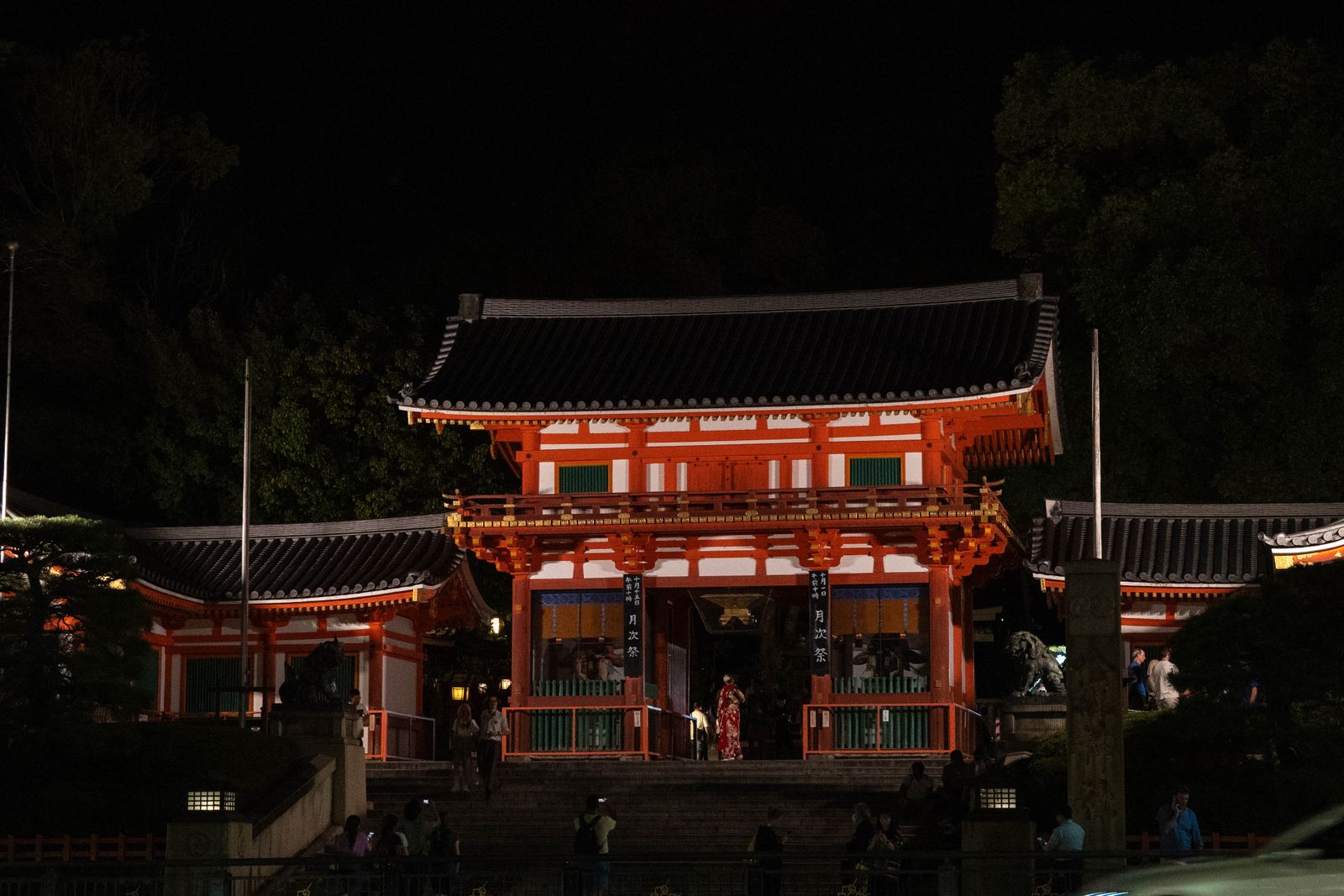
Kiyomizu-dera opens at 6:00. The city’s tourism site, kyoto.travel, puts it plainly: visiting “at a time when there are few people is a smart idea.”
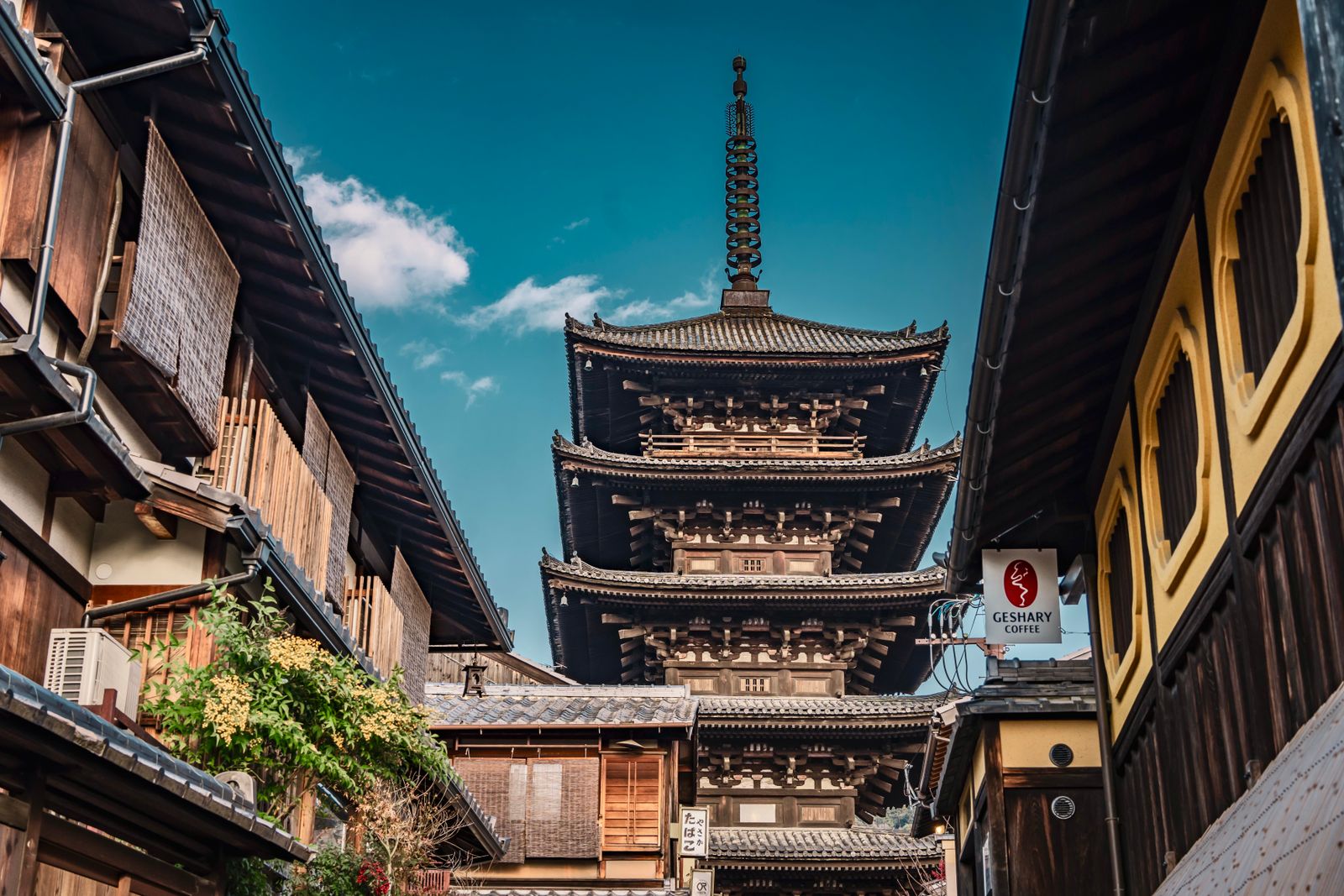
The same site tells Arashiyama visitors to go early in the morning and take “the relatively empty route through Kameyama Park,” and asks for extra care in cherry season.
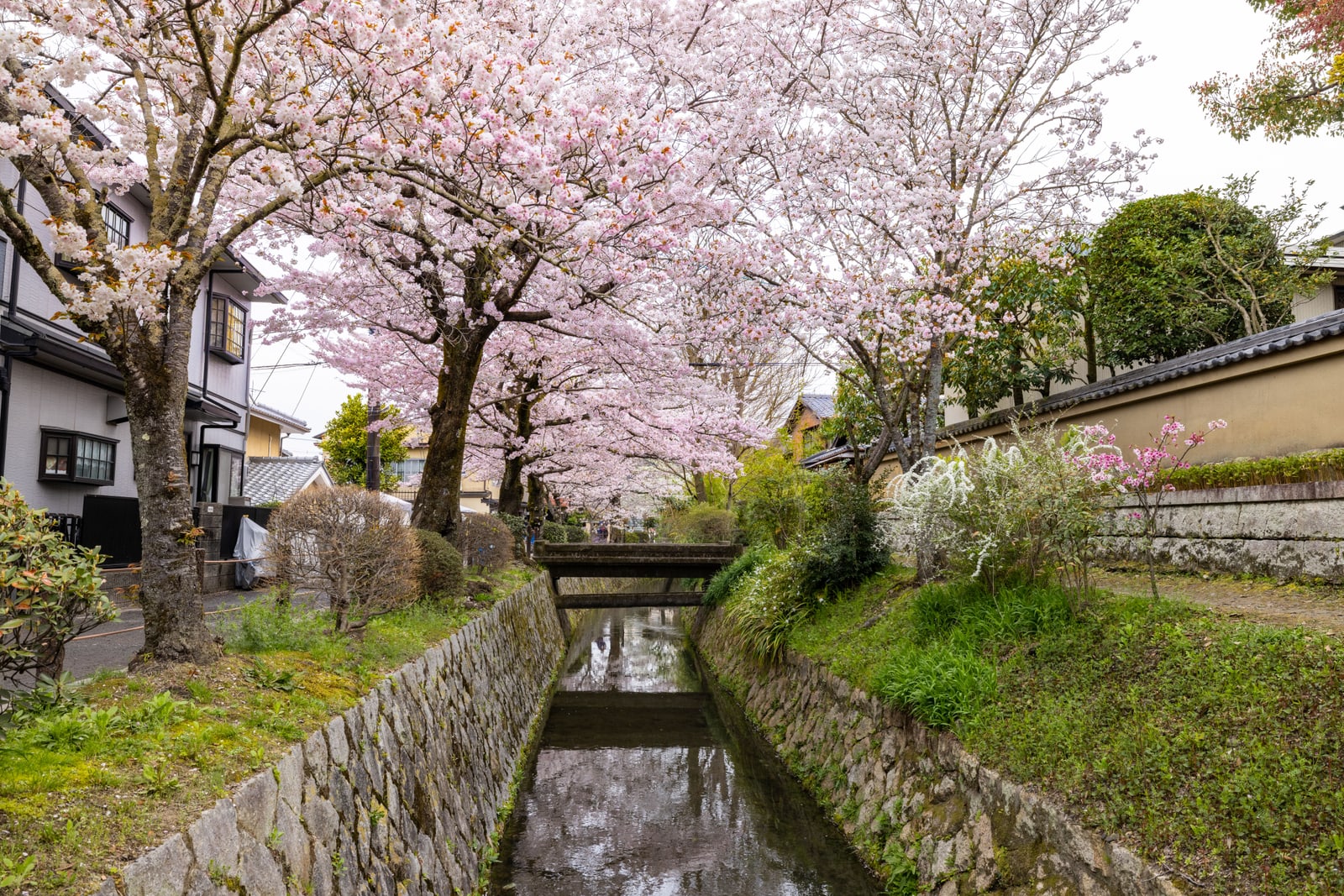
The Philosopher’s Path and Maruyama Park have no gate at all. Maruyama, the city’s oldest park (1886), has its weeping cherry in the middle. On these the hour is yours, and 7 a.m. is as valid as noon.
To see when each area fills, use the Kyoto Travel Congestion Forecast (global.kyoto.travel). It covers eleven spots in seven areas, including Philosopher’s Path and Okazaki Park, Saga-Arashiyama, Gion and Kiyomizu, and Fushimi. It rates each hour from 6:00 to 23:00 on a five-step scale, from “Comfort” to “Crowded,” and you pick the date and the weather. Put a Saturday next to a Tuesday in your week and compare. The site says accuracy improves as the day approaches.
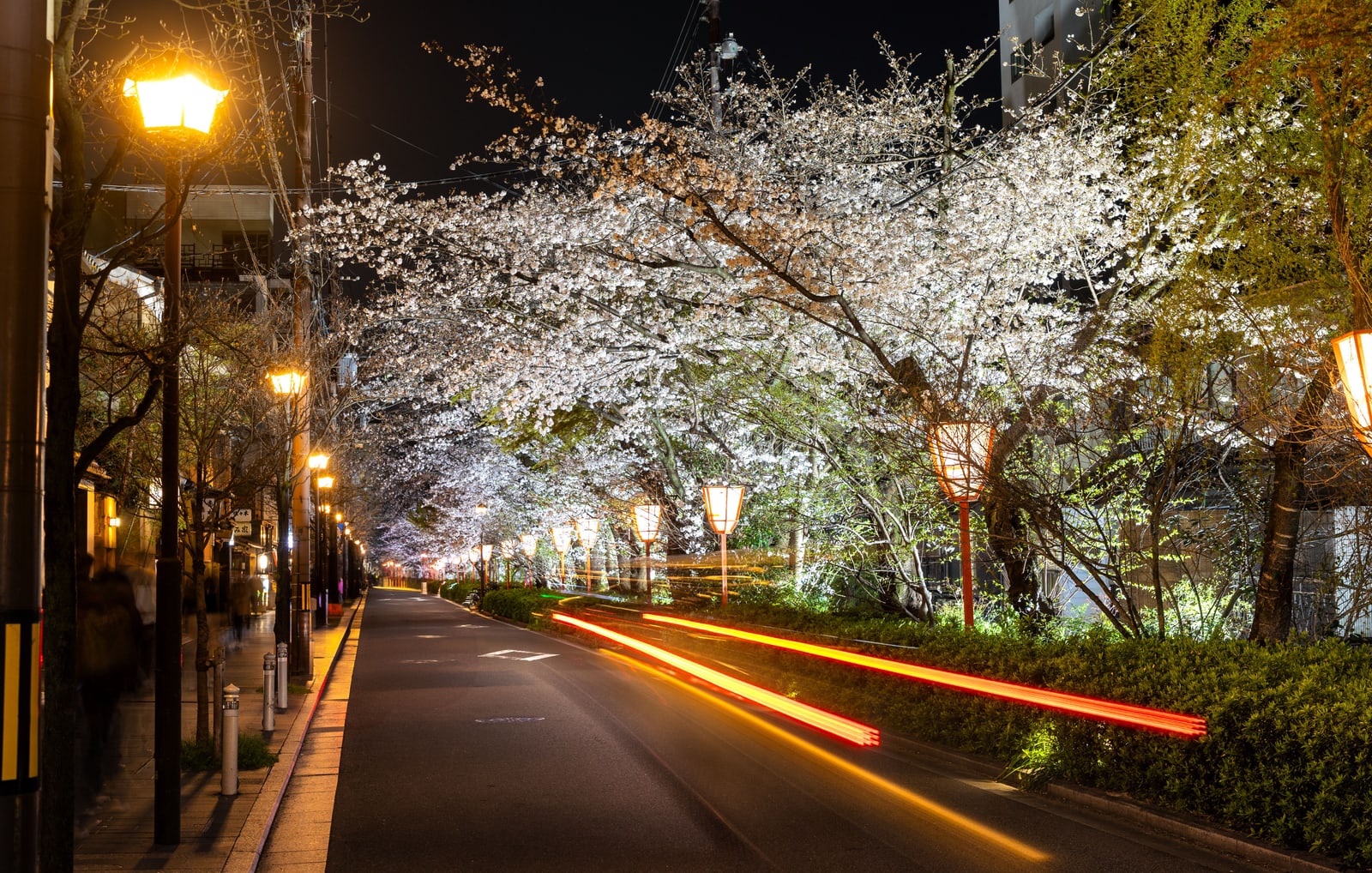
On a full-bloom weekend, drop the gated spot you can’t reach at opening, not the path. The path can move to early morning or after dark. The garden can’t.
After dark, Kiyomizu-dera’s 2026 spring night opening ran March 27 to April 5, open to 21:30 with last entry at 21:00. The 2027 dates were not on the temple’s site as of October 21, 2026.
In Gion, kyoto.travel is blunt: stopping maiko on the street or taking pictures of maiko without permission “is prohibited.”
How you move in peak week, and when a day tour beats going alone
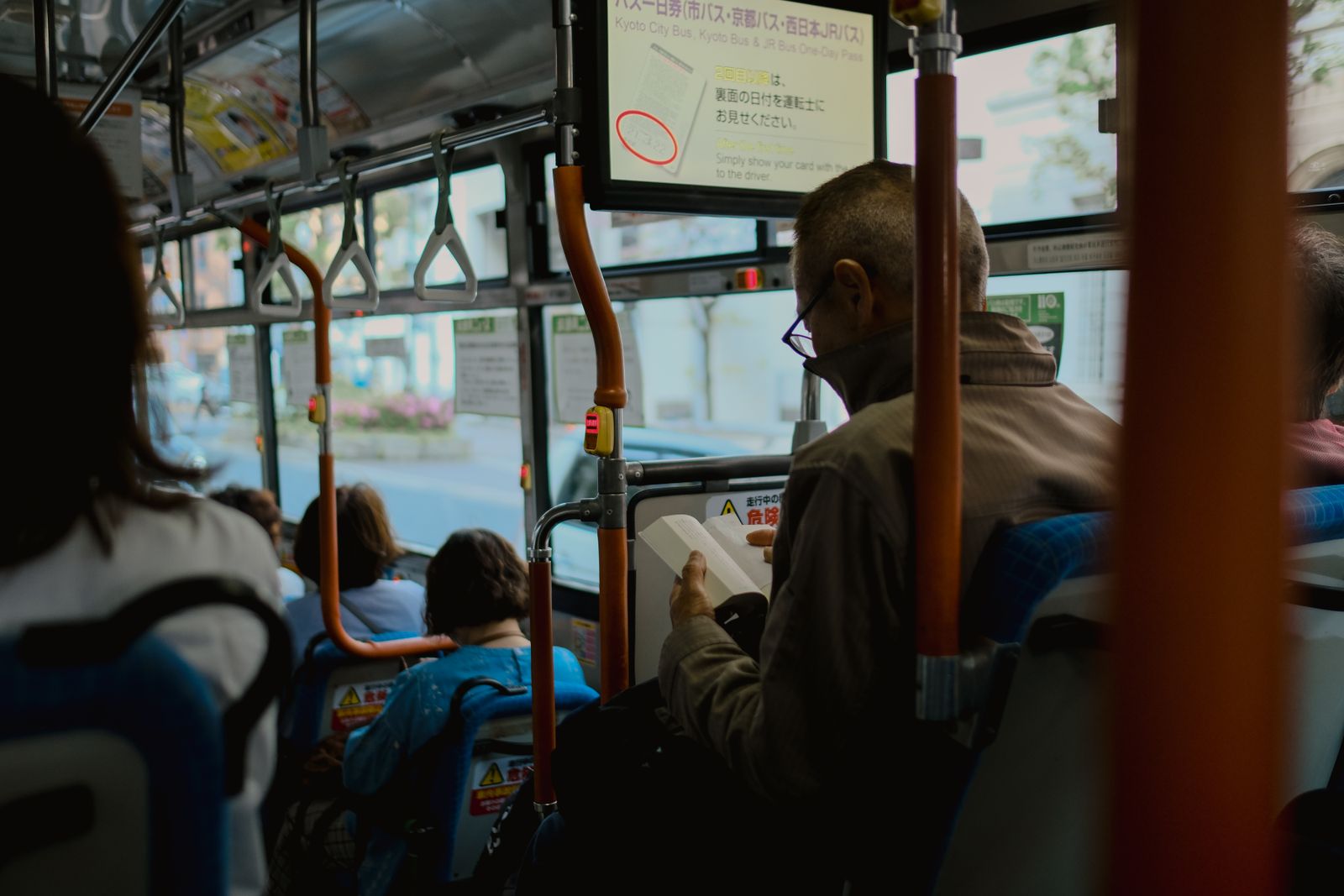
The subway Tozai line puts Daigo (T03), Keage (T09) and Higashiyama (T10) on one line, and Rokujizo (T01) connects it to Keihan. The Randen tram serves Ninna-ji and Arashiyama for a flat ¥250. From Randen Arashiyama it’s about 4 minutes on foot to the Togetsukyo area, and about 8 from JR Saga-Arashiyama. For Kiyomizu, Kyoto Station’s buses 206 and 100 stop at Gojozaka. The temple warns that some map apps show routes that don’t reach its grounds.
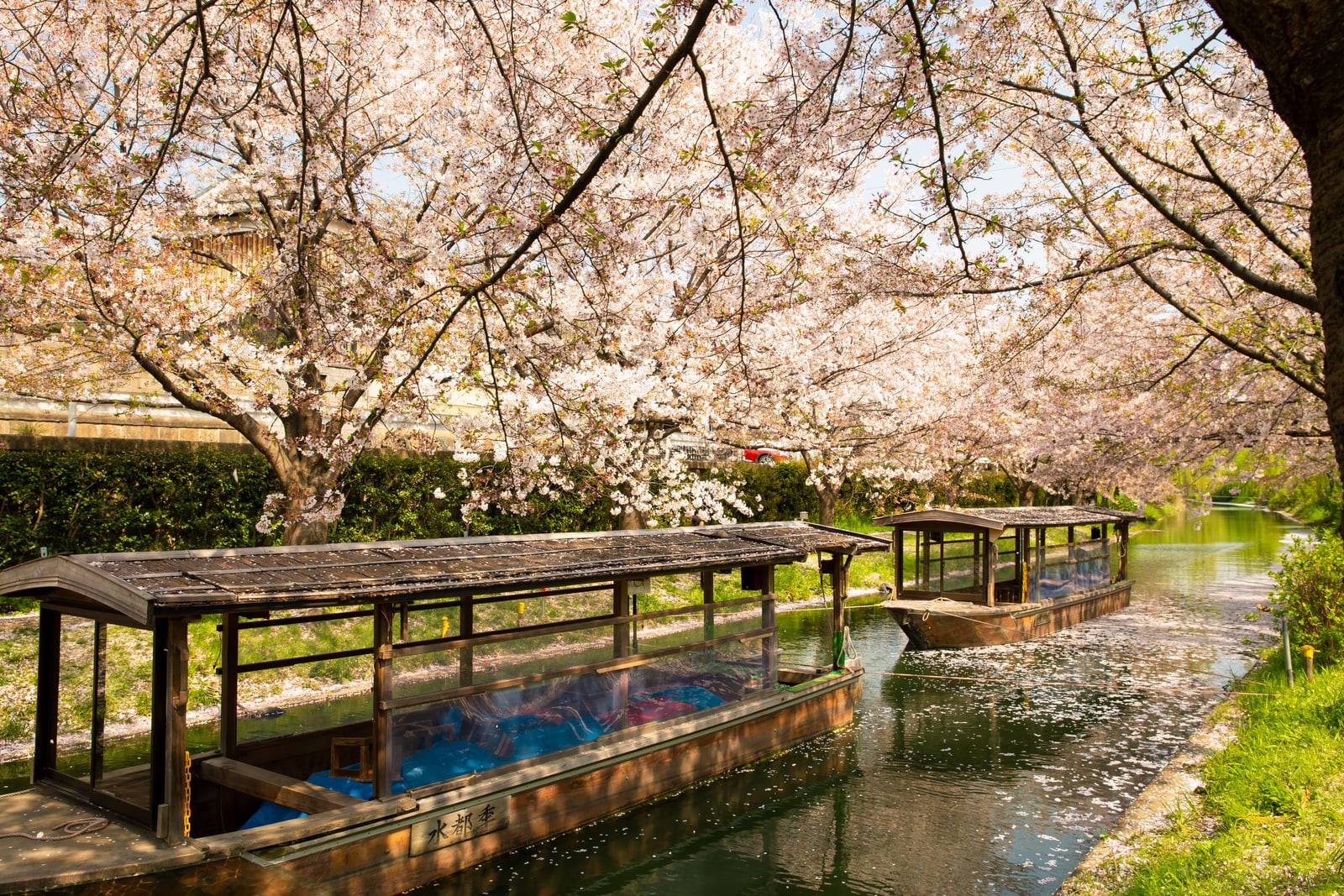
The tour on this page’s listing makes four stops: a Fushimi boat, the Sewaritei embankment, the Keage incline and Daigo-ji. It moves between them by private car. You can ride the same day by rail: Keihan to Iwashimizu-hachimangu for Sewaritei, back to Chushojima for Fushimi, the Keihan Uji line to Rokujizo, then the Tozai line to Daigo and on to Keage. That is two railways and three changes, and it has to reach Daigo-ji before its 16:30 last entry.
The conditions sort it:
- The tour fits if your dates fall inside the main bloom, you want Sewaritei (outside the city and on its own line), and a day without transfers is worth more to you than choosing your own hours.
- Going alone fits if your list is the Higashiyama side: the Philosopher’s Path, Maruyama Park, Kiyomizu-dera. None of those are on the listing. It also fits if you arrive April 10 or later and Ninna-ji is the point.
If you’ve already put your dates inside the March 28 to April 7 band and the south side is the day you want, check the listing against the rail route above. What the tour replaces is that chain of changes.
Taking the south side by car instead of four trains?
Kyoto Cherry Blossom Day Tour: Fushimi boat, Sewaritei, Keage tunnel and Daigo on Klook
One day covering Daigo-ji, Sewaritei, the Keage incline and a Fushimi boat, with private car transfers, per the listing. Confirm the date against the bloom forecast before you book.
Check the Kyoto cherry blossom day tour on Klook →Sold on Klook (Klook Travel Technology Limited), an online travel agency. Before you book, check on the listing: the tour dates against the bloom forecast, the departure point (Osaka or Kyoto), whether the Fushimi boat ride and Daigo-ji admission are included or booked separately, the cancellation terms and the price in your currency.
A worked example: four nights from March 31
Say you land March 31 and leave April 4, right on top of the average. In none of the last ten years did the full-bloom day itself fall on those five days. In eight of them it fell within three days either side; only 2021 and 2023 came earlier. Arriving just before or just after full bloom is the usual result, so this plan rests on gate hours and a room you can move, not on one day.
- Now: book a room you can cancel. Kyoto’s lodging tax is ¥400 per person per night for rooms of ¥6,000 to under ¥20,000 (room only, before consumption tax).
- January: read the first forecasts. Move a night if you can.
- Day one: Kiyomizu-dera at 6:00, then Maruyama Park and the Philosopher’s Path while the gated gardens are still closed.
- Day two: the south side, by tour or by the Keihan–Tozai route, Daigo-ji before 16:30.
- Day three: Arashiyama early via Kameyama Park, then Randen to Ninna-ji, the late one.
- One evening: Kiyomizu’s night opening, if 2027 runs on dates like 2026’s.
Next
Book a refundable room in Kyoto now for nights around April 1–4, the middle of the record. Then come back in January and move it once. Where to stay in Kyoto sorts out the area. Kyoto bus or subway handles the rides. If this is your first trip to Japan, read when to visit Japan before you settle on spring.