Every guide to visiting Japan eventually says the same thing: it depends. And it does depend — on when you can take leave, on how you feel about crowds, on what you want to see. But “it depends” is not an answer, and picking your months is the first real decision of the whole trip. It comes before flights, before the leave request, before anything else in the planning order.

So this page decides. The answer is anchored to the standard first-trip spine — Tokyo, Kyoto, Osaka — with the regional exceptions called out wherever they change the month math. And the months to avoid get equal billing with the months to aim for, because on a first trip the avoid-list is half the answer.

The short answer

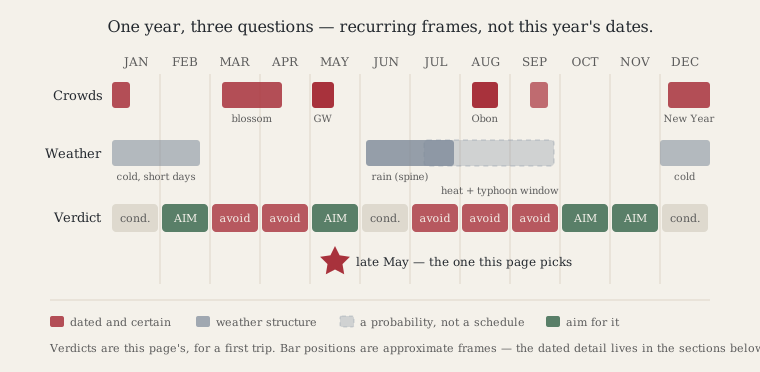
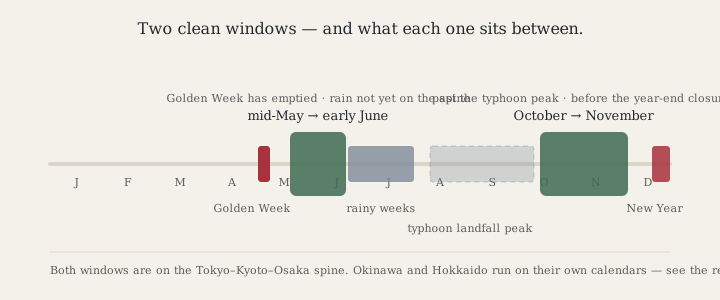
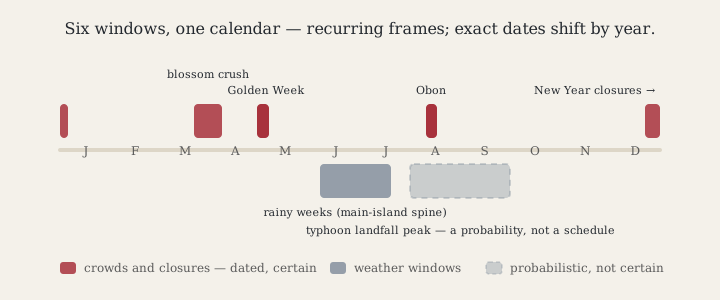
Take the verified calendar on its own — every dated trap laid over a first-timer’s route — and two windows come through clean: mid-May to early June, after Golden Week ends and before the rainy season reaches the main cities (Okinawa is already in its rainy season by then — see the regional section), and October to November, past the August–September typhoon peak and well before the year-end closures. That is what the evidence consistently favors.

The avoid-list, compressed — each window is dated and explained below:

  • Late December – early January — the New Year closure window (statutory core: Dec 29 – Jan 3)
  • Late March – early April — peak cherry-blossom weeks on the Tokyo–Kyoto–Osaka spine
  • April 29 – May 5 — Golden Week
  • Roughly June to mid-July on the main-island spine (regionally staggered) — the rainy season
  • Mid-August — Obon (customary, around the August 11 holiday)
  • August – September — the typhoon landfall peak

If your dates are already boxed in — you only get certain weeks, and they’re not these — don’t stop here. The ranking section at the end, “Locked dates? Rank what you actually have,” treats that as the real case it is.

What actually decides this: weather, crowds, cost, events

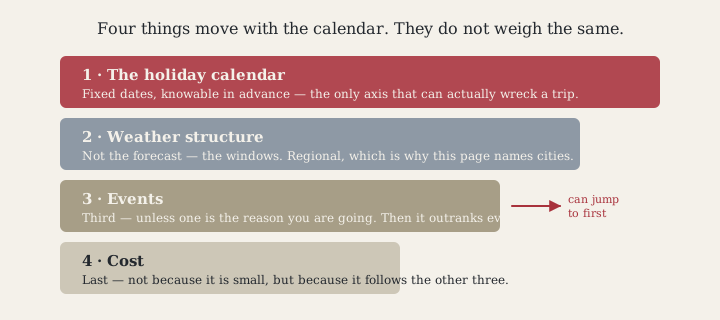
Four things move with the calendar. For a first trip, they don’t weigh equally.

The holiday calendar comes first. It’s the only axis with fixed, knowable dates, and it’s the one that can actually wreck a trip: the windows when all of Japan travels at once are the windows when rooms vanish and everything is full. Japan received a record 42,683,600 overseas visitors in 2025 (JNTO) — and that demand doesn’t spread evenly across the year. It stacks onto the same short windows the domestic calendar already loads.

Weather comes second. Not day-to-day weather — you can’t book around that — but the structural windows: the rainy season, the typhoon peak, midsummer heat. These set the odds you’re playing, and they’re regional, which is why this article keeps naming cities instead of “Japan.”

Events third — unless one is the reason you’re going. Cherry blossoms, autumn color, festivals, snow: each has its window, and if one of them is the point of your trip, it overrides the other axes. You go when the event is, and you manage what comes with it.

Cost last — not because it doesn’t matter, but because it follows the calendar. The weeks everyone wants are the weeks that cost the most; the windows this article tells you to avoid for crowds are, by and large, the same ones that punish your budget. Cost rarely changes the answer on its own. The one exception — “cheapest acceptable” as your actual goal — is handled in the ranking section and the FAQ.

The months to avoid — and why

These are the named traps. Each one is a real, dated window, and each does something specific to a first trip. They’re in calendar order, so this section doubles as a scan of the year.

New Year (late December – early January)

Japan’s biggest holiday isn’t Christmas — it’s the New Year. The country largely stops: people travel home, and much of ordinary life pauses.

The dates (recurring annually): Government and administrative offices are closed December 29 – January 3 by statute; January 1 is itself a national holiday. Commercial closures — shops, restaurants, museums, attractions — around this window are customary and vary by operator.

What it does to a first trip: uncertainty. You can’t count on what will be open, day by day, and the things you flew in for may be the things that are shut. The statutory core is the anchor; the customary closures spread wider on both sides of it, and there’s no single list you can check in advance.

Peak cherry-blossom weeks (late March – early April)

The most famous two weeks in the Japanese travel year — and the most compressed.

Peak weeks on the first-trip spine (JMA normals, 1991–2020): Tokyo — flowering ~March 24, full bloom ~March 31 · Kyoto — flowering ~March 26, full bloom ~April 4 · Osaka — flowering ~March 27, full bloom ~April 4. Recent years have run earlier than the normals (Tokyo’s 2026 flowering came on March 19). Any 2027 dates you see published now — here or anywhere — are historical averages, not forecasts; see the spring section below.

What it does to a first trip: a year’s worth of blossom-seeking demand, domestic and international, has to fit inside a short window whose exact dates nobody can promise. Booking pressure and prices behave accordingly. If the blossoms are your reason for going, that’s a trade you make with open eyes — the ranking section covers it. If they’re not, these two weeks are the most expensive way to see Japan busy.

Golden Week (late April – early May)

A run of national holidays that turns into a nationwide vacation.

The frame (recurring statutory holidays): April 29, May 3, May 4 and May 5 are national holidays — the Golden Week window runs April 29 – May 5.

For 2027 (officially fixed): April 29 falls on a Thursday as an isolated holiday, April 30 is a regular workday, and May 1 – 5 form a five-day run of days off with no leave required.

What it does to a first trip: this is when Japan itself travels. Long-distance trains, popular destinations and accommodation all take the load of a whole country on holiday at once, and a visitor is competing with that domestic wave for everything. The exact congestion shape shifts with each year’s weekday layout — which is why the 2027 layout above matters if that’s your year.

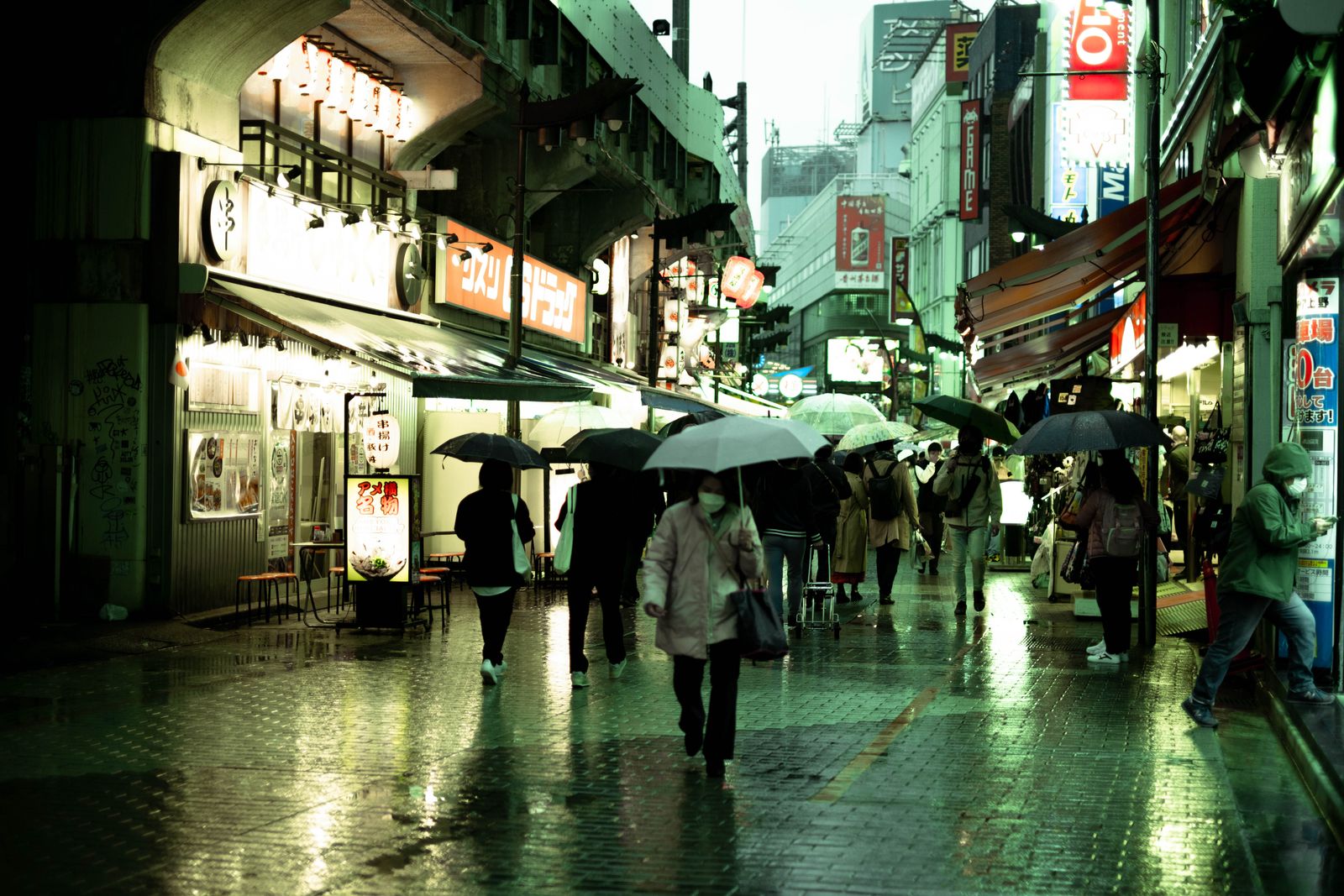
Tsuyu — the rainy season (regionally staggered early summer)

Not a national event, whatever the headlines say. The rainy season arrives region by region, south to north — and one major region skips it entirely.

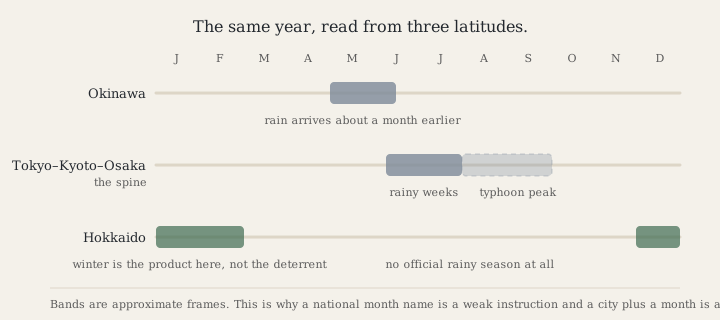
Entry and exit (JMA normals, 1991–2020; ~5-day precision, declared retrospectively): Okinawa ~May 10 – June 21 · northern Kyushu ~June 4 – July 19 · Tokyo area ~June 7 – July 19 · northern Tohoku ~June 15 – July 28 · Hokkaido: no official rainy season. Actual years vary — northern Kyushu’s 2025 entry came three weeks early, on May 16.

What it does to a first trip: on the Tokyo–Kyoto–Osaka spine, roughly six weeks from early June carry the year’s structural rain window. How wet any given week actually turns out varies by year — the entry and exit dates themselves are declared after the fact, with about five days’ precision. What you can plan on is the window’s existence, and the fact that the same weeks in Hokkaido sit outside it.

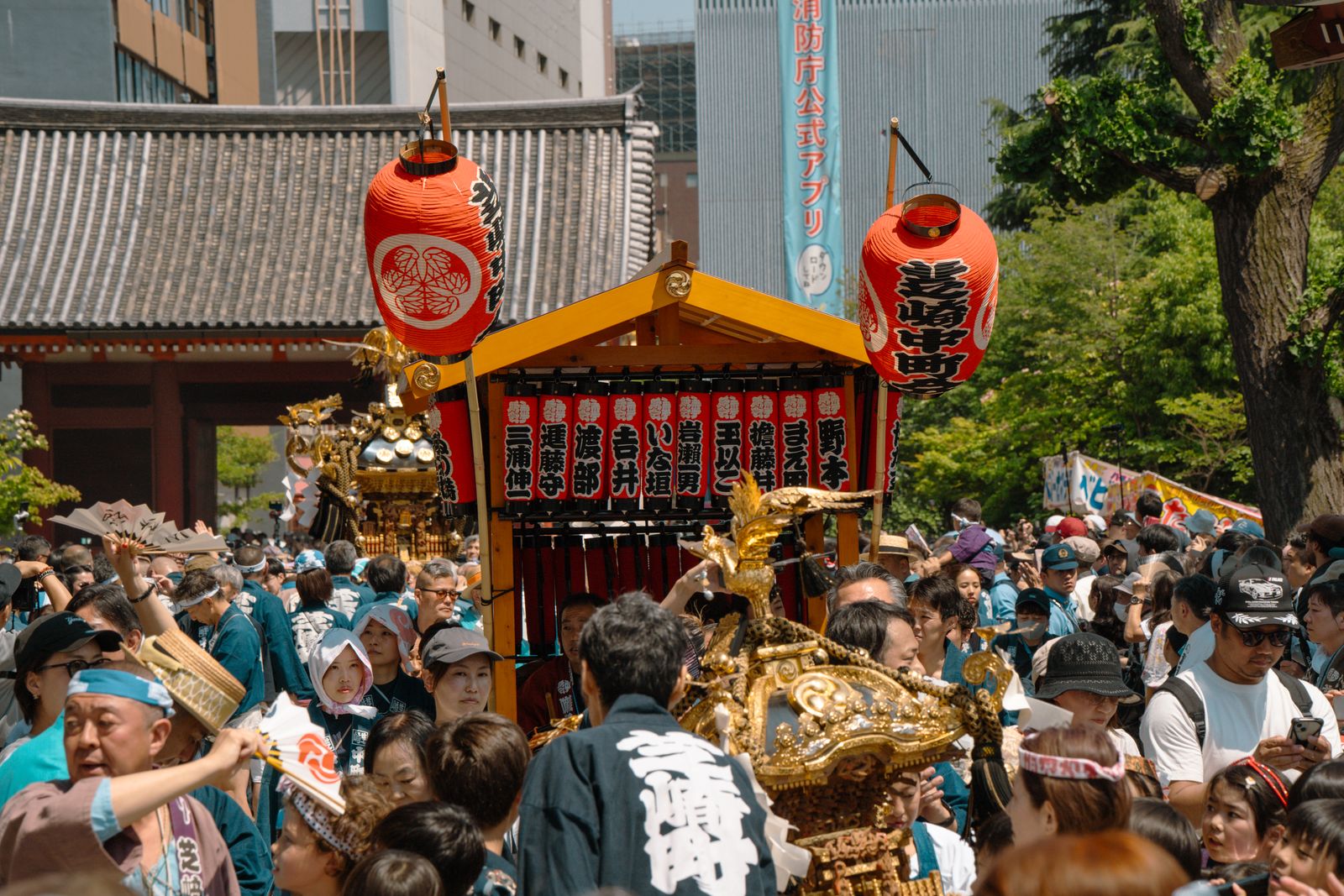
Obon (mid-August)

Japan’s midsummer homecoming.

The dates: August 11 (Mountain Day) is the statutory holiday. The Obon period itself — typically taken around August 13 – 16 — is customary, not official, and company shutdown windows vary by employer and year.

What it does to a first trip: combined with the August 11 holiday, Obon produces Japan’s mid-August domestic travel peak. Long-distance transport and accommodation carry the homecoming load, in the hottest part of the year. Unlike Golden Week, the dates aren’t fixed in law — which makes the window slightly blurry at the edges and no easier to travel through.

Peak typhoon landfall risk (August – September)

The one trap that isn’t about crowds at all.

The numbers (JMA normals, 1991–2020): about 25 typhoons form in the region per year; about 3 make landfall in Japan; both formation and landfall peak in August–September. May–October is the landfall-risk window.

What it does to a first trip: three landfalls a year, concentrated into two months, means August and September are the weeks when the odds of a typhoon intersecting your dates are at their highest. It’s a probability, not a prediction — most August–September trips meet no typhoon — but it’s the only trap on this list that can rearrange an itinerary by force rather than by crowding it.


That’s the complete map. If one of these windows is the only window you have, don’t talk yourself into pretending it’s fine — and don’t give up either. Take it to the ranking section at the end, where “my only option is August” is treated as a real case with a real answer.

The year at a glance: four seasons, then month by month

With the boundaries set, the rest of the year is an option space. Here’s how it actually divides.

Spring (March – May)

Spring is the season everyone means when they say Japan is beautiful, and the blossoms are why. The mechanics matter more than the postcard: flowering comes first, full bloom about a week later — Tokyo’s normals run March 24 to March 31 — and the wave moves south to north, from Fukuoka (flowering ~March 22) through Tokyo, Kyoto and Osaka in late March, to Sendai in early-to-mid April (April 8 → April 13) and Sapporo at the start of May (May 1 → May 6). Two consequences follow. First, “cherry blossom season” on the first-trip spine is genuinely short. Second, missing it in one city can mean catching it in another, further north.

The cost of that beauty is the convergence covered in the avoid section: the bloom weeks are the year’s heaviest collision of demand and fixed dates, and recent years running early has made betting on exact dates riskier, not safer.

Looking at spring 2027 (as of this article’s publication): no professional 2027 forecast exists yet. The first professional forecasts — issued by private weather companies; the Japan Meteorological Agency hasn’t published sakura forecasts since 2010 — are expected around December 2026 – January 2027. Until then, every 2027 date in circulation, including the normals above, is a historical average (JMA normals). This section will be updated when the first forecasts publish.

The rest of spring is quietly excellent. Early March sits before the bloom crush. Mid-April, after full bloom on the spine and before April 29, sits between the two peaks. And late May, after Golden Week ends, opens the first of the year’s two clean windows — mild-season Japan with the calendar’s pressure off.

Summer (June – August)

Summer asks the most of a first-timer and is the easiest season to get wrong by accident — which is different from being a season to write off.

June and the first half of July belong to the rainy season on the spine (the regional windows are in the avoid section; Hokkaido opts out entirely). What follows is heat: Japanese midsummer in the big cities is hot and humid, and an itinerary built on all-day walking will feel it. Then mid-August adds Obon’s domestic travel peak, and the typhoon window climbs toward its August–September high.

Summer is also festival season — the trade-off that keeps it on the table. The honest information-level play, if summer is your window: the slot between the rainy season’s exit (~July 19 on the spine, by the normals) and Obon’s start is the least-loaded stretch; mornings and evenings carry the walking, midday carries the indoors; and latitude is the structural workaround — Hokkaido has no rainy season and sits outside the spine’s midsummer at its worst. The constraint table at the end works this through properly.

Autumn (September – November)

Autumn is two different seasons wearing one name. September belongs to the typhoon statistics — it’s the peak landfall month — and treating it as “basically autumn” is how September trips inherit summer’s biggest risk.

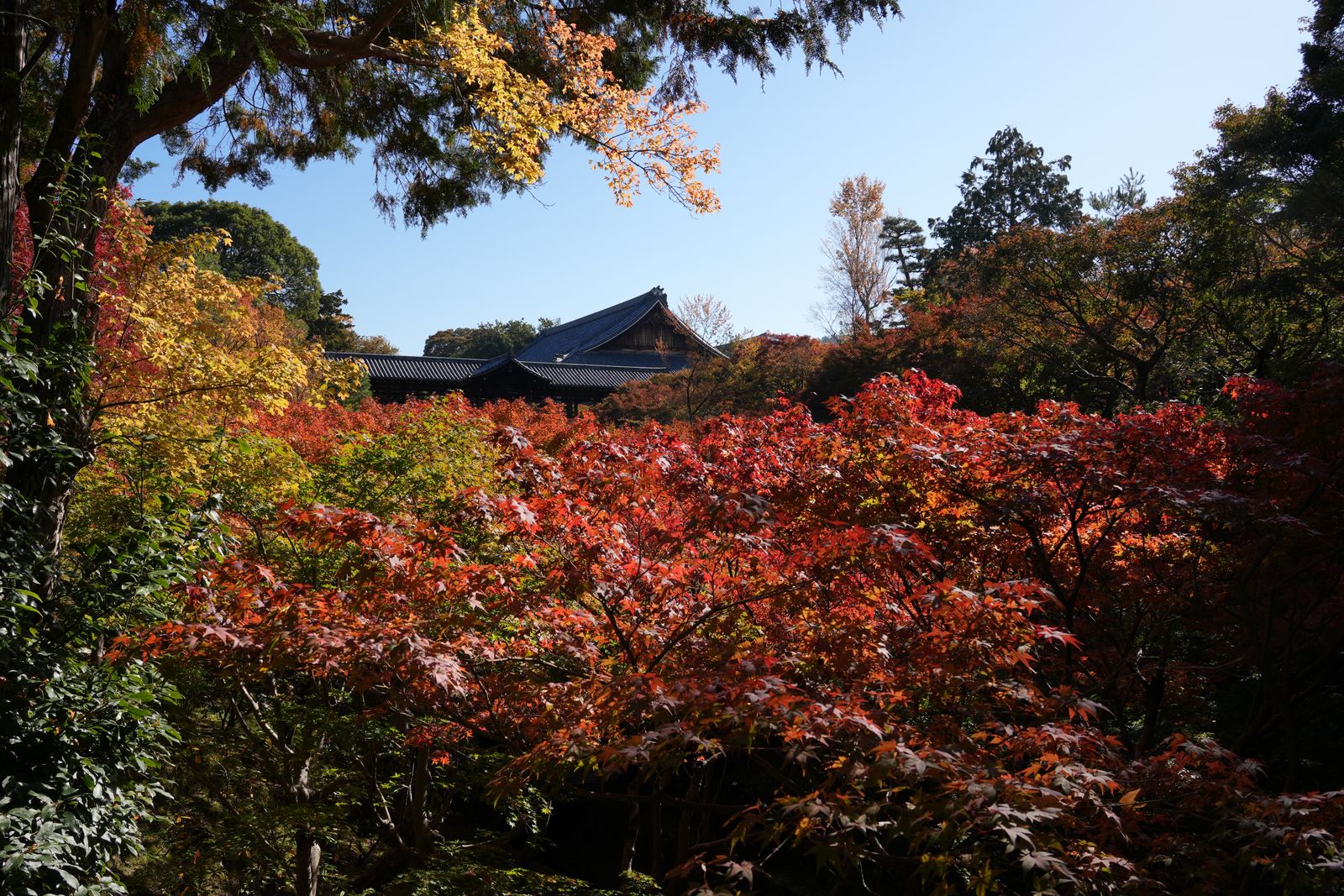
October and November are another matter: past the typhoon peak (early October still carries the tail of the May–October landfall window), before the year-end closures, with no domestic holiday convergence in the way. November in particular clears every dated trap in this article. Autumn color is the season’s event; its timing isn’t in this article’s verified date set and shifts by region and year, so treat it the way the spring section treats blossoms — check the current season’s reports before you lock dates around a specific week.

Winter (December – February)

Winter is the season nobody puts on the poster and plenty of people quietly enjoy most: snow country in the north, onsen weather everywhere, and — outside one window — the calendar at its emptiest. That window is the New Year closure period from the avoid section; early December and the stretch from mid-January onward sit clear of it.

Winter also carries the cost logic covered in the FAQ: the demand-convergence windows that drive peak pricing are all elsewhere in the year, so the quiet winter weeks are where lower fares and room rates are most likely — likely, not guaranteed; this article carries no fare data, and a fare tool checked against your actual dates is the only real answer. What’s verifiable is the other direction: nothing in the winter calendar, outside New Year, generates the demand spikes that spring and the holiday windows do.

Month by month in one pass

  • January — New Year closures run through the statutory core (to Jan 3) and customary edges beyond it; after that, deep winter and an empty calendar. Okinawa’s cherry blossoms flower around mid-January (Naha normal: Jan 16) — a different species and a different season from the main-island bloom.
  • February — late winter, snow season in the north, no dated traps anywhere in the month.
  • March — the turn. Early March sits before the bloom window; from ~March 22–24 the flowering wave starts up the spine and the peak weeks begin.
  • April — full bloom on the spine in the first days (Kyoto/Osaka normals ~April 4), a between-peaks lull mid-month, Golden Week from April 29.
  • May — Golden Week through May 5; Okinawa’s rainy season from ~May 10; from mid-May, the year’s first clean window on the spine.
  • June — rainy season on the spine (Tokyo-area entry ~June 7); Hokkaido skips it; Okinawa exits ~June 21.
  • July — rainy season exits the spine ~July 19 (normals); heat takes over; the late-July slot is summer’s most workable.
  • August — peak heat, Obon mid-month (customary, around the Aug 11 holiday), typhoon peak underway. The constrained-summer row in the ranking section is written for exactly this month.
  • September — the year’s peak typhoon-landfall month. The risk is probabilistic, but this is where it concentrates.
  • October — the typhoon window tapers (it formally runs to October); the year’s second clean window opens.
  • November — clears every dated trap in this article. Autumn’s core month on the spine.
  • December — quiet until the New Year window opens; statutory closures from Dec 29, customary ones spreading wider.

One country, several calendars

Everything above is anchored to the Tokyo–Kyoto–Osaka spine, because that’s where first trips happen. But Japan runs on several calendars at once, and if your route leaves the spine, the month math changes with it.

Regional offsets (JMA normals, 1991–2020 — dates, not weather data):

Region Rainy season Cherry blossoms (flowering → full bloom)
Hokkaido (Sapporo) None — no official rainy season May 1 → May 6
Tohoku (Sendai / northern Tohoku) ~Jun 15 – Jul 28 (northern Tohoku) Apr 8 → Apr 13
Tokyo–Kyoto–Osaka spine ~Jun 7 – Jul 19 (Tokyo area) Mar 24–27 → Mar 31–Apr 4
Northern Kyushu (Fukuoka) ~Jun 4 – Jul 19 Mar 22 → —
Okinawa (Naha) ~May 10 – Jun 21 ~Jan 16 flowering (different species; a January season)

Read it as levers, not trivia. A June trip that would sit inside the spine’s rainy season sits outside it in Hokkaido. A missed Tokyo bloom can be a caught Sendai or Sapporo bloom. An Okinawa itinerary moves its rainy season a month earlier than the spine’s — and its cherry blossoms to January. The national-sounding version of any season claim is the version that gets first trips wrong.

Locked dates? Rank what you actually have

Most timing guides assume you’re free to choose. Most people aren’t. This section is for the real case: a fixed or narrow window, and the question of what to do with it.

Three questions locate you:

  1. When can you actually go — fixed weeks, a movable window, or genuinely flexible?
  2. Which would bother you more — sharing the famous places at peak crowd, or the weather working against you (heat, rain)?
  3. Is there one thing you’d regret missing — blossoms, autumn color, festivals, snow?

If question 3 has an answer, it overrides most of the rest: event windows are fixed, so you go when the event is and manage the crowds and cost that come with it. If budget is your binding constraint, pair this table with the cost section and FAQ below. Otherwise, find your row.

If this is your window What the verified calendar says
Only July–August The spine’s rainy season runs to ~July 19 (normals), Obon takes roughly Aug 11–16, and the typhoon peak begins in August. The least-loaded slots are the last week of July and the first days of August — taken with full summer heat and an indoor-midday itinerary. The structural alternative is latitude: Hokkaido has no rainy season and sits outside the spine’s midsummer pattern. Either way, keep clear of Aug 11–16.
Only March–April The peak-bloom weeks (late March – early April on the spine) are the year’s heaviest convergence of demand onto fixed dates: going then means booking far ahead and expecting peak-season pricing — the price of the blossoms being the point. Early March sits before the bloom window; the stretch after full bloom (~April 4 normals) and before April 29 avoids both that peak and Golden Week.
Only school-holiday weeks Each school window lands on a trap. The winter break runs into the New Year closure window (statutory core Dec 29 – Jan 3) — the days before ~Dec 28 are the safer half. Spring breaks can overlap the bloom peak — the March–April row applies. The long summer break sits across the rainy season, peak heat, Obon and the typhoon peak — the July–August row applies.
Fully flexible Two windows clear every dated trap on the spine: mid-May to early June (post-Golden Week, pre-rainy season; Okinawa is already in rain from ~May 10) and October to November (past the typhoon peak; early October carries the tail of the landfall window).

Months chosen? The rest of the trip has an order too — days, route, bookings, transport — and that’s its own guide: First Trip to Japan: If You’re Not Sure, Decide in This Order.

Timing-linked costs that change in 2026–2027

None of these decide your month by themselves. But all four are tied to when you travel or when you buy — and two of them switch over in the months after this article’s publication, so each carries its own dates.

Departure tax — current, as of publication: Japan’s International Tourist Tax is ¥3,000 per departure, for departures on or after July 1, 2026. (It was ¥1,000 before; tickets issued by June 30, 2026 keep the old rate.) It’s collected through your ticket price — nothing to do at the airport.

Kyoto accommodation tax — current, as of publication: for stays on or after March 1, 2026, Kyoto City’s per-person, per-night accommodation tax runs from ¥200 up to ¥10,000, scaling with the room rate, and applies by stay date regardless of when you booked or paid. On a multi-night Kyoto stay, it’s a real line item — budget it on top of the room price.

Japan Rail Pass — two price states: through September 30, 2026, the nationwide pass sells at current prices (7-day ordinary ¥50,000). From October 1, 2026, prices rise roughly 5–6% (7-day ordinary ¥53,000; the 14- and 21-day and Green passes rise too). The official Japan Rail Pass website has said pre-increase prices remain available “for a limited time,” with the window still to be announced — check the official site for the current state before buying. Timing consequence: a trip near or after the switchover is a reason to confirm prices at booking, not at departure.

Tax-free shopping — two states: for purchases through October 31, 2026, the current point-of-sale system applies — you pay the tax-free price in the store. For purchases on or after November 1, 2026, Japan switches to a refund model: you pay the full tax-inclusive price, have your purchases confirmed by customs at your departure air- or seaport within 90 days of purchase, and receive the consumption-tax equivalent back after that. Timing consequence: on a trip after the switchover, plan your shopping budget at tax-inclusive prices, with the refund arriving at the end of the process — not at the till.

FAQ

What’s the cheapest time to visit Japan?

The weeks with the least demand pressure: deep winter outside the New Year window (mid-January through February) and the other non-event, non-holiday stretches. That’s a structural answer, not a fare quote — this article carries no fare data, and prices move with your route and booking timing. Check a fare tool against your actual dates; use the calendar here to know which dates are worth checking.

What’s the most expensive time?

The demand-convergence windows: the peak-bloom weeks (late March – early April on the spine), Golden Week (April 29 – May 5), Obon (mid-August), and the New Year period. Those are the weeks when domestic and international demand stack onto the same days — expect them to cost the most and to require the earliest booking.

Is there one single best month?

No month wins every axis, and anyone who says otherwise is hiding a trade-off. But the calendar does narrow honestly: November clears every dated trap in this article, and late May comes close behind (post-Golden Week, pre-rainy season on the spine). Which of the two — or whether some other month with a trade-off you’re happy to make — is right for you is what the ranking section above is for.

When is Japan least crowded?

Crowds concentrate where the calendar concentrates: the holiday windows and the bloom weeks. The months without any of them — deep winter outside New Year, and the rainy-season weeks in early summer — are where crowd pressure is structurally lowest. That’s the trade in plain sight: the emptiest weeks are quiet because of the weather or the season, not despite it.

Is the rainy season a bad time for a first trip?

It’s a trade-off window, and a regional one — that’s the honest planning answer. The rainy season covers roughly six weeks on the Tokyo–Kyoto–Osaka spine (~early June to mid-July by the normals), arrives a month earlier in Okinawa, and doesn’t exist in Hokkaido at all. Its dates are declared retrospectively with about five days’ precision, so you’re planning around a window, not a schedule. If those are your only weeks, the ranking section above treats that case directly — including the option of routing the trip north, where the window doesn’t reach.