Most “worst time to visit Japan” pages lose their nerve on the way down. Warnings first, dates vague or missing, and then a final section that takes it all back — every season has something, there’s no truly bad time, go whenever you can.
That ending is why you’re still searching.
Six windows in the Japanese year can do real damage to a first trip. They have real dates. The dates are immediately below, and this page still means them at the last line.
If you want the other half — which months to actually aim for — that’s the when-to-visit guide. This page is the danger map only.
The six windows, dated
No build-up. Here is the whole answer.
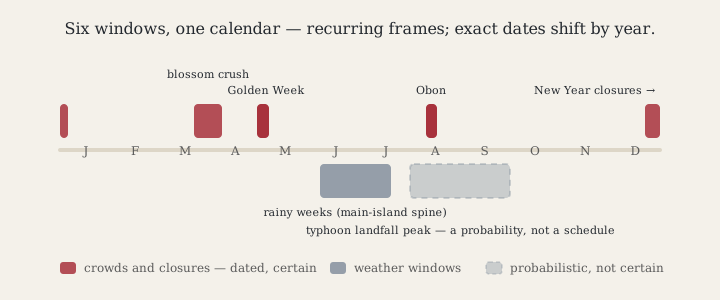
The six avoid-windows. Basis marked per line — statute, JMA 1991–2020 normals, or custom.
- December 29 – January 3 — statutory closure core, with customary closures spreading wider. The week the country shuts.
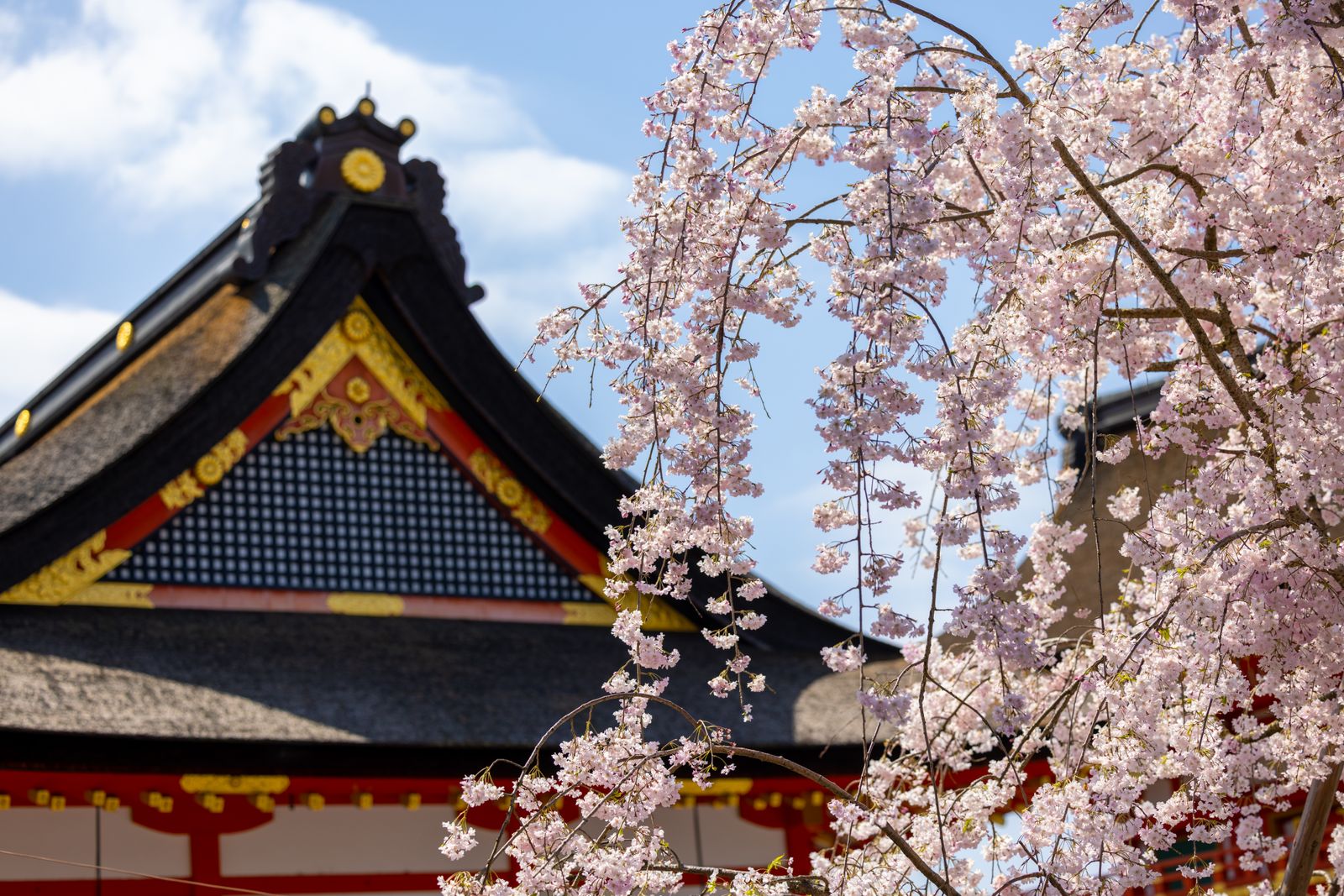
- ~March 22 – April 4 — JMA city normals, flowering through full bloom on the first-trip cities. The blossom crush.
- April 29 – May 5 — the statutory Golden Week frame. The days the whole country travels at once.
- ~June 7 – July 19 — Tokyo-area rainy-season normals, regionally staggered. The quality-tax weeks.
- Around August 13 – 16 — customary Obon, anchored by the August 11 holiday. The homecoming peak.
- August – September — the typhoon peak, inside a wider May–October risk window. The one that can rewrite your itinerary for you.
Why these weeks go wrong
Four of the six run on the same engine, and it isn’t tourism. Japan’s time off is synchronized. National holidays land on fixed dates for essentially everyone at once, so the country doesn’t take its breaks in shifts. It takes them together.
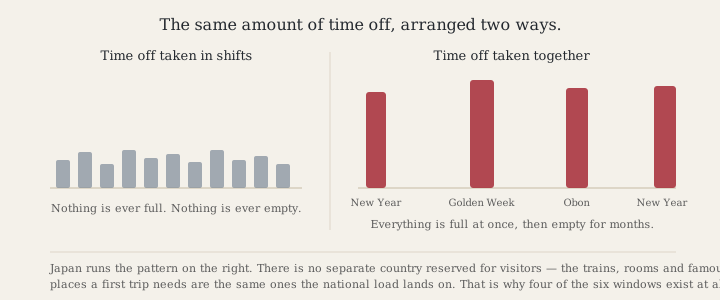
Two things follow. Movement: when the same days off arrive for everyone, long-distance travel compresses into them. Closure: the same synchronization shuts parts of the country, on fixed dates, at the year’s turn.
And there is no separate country reserved for tourists. The trains a first trip rides and the rooms it sleeps in are the same ones the national load lands on. Inside a synchronized week you aren’t sharing Japan with other tourists. You’re sharing it with Japan.
The other two windows — the rainy weeks and the typhoon peak — run on weather structure instead. Different engine, different failure mode, and pretending all six are the same kind of bad is its own way of being wrong.
The six, one by one
Late December to early January — the country closes
Basis: statute, plus custom. Government and administrative offices close December 29 – January 3, fixed by law. January 1 is itself a national holiday. Commercial closures — shops, restaurants, museums — are customary, not statutory, chosen operator by operator, and spread wider than the legal core on both sides.
The mechanism here is closure — and closure with blurred edges. The statute tells you when the offices shut. It cannot tell you which restaurants, which museums, which small place you crossed the world for will be dark, or for how long — nobody publishes that as one checkable list.
You pay full trip costs for a country running at partial capacity. Nothing discounts itself for being closed.
Verdict: the easiest no on this page. A first trip assumes the country is open for it. This is the one week that assumption fails.
Late March to early April — the blossom crush
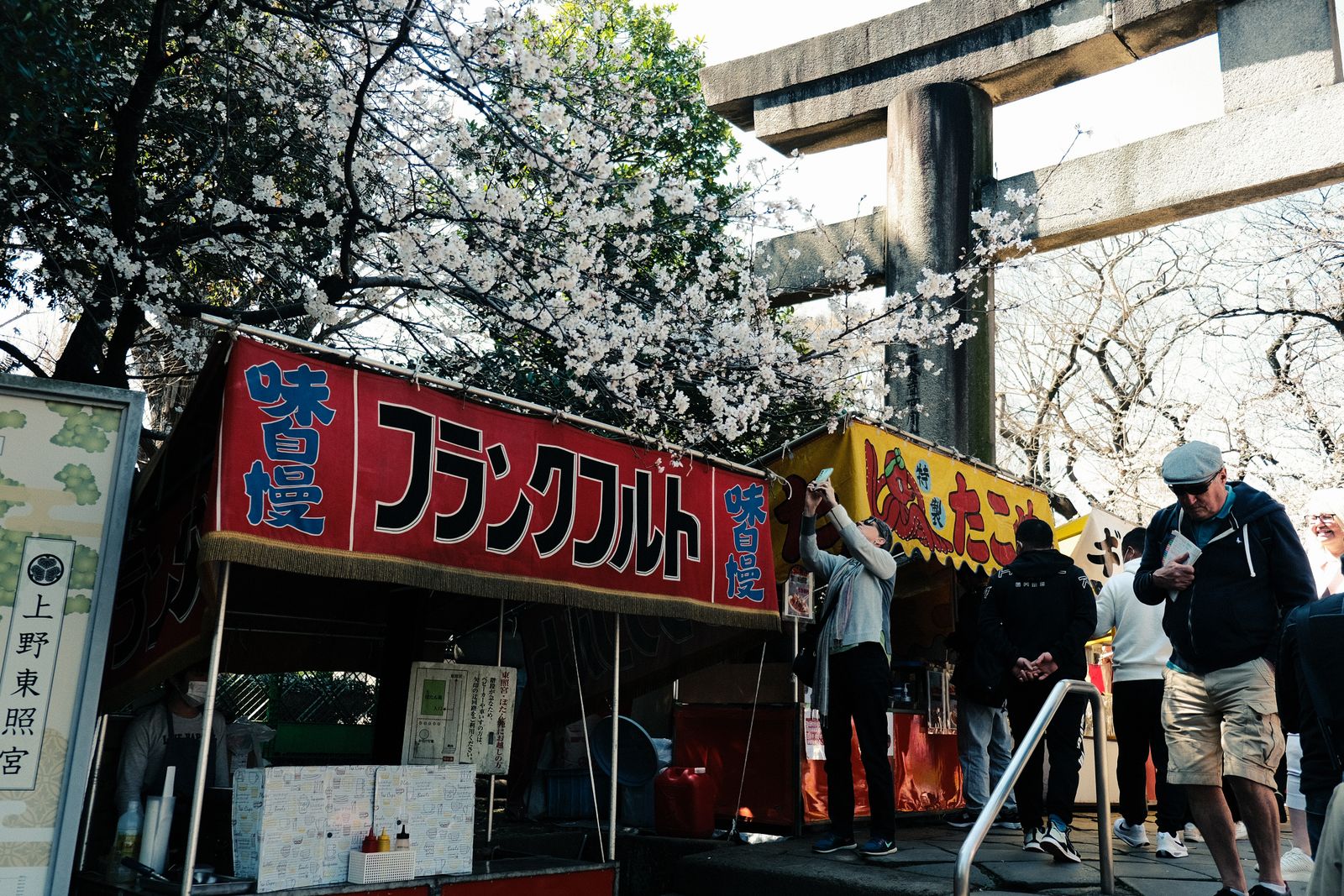
Basis: JMA station normals, 1991–2020 — city-anchored; there is no national date. Flowering opens Fukuoka ~March 22, Tokyo ~March 24, Kyoto ~March 26, Osaka ~March 27, with full bloom about a week behind — Tokyo ~March 31, Kyoto and Osaka ~April 4. The wave keeps moving north after the first-trip cities: Sendai April 8 → 13, Sapporo May 1 → 6. Recent years have run earlier than the normals — Tokyo’s 2026 flowering came on March 19, full bloom March 28. Normals are thirty-year averages, not promises for your year.
A year of worldwide anticipation lands on roughly two weeks, in a handful of cities, on dates nobody can guarantee in advance.
Because nobody can book the bloom itself, everyone books the window — defensively, early, and all at once. The uncertainty makes the crowding worse, not better, because people widen their bookings to cover the risk.
Verdict: if blossoms are the point of your trip, this isn’t a trap, it’s a bill — pay it with early bookings and open eyes. If they’re not the point, these are the most contested days you can choose by accident. And because recent years run early, the dangerous edge is the front one: a booking aimed at the “safe” start of the window can land inside it.
April 29 to May 5 — Golden Week
Basis: statutory holiday law, recurring annually. Four national holidays anchor the window — April 29, May 3, May 4 and May 5. May 1 and May 2 are not holidays. The frame is April 29 – May 5, every year.
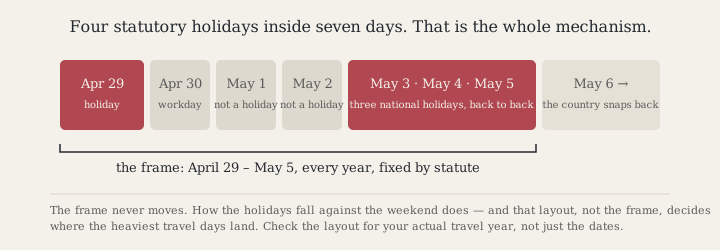
This is the synchronized calendar at maximum. Four legal holidays inside seven days turn a working spring week into the country’s largest shared vacation.
Inside this frame you are not a traveler among travelers. You are a guest inserting yourself into a nation’s own vacation, at its peak, competing for its infrastructure on its biggest travel days.
Verdict: the worst week of the year to be a first-time visitor. Not the most dangerous — the most completely taken. Booking early doesn’t defuse it; it only decides whether you compete with a reservation in hand.
June to mid-July — the rainy weeks
Basis: JMA rainy-season normals, 1991–2020. Entries and exits are declared retrospectively, to about five days’ precision. Okinawa ~May 10 – June 21 · northern Kyushu ~June 4 – July 19 · Tokyo area ~June 7 – July 19 · northern Tohoku ~June 15 – July 28. Hokkaido has no official rainy season.
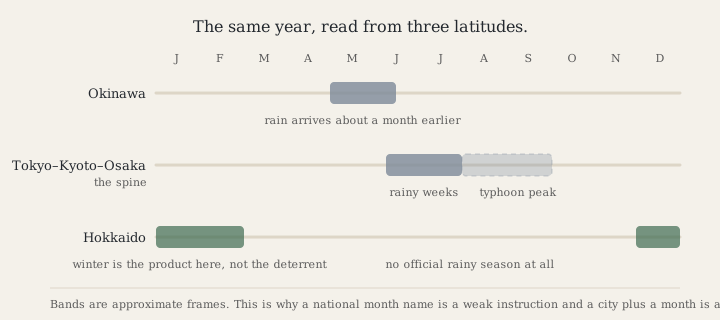
This one earns its place differently, so let’s be precise about what it is. Nothing statutory happens. No synchronized movement, no closures, no demand spike. Of the six, this is the only window whose problem contains no other people.
The trap is the character of the weeks. A structural rain window sits over the spine for roughly six weeks, and the only plannable fact is that the window exists.
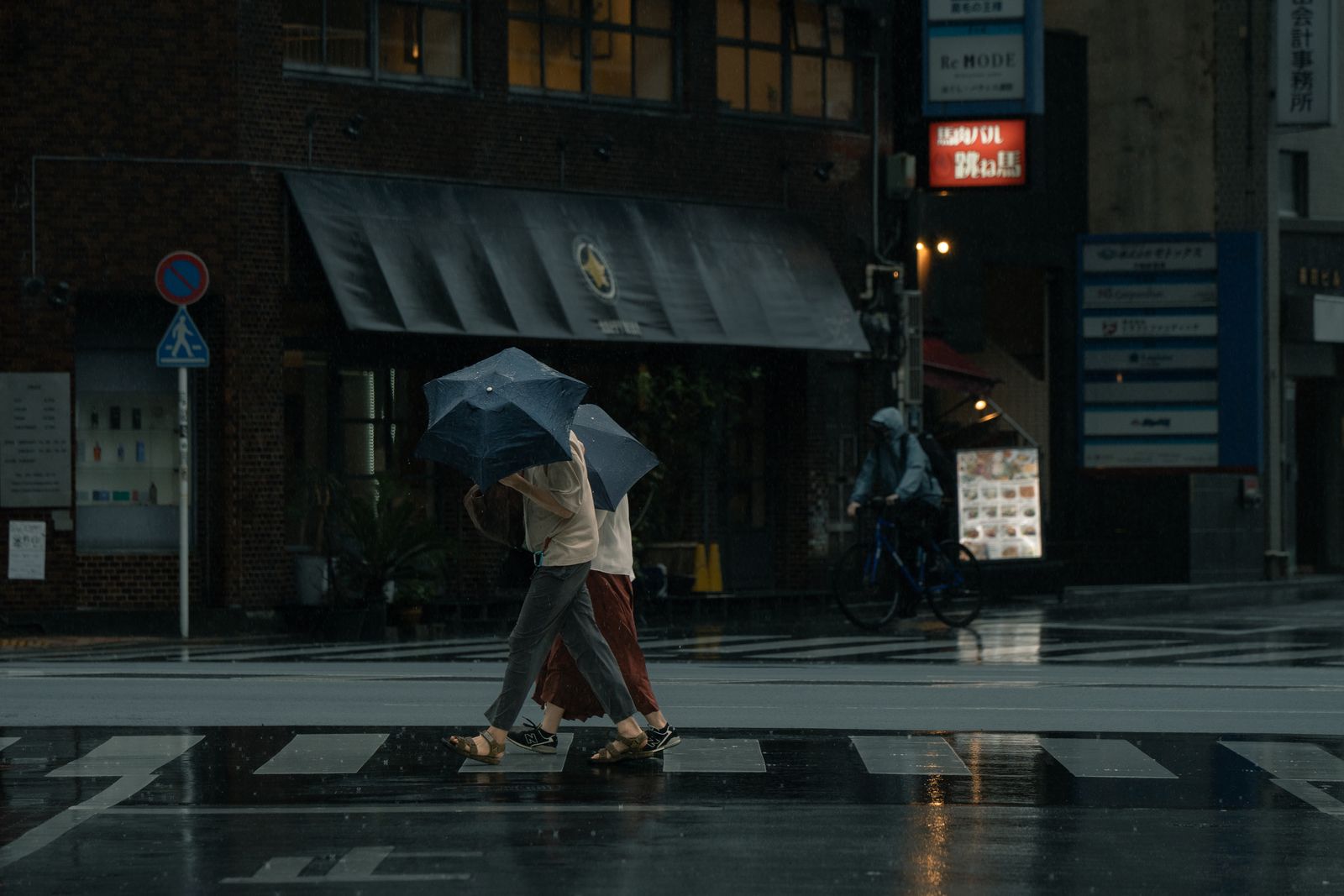
Verdict: the mildest window here, kept on the page anyway. It’s a tax on trip quality, not a barrier to a trip — so shift your dates off it if you still can, and stop worrying about it if you can’t.
Mid-August — Obon
Basis: statute for the anchor, custom for the window. The statutory holiday is August 11. Obon itself appears nowhere in the holiday law: it is customary, typically taken around August 13 – 16, and shutdown windows vary by employer and by year. Treat those dates as the customary center, never as official ones.
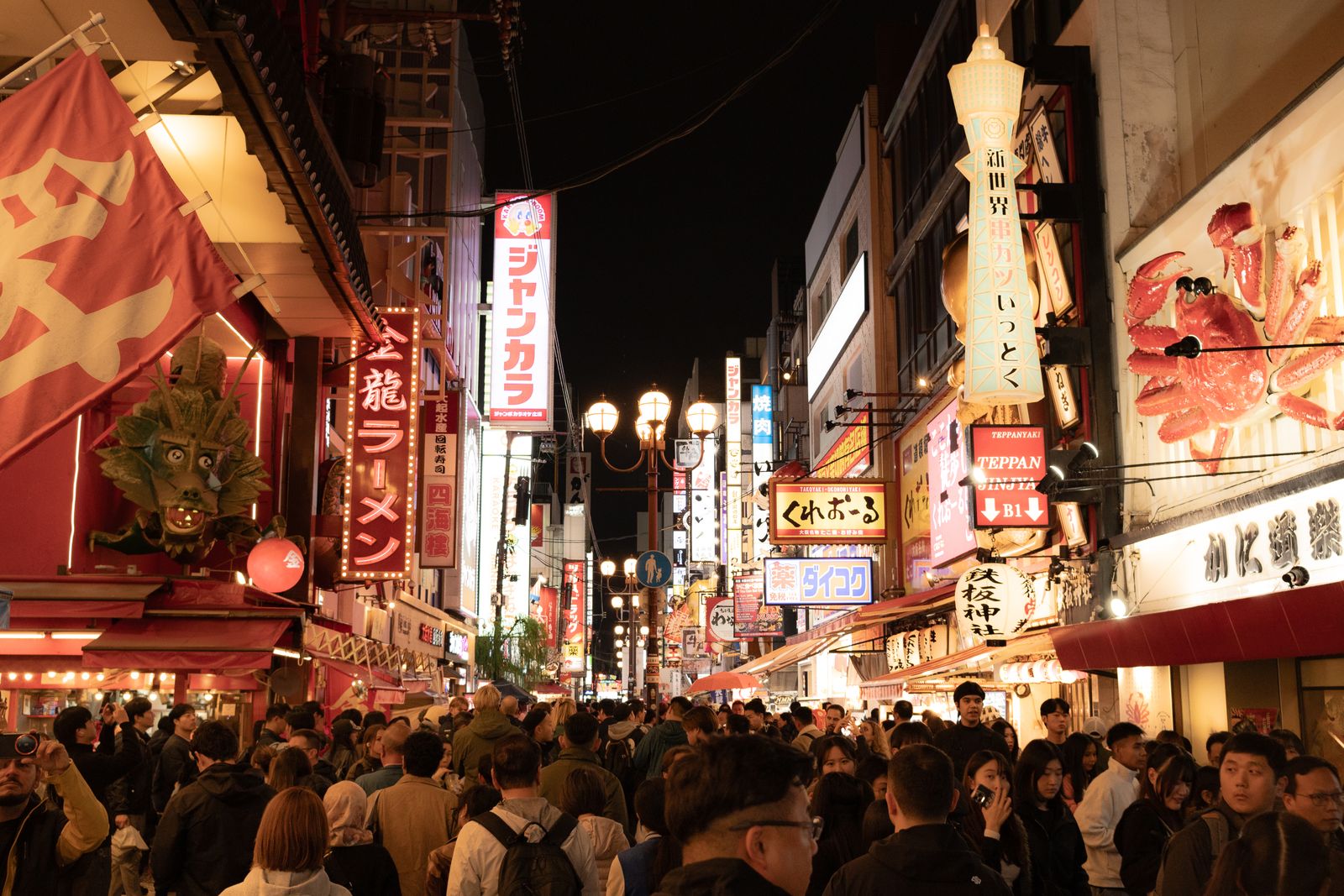
Where New Year closes the country and Golden Week vacations it, Obon relocates it. On the customary days the country travels toward family and then back, and the load lands on exactly what an itinerary can’t reroute around — long-distance transport and the rooms along it.
None of it is law. The country has simply converged, employer by employer, on approximately the same days. That makes the center dependable and the edges genuinely unknowable from outside.

Verdict: treat the center as being as hard as Golden Week, because while it lasts, it is. Plan against the wider window, not the four famous days.
August and September — the typhoon window
Basis: JMA typhoon normals, 1991–2020. About 25 typhoons form in the region per year; about 3 make landfall in Japan; both peak in August–September. May through October is the landfall-risk window — a description of when risk exists, not a forecast that a storm will meet your dates.
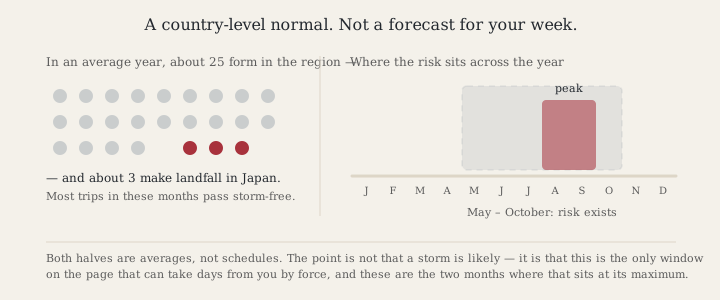
This is a different category from everything above, and the category matters more than the months. The other five crowd a trip, price it, or dampen it. This is the only one that can take the schedule out of your hands.
Keep it probabilistic in both directions. Three landfalls a year is a country-level normal, not a trip-level fate — nothing in it says a storm will find you. What it does say is that these two months are where that possibility sits at its annual maximum.
Verdict: the only window that can overrule you outright, and also the only one that usually doesn’t fire at all. Not a reason for fear. A reason for slack in the plan.
JBJ'S TAKE
Obon is the one people miss.
Everyone arrives at this page already knowing about Golden Week. Almost nobody arrives knowing about Obon.
That's the asymmetry that actually costs people money. Golden Week is in every guide, printed in the holiday law, easy to look up. Obon is in none of them — it isn't a legal holiday, so it doesn't appear on the calendars a visitor checks.
And it hits the same infrastructure just as hard. Mid-August is the window first-timers walk into by accident — not through carelessness, but because nothing in their planning ever named it.
If you take one date away from this page, take that one.
Not all six are equal
A list that scores all six the same is quietly lying in both directions at once — overselling the mild ones, underselling the brutal ones.
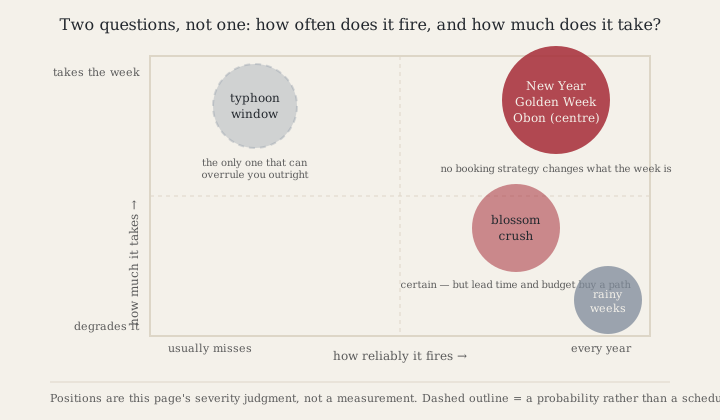
| Tier | Window | What the tier means |
|---|---|---|
| Certain and total | New Year · Golden Week · Obon’s center | Fires every year, on schedule, at full force. No booking strategy changes what the week is. |
| Certain but purchasable | The blossom crush | Fires every year — but the damage is competition and cost, so lead time and budget buy a path through. |
| Probabilistic but forcible | The typhoon window | Usually doesn’t fire on any one trip — but it’s the only one that can take days from you by force. |
| Certain but survivable | The rainy weeks | Fires every year and wrecks nothing. Degrades a trip; doesn’t deny one. |
Refuse to average the typhoon window. Calling it fine because it usually misses, and calling it terrible because it sometimes doesn’t, are both wrong in the same lazy way.
And the rainy weeks stay at the bottom deliberately. Putting them in the same breath as Golden Week is how worst-time pages turn into clickbait.
JBJ'S TAKE
No take-backs.
Here is where a page like this normally softens. Every season has its charm. There's no truly bad time. Go whenever you can.
No. Three of these windows will make a first trip worse in every way a first trip is measured — you will see less, pay more, and wait longer in line, and none of that is compensated by atmosphere.
If your dates are locked inside one of them, that's a real situation and it has a real answer, and the aiming guide has a whole section for it. That's different from pretending the window isn't what it is.
The map keeps this shape when you leave. That's the entire point of the page.
You’re holding half a decision — the half that says where not to land. The other half, which months actually deserve a first trip and what to do when your dates are already fixed, is the companion guide: When to Visit Japan.
If cost is what’s driving your dates, the third guide in this set takes that on directly: the cheapest time to visit Japan.
FAQ
What is the single worst time to visit Japan?
Golden Week, April 29 – May 5. Not the most dangerous — the most completely taken. Four legal holidays inside seven days point the entire country at the same trains, rooms and famous places a first trip needs.
Is August really that bad in Japan?
August carries three separate problems at once: peak heat, Obon in the middle of it, and the start of the typhoon peak. It’s the most loaded month on the page, and the one people most often book without knowing about Obon.
Should I avoid Japan during the rainy season?
Avoid it if you can choose freely. Don’t cancel over it if you can’t. It’s the mildest window here — a tax on trip quality, not a barrier — and Hokkaido sits outside it entirely.
Is it safe to visit Japan during typhoon season?
Usually the season passes without touching a given trip; about three typhoons make landfall in an average year. The planning answer isn’t fear, it’s slack: leave room in the itinerary rather than booking the two peak months tight.
What if my only possible dates fall inside one of these windows?
That’s a real trip and it has a real answer. The ranking section of the when-to-visit guide is built for exactly that case.