Two Tokyo airports, one fare cheaper than the other, and a booking page waiting. Haneda is about 15 km from central Tokyo. Narita is 50 to 60. Whatever the fare saves, that distance takes back on the ground — at the ticket window, in the hour you land, and in whether a train is still running when you come through the doors.
Four conditions decide it, in the order they close the question. Then one landing, worked through, so the choice holds at the platform and not only on the screen.
The answer, in the order the conditions decide it
Four conditions, ordered by what each can close. The rule they produce: Narita when the fare gap survives what the ground will charge — a transfer for every head, both ways, and the taxi if you land late. Haneda when it doesn’t. A close call goes to Haneda; 15 km is the tie-break.
1. Whether there is a choice. The airport is on the itinerary before you pay. One route, one airport: nothing to settle — the rest of this page tells you what that airport costs on the ground, not how to switch.
2. The fare gap, per person, both ways. Narita’s saving has to cover the transfer for every head in the party, in and out, before it is a saving. Close, or gone once counted: Haneda.
3. The hour you land. Narita’s runway closes at 23:00, in principle, and its last Skyliner leaves at 23:00; Haneda’s last Keikyu train leaves at 00:08. Miss the Skyliner and Narita is a taxi from ¥23,500. This is the condition that moves the most money.
4. Where you sleep. Keisei’s Skyliner ends at Keisei Ueno; Keikyu’s line from Haneda reaches Shinagawa. Not booked yet? Then the airport can choose the side of town — or the other way round.
| Haneda | Narita | |
|---|---|---|
| From central Tokyo | about 15 km | about 50–60 km |
| Last train into the city | Keikyu, Terminal 3 to Shinagawa, 00:08 | Skyliner to Keisei Ueno, 23:00 (arrives 23:48) |
| Last train out to the airport | Keikyu from Shinagawa, 23:59 weekdays / 23:45 Sat–holidays, change at Keikyu Kamata | Skyliner from Keisei Ueno, 20:25 weekdays / 20:22 Sat–holidays |
What follows is each condition on its own, then the landing.
First: whether the ticket has already decided
Read the airport on the itinerary before you compare anything — NRT is Narita, HND is Haneda. If the route you want is flown into one airport only, there is no Narita-or-Haneda question — only the question of what that airport costs you, and the next three conditions answer it just the same.
If the fare is Narita’s and the carrier is a low-cost one, read one more line: the terminal. Jetstar Japan and Spring Japan operate from Narita Terminal 3. Peach Aviation and ZIPAIR operate from Terminal 1, where Peach has been since 2020. One terminal for every budget airline is not how Narita is laid out, and the terminal is where you come out — put it on the same line as the flight number.
Second: what the fare gap has to pay for
A fare is cheaper once, on the screen. The transfer is paid per person, twice — in and out — in yen, on the day. So the gap is not the number the booking page shows; it is that number minus a transfer for every head in the party, both directions. The fares and times for each airport’s trains are in the airport section of where to stay in Tokyo.
Run it on the party you are actually booking. One person on a wide gap: Narita is cheaper, and stays cheaper. Four people on a narrow gap: eight transfers, and the gap can be gone before the taxi question in the next section has even been asked. And 50 to 60 kilometers against 15 is paid in time as well as yen, in the first hour of the trip and the last.
JBJ'S TAKE
Cheaper for whom? Count the heads.
A saving on one fare is a saving. The same saving across four people, four transfers in and four out, can be nothing at all. Run it before you believe it.
JbJ's line: if the gap doesn't survive the transfer table, it's Haneda. Close counts as gone. Stop reading there.
Third: the hour you land, the last train, and the runway’s own hours
This is the condition the booking page cannot see, and the one that moves the most money.
Narita’s runway, in principle, takes no landings or take-offs between 23:00 and 06:00; the exceptions are narrow, for emergencies and delays. Keisei’s last Skyliner from the airport leaves at 23:00 and reaches Keisei Ueno at 23:48. A flight scheduled into Narita late in the evening is landing against two clocks at once: the runway’s, which a delay can push you past, and the train’s, which does not move. Between the scheduled landing and the platform sit immigration, baggage and the walk — leave your own margin, because the train leaves without one.
When the train has gone, what is left is Narita’s own fixed-fare taxi: ¥23,500 to ¥38,500 to central Tokyo by zone, tolls extra, with a late-night and early-morning surcharge window from 22:00 to 05:00. That is one car, and it is the number the cheap fare has to beat.
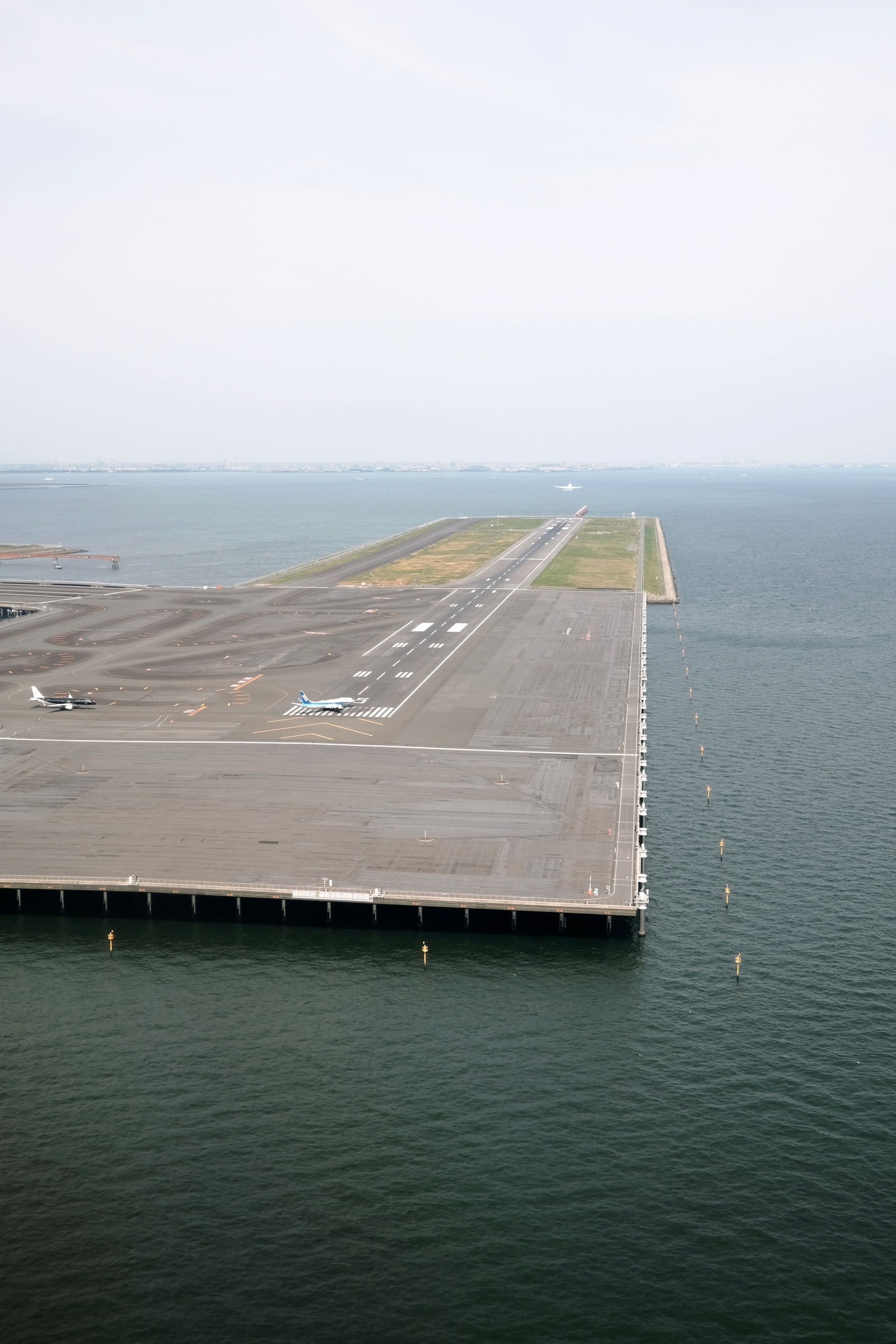
Haneda’s last Keikyu train from Terminal 3 to Shinagawa leaves at 00:08, every day of the week — an hour after Narita’s runway has closed.
Declined: the late Narita fare. Scheduled into Narita in the evening, close enough to 23:00 that one delay puts you on the platform after the last Skyliner. The fare saving is one number. The taxi is ¥23,500 upward, per car, before tolls, in the surcharge window. Unless the gap covers that with room to spare, that fare is not the cheap one. Land earlier, or land at Haneda.
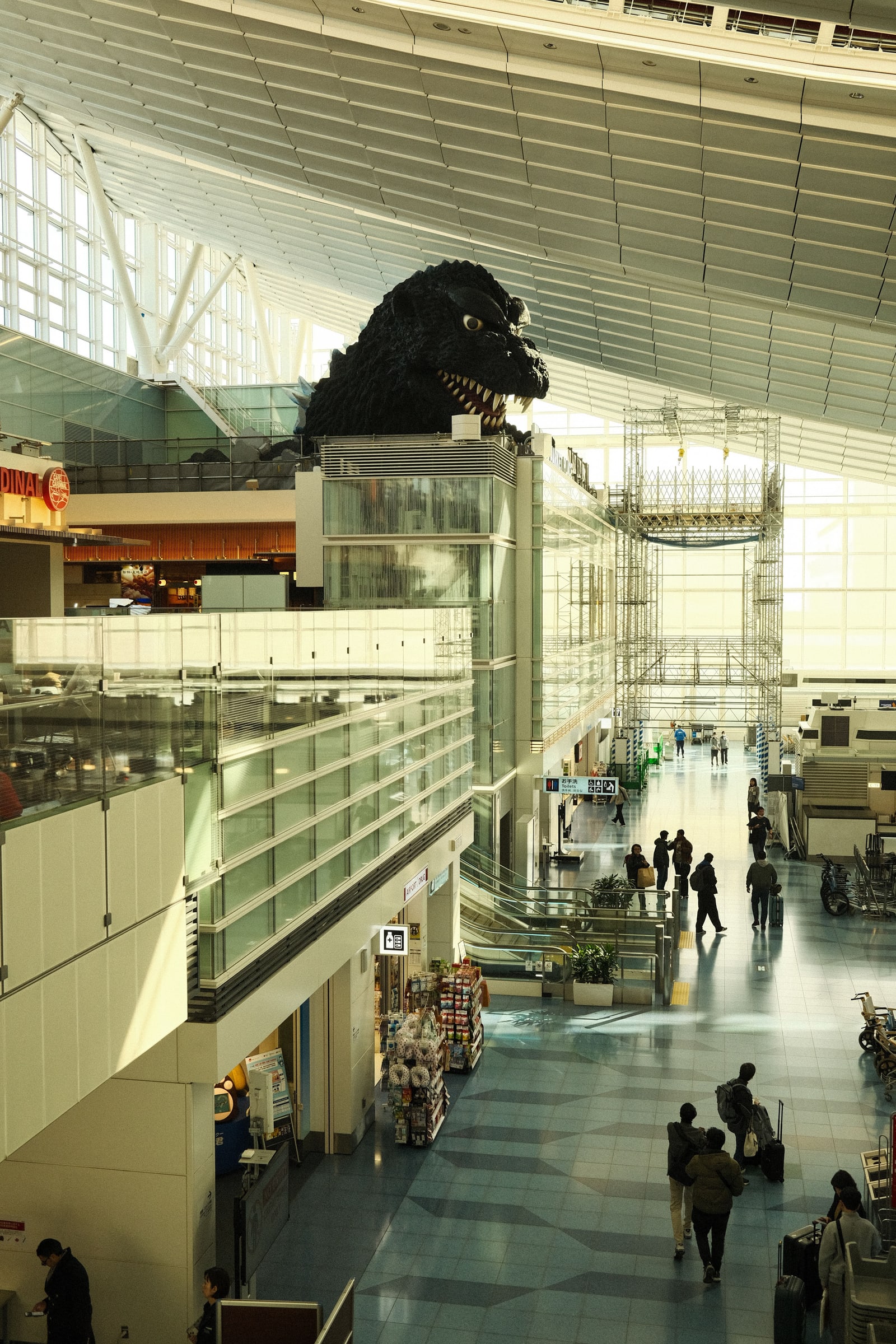
The same clock on the way out. The last Skyliner toward Narita leaves Keisei Ueno at 20:25 on weekdays, 20:22 on Saturdays and holidays. Keikyu’s last train toward Haneda leaves Shinagawa at 23:59 on weekdays, 23:45 on Saturdays and holidays, with a change at Keikyu Kamata. Check them against your departure as well as your arrival.
JBJ'S TAKE
The hour you land outranks the fare.
The fare is arithmetic. This one is a timetable. 23:00 at Narita, 00:08 at Haneda, and between them the difference between a train and a ¥23,500 taxi.
JbJ's call: a late landing goes to Haneda, whatever the fare said. If the only fare you can afford lands late at Narita, price the taxi into it before you call it cheap.
Fourth: where you sleep
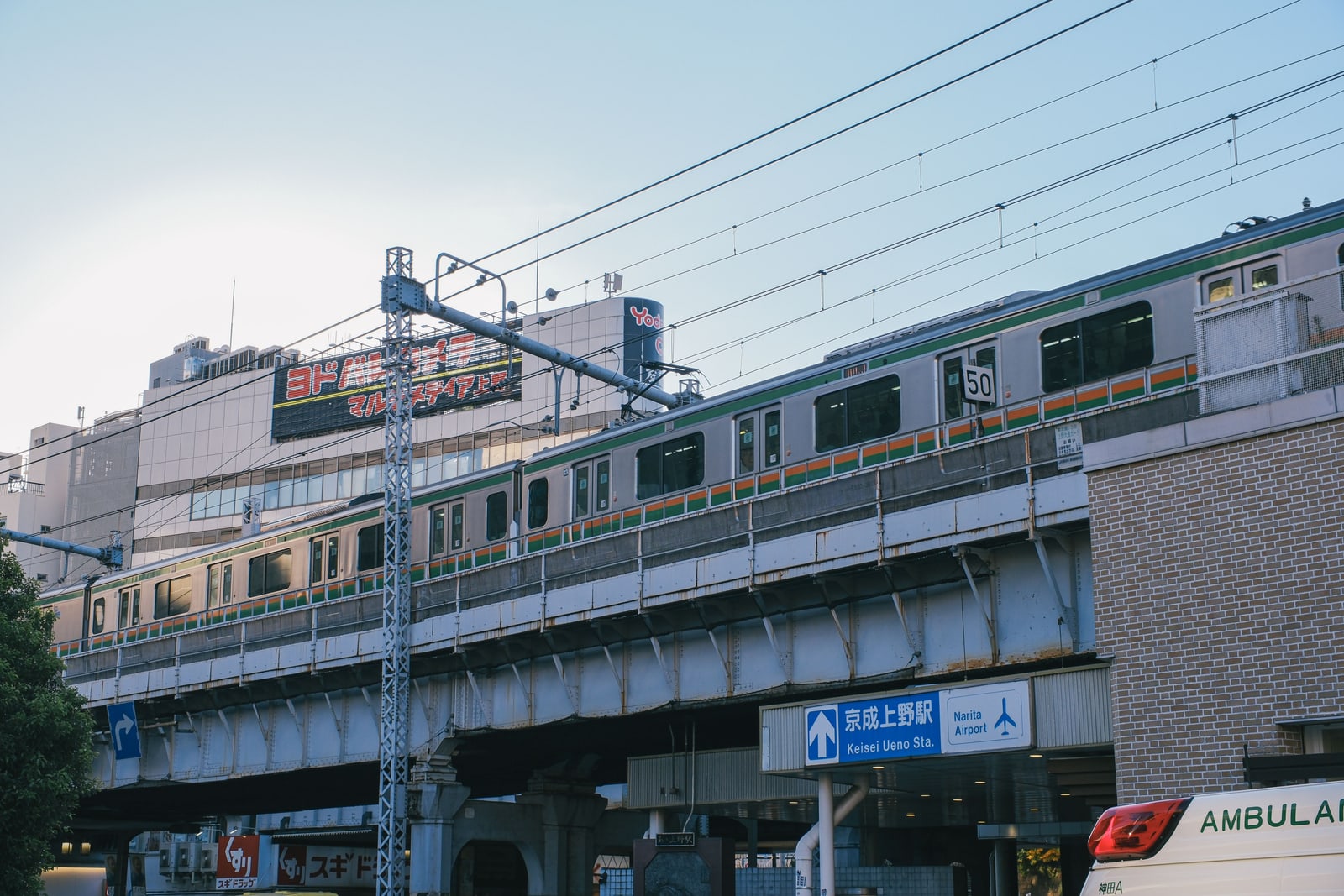
The airport train ends somewhere, and where it ends is the last condition. Keisei’s Skyliner ends at Keisei Ueno. Keikyu’s line from Haneda reaches Shinagawa. Booking the flight before the bed? Then this condition is still open, and it cuts both ways: the airport can pick the side of Tokyo you sleep on, or the side of Tokyo can pick the airport.
The area-by-area transfer — which train, which change, how long, what it costs from each airport to each part of the city — is the airport section of where to stay in Tokyo. Read it with the airport you are leaning toward. If the area you want sits at the far end of the other airport’s line, that is a reason to switch, not a footnote.
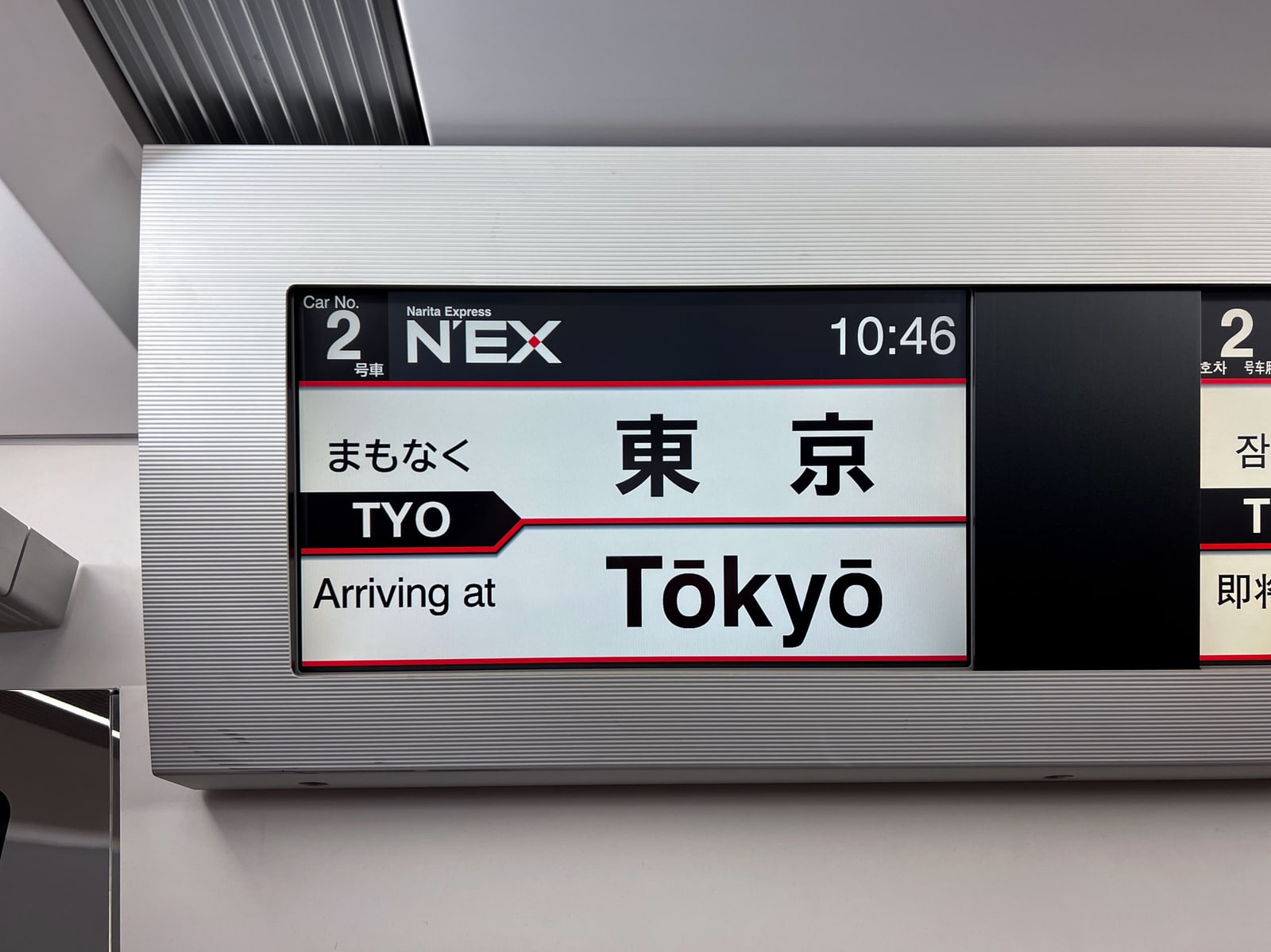
So it works when you land

One landing, worked through. Two travelers. A Narita fare cheaper than the Haneda one on the same day, scheduled to land at 21:40. No hotel yet.
Condition one: the itinerary says Narita, and the Haneda fare exists, so there is a choice. Condition two: the gap, minus two transfers in and two out from the transfer table, is still positive — say it survives. Condition three: 21:40 scheduled, 23:00 last Skyliner, 23:00 runway. Eighty minutes on paper, before immigration, bags and the walk, with any delay eating it from the front. Miss the train and it is ¥23,500 upward by taxi, in the surcharge window. Put that against what survived condition two. If the gap still covers it, Narita stands. If it only ever covered the trains, it was never a saving — it was a bet on a punctual flight, and the Haneda fare, with a train at 00:08 behind it, was the cheaper one all along. Condition four: not booked, so book on the line the chosen airport ends on — the Ueno side for Keisei, the Shinagawa side for Keikyu — and the transfer solves itself.
On the ground, three things, in this order: the phone works (eSIM or pocket WiFi); the card for the first train is in hand or on the phone (Suica or PASMO); the platform before the shops. The flight itself sits inside the trip’s total on what a Japan trip costs.
Next
JBJ'S TAKE
Book the hour, then the airport.
Fare first is how a booking page thinks. Hour first is how the ground thinks, and the ground sends the bill.
Land while a train still runs. Take the cheaper airport only when the gap pays for every head, both ways. Put the bed on the line that airport ends on. That's the page.
- Where to stay in Tokyo — getting to and from the airport
- eSIM or pocket WiFi
- Suica or PASMO
- What a Japan trip costs
- The first-trip planning order
Checked 2026-09-22, against GO TOKYO’s Narita and Haneda access pages; Keisei’s Skyliner timetable; Keikyu’s Haneda night and morning page; Narita Airport’s taxi page, the Tokyo Hire-Taxi Association’s Narita fixed fares and the airport’s airline and terminal search; and NAA’s capacity-enhancement page on the current 23:00–06:00 restriction. Timetables revise at least once a year and fixed fares move — check the operator before relying on a time or a figure here.