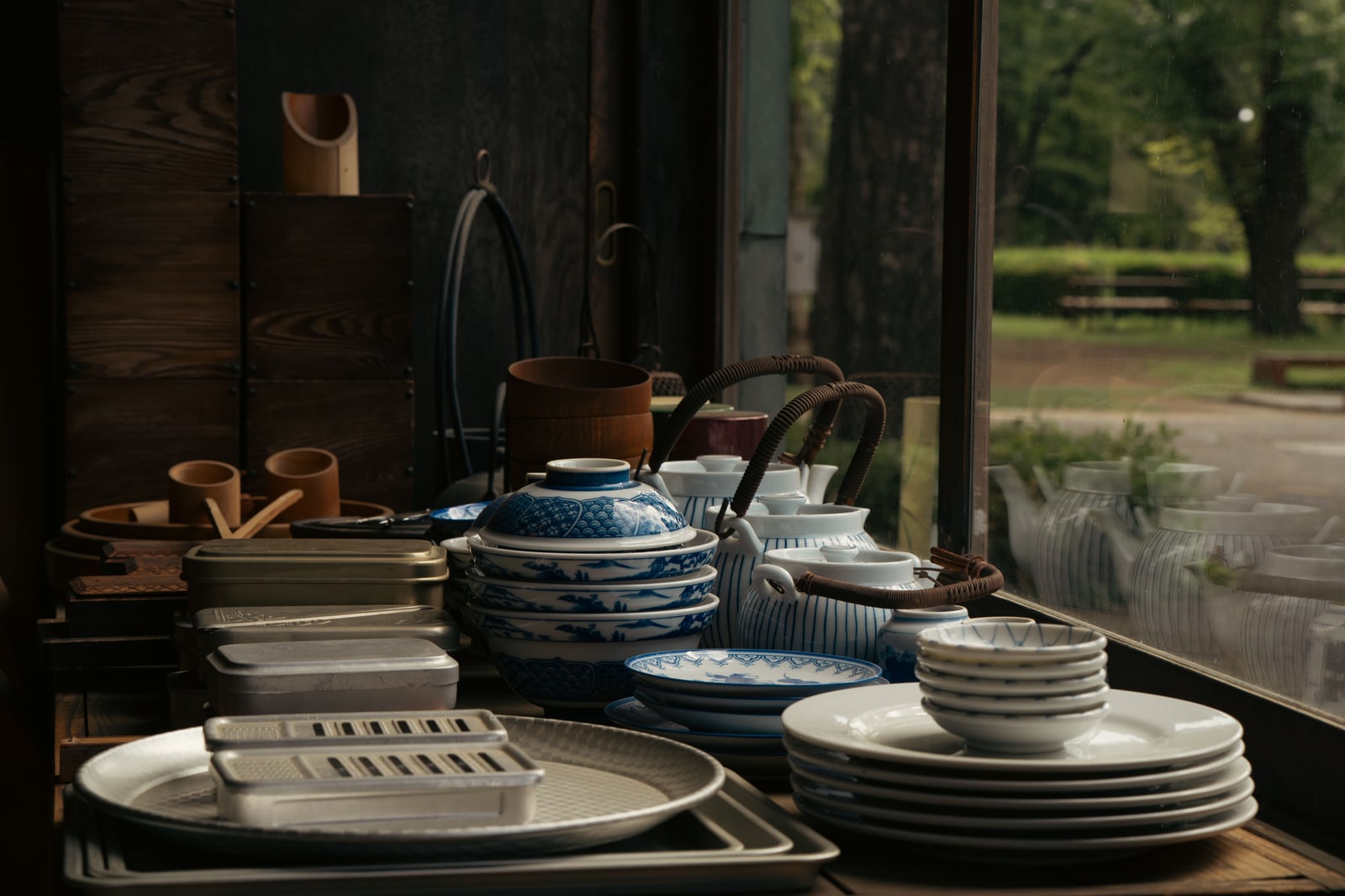
Hasami, Mino, Arita. Three names on three plates, prices that do not line up with anything you can see, and nothing on the listing or the shelf to say whether you are looking at three brands, three towns or three grades.
They are three places. Each name is a production region — a short list of towns in Nagasaki, Gifu or Saga — and each carries exactly the same official status as the other two. None of them is a rank. Where the piece in your hand was actually made is a separate line, on the underside or in the listing, and that line is the one that settles it.
Below: the three side by side, what a label has to say and what it does not, the number that does not sort them, the three by seat, what to leave, and which one to buy first.
The three names, side by side
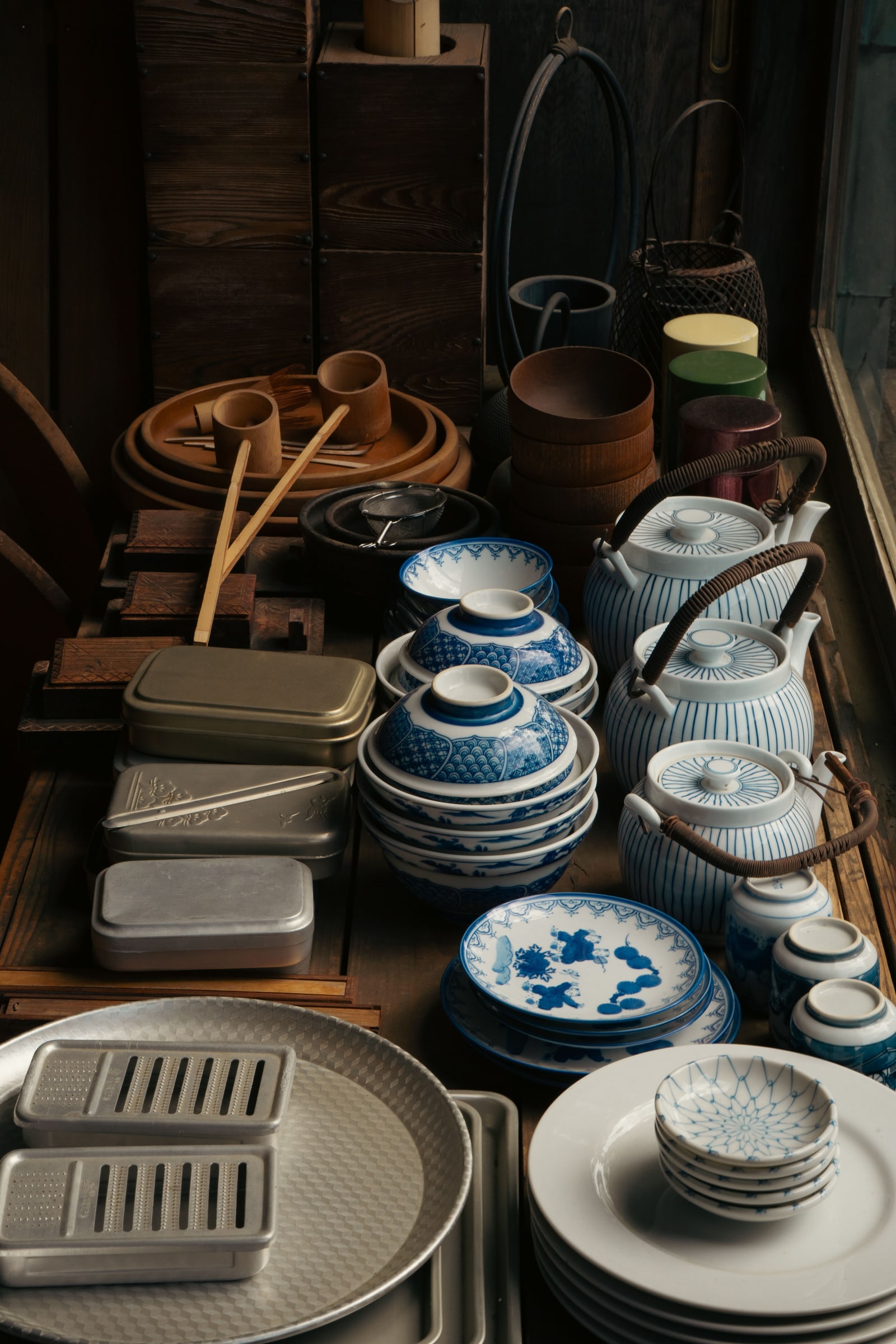
The first split is not between the three names. It is between two bodies: porcelain, 磁器, fired from porcelain stone, and stoneware, 陶器. Arita and Hasami are porcelain traditions. Mino is both — its famous named styles are stoneware glazes, and its everyday output today includes a great deal of plain porcelain.
Mino 美濃焼 — Gifu. Six towns in the Tono region: Tajimi, Toki, Mizunami, Kani, Ena and Mitake. Shino, Oribe and Ki-Seto, the names the region is known for, are stoneware glaze traditions; the same towns fire everyday porcelain in volume. Designated a traditional craft in July 1978.
Arita 有田焼 — Saga. Designated jointly as Imari-Arita ware, across Arita, Imari, Takeo and Ureshino. Porcelain since 1616, when the Korean potter Yi Sam-pyeong found porcelain stone at Izumiyama in Arita and fired Japan’s first. Painted, formal ware, shipped to Europe through the Dutch East India Company from the 1650s. Designated October 1977.
Hasami 波佐見焼 — Nagasaki. Hasami, Kawatana and Higashisonogi, directly across the prefectural border from Arita. Porcelain from roughly 400 years ago, made from the start as everyday tableware on a division-of-labor system built for affordable volume. Designated February 1978 — five months before Mino.
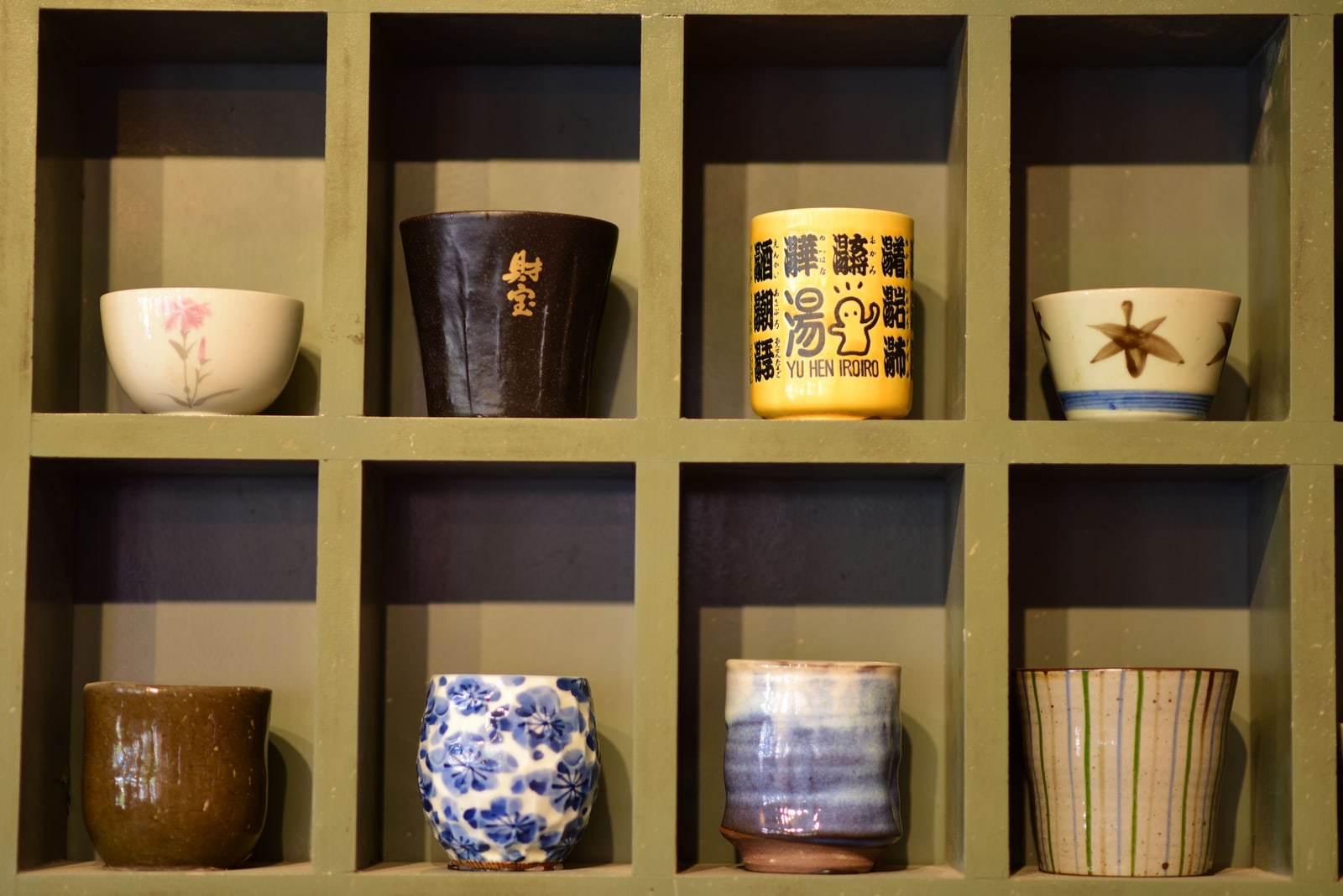
The last two share a start and a border, and Nikkei reports that Hasami ware was historically shipped out under Arita’s name, taking back its own only after an origin-labeling row around 2000. Two of the three names have been sold as one.
What the label says, and what it does not have to
Start with the name. On a Japanese listing it is 美濃焼, 有田焼 or 波佐見焼 — the place, then 焼, ware. On an exporter’s site, Mino ware, Arita ware, Hasami ware. It gives you a region. It does not give you a maker, a grade or a price band, and the line that says where the piece was made is a different line.
That line is 原産国 — country of origin — followed by a country: 日本 for Japan. Japanese law does not put it on everything. There is no blanket duty to mark origin on tableware, and the household-goods labeling law says nothing about origin at all. The duty is conditional: a foreign-made piece whose Japanese-language packaging or Japanese company name would let an ordinary buyer assume it was made in Japan has to show its true origin clearly, or the labeling counts as misleading. So a line that is there means something, and a plain domestic piece with none is not breaking any rule. The cheapest shelf in the country runs on the same line: Daiso’s own listings for its Mino-titled bowls and plates carry 原産国:日本, item by item.
Buying from home, the rule changes hands. Japan’s labeling law governs sales inside Japan; what an exported piece must carry is set by the country it lands in. In the US, for example, customs rules require “Made in Japan” or “Product of Japan” in English on the article or its container at importation. That is one country’s rule; yours is set by your own customs authority.
And the one thing neither the name nor the line promises: care. Across makers in all three wares the pattern is the same — plain porcelain tableware is commonly sold as safe for the dishwasher and the microwave, while pieces with gold, silver or platinum decoration are commonly kept out of the microwave and discouraged from the dishwasher. A pattern across makers, not a property of a ware. Check the item, not the name.
JBJ'S TAKE
The name is a map. The line is the passport.
JbJ reads them in that order, and never lets the first do the second's job.
Mino, Hasami, Arita — a region, nothing more. Fine for choosing a look. Useless for knowing where the thing was fired.
Turn it over, or scroll down. No line, no answer — and the name doesn't get to fill the gap.
The number that does not sort the way you were told
Sellers attach a share to Mino — a slice of the national total that changes size with whoever is quoting it, and with whether they are counting ceramics or tableware, value or volume. What holds across every count is the rank: Gifu, Mino’s prefecture, is Japan’s largest ceramics-and-tableware-producing area by a wide margin, and Saga, Arita’s, is next.
Now what that number is. A prefecture’s total across everything it fires, standing in for a ware named after six of its towns. It tells you where the factories are. It tells you nothing about the plate in front of you except that a great many were made near it.
There is a second number, and it does sort the three — into a tie. All three are designated traditional crafts by the trade ministry: Imari-Arita in 1977, Hasami and Mino in 1978, the three within a year of each other. Nothing in the order says which is the real one, because the list is not asking that question.
Volume says where the factories are. Designation says the ministry counted all three. JbJ would not pay one yen more, or one yen less, on either.
The three by seat, and the line that settles origin
The order for a first everyday purchase: Hasami, then Mino, then Arita. It runs on what each ware was built to do — the three tie on designation, and volume belongs to a prefecture, not a plate.
1. Hasami — the everyday one
Porcelain made from the start as daily tableware, on a system built to make a lot of it affordably — the ware’s own account of itself, and it matches what you meet: white and celadon, in everyday shapes. The cup for the tea you bought first is on this shelf.
The line: on a Japanese listing, 原産国 and 日本. On an exported piece, whatever your own import law demands on the base.
2. Mino — the one you are probably already holding
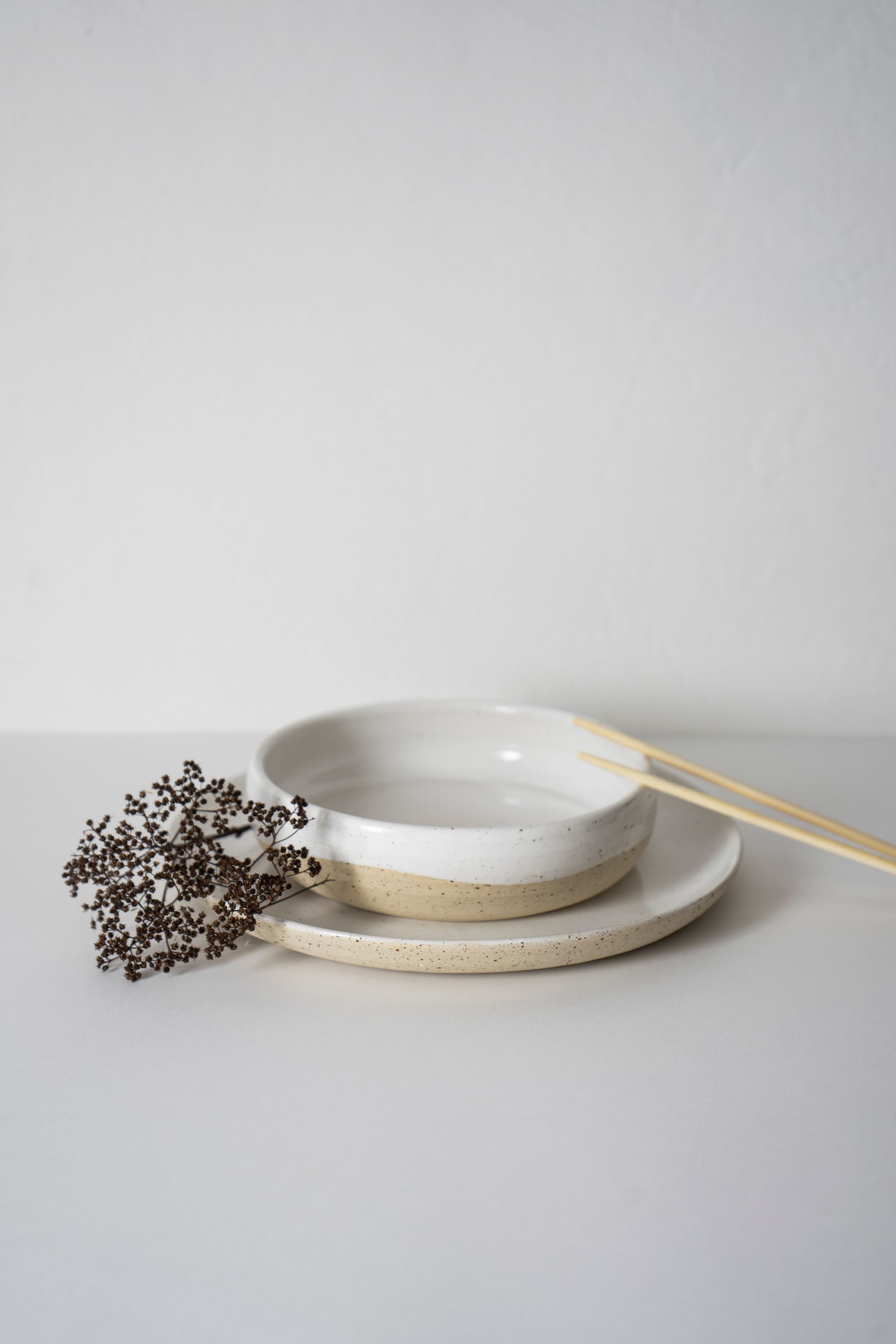
The region that fires more than any other, in both bodies. Glazed stoneware carrying a name — Shino, Oribe, Ki-Seto — is the historic Mino. Plain porcelain from the same six towns is the everyday Mino, and it is made in volume. Second, not first, because one name covers two different things in the hand.
The line: identical, and already read for you once — the Mino-titled bowls on Daiso’s own listings carry 日本.
3. Arita — the painted one
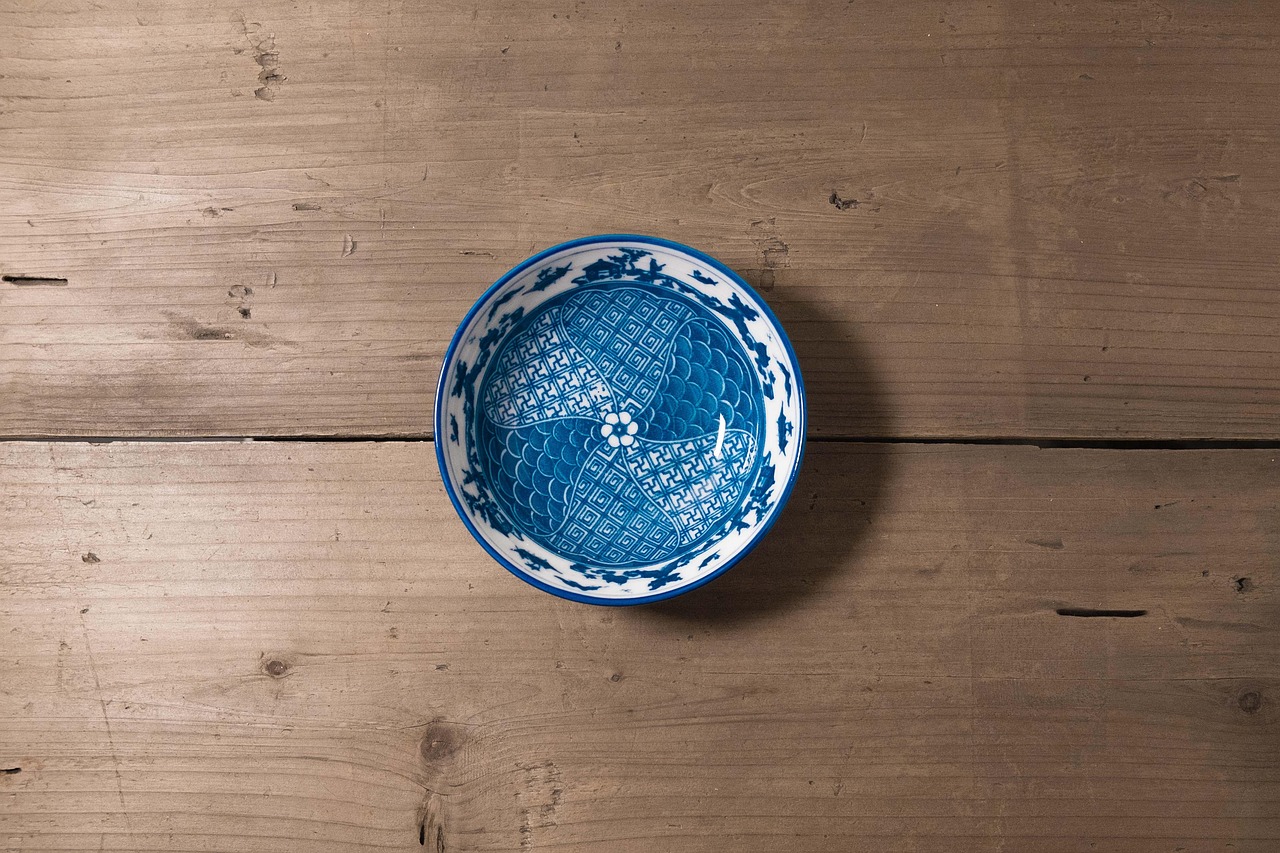
Japan’s first porcelain and the one Europe bought: painted, formal, exported from the 1650s. Third for a first everyday piece because of what it was built for, not what it is. Check for gold, silver or platinum before it goes near a microwave.
The line: the same. Where a name and a line disagree, the line wins.
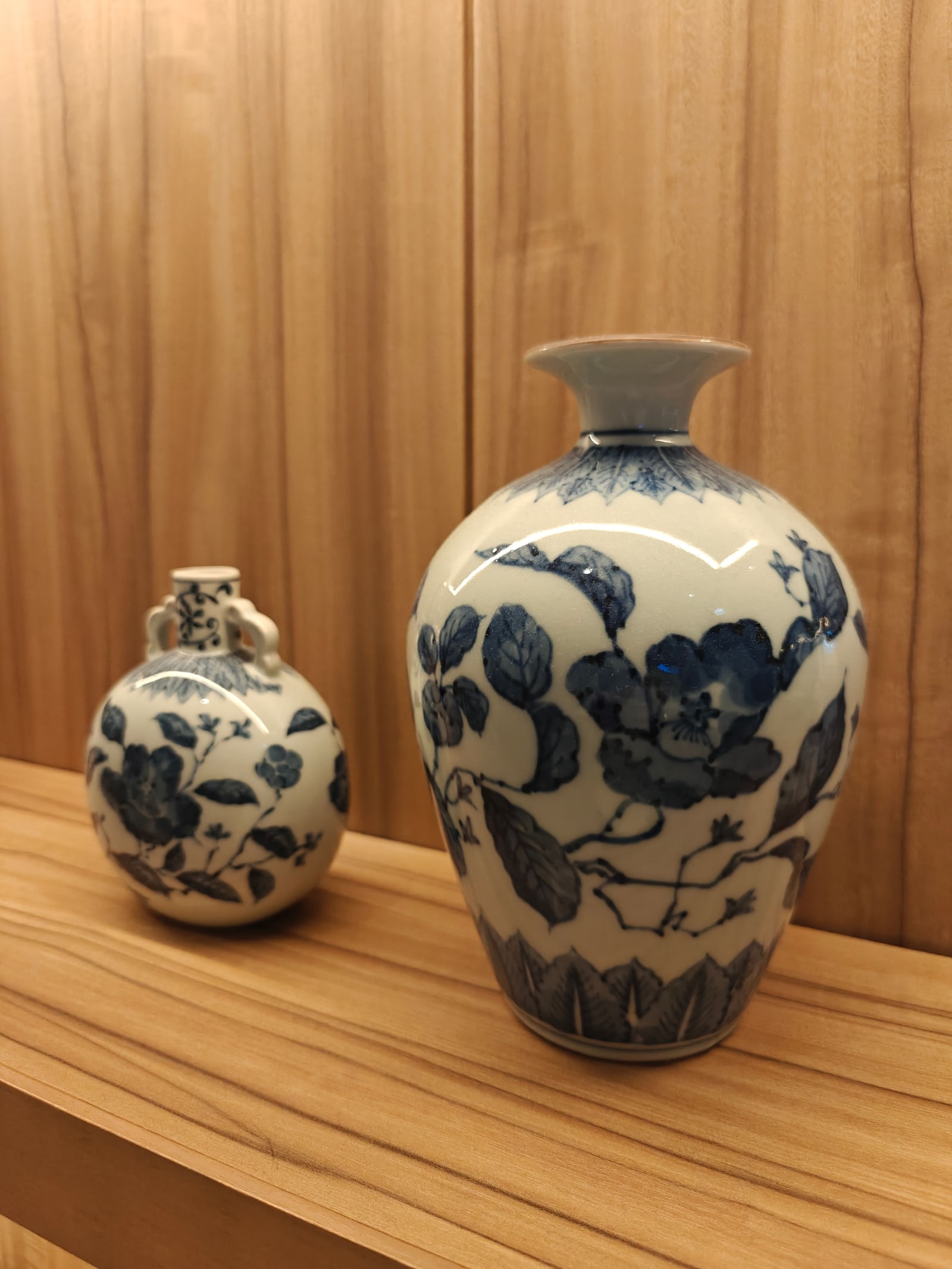
Leave it on the shelf
Three things to leave, by name.
The set. Five bowls in a box commit you before one meal has told you whether you like eating out of them. One bowl. If it is still the one you reach for in a month, the shelf will still be there.
The gold rim, for every day. Gold, silver or platinum on a piece you mean to use daily. The makers’ own pattern keeps it out of the microwave and warns you off the dishwasher, and a bowl you have to think about is a bowl that stays in the cupboard. Keep it for the gift, or for the one plate that only comes out on a day that earns it.
The authenticity premium. A price explained by “the real traditional one”. All three are on the same list, within a year of each other. Pay for the piece. Do not pay for a status the other two already hold.
JBJ'S TAKE
The set is the trap. Not the price.
JbJ would rather you overpay for one bowl than save money on five.
One bowl teaches you whether you like the weight, the rim, the way it holds rice. Five teach you nothing you haven't already committed to.
Buy the second after the first has earned it.
Which one to buy first
The question you came with, last. Once volume and designation are set aside, the three differ on what each was built to do: Hasami for the daily table, Arita for the painted, formal one, Mino for both — glazed stoneware with a name and plain porcelain without one. Whichever you pick, the check is the same line.
Getting it home in a suitcase is its own set of rules; if the basket grows past one bowl, so is the tax-free refund.
JBJ'S TAKE
Hasami first. A bowl, not a plate.
Built as everyday porcelain and still made that way — JbJ would start with the ware that never asked to be anything else.
A bowl, because you'll hold it. A plate you only look at.
What flips it: a plain Mino bowl in front of you in Japan, line reading 日本 — buy that one and stop looking. Arita comes later, when you want something to look at.
Information checked 22 September 2026. The three designations, their dates and their production areas come from the Traditional Crafts Industry Promotion Association, the body that administers them; Arita’s founding from Saga Prefecture; Hasami’s from the town and its ceramics cooperative; the origin-marking rule from the Consumer Affairs Agency; the US import-marking rule from US Customs and Border Protection and the Code of Federal Regulations; the care pattern from makers’ and retailers’ own pages; the Daiso line from Daiso’s own online catalog.