Sencha, gyokuro, hojicha, genmaicha, kukicha. Five names, five tins, prices an order of magnitude apart, and nothing on the shelf to say whether these are five grades of one thing or five different things.
They are five different things. Each name specifies something that was done to the leaf — how long it was steamed, how many days it was covered, whether it went through a roaster. None of them is a rung.
And the check you were probably planning to run, how fresh it is against its harvest, is the one thing a Japanese packet does not have to print.
So: what each name specifies, what the packet does and does not say, the one number that decides whether your tea comes out bitter, and which tin to buy first.
The five you will actually meet, side by side
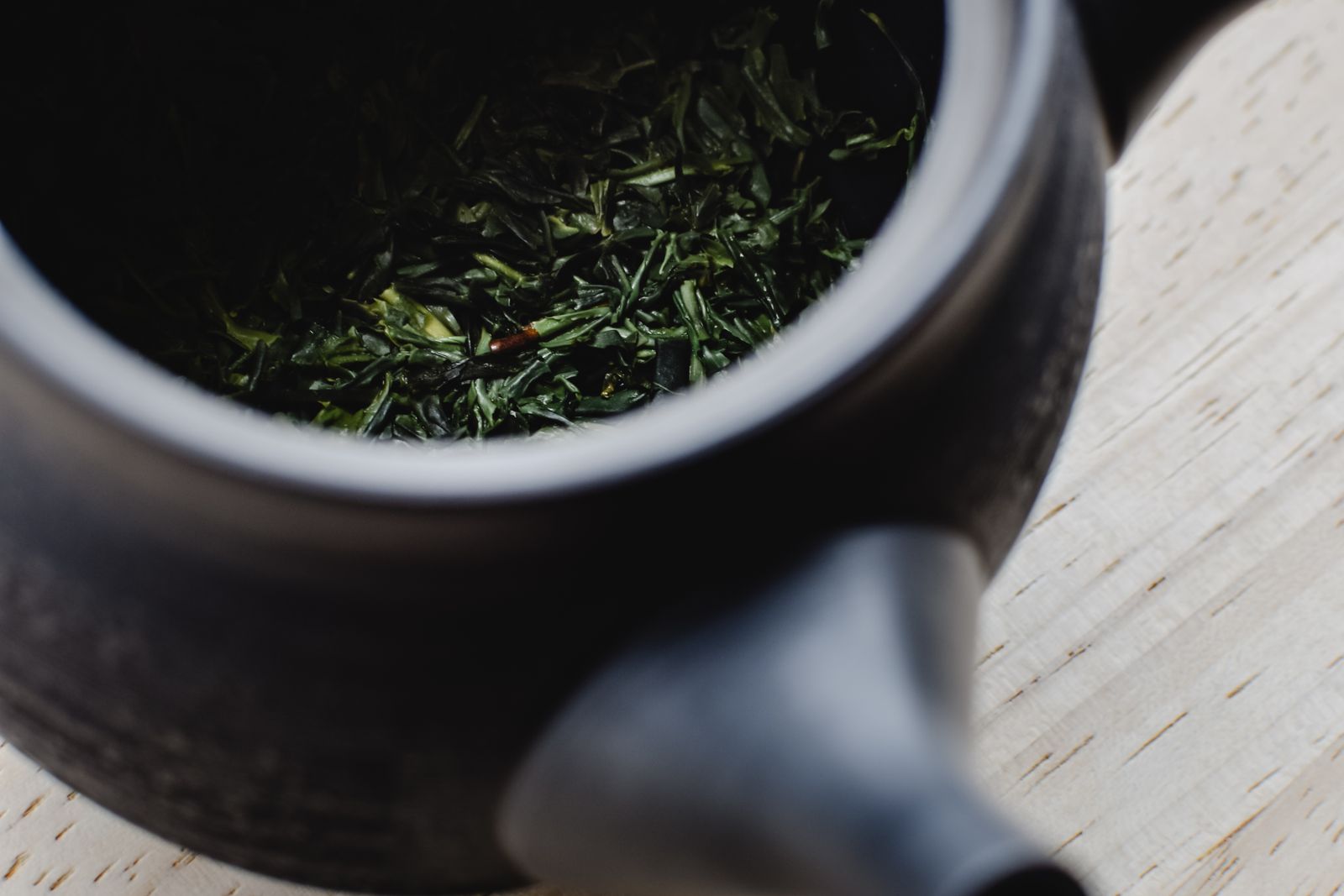
The Japanese tea industry’s own naming standard runs to sixteen named categories. These five are the ones you will actually be choosing between.
| Name | What was done to the leaf | What that does to the cup |
|---|---|---|
| 煎茶 sencha | Steamed, rolled, dried. Grown in the open. | Astringency and 旨味 in balance — the open-grown result. |
| 玉露 gyokuro | First-flush shoots covered about twenty days, shutting out nearly all light. | The shade limits the change into catechin and loads the leaf with theanine: umami forward rather than astringent. |
| ほうじ茶 hojicha | Sencha or bancha put through a roaster over strong heat. | Distinctly toasty, with almost no astringency or bitterness. |
| 玄米茶 genmaicha | Sencha or bancha with roasted rice added. | Leaf and roasted rice infusing together in the same pot. |
| 茎茶 kukicha | Stems and leaf-stalks sorted out of the leaf during finishing. | The stem fraction of a finished tea, brewed on its own. |
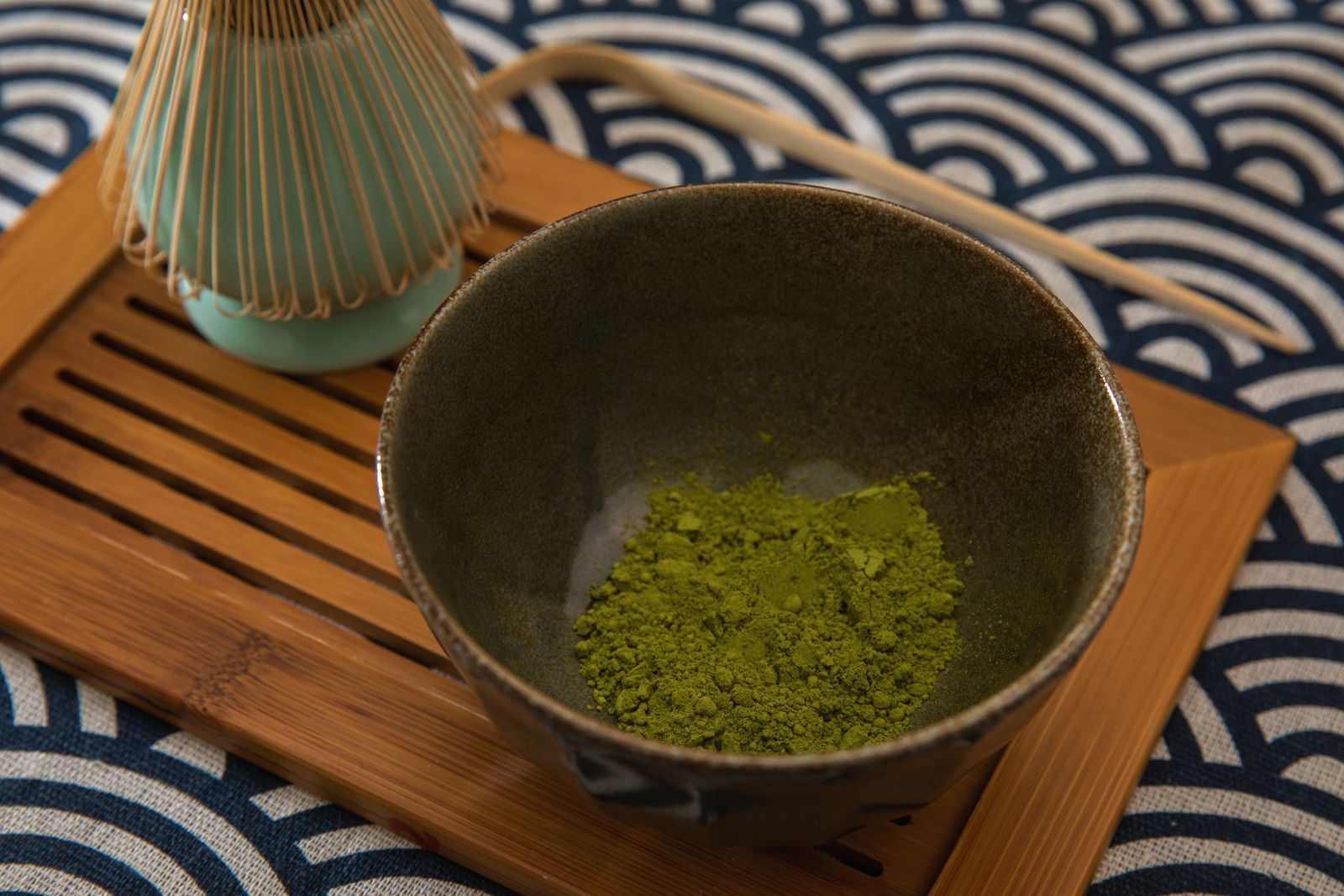
Matcha is a category in the same standard and is not a leaf tea at all — it has a page of its own.
What each name describes
煎茶 sencha
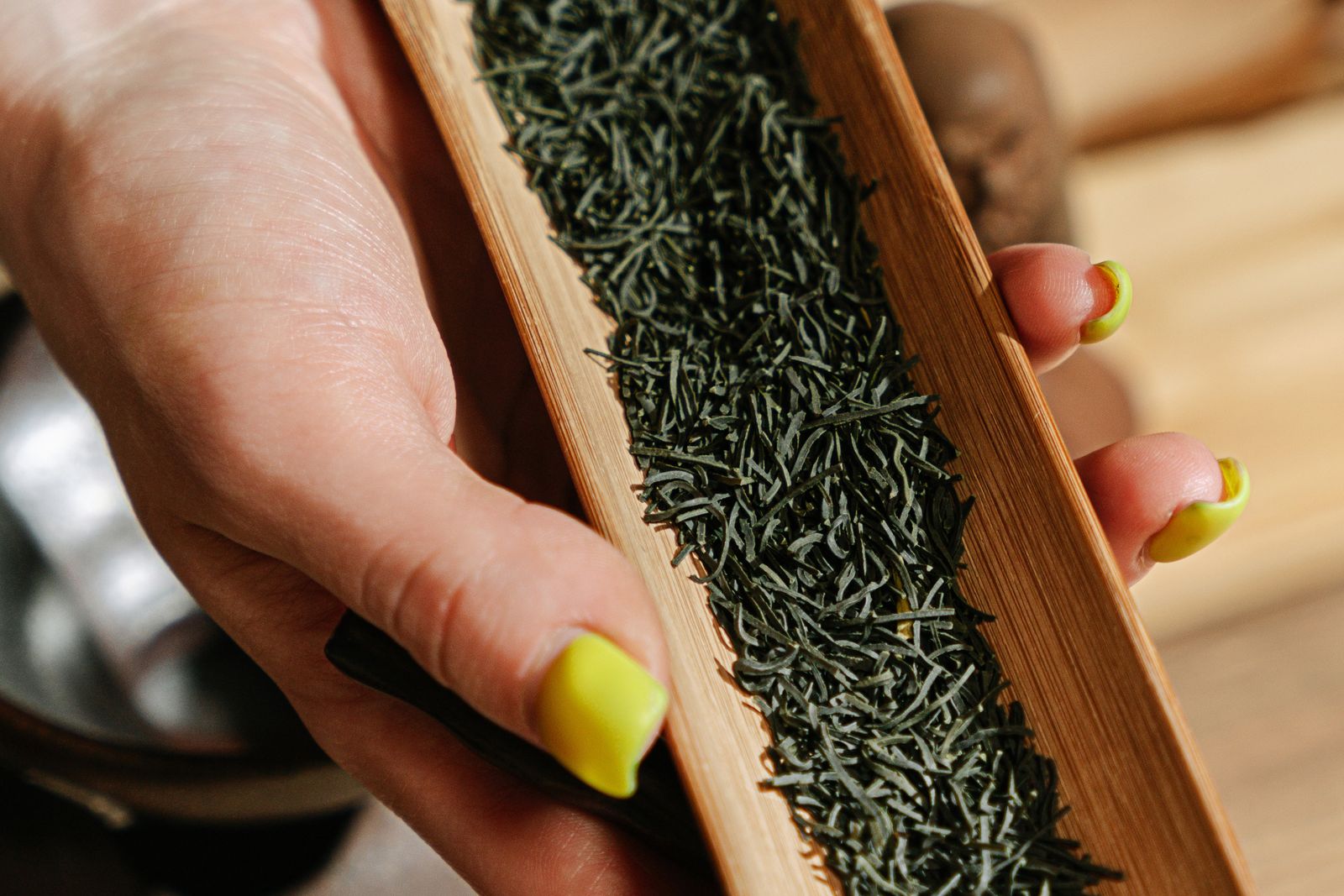
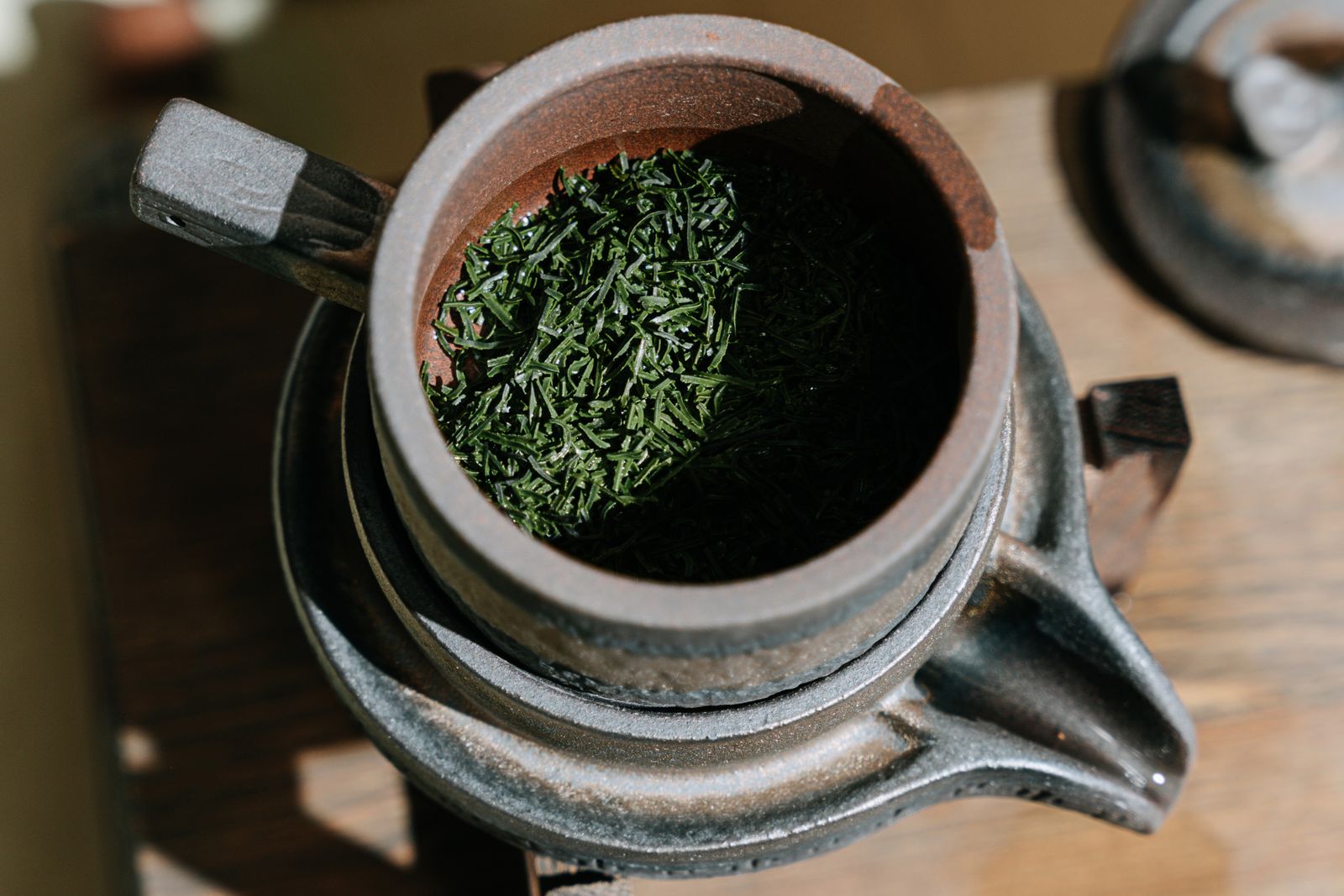
Steamed to stop the leaf changing, rolled to press the moisture out of it, then dried and stretched into a needle. It is grown 露地 — in the open, under whatever light the sky provides — and that is where the balance of astringency and 旨味 comes from. It is the tea Japan produces more of than any other.
The correction the word invites: 深蒸し煎茶, fukamushi, is not a better sencha. It is a separately named category in the same standard, steamed more than twice as long, which gives it a darker green and a richer sweetness. On the agriculture ministry’s figures, brewed sencha carries about 20 mg of caffeine per 100 mL of liquor.
玉露 gyokuro
First-flush shoots, covered for about twenty days under reed screens, straw matting or cloth, with nearly all the light shut out. The covering limits the change into catechin, which is the astringent part, and loads the leaf with theanine instead. Gyokuro is made from the first picking only.
The correction: this is a cultivation method with a number attached, not the top rung of anything. Twenty days is 程度 — approximately — and the same ladder runs かぶせ茶 at about a week and 碾茶 at two to three weeks. Nor is it a legal minimum: the standard is the industry’s own, and voluntary. The ministry’s table puts gyokuro’s brewed liquor at about 160 mg of caffeine per 100 mL against sencha’s 20, so a cup of it lands far heavier.
ほうじ茶 hojicha
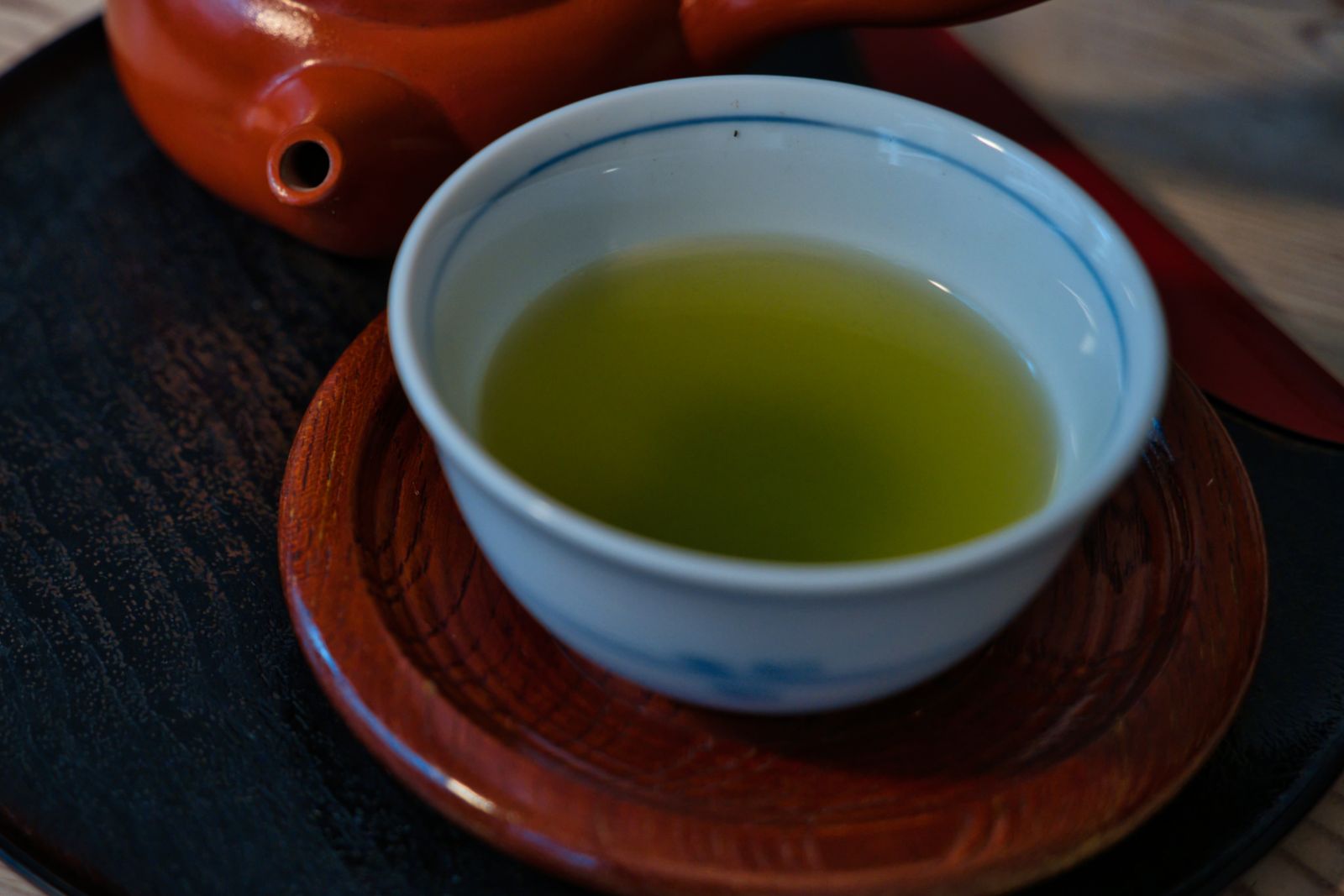
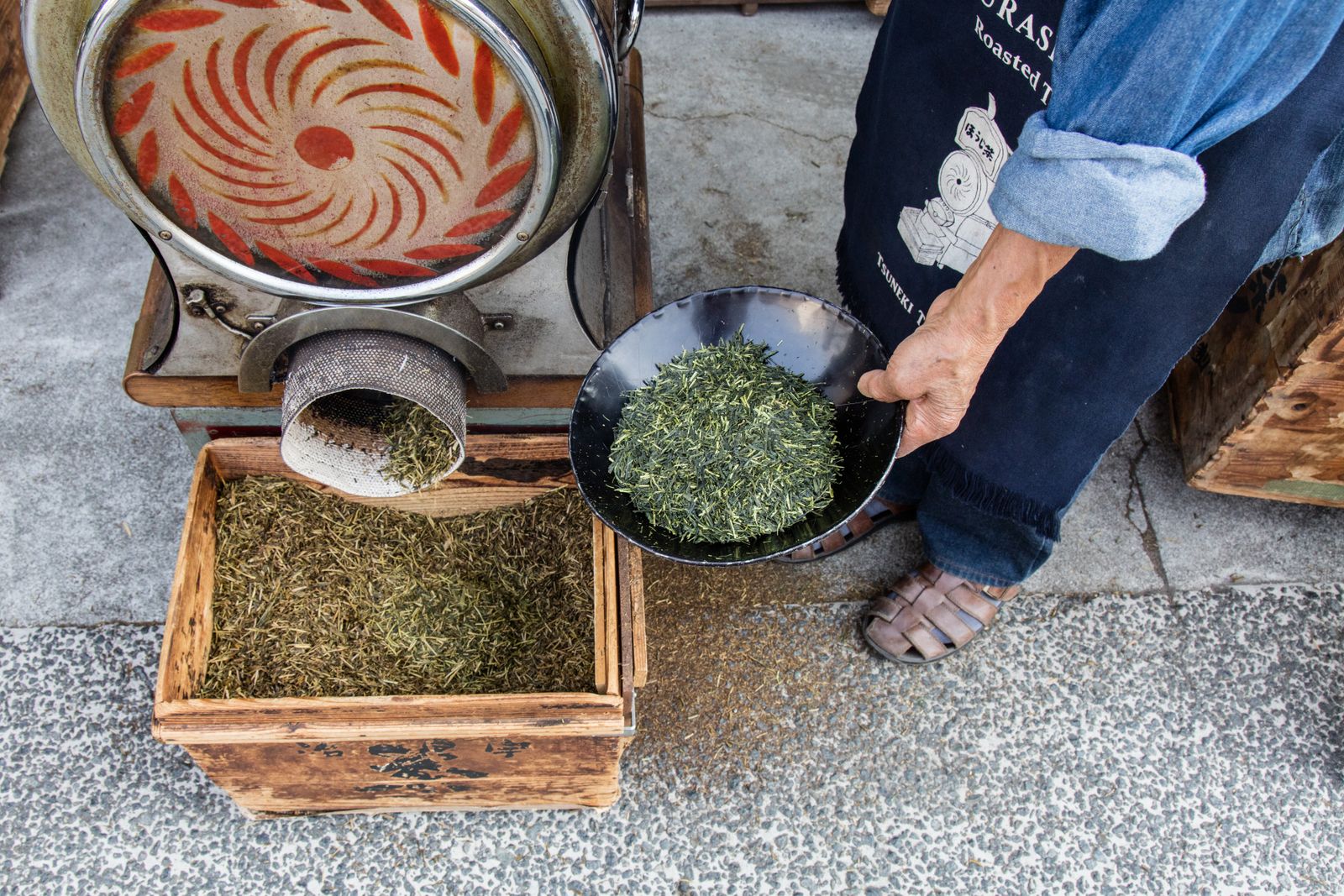
Sencha or bancha put through a roaster over strong heat. It comes out distinctly toasty, with almost no astringency or bitterness.
The correction: it is not a different plant and not a grade — it is the same leaf with one more step done to it. It is also not the low-caffeine option relative to sencha. On the national figures the two come out the same, about 20 mg per 100 mL of liquor, at effectively the same leaf strength. Genmaicha is the one that is genuinely lower, at about half.
玄米茶 genmaicha
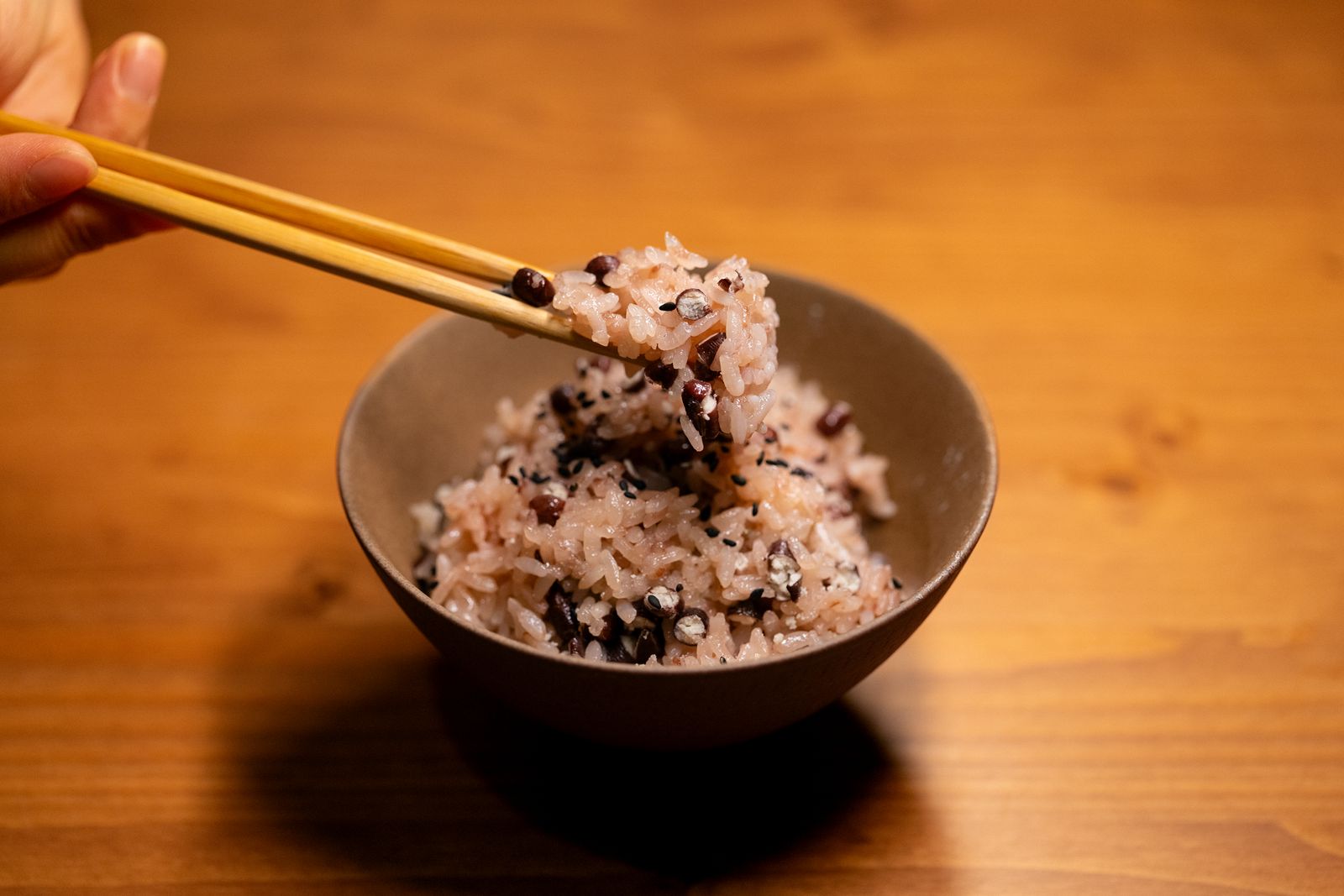
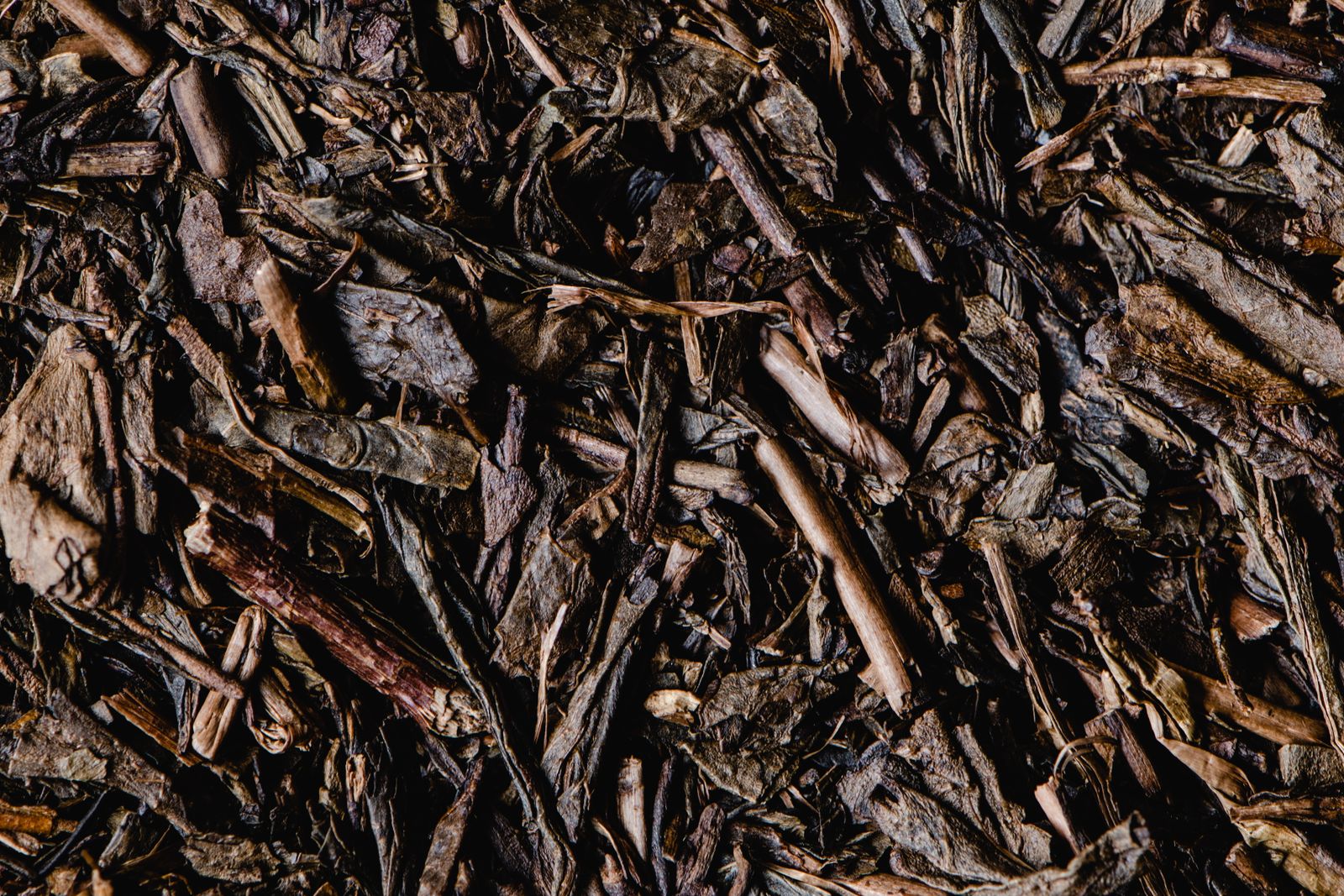
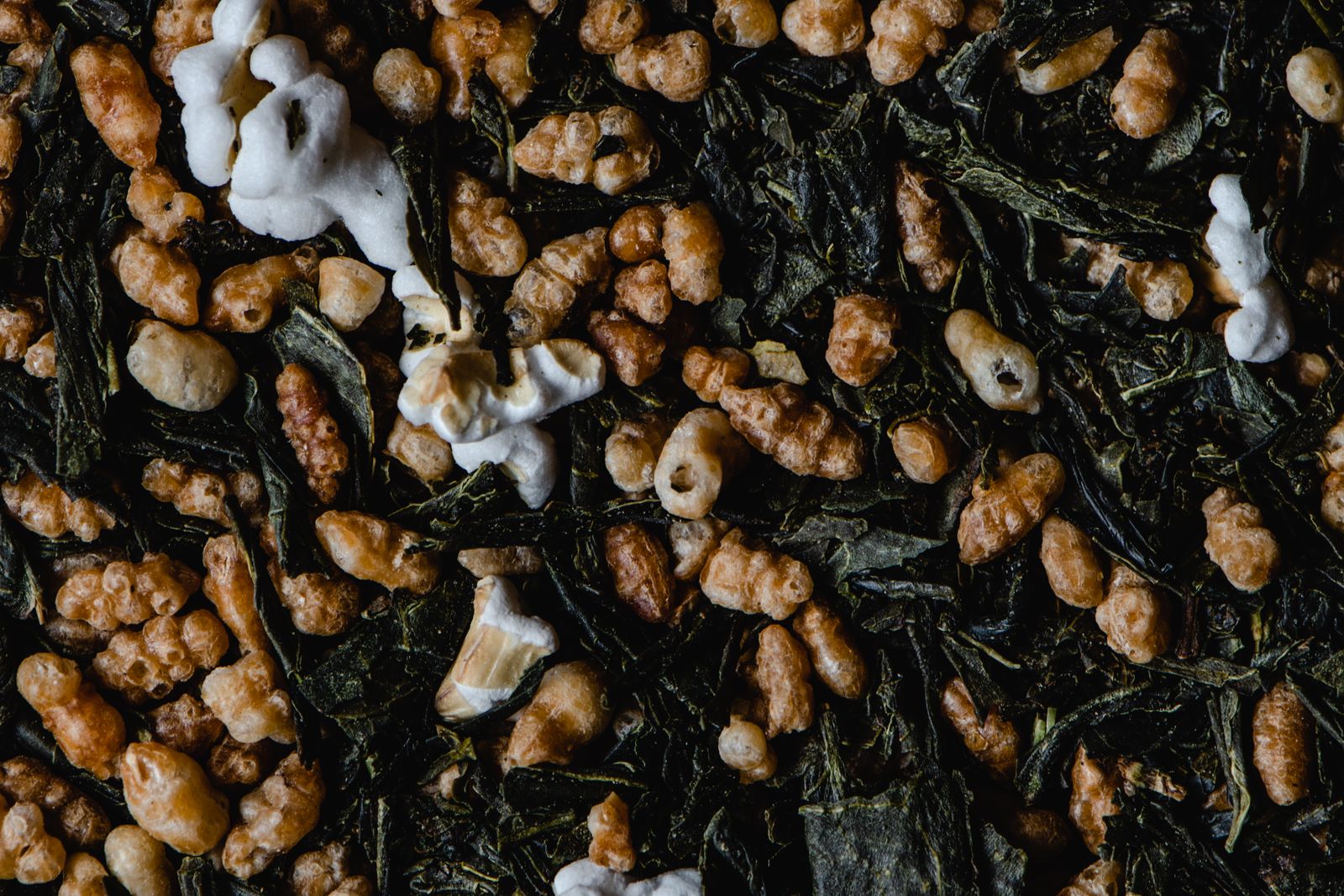
Sencha or bancha with roasted rice added to it.
The correction, and the prefectural tea association makes it itself: the rice is 炒り米, roasted rice — not 玄米, brown rice, which is what the product name says.
茎茶 kukicha
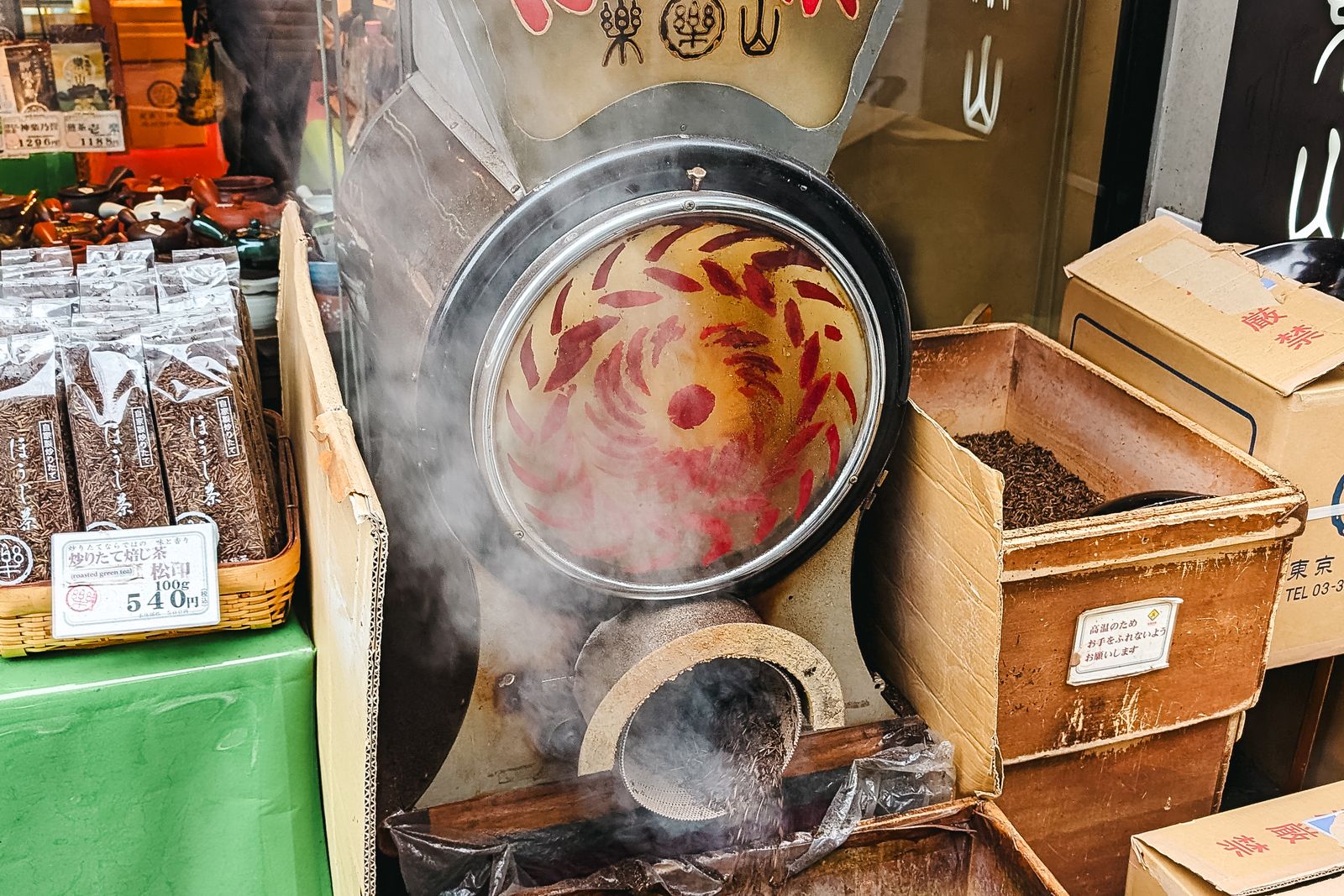
Stems and leaf-stalks, separated out of the leaf by a sorting machine while the rough tea is being finished. The fraction that gets sorted out this way — 出物 — is about two-tenths of the rough tea.
The correction: this is a by-product fraction with several trade names rather than a single product. 白折, 棒, 雁ヶ音 are among them, and some shops keep 雁ヶ音 for the kukicha that came out of gyokuro. And the two-tenths stays about two-tenths; nobody publishes it as a precise ratio.
The date on the packet, and the one that is not there
A packet of tea sold in Japan has to carry two things you can use: a 賞味期限, the best-before, and a 保存方法, the storage instruction. Both are mandatory items on the panel.
A harvest date is not. It does not appear among the mandatory items at all, and neither does a 一番茶 designation. The check most people expect to run on tea is the one the packet is under no obligation to let them run.
And the best-before is set by the maker. The Consumer Affairs Agency requires only that a business set it on scientific and reasonable grounds; it prescribes no period for tea, or for any other food. The number printed there is the company’s own answer, not a regulator’s.
Which leaves the harvest words themselves. 一番茶 and 新茶 name the year’s first picking — from early April in Kagoshima, from the middle of the month in Shizuoka. 八十八夜, the eighty-eighth night counted from 立春, falls around the peak of the new tea in Shizuoka. And gyokuro is made from the first flush by definition, so on a gyokuro tin first flush is what the tea is rather than a mark of how good it is.
JBJ'S TAKE
Stop checking. Start buying small.
The check you came to run isn't on offer, and JbJ isn't going to invent one. Better to make the question stop mattering.
Buy the smallest bag sold. Drink it. Buy the next one. Small enough and often enough, and age never gets a chance to become your problem.
And ask when it was picked. A straight answer tells you something. So does a vague one.
Whether the company sells tea in Japan at all
There is a second check, and it costs about two minutes.
A company’s own corporate pages say which market it sells to, and the Japanese-language side of a site tends to say it plainly. 一休合同会社, a Fukuoka company, states on its own Japanese page that it specializes in shipping Kyushu green tea overseas — and directs customers living in Japan who want tea for themselves to contact tea producers directly.
Then the case that looks like the opposite of what it is. The ITO EN site an English-language search lands on carries the footer 「© 2026 ITO EN (North America) INC.」. The Japanese company is 株式会社伊藤園: leaf tea, tea bags and instant since 1966, six factories, and 79 of its own stores around the country. Same brand, two companies, and the English site is not the Japanese shelf.
The boundary matters as much as the check does. Not finding a Japanese storefront tells you what a company has published about itself. It does not tell you that nobody in Japan drinks the tea.
JBJ'S TAKE
Run it. Don't let it grade the tea.
Which market a company sells to is a fact about the company. Not about what's in the bag. JbJ rates it low.
Near the bottom, not off it. Some companies say plainly, in their own words, who they are and where they sell. That's worth two minutes.
And if one won't say? Not a crime. Just one less thing you know before you pay.
The water temperature, and why the numbers you find disagree
Temperature is the variable that decides whether your tea comes out bitter, and it is not one number.
- Upper-grade sencha — 70℃.
- Mid-grade sencha — 80–90℃.
- Gyokuro — 50–60℃.
- Bancha and hojicha — hot water straight from the kettle into the pot.
That sencha split is real, and it is about when the leaf was picked rather than about a ladder of names. Leaf picked early is rich in the amino acids that read as umami and is called 上級; leaf picked later carries more catechin, which is where the astringency and the bitterness come from, and is called 中級. The first wants cooler water. The second can take it hotter.
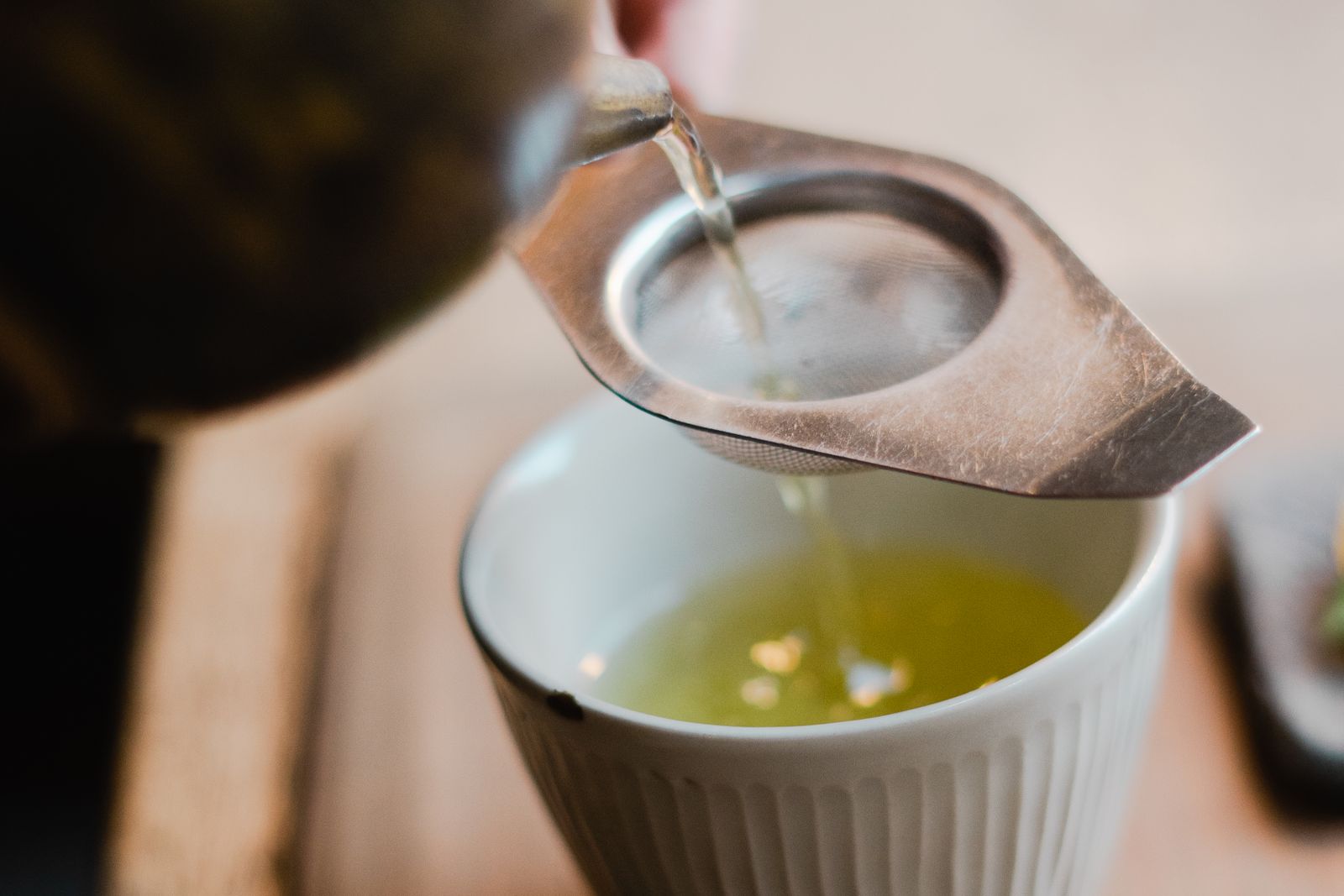
For quantity, the Kyoto prefectural tea association gives a complete instruction in its own units: 10 g of leaf, 180 ㏄ of water, poured out as three servings of 60 ㏄ — and the water cooled in the cups first, to about 70–80℃, before it goes anywhere near the pot.
Then two things to do with the pot. From the second infusion on, the water goes up and the time comes down. And empty the pot completely when you pour, leaving no water sitting in it: the national tea instructors’ association gives the reason, which is that this is what makes the second infusion good.
Which leaves the steeping times, and they are worth separating rather than averaging. The agriculture ministry’s short figure is for 深蒸し煎茶 — the separately named category from earlier, a different product carrying its own parameters, not a shorter answer to the same question. And for plain 煎茶, two Kyoto tea bodies, a prefectural research institute and the prefectural tea association, print times that differ from each other by a factor of two, with neither stating a condition that would account for the gap.
So put your attention on the temperature. It is the figure the sources agree on, and it is the one that decides bitterness.
Which one to buy first
Five names, one first tin, and the routing is short because it runs on what the names actually specify.
Astringency is the axis they vary along. Sencha holds it in balance with 旨味, and wants its water at a temperature. Gyokuro trades it for theanine, and wants cooler water than sencha does. Hojicha has almost none in it at all. Genmaicha is a sencha or bancha base with roasted rice alongside. Kukicha is the stem fraction of a finished tea, sold under its own set of names.
One more thing changes the arithmetic of the whole shelf: Japanese practice re-infuses the same leaf, a second time and a third. A tin is not one cup’s worth of anything.
JBJ'S TAKE
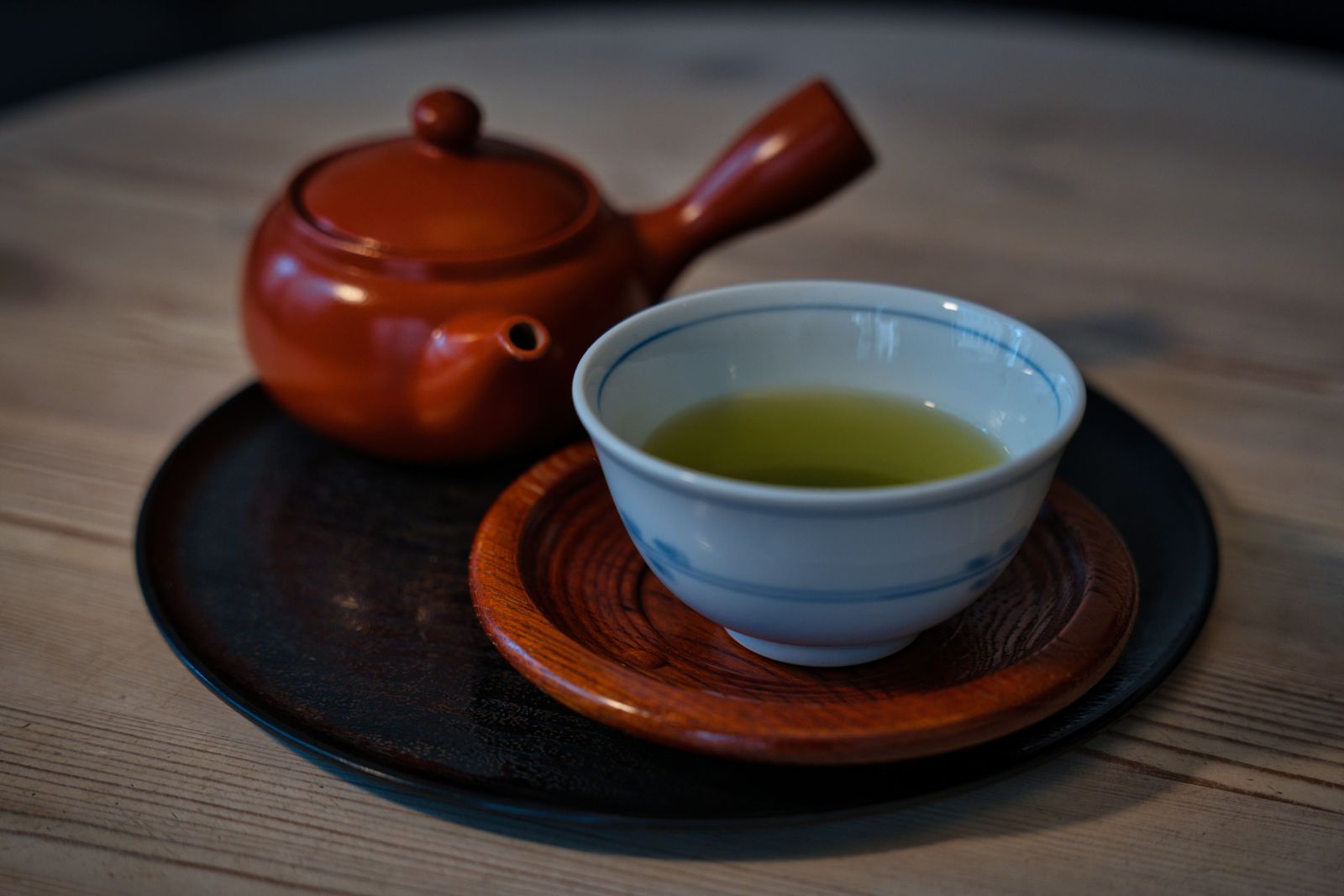
Hojicha first. You're going to pour straight from the kettle anyway.
Not sencha, not first. It wants its water at a temperature, and week one is not when you start measuring.
Hojicha forgives the kettle — there's barely any bitterness in it to release.
What flips it: if you'll actually watch the water, start at sencha. And gyokuro isn't a first tin. It asks the most, and the cup lands far heavier in caffeine than sencha's.
Information checked September 2026. The tea definitions come from the national tea industry body’s own naming standard as quoted by 公益社団法人京都府茶業会議所, corroborated by the agriculture ministry, which is also the source for the caffeine figures and the harvest timings; the leaf and water quantities are the Kyoto association’s own; the brewing temperatures come from that association, the 京都府茶業研究所 and the NPO法人日本茶インストラクター協会; the labeling requirements from 徳島県 and the Consumer Affairs Agency.