You ate rice in Japan, you cannot reproduce it, and somewhere between the bag and the machine, something is wrong.
JbJ’s position, before the reasoning: it is the rice, and specifically it is how recently that rice was milled — and the three signals you are being sold to solve this each measure something other than what you think. The appliance is doing more of the work than the marketing gives it credit for, and less of it than the price ladder implies.
Here is what Japan’s own record actually says about each one.
The grade on the bag has no taste in it
Japan inspects brown rice and grades it 1等 / 2等 / 3等 / 規格外 under a standards regulation with real force behind it. The criteria for ordinary paddy rice are: proportion of whole grains, moisture, damaged grains, dead grains, discolored grains, foreign matter.
Read that list again. Every item is appearance or composition. There is no taste criterion anywhere in it.
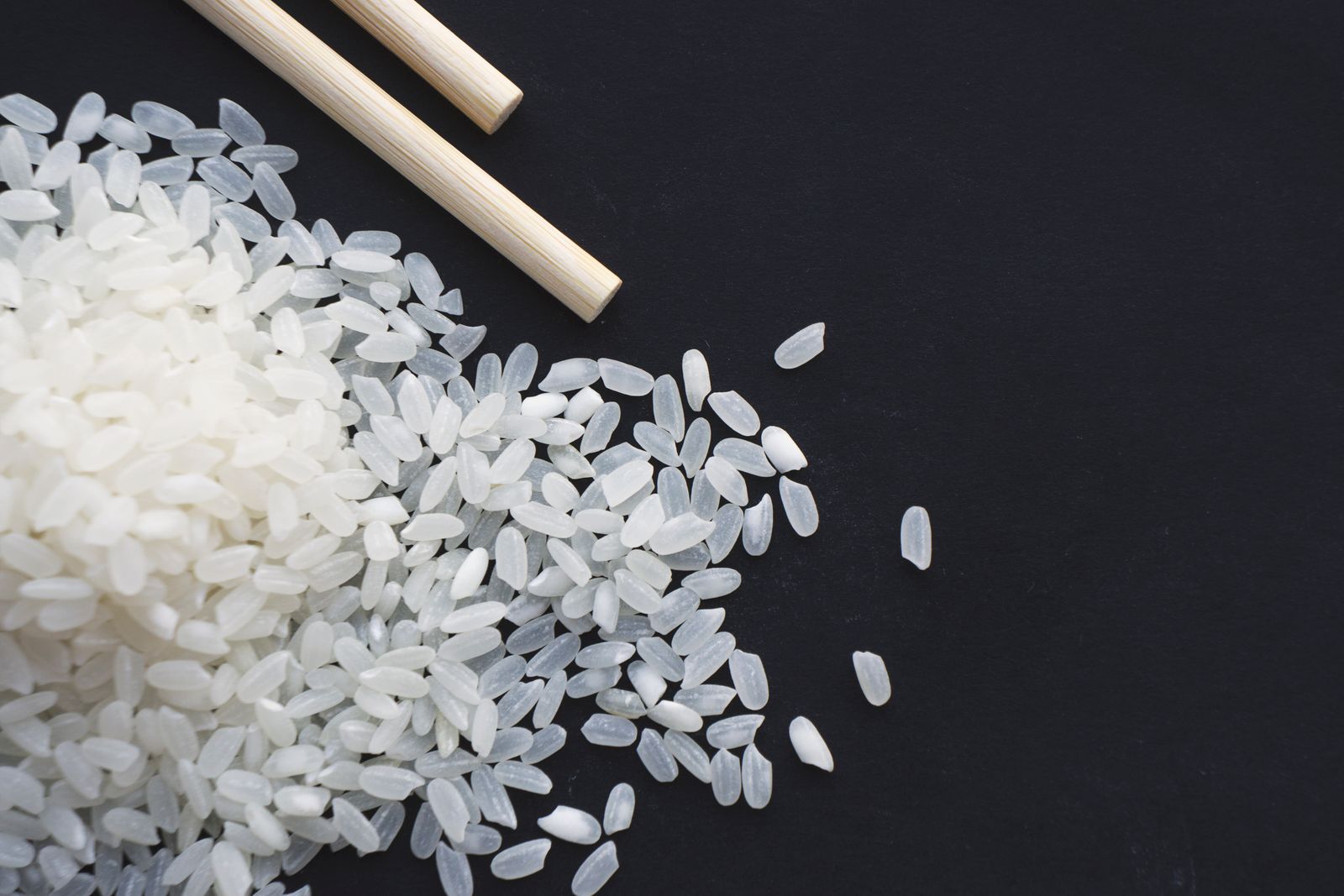
Japan does evaluate taste. It just does it somewhere else entirely: the agriculture ministry handles 食味 through sensory panels supported by physicochemical measurement, with amylose content driving firmness and stickiness, and higher protein associated with lower eating quality.
So the grade and the taste system are two separate machines. Being told a rice is 1等 tells you it looked right coming off the farm.
A boundary that matters here and gets skipped: these are the rules for rice sold in Japan. If you are buying outside Japan, your bag is labeled under your own market’s law, and none of this is guaranteed to be on it. What the Japanese rules are good for is knowing what a Japanese-market bag must disclose — so you can read one in a shop in Japan, check an imported bag, and know what to ask an importer for.
The 特A mark is not about the bag it is printed on
This one is remarkable, because the organization that issues the mark says so itself.
The taste ranking is published annually by the Japan Grain Inspection Association — a private foundation, not a ministry. It has run since the 1971 crop. A hundred trained evaluators across five sites taste in groups of three or four, scoring appearance, aroma, taste, stickiness and firmness against a reference. The reference is itself a blend of Koshihikari from several areas, which is why the ranks are relative: A′ means “about the same as that blend,” not a failing grade.
Two things follow that almost nothing in the market tells you.
特A belongs to a place-and-variety combination in one crop year. Not to a variety. “Koshihikari is 特A” is a category error — a particular region’s Koshihikari earned it in a particular harvest, and can lose it the next. Eligibility is also volume-gated, so a small-production variety cannot be ranked at all, and having no rating is not evidence of being worse.
And the issuing body requires that a bag displaying 特A says the mark is not an evaluation of that product. In its own words, a business showing the mark must state 「商品そのものの評価ではありません」 so as not to mislead consumers. The association also states plainly that it does not evaluate all rice in circulation.
JBJ'S TAKE
The caveat already exists. It is just not on the bag.
JbJ does not have to argue this one. The organization that owns the mark has already published the qualifier, and asked sellers to print it.
So the useful test is not whether a bag carries 特A. It is whether it carries 特A and the sentence the issuer asked for. A bag with the mark and no qualifier is not following the rule of the body it is borrowing authority from.
That is a check you can run in a shop, in about two seconds, before you have spent anything.
Nobody defines the cooker ladder
You have seen the ladder: microcomputer, then IH, then pressure IH, then clay pot, with the price climbing at each step.
Japanese regulation does classify rice cookers. They are a designated product under the household goods quality labeling law, and every cooker must display a set of items: maximum cooking capacity, a classification name, evaporated water volume, and four separate power-consumption figures.
Every mandatory item is capacity, energy or safety. And the classification splits on exactly one thing:
- Classes A–D: induction heating.
- Classes E–H: not induction heating.
The A–D and E–H spread is capacity bands. That is the whole classification. And its purpose is measuring energy consumption — it is the bucket against which annual power use is compared.
Pressure IH, microcomputer and clay pot appear nowhere in it. Under Japan’s own labeling regime, a pressure IH cooker and a plain IH cooker sit in the same class, separated only by how much rice they hold.
Be careful what that means. Pressure and clay pots may well make a difference to the rice — that is not the claim here. The claim is that the ladder you are being priced against is a marketing structure, not a Japanese standard. No regulator stands behind the step from one rung to the next. The maker set those steps, and the maker also set what each step costs you.
And one hard practical thing. A Japanese-market cooker is built for 100 V. Tiger’s own manuals say it in the plainest possible terms — for domestic use in Japan at 100 V only; it cannot be used on any supply other than 100 V AC — across an entire product line, with rated draw of 1200 to 1350 watts. JbJ will not tell you what a transformer does about that, because the manufacturer does not address transformers and this is not a question to answer from consensus. What is certain is that a Japanese cooker is not a plug-and-play import.
What the method is, and who is actually doing it
Here the answer is genuinely different from what you might expect, and it is the reason for the position at the top of this page.
On washing, the ministry is unusually direct: stir briskly in plenty of water and change it three or four times, and — this is the part nobody repeats — research found no significant difference in the taste of the cooked rice between the old grinding method and the gentler washing one. The instruction that is emphasized is to throw the first water away immediately.
On water, the ministry publishes a reference: 1.5 times the rice’s weight, equivalently 1.2 times its volume. Those are two expressions of the same thing and mixing them up is a real error. It then immediately qualifies the number — adjusted for variety, for how new or old the crop is, for the equipment, and for how firm you like it. For modern electric cookers it gives a different figure again: 1.3 to 1.4 times by weight.
Then the thing that resolves the article’s question. For a household electric cooker, the ministry does not tell you to apply a ratio at all. It tells you to measure with the supplied 1合 cup — 180 ml — and fill to the marked line inside the pot.
The water ratio is delegated to the appliance. Which means the method is largely handled for you, provided the calibration is intact — the right cup, the pot it belongs to, and a machine designed around that measure. Buy a cooker abroad, or lose the cup, and you have quietly taken the job back.
Soaking, for completeness: at least 30 minutes, an hour if you can.
So: the rice, and the date on it
If the method is mostly the appliance’s job and the two quality marks are measuring something else, what is left is the grain.
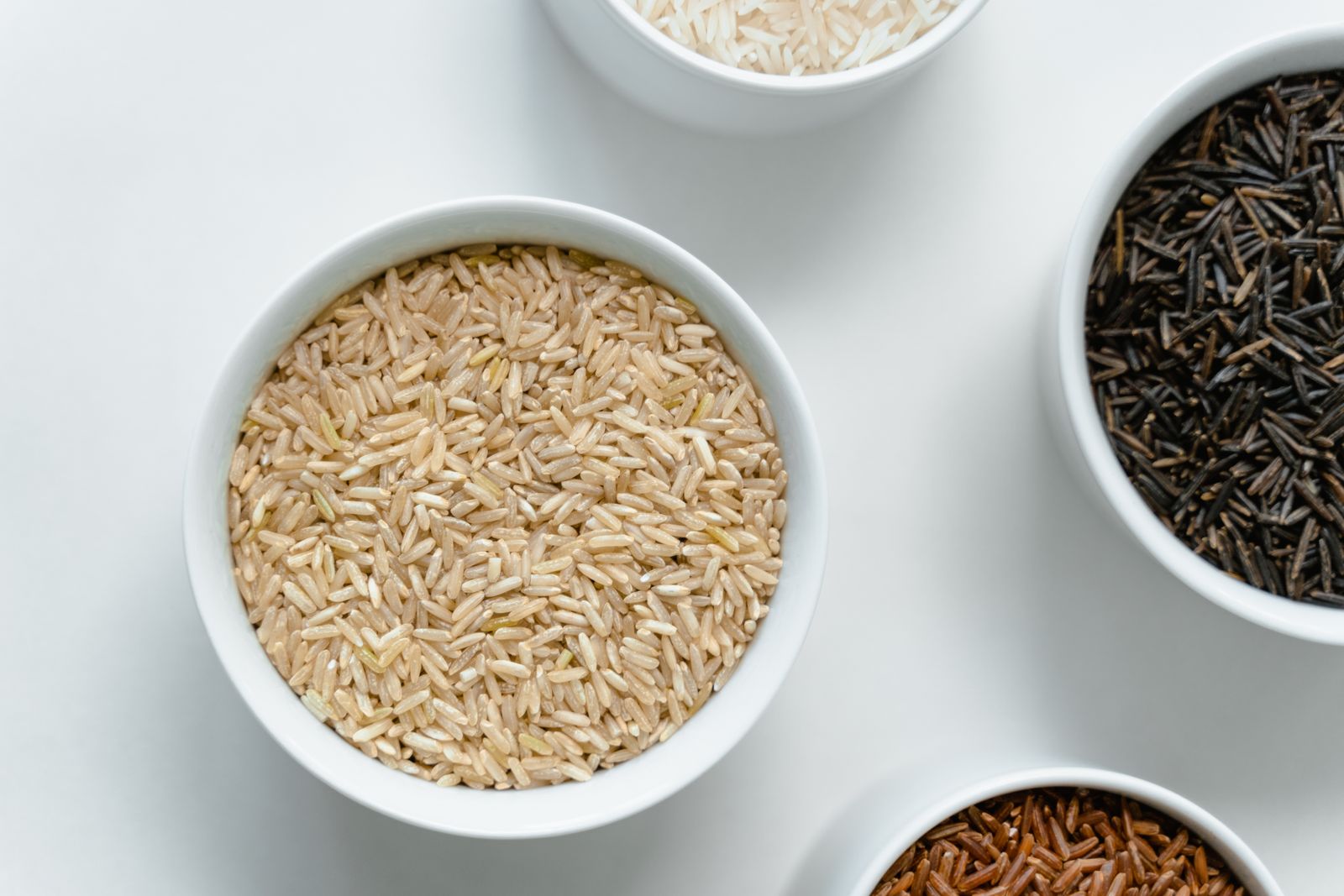
A Japanese bag has to state its name, its raw material, its net weight, its milling period, and the seller’s name, address and telephone number. Two of those are worth more than everything discussed above.
単一原料米 — single-origin rice — is a legal category, and it requires the place, the variety and the crop year to all be the same, with the seller holding evidence. A bag merely naming a variety is not automatically this. If it is a blend, it must say so, and list the shares by weight.
And the milling period. The mandatory field is a milling time, and Japanese law lets it be shown as a ten-day band — early, middle or late in a given month — rather than a specific date. That is less precise than people assume, and it is still the single most useful line on the bag, because milled rice is a fresh product and the field exists to tell you how fresh.
One thing not to reach for: Koshihikari has no protection on its name. It is a general variety, so no plant-variety right restricts who grows it or where — Japan’s geographical-indication register carries no Koshihikari entry at all. So the word on the bag is not a guarantee of anything — not the grower, not the country, not the quality. Read the three facts underneath it instead.
JBJ'S TAKE
Buy the newest bag with three matching facts on it.
Pulling it together: the grade is about appearance, the ranking is about a region's harvest and not your bag, the cooker ladder is not defined by anyone, and the water ratio is the machine's job.
What is left is a grain that goes stale, sold with a milling period printed on it and a legal category that tells you whether it is one thing or several. That is the whole checkable surface, and it is on the packet rather than in the marketing.
So JbJ would spend on rice that was milled recently and says so, and stop worrying about the rung on the cooker ladder. If the rice at home tastes flat, check the milling period before you blame the cooker.
And if you are shopping outside Japan, none of those fields is guaranteed to be there. That is worth knowing before you conclude your cooker is the problem.
Before you go
Do the cheap experiment first. Buy the freshest-milled bag you can find, measure with the cup that came with the cooker, and fill to the line. If that fixes it, you never needed a new machine.
If it does not, the next thing to read is not a cooker review — it is how Japanese labeling works on a product you are buying abroad, which runs the same trap in a different aisle. And if you are building a Japanese kitchen rather than fixing one meal, start with the knife.
Checked 2026-09-01. Grading, labeling, variety and cooking guidance come from the Ministry of Agriculture, Forestry and Fisheries and the Consumer Affairs Agency; the taste ranking and its stated limits from the Japan Grain Inspection Association; the cooker classification from the Consumer Affairs Agency and the Agency for Natural Resources and Energy; the voltage specification from the manufacturer’s own published manuals.