Your dates decide most of this. Kyoto’s color reaches the northern hills first and the city temples last, and each famous temple runs its autumn hours and its night light-up on its own fixed 2026 dates.
- Before about November 15: go north, to Takao and Ohara. Kyoto City’s tourism site lists both from early November.
- November 15–30: every spot on this page is inside its usual window, and every special opening is running. Be at the gate when it opens.
- December 1–6: Tofuku-ji and Eikando keep their autumn hours through the 6th. Ohara’s usual window runs into early December.
- After December 6: the special openings are over, and color depends on a late year.
Want a guide for an autumn evening light-up?
Kyoto Half Day Walking Tour with the Illumination in Autumn on Klook
A half-day autumn walking tour that includes an illumination, per its title. Eikando's 2026 light-up runs November 20 to December 6, and the temple sells night tickets at the gate only.
Check the autumn illumination walk on Klook →Sold on Klook (Klook Travel Technology Limited), an online travel agency. Eikando sells its night tickets at the gate on the night only. Before you book, check on the listing: the tour dates, which temple it visits after dark, whether that admission is included, the meeting point, the cancellation terms and the price in your currency.
First: your dates, and which part of Kyoto is in color
Both 2026 forecasts put Kyoto later than average. Weathernews (October 8 update) expects Arashiyama at its best from about November 24. Japan Meteorological Corporation (September 2) puts Kyoto’s red maples around December 11, six days behind the average. A forecast is a guess, not a booking. Kyoto City’s tourism site starts its spot-by-spot color survey on October 30.
The middle column below is the window Kyoto City’s tourism site gives for a typical year. The right-hand column is what each place has published for 2026.
| Area · spot | Usual peak (Kyoto City) | 2026 special opening |
|---|---|---|
| Takao · Jingo-ji | early to late Nov | — |
| Ohara · Sanzen-in | early Nov to early Dec | — |
| Kibune · Kifune Shrine | mid-Nov | light-up Nov 7–24 (city listing; not yet on the shrine’s site) |
| Arashiyama · Tenryu-ji | mid to late Nov | garden opens 7:30, Nov 14–30 |
| Tofuku-ji | mid to late Nov | autumn period Nov 14–Dec 6, Tsutenkyo bridge from 8:30 |
| Eikando | mid to late Nov | autumn exhibition Nov 11–Dec 6; night light-up Nov 20–Dec 6 |
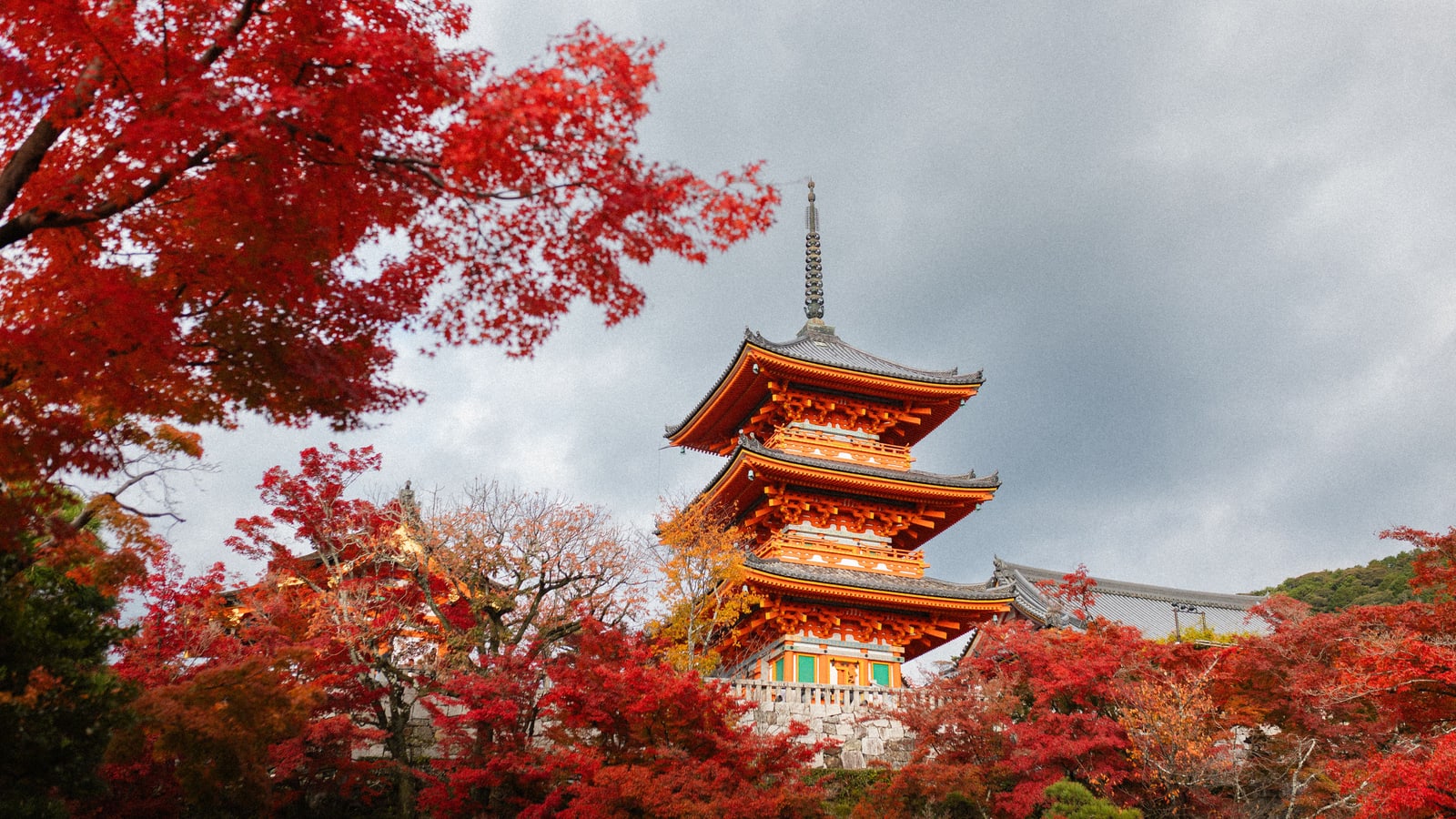
| Kiyomizu-dera | mid to late Nov | night opening Nov 21–30, until 21:30 |
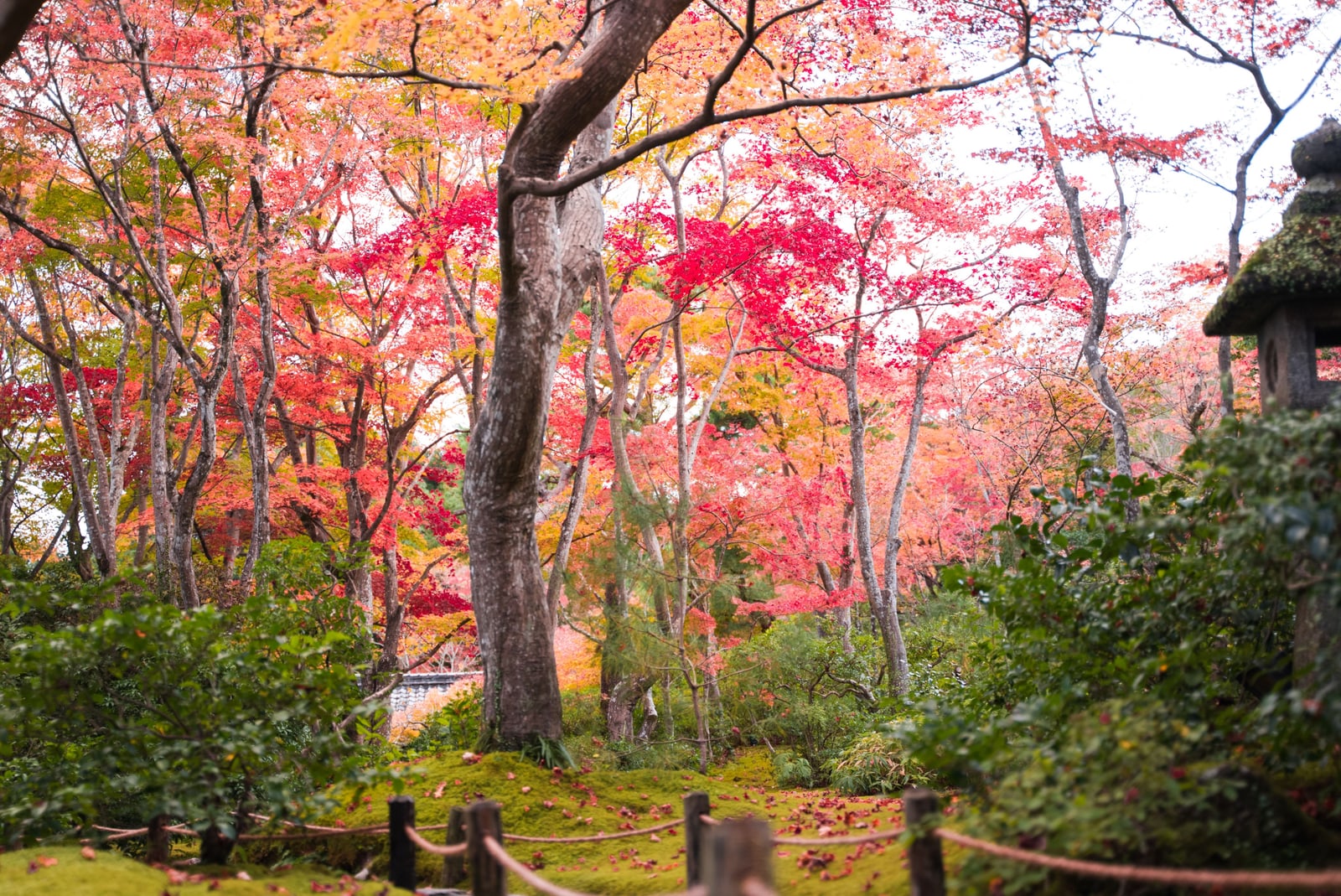
Of these, only Takao, in the hills to the northwest, and Ohara, to the northeast, start in early November. If your trip ends before about November 10, don’t build the foliage plan around Tofuku-ji, Eikando or Kiyomizu-dera: none of them is inside its usual window yet, and 2026 is forecast late.
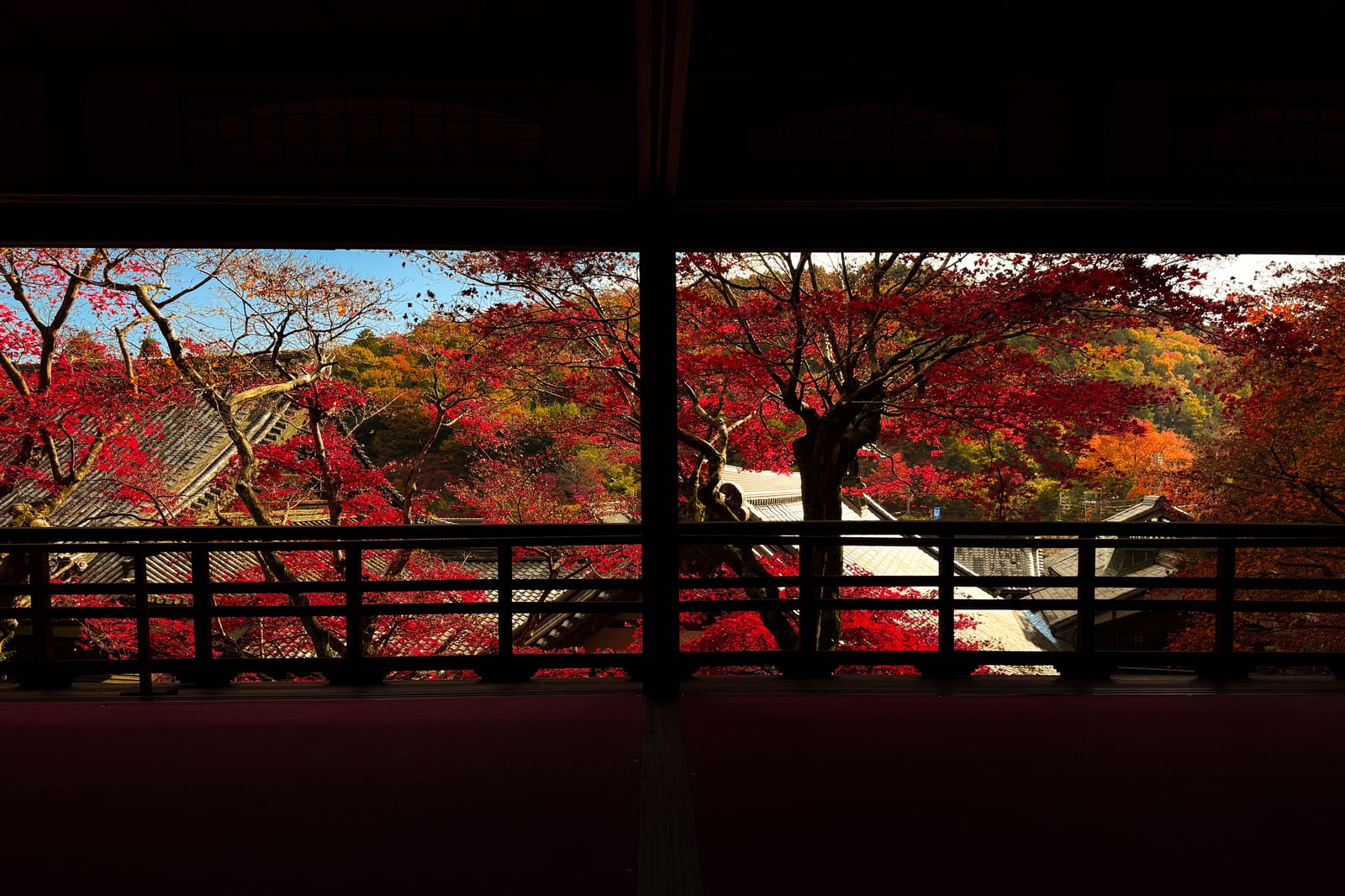
From mid-November everything overlaps. Ohara’s window is still open, Arashiyama is in its usual range, and the city temples follow.
December is the narrow case. Tofuku-ji’s autumn hours end on December 6, and from December 7 it is open 9:00 to 15:30. Eikando’s exhibition and light-up end the same day. After that you are relying on the late forecast.
Second: the clock, the hour each gate opens
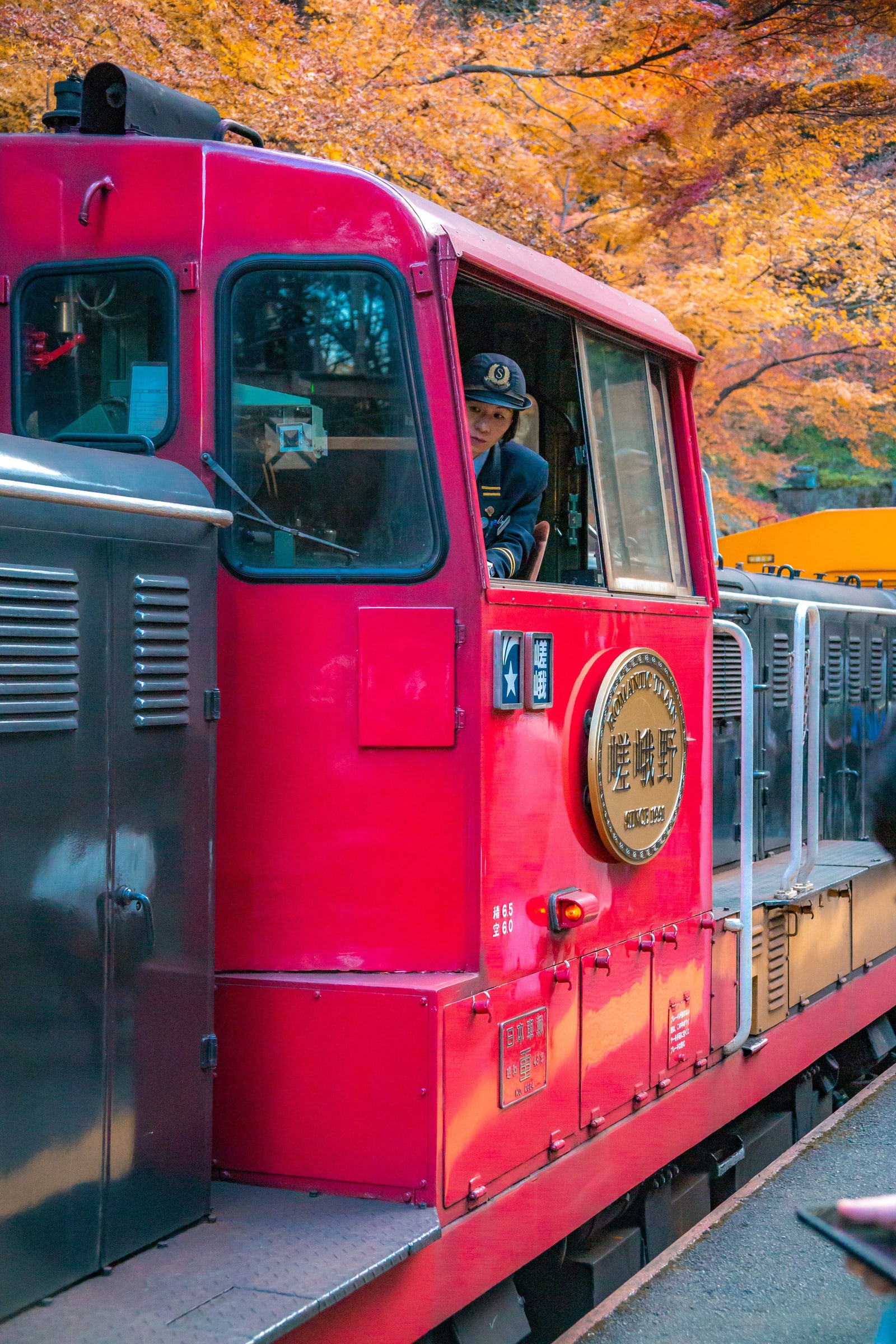
No temple publishes the hour it fills up. They publish the hour they open. Kyoto City’s travel site calls Kiyomizu-dera at its 6:00 opening, with few people about, a “smart idea,” and suggests reaching Arashiyama early by way of Kameyama Park.
| Spot | Opens (autumn 2026) | Adult fee |
|---|---|---|
| Kiyomizu-dera | 6:00 (closes 18:00) | — |
| Tenryu-ji garden | 7:30, Nov 14–30 (normally 8:30) | ¥500 garden; ¥800 with the halls |
| Tofuku-ji, Tsutenkyo and Kaisando | 8:30, Nov 14–Dec 6 | ¥1,000 in the autumn period |
| Tofuku-ji, Hojo garden | 9:00 | ¥600 (from Nov 1, 2026) |
| Eikando by day | ticket desk 9:00–16:00, gate shuts 17:00 | ¥1,500, Nov 11–Dec 6 |
At Tenryu-ji, only the garden ticket desk opens at 7:30. The North Gate desk opens at 8:30.
Tofuku-ji says it gets very crowded in the foliage season. During the autumn opening it may ask you not to take photos while standing on the Tsutenkyo and Gaunkyo bridges, and tripods are not allowed. There is no combined ticket in autumn: the bridge and the Hojo garden are sold separately.
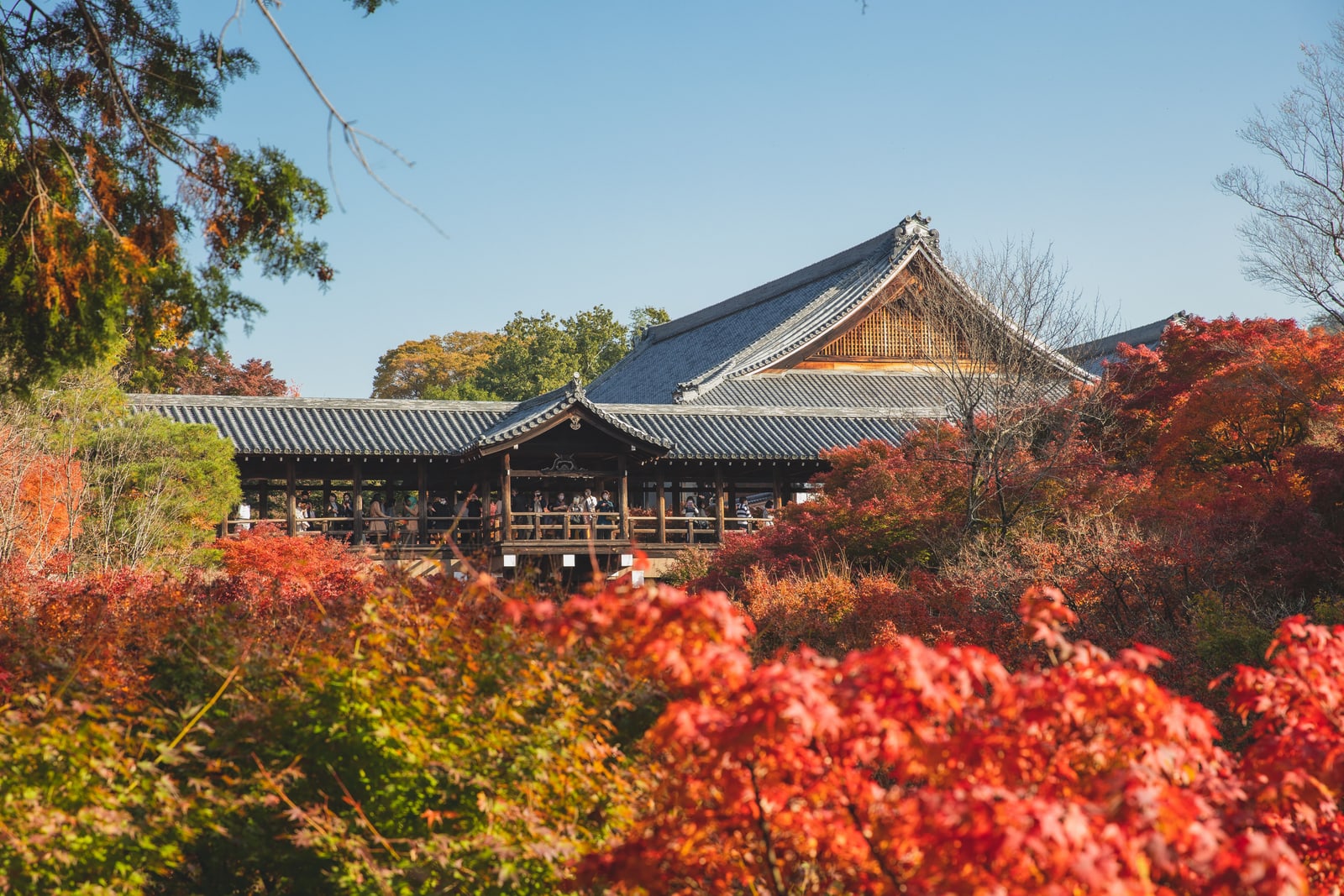
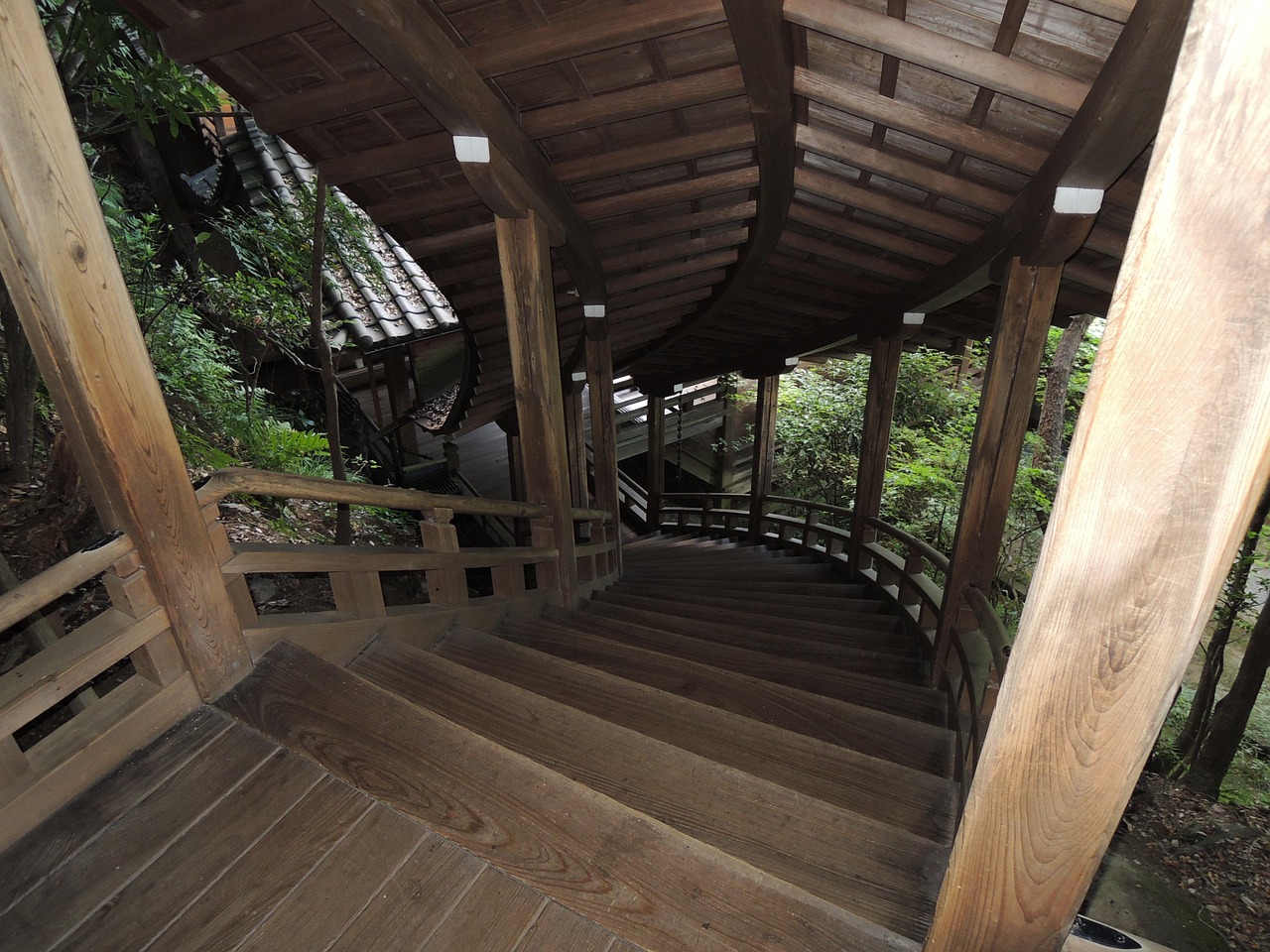
Eikando warns that its ticket desk may close early when it is crowded. During the exhibition, the covered hillside stairway (Garyuro) and the Senbutsudo hall are closed, and the Tahoto pagoda may shut for crowds or bad weather.
One plan drops out: a single Eikando visit that runs from the afternoon into the light-up. The day exhibition and the light-up are separate sessions, each with its own ticket, and the temple says you cannot go from one straight into the other on the same day. Pick one per date.
Third: moving between spots in peak week, rails first
In peak week the bus is the slow link. Each spot below has a rail option or a quieter bus.
- Tofuku-ji: JR Nara Line from Kyoto Station, one stop (about 3 minutes), then about 10 minutes on foot. Keihan Tofukuji Station is also about 10 minutes away. City buses 88 and 208 take about 15 minutes. The temple closes its parking from October 25 to December 10.
- Kiyomizu-dera: Buses 206 and 100 run to Gojozaka, then it’s a 10-minute walk east. Kyoto City’s travel site calls that route “frequently congested.” It suggests the subway to Kujo instead (about 2 minutes, ¥220), then bus 202 or 207 to Gojozaka, “relatively uncrowded.” Evening buses from Kiyomizu to Kyoto Station are especially crowded, so it gives the same route back.
- Eikando: City bus 5 from Kyoto Station to Nanzenji Eikando-michi, then 3 minutes on foot. Or the Tozai Line subway to Keage and about 15 minutes on foot. No private cars on the grounds during the season.
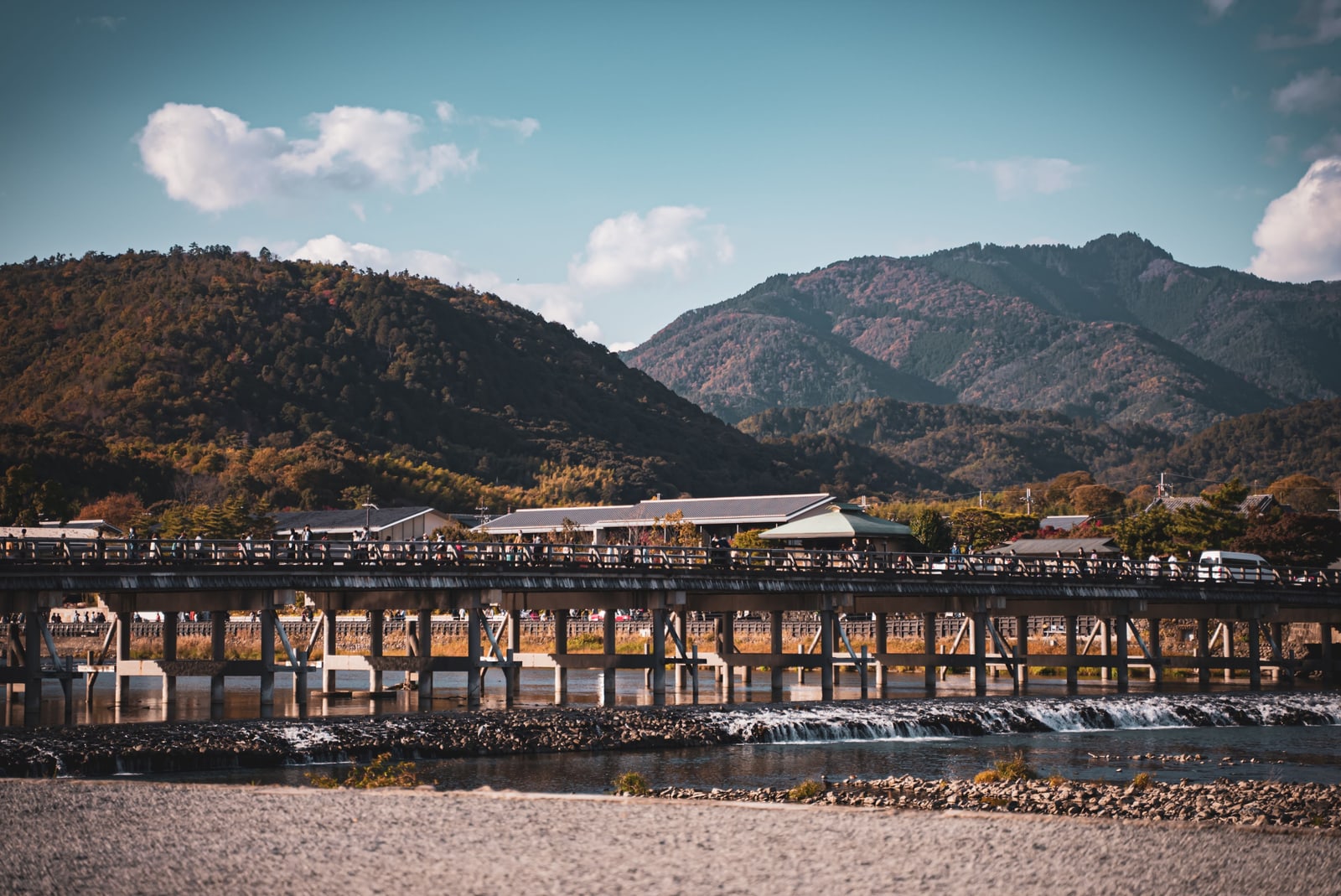
- Arashiyama: JR Sagano Line to Saga-Arashiyama (about 11–15 minutes), then about 8 minutes on foot to the Togetsukyo area. The Randen tram runs from Shijo-Omiya in 24 minutes for ¥250. Buses from Kyoto Station are crowded and slow.
- Kibune: Eizan Railway to Kibuneguchi, then Kyoto Bus 33 to Kibune and a 5-minute walk, or about 30 minutes (2 km) on foot.
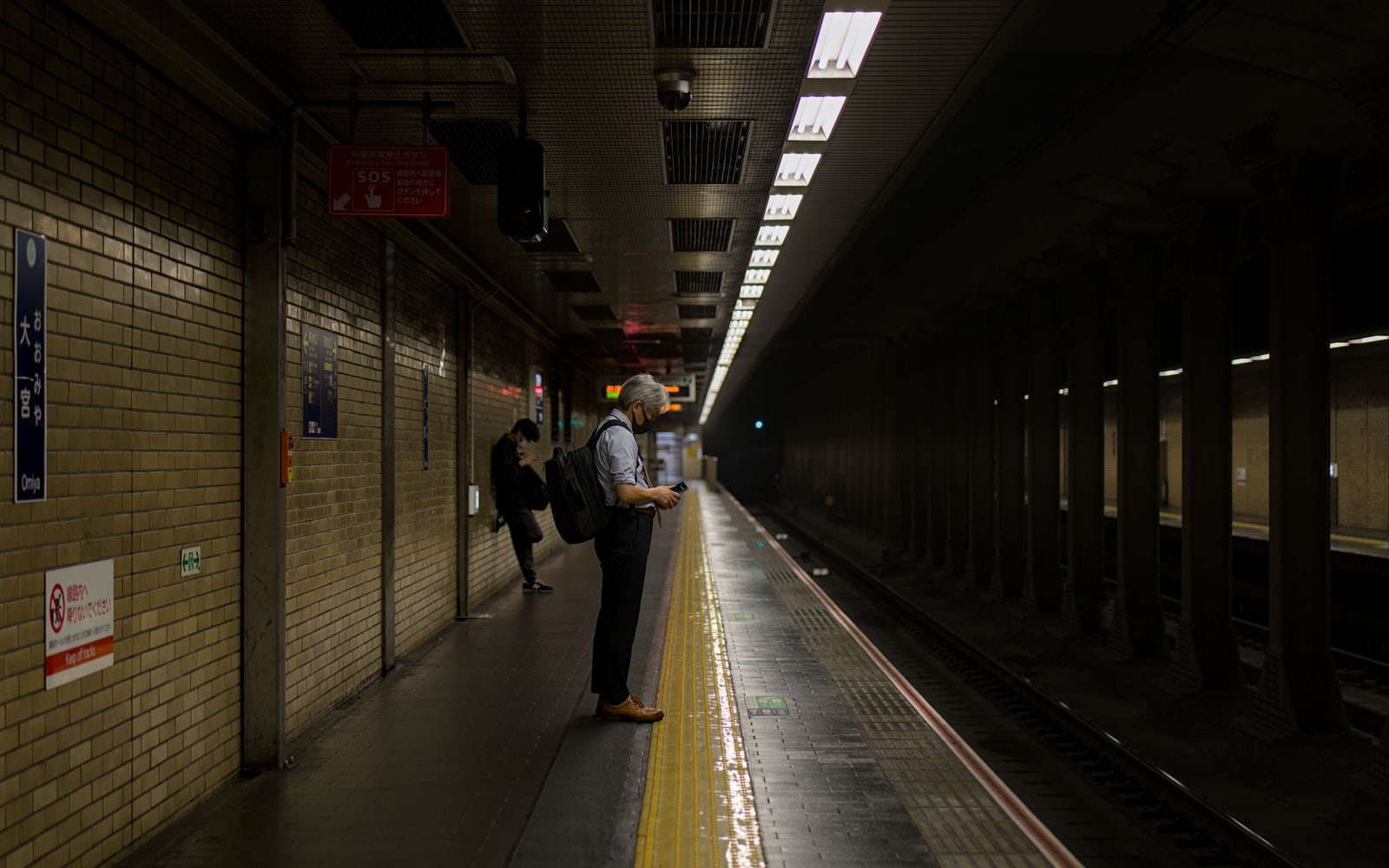
Whether the city’s ¥1,100 subway-and-bus day pass beats paying per ride is worked out in Kyoto bus or subway.
Fourth: the evening, one light-up, alone or with a guide
Three evening openings fall in the season. Your nights decide which you can choose from.
- Eikando, November 20 to December 6: ticket desk 17:30–20:30, gate shuts at 21:00. ¥1,000, junior high age and up. Night visitors see the Amida-do hall and the garden only. No advance tickets; you buy at the gate on the night.
- Kiyomizu-dera, November 21 to 30: open until 21:30, last entry 21:00.
- Kibune, November 7 to 24: listed by Kyoto City’s tourism site; the shrine’s own site has not posted it yet.
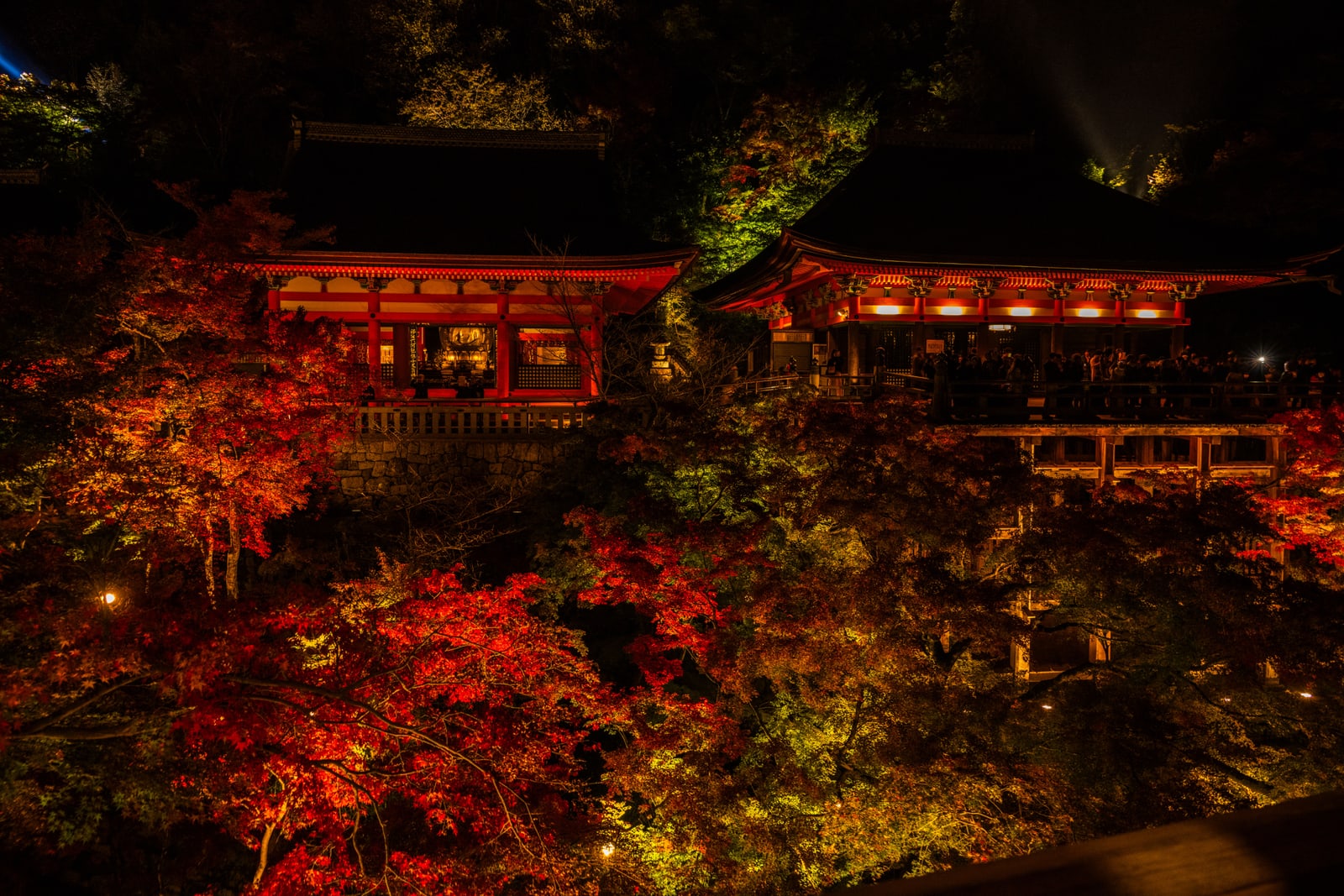
Nights between November 21 and 30 give you Eikando or Kiyomizu-dera. From December 1 to 6, Eikando is the only one of the three. Before November 20 there is only Kibune, still unconfirmed by the shrine. With one evening, the date settles it.
The ride back counts as much as the temple. The last 206 bus from Gion to Kyoto Station leaves before 22:00; the subway runs to about midnight. From Eikando, the Tozai Line at Keage is the way home after a 21:00 closing.
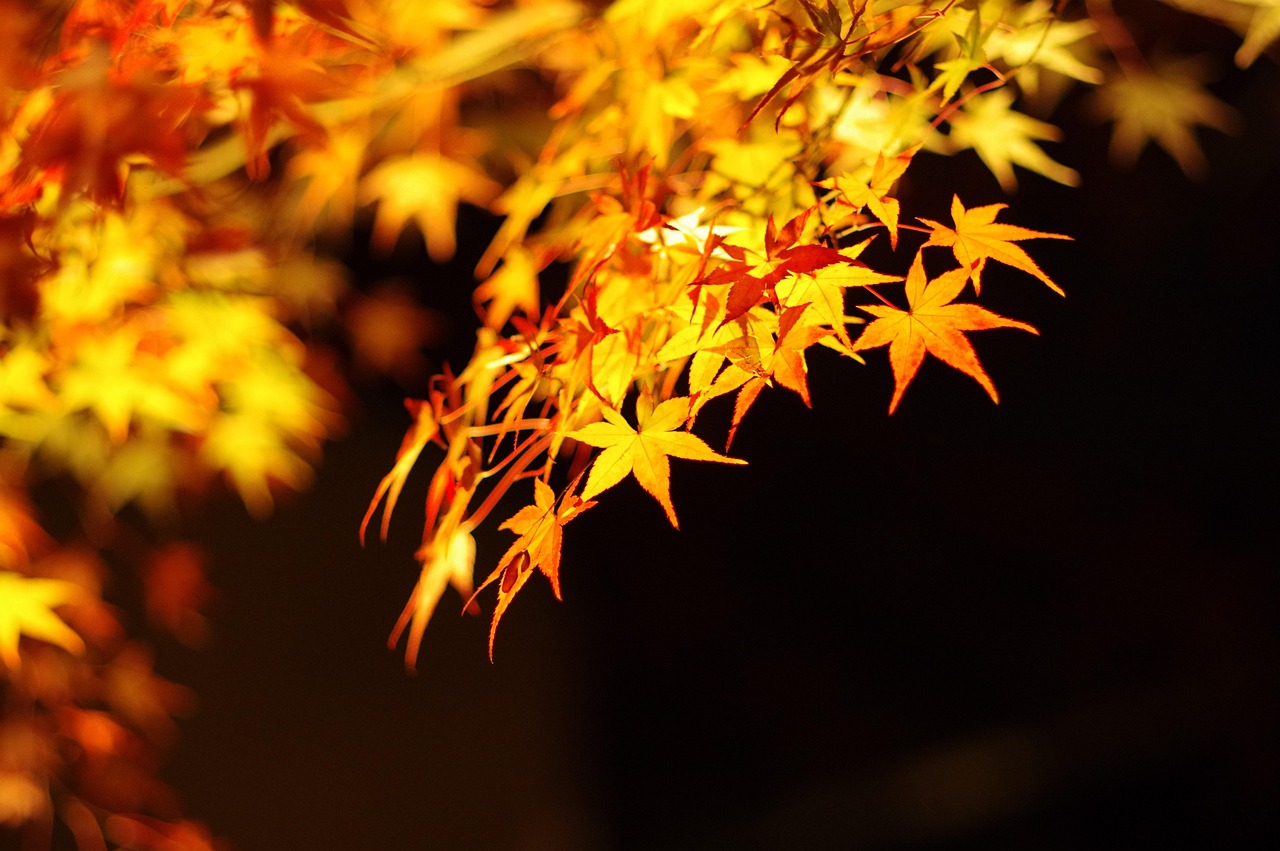
Going to Eikando alone costs the ¥1,000 gate ticket and a bus or subway ride each way; the gate is the only place that sells tickets. What a first-time visitor takes on is the 15-minute walk from Keage in the dark and the ride back to the Tozai Line before the last trains.
If one of your evenings falls between November 20 and December 6 and you would rather follow a guide than plan that walk and the ride home, a guided tour is the other way in. Klook sells a “Kyoto Half Day Walking Tour with the Illumination in Autumn.” Before you book, check its dates against Eikando’s November 20 to December 6, which temple it visits after dark, and whether that admission is included.
One autumn evening, with a guide?
Kyoto Half Day Walking Tour with the Illumination in Autumn on Klook
A half-day autumn walking tour that includes an illumination, per its title. Check the dates and the admission terms on the listing.
Check the illumination walking tour on Klook →Sold on Klook (Klook Travel Technology Limited), an online travel agency. Eikando sells its night tickets at the gate on the night only. Before you book, check on the listing: the tour dates, which temple it visits after dark, whether that admission is included, the meeting point, the cancellation terms and the price in your currency.
A worked day: Thursday, November 26
One date inside every window, and the four conditions in order.
Take the JR Nara Line one stop to Tofukuji a little before 8:30 and walk ten minutes, so you are at Tsutenkyo when it opens: ¥1,000 for the bridge, another ¥600 if you add the Hojo garden.
Be back at Kyoto Station by midday. Leave Eikando by day off the list; you are seeing it tonight.
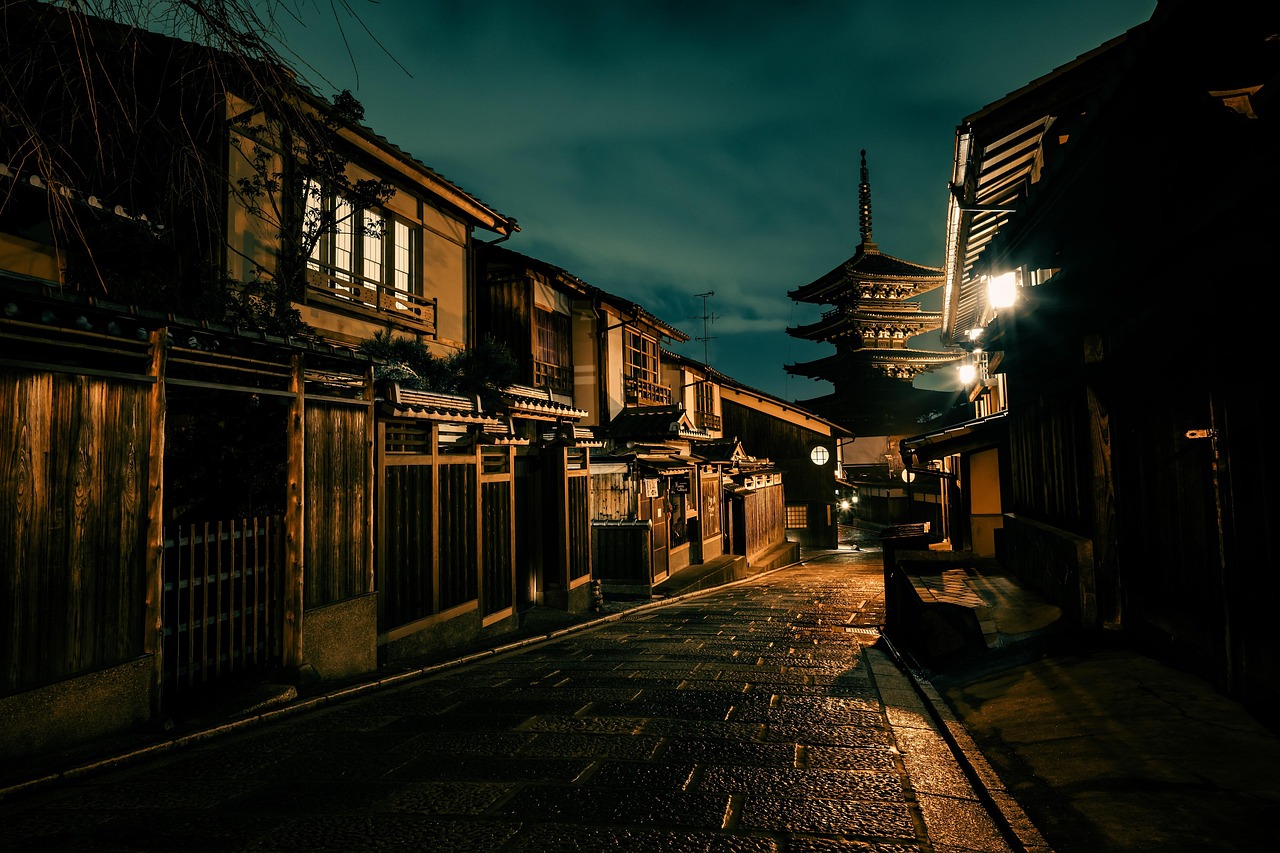
From 17:30, take the subway to Keage and walk to Eikando for the light-up, ¥1,000 at the gate. Ride the Tozai Line back before midnight.
One more morning before November 30? The JR Sagano Line to Saga-Arashiyama, and Tenryu-ji’s garden at 7:30.
Next
In the week before you go, open Kyoto City’s color survey (it starts October 30) and the latest Weathernews forecast (a third update is due in late October), then put your one evening on a date inside Eikando’s or Kiyomizu-dera’s window. For the rest of the trip, see Kyoto in 2 days, whether a night in Arashiyama is worth it and the best time to visit Japan.