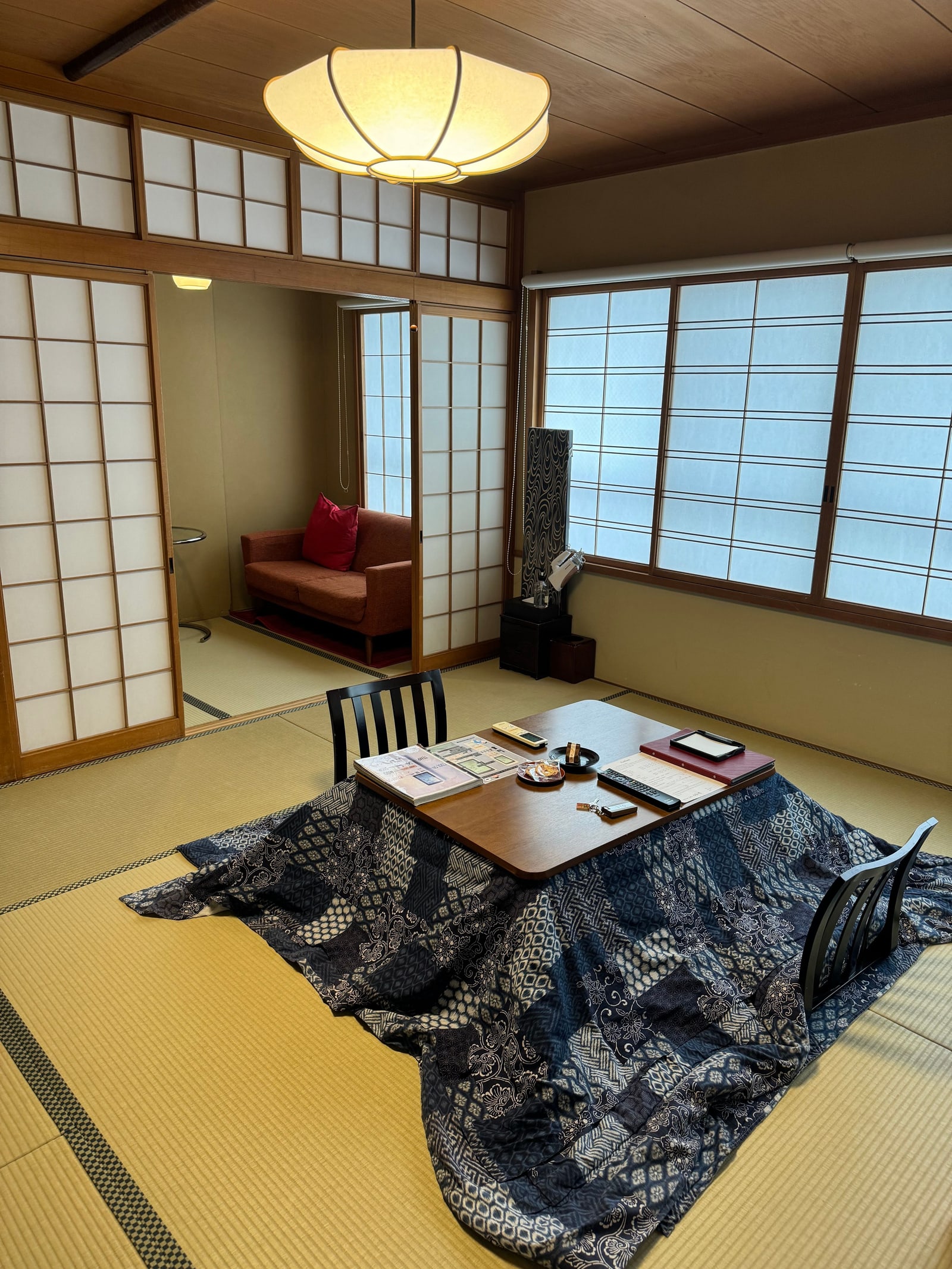
A kotatsu is four objects sold under one word. A low table frame. A heater unit bolted under the frame. A quilt that hangs from the frame to the floor. And a loose board that lies on the quilt so the thing is a table again. Buy a frame and you usually get the heater and the board in the box; the quilt is usually a second purchase.
Three questions decide whether a household outside Japan wants one, and none of them is which brand. What the heater’s rating plate says, and what one maker says about using it overseas. What the running-cost line on a Japanese product page measures, which is not the number on the box. And who should not have one, on the word of the agency that counts the accidents.
Up front, JbJ’s call: the shape travels; the heater unit stays in Japan.
The set: four parts, and which of them come in the box
| Part | What it is | How the shelf sells it |
|---|---|---|
| Table frame 本体 | A low wooden table with a heater mount built into its underside | With the heater unit and the top board, as one product |
| Heater unit ヒーターユニット | The element in a housing that bolts into the frame’s wooden mount | Inside the frame; also sold on its own as a replacement |
| Quilt こたつ布団 | The cover that hangs from under the top board to the floor | Usually a separate purchase; one-person sets bundle it |
| Top board 天板 | The loose board laid over the quilt | With the frame |
One real box, so the table is not abstract. Yamazen’s GKR-803H, a 300 W set, ships as the top board, the heater unit already in the frame, a pair of extension legs and a 3 m cord — and no quilt. The same maker’s one-person set, VGA-70582HB, bundles the table with its heater, a chair and the quilt. That bundle is the exception; the separate quilt is the rule.
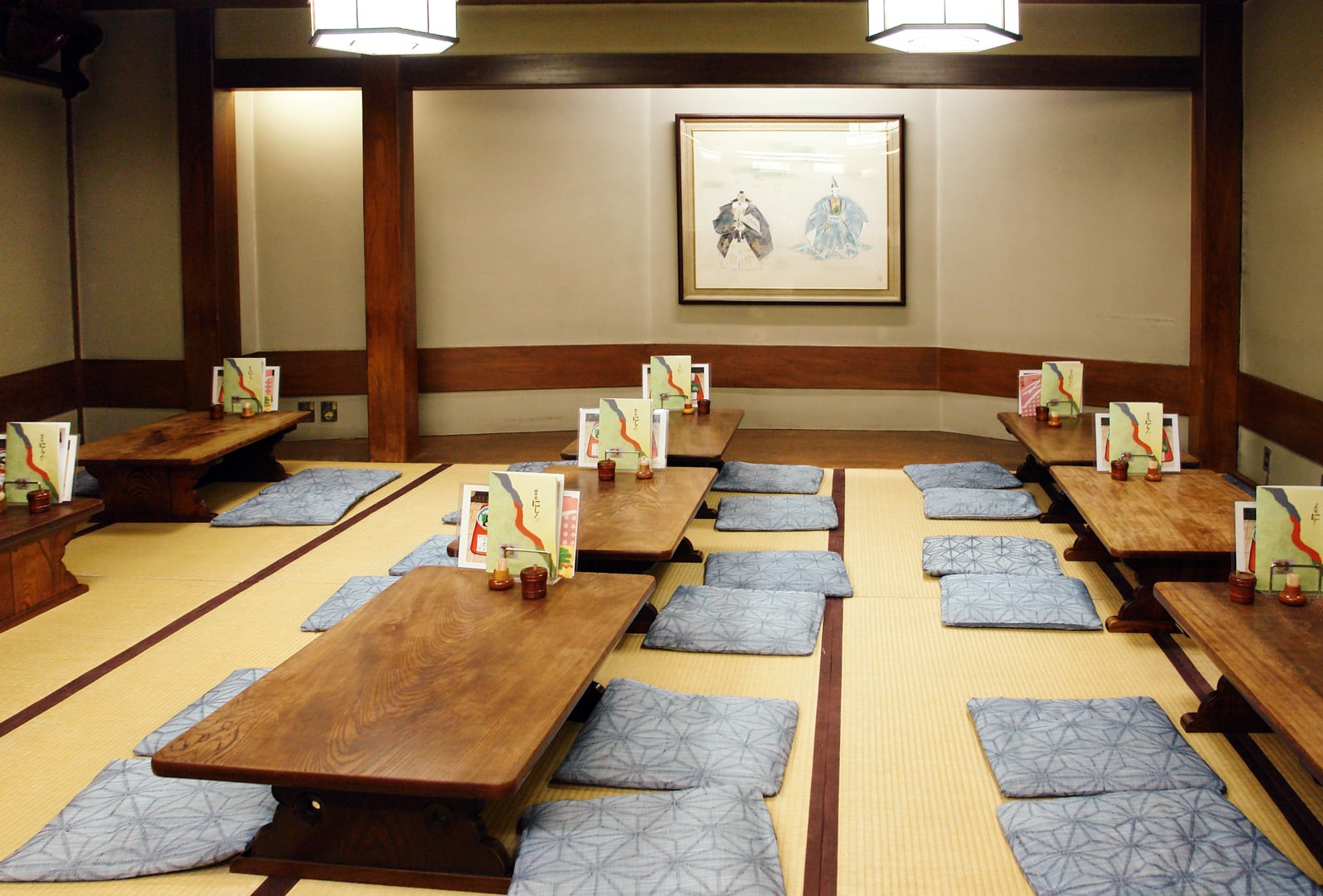
Sizes are whatever the catalogs carry, not a standard. Between Yamazen and Koizumi the list runs 60×60, 75×75, 80×80 and 90×90 cm square, and 70×58, 80×60, 90×60, 105×70, 105×75 and 120×80 cm rectangular. The quilt is bought to the frame, which is one reason it is sold apart.
Same word, different object: the quilt here is a cover for a table, not the mattress you sleep on. The bedding is its own purchase, with its own label questions.
What the label says, and what it does not have to
Turn the heater unit over. The plate reads AC100V 50/60Hz. Metro Denki, Yamazen and Koizumi print it on their units, and it describes the mains the unit was built for: Japan’s supply is 100 V everywhere, 50 Hz in the east and 60 Hz in the west, the line between them running roughly along the Fuji River.
Beside it is the PSE mark. It belongs to Japan’s electrical appliance safety law, which governs the manufacture, import and sale of appliances in Japan; a unit without the mark cannot be sold there. What it certifies is that the unit met Japan’s technical standard for Japan’s market. That is the whole of it. It is not a rating for anyone else’s mains, and nothing on the plate has to address anyone else’s mains.
One maker does address it, in its FAQ rather than on the plate. Metro Denki: 「この商品は日本国内専用で、海外ではご使用いただけません」 — this product is for use in Japan only and cannot be used overseas. That is Metro’s statement about Metro’s units.
JBJ'S TAKE
The plate says where it was built to run. Believe it.
AC100V, a Japan-market mark, and one maker's sentence: not overseas. JbJ takes all three at face value.
What it does on your socket isn't on the plate. 'Japan only' is. That's your answer.
And no, JbJ isn't sending you to a transformer page. The maker said no. So the heater unit stays in Japan; the frame, quilt and board carry no plate — the import question moves to them.
The number that does not sort the way you were told
The number on the box is the heater’s rating. Quartz, halogen and carbon tube units at Metro, Yamazen and Koizumi sit at roughly 300 to 600 W; a flat panel unit from Koizumi is 130 W. Read as a bill, the rating sorts the shelf into cheap and dear. It is not a bill.
The thermostat is why. Metro’s FAQ describes the element switching off and on under temperature control; on the high setting it comes back on within ten minutes of going off. A 600 W element is not drawing 600 W for an hour.
Yamazen prints the pair of numbers that shows it. Its YHF-HD605E replacement unit is rated 600 W maximum and 90 W minimum, and the same page gives about 180 Wh per hour on high and 70 Wh on low. Its GKR-803H set carries a 300 W unit: about 112 Wh per hour on high, 48 Wh on low. The ratings are two to one. The hourly figures are not.
From the watt-hours comes the yen. The reference unit price behind these lines is 31 ¥/kWh including tax, set by Japan’s home-appliance fair-trade council on 22 July 2022. Yamazen’s own examples at that price:
- YHF-HD605E (600 W maximum) — example: about ¥5.6 an hour on high, ¥2.2 on low.
- GKR-803H (300 W) — example: ¥3.5 an hour on high, ¥1.5 on low.
- VGA-70582HB one-person set (300 W) — example: ¥5.0 an hour on high, ¥2.5 on low.
Examples, the maker’s, at a Japanese unit price on a Japanese thermostat cycle. They tell you the 600 W unit does not cost twice the 300 W unit to run, and that two 300 W products from one maker do not print the same figure. They do not tell you your bill. The watt-hour line is the one worth reading; the yen line is the one most people read.
The four, one at a time
The order is by what there is to check. The part with the plate first. The part that touches it second. The two parts with nothing to check, last.
1. The heater unit — the part with the plate
The only part with a rating, a mark and a wattage, and the only part a maker makes a statement about. It is also a product on its own: Metro sells five replacement units, Yamazen the YHF-HD605E, Koizumi the KHH-51240, because the unit is expected to be replaced inside a frame that outlives it. Fit is by the mount — the wooden mount on the frame’s underside comes in 29 cm square, 29×33 and 33 cm square — and Koizumi’s unit lists the table sizes it fits. Cords are not interchangeable either: Metro’s three-pin cord fits Metro units only.
2. The quilt — the part that touches the heater
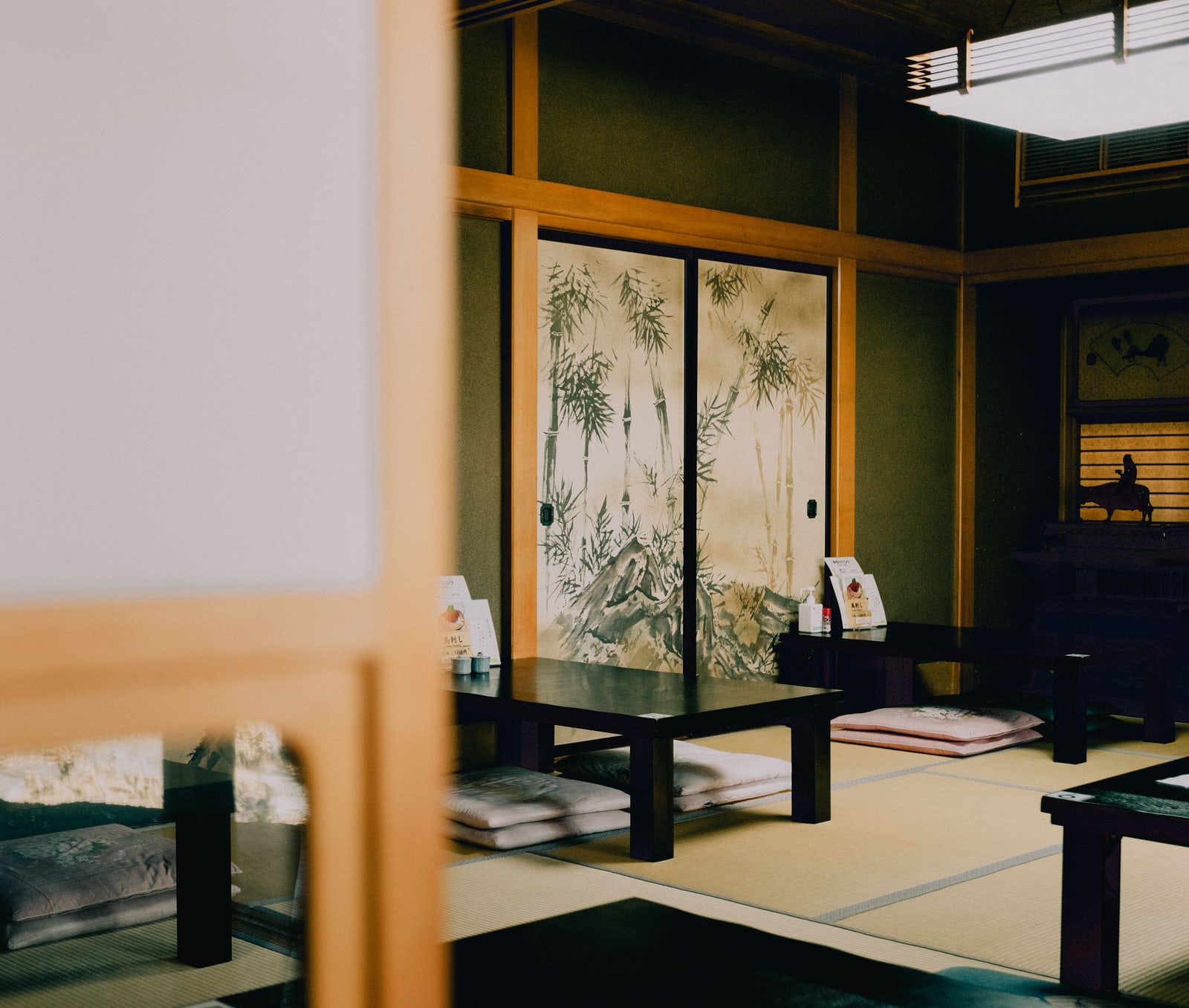
Sold separately as a rule, bought to the frame’s size. It is what makes a low table a kotatsu, and it is the part in every fire description. NITE, Japan’s product-safety agency, gives the mechanism as the quilt, a cushion or a seat pushed against the heater unit and igniting; Nitori’s FAQ says the same in shop language — prolonged contact scorches the quilt and can set it alight. It hangs. It is not packed under the table.
3. The table frame
A low table with the mount built in and, in the Yamazen box, extension legs to raise it. Nothing electrical is part of the frame itself, and the sizes above are its sizes.
4. The top board
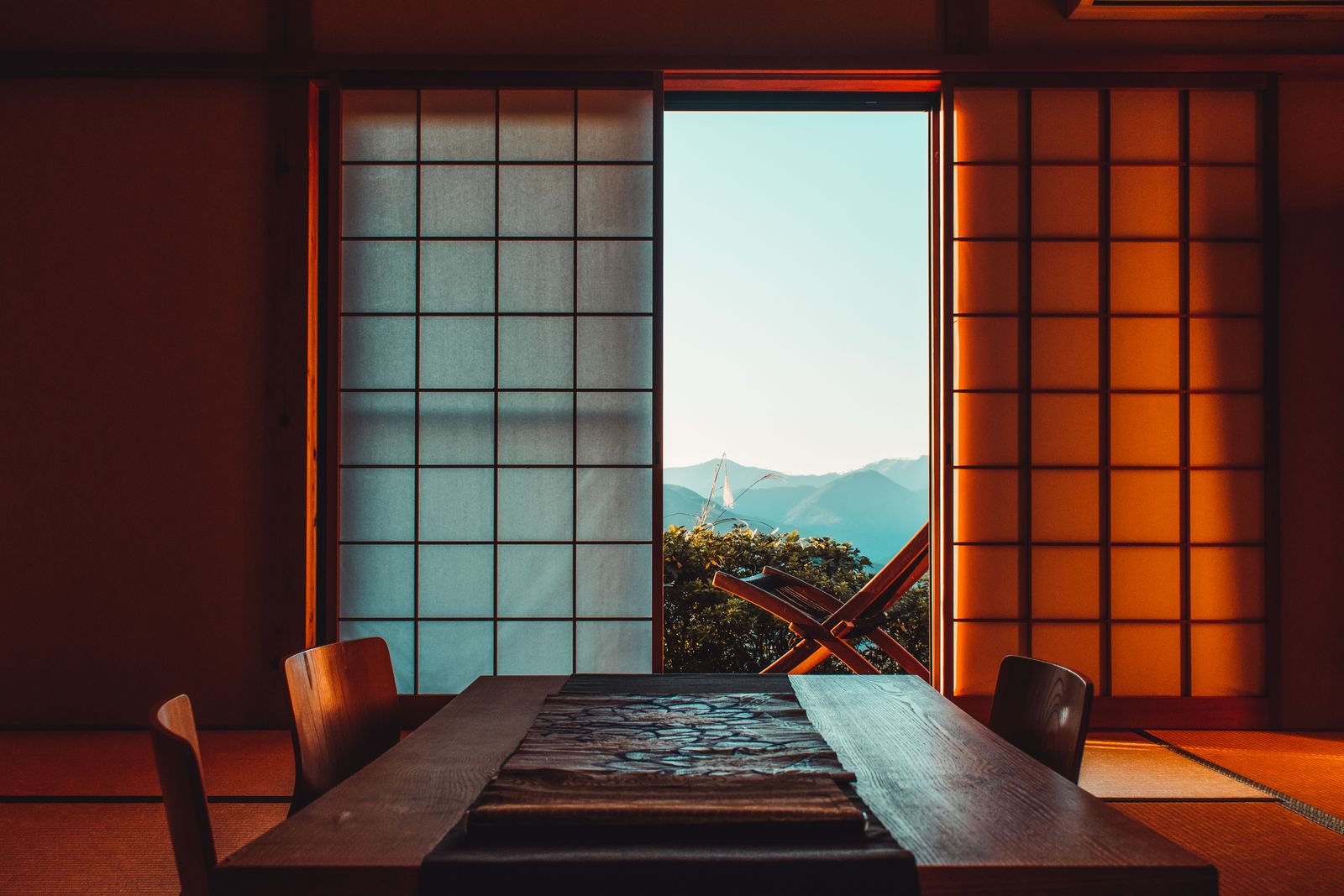
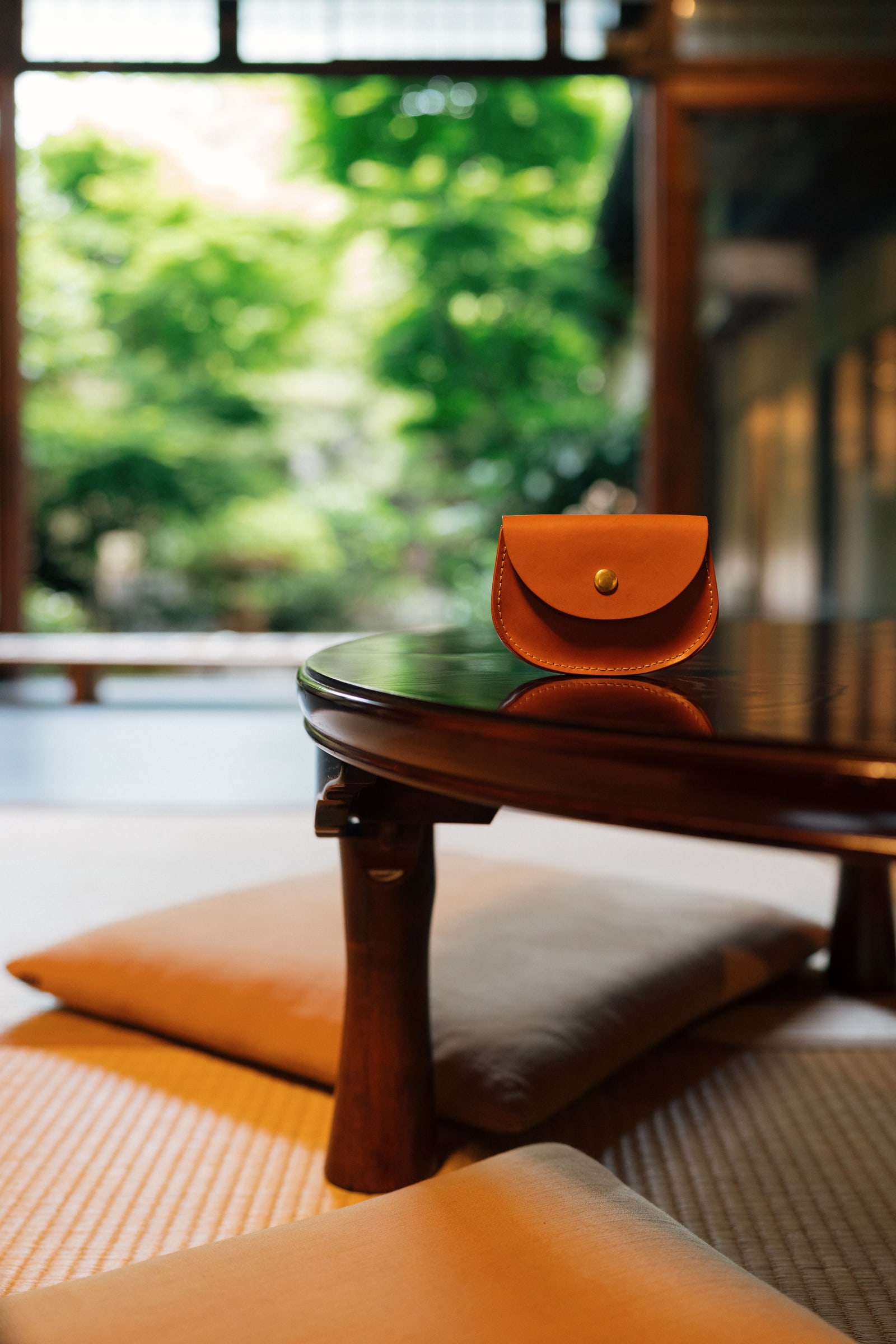
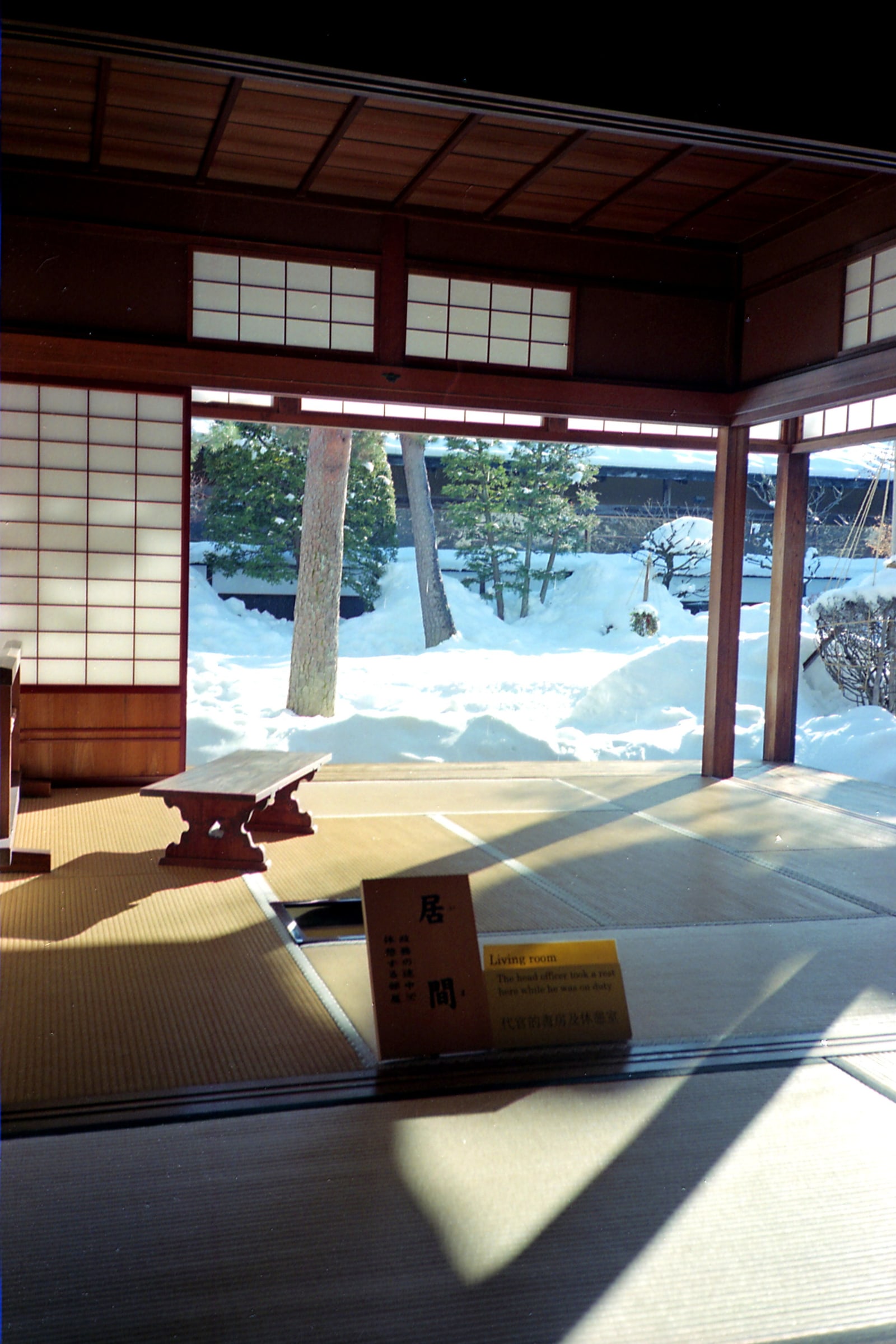
The loose board over the quilt. It is the part you can see in the hero photograph, and the part with nothing to check.
Leave it on the shelf
Three households, by name, and the fact each one stands on.
The household whose sockets are not 100 V. The plate reads AC100V 50/60Hz, and one maker says in plain Japanese that its product is for use in Japan and cannot be used overseas. That household does not buy a Japanese-market heater unit. The frame, the quilt and the board carry no such line. They are a different question.
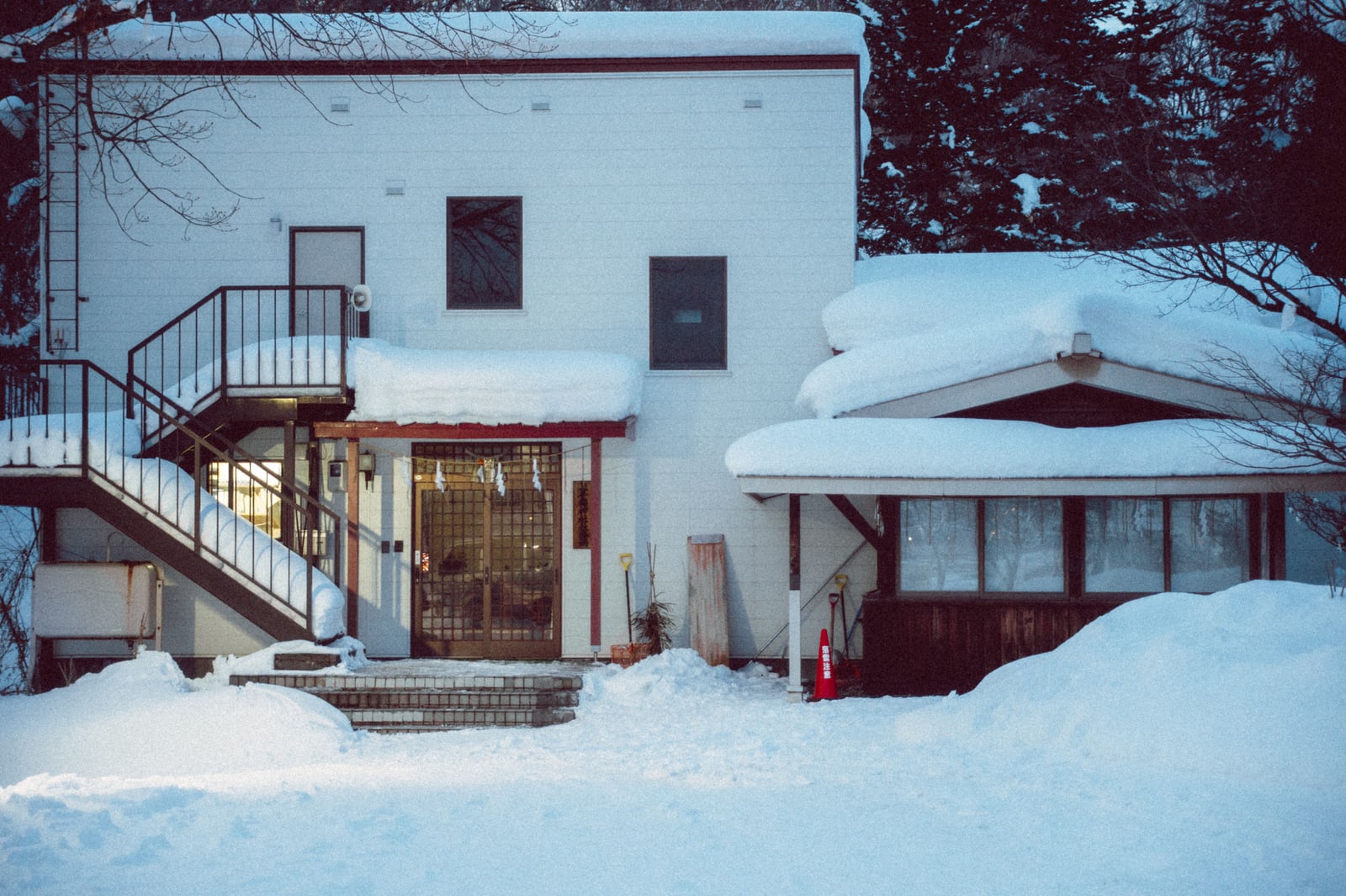
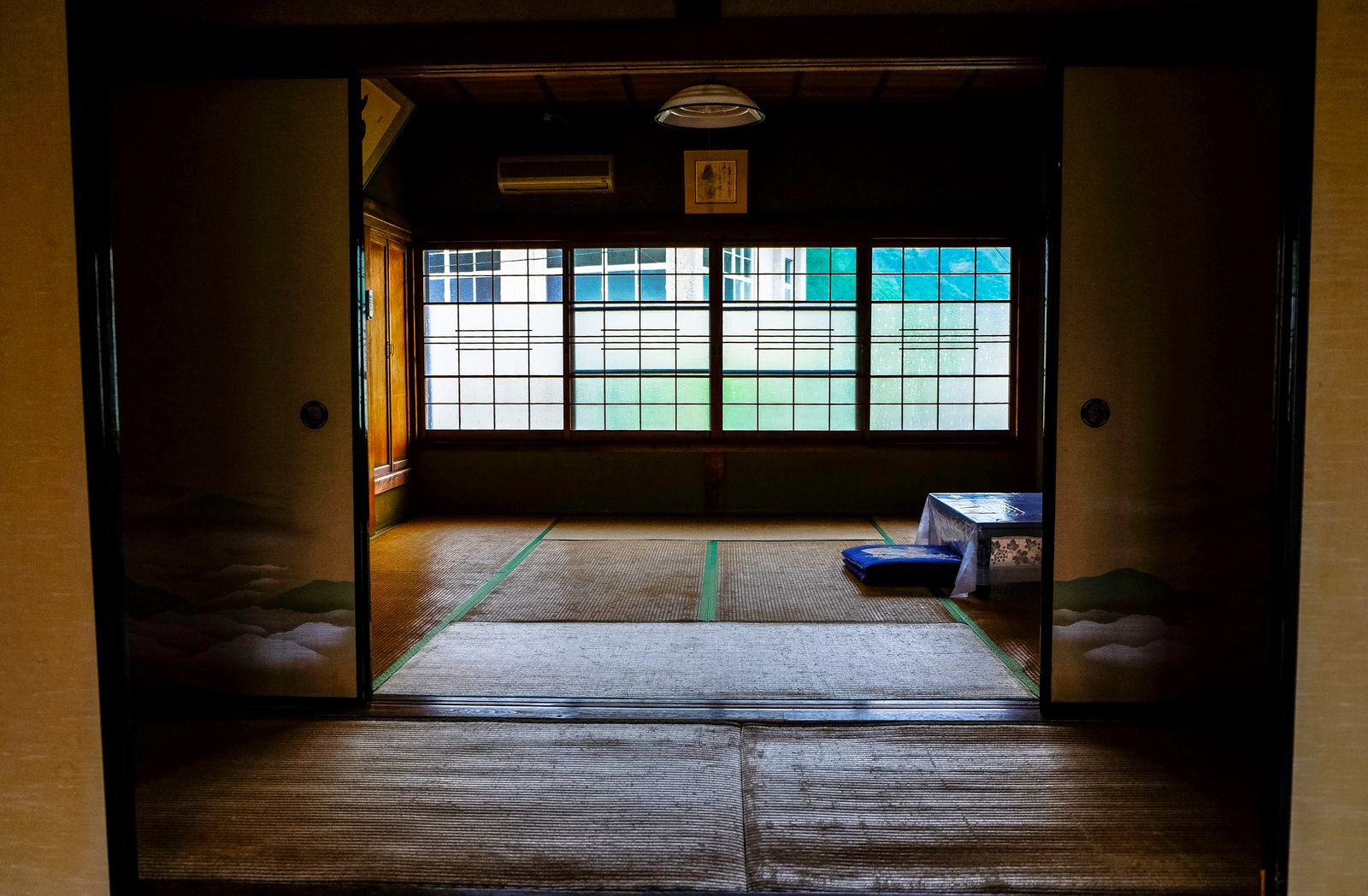
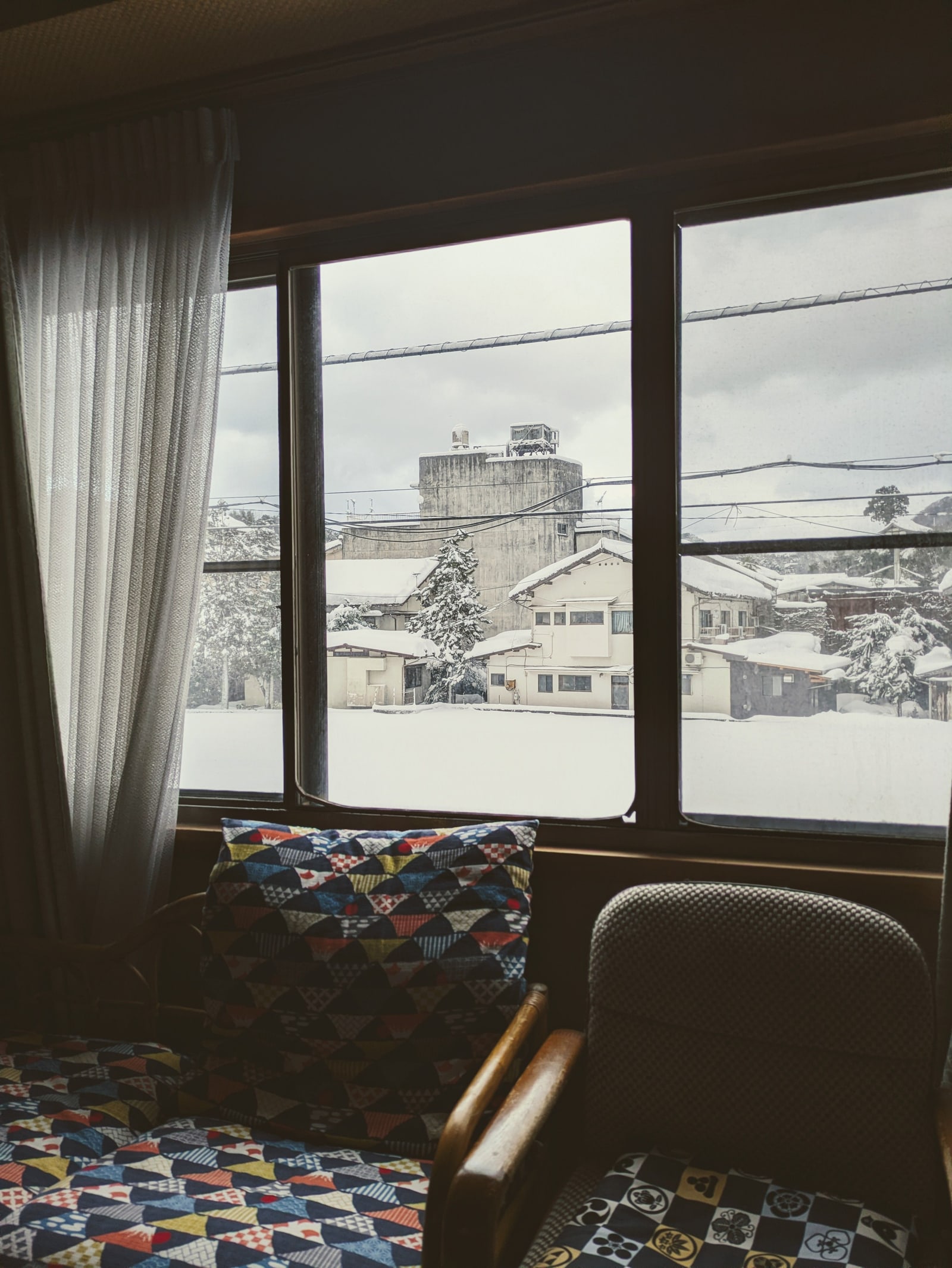
The household that needs heating, not a warm table. The heater is a roughly 300 to 600 W element under a quilt, and the hourly figures on the maker’s page are those of a small appliance. If the house in the photograph is your winter, the kotatsu is not the heating. Get the heating first. This is the table you sit at once it is on.
The household where someone will sleep in it. NITE says sleeping in a kotatsu brings shallow sleep, fatigue, heavy sweating to the point of dehydration, and burn risk from contact with the heater. Its low-temperature burn table runs from two to three minutes at 50 °C to three or four hours and more at 44 °C, and it names the elderly as especially vulnerable. NITE says it, and so does Kochi Prefecture, citing the national fire agency: unplug it when you sleep and when you go out. The numbers: NITE counted 347 accidents and 26 deaths for kotatsu and electric stoves together over FY2017–2021; Kochi Prefecture, citing the fire agency, counts 192 electric-kotatsu fires across 2014–2018. So: if the plan is to fall asleep under it, no. The agency that counts the accidents says so. A household that will not unplug it at night skips the whole set.
JBJ'S TAKE
Skip it on the plate, not on the fear.
The voltage decline is the hard one. A 100 V plate, a maker's 'Japan only.' Sockets aren't 100 V? Done. No arguing with a plate.
The safety one is softer. 347 accidents in five years, kotatsu and electric stoves combined. It's a heater — don't sleep in it, keep the quilt off the element, unplug when you leave.
The climate one? Only if you expected a room heater. It isn't one.
What JbJ would carry home
Back to the four parts, with what each carries. The heater unit carries the plate, the mark, the wattage and the maker’s sentence. The frame, the quilt and the board carry none of it — they are a shape, and the shape is most of what a household abroad is after.
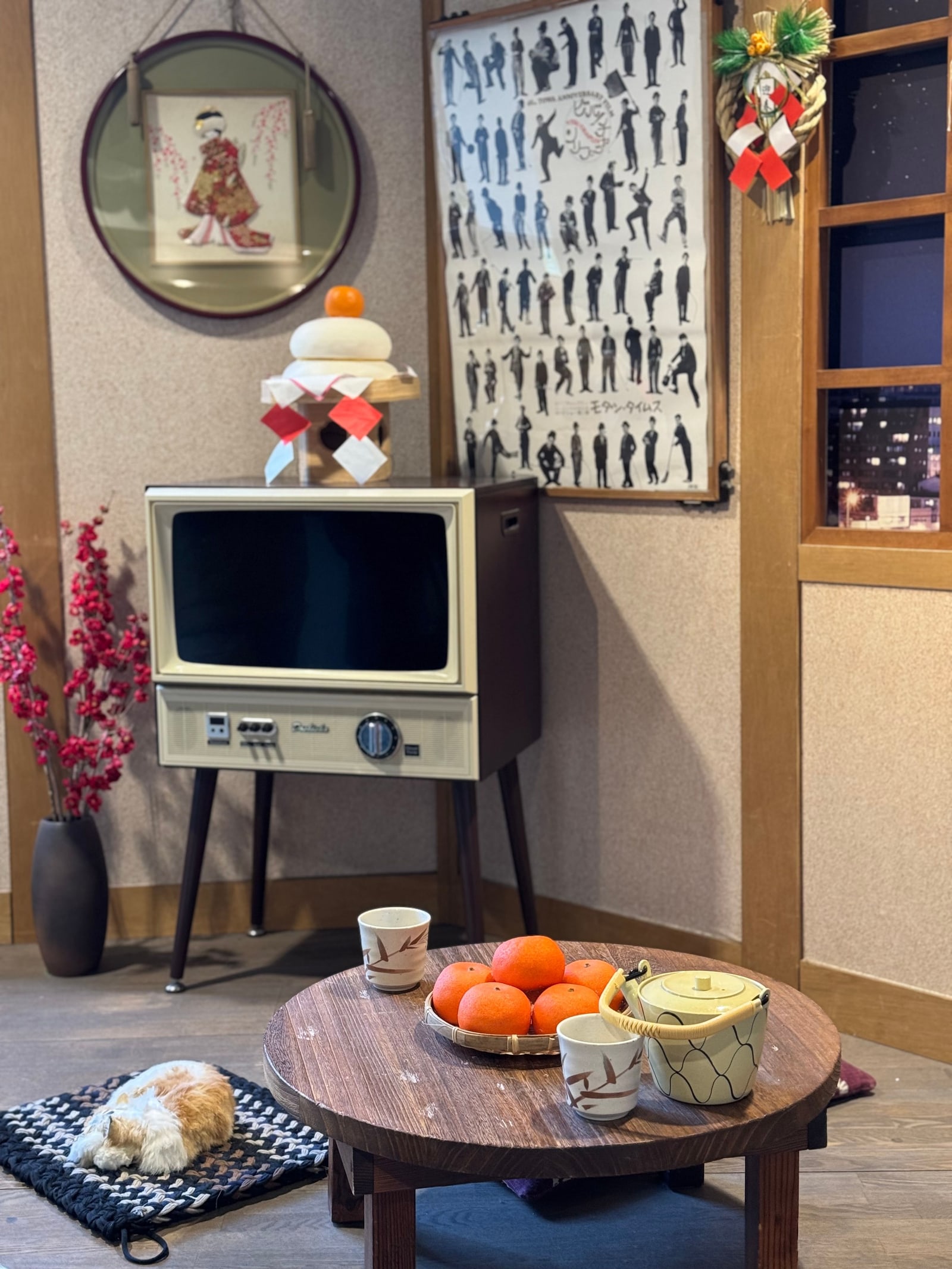
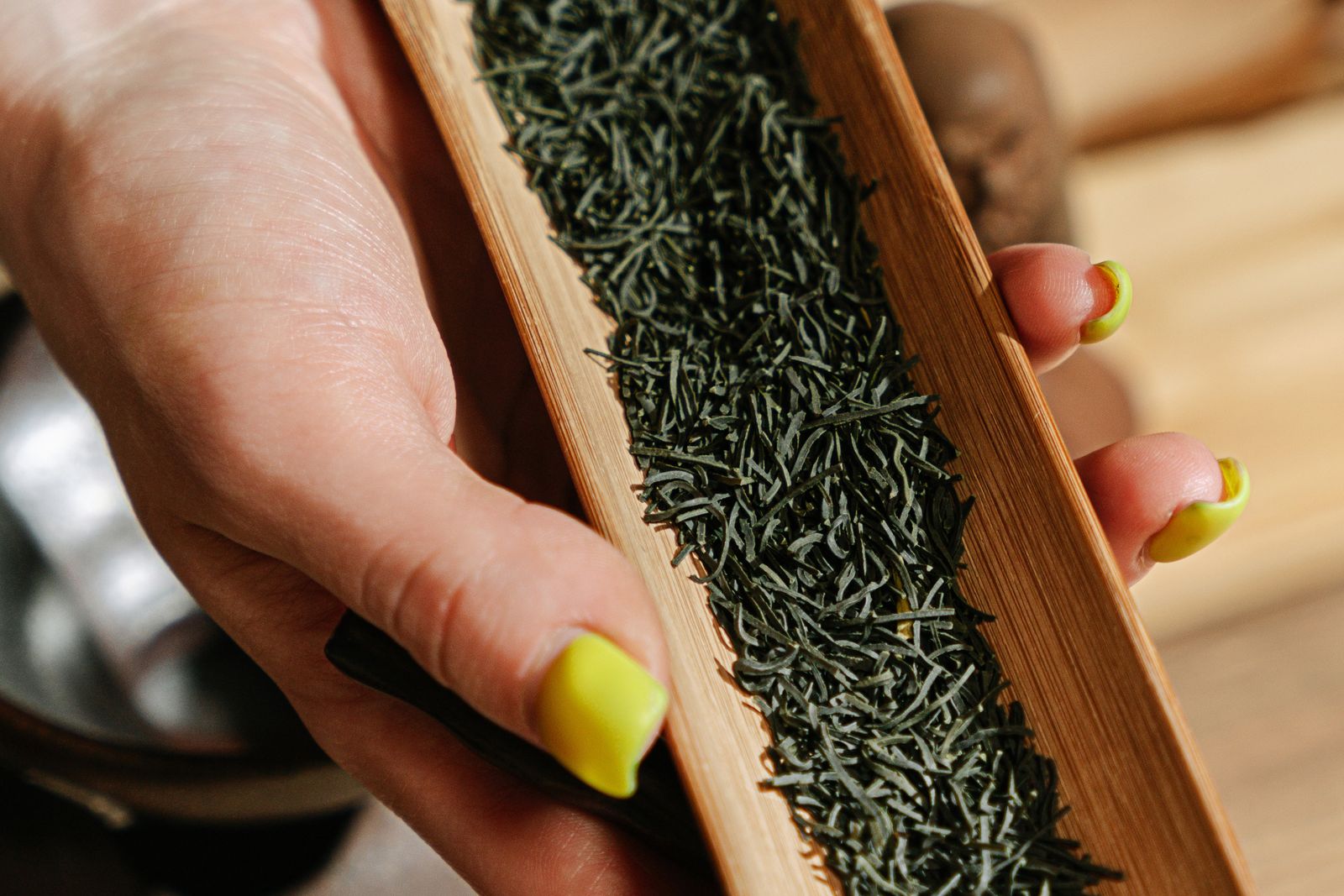
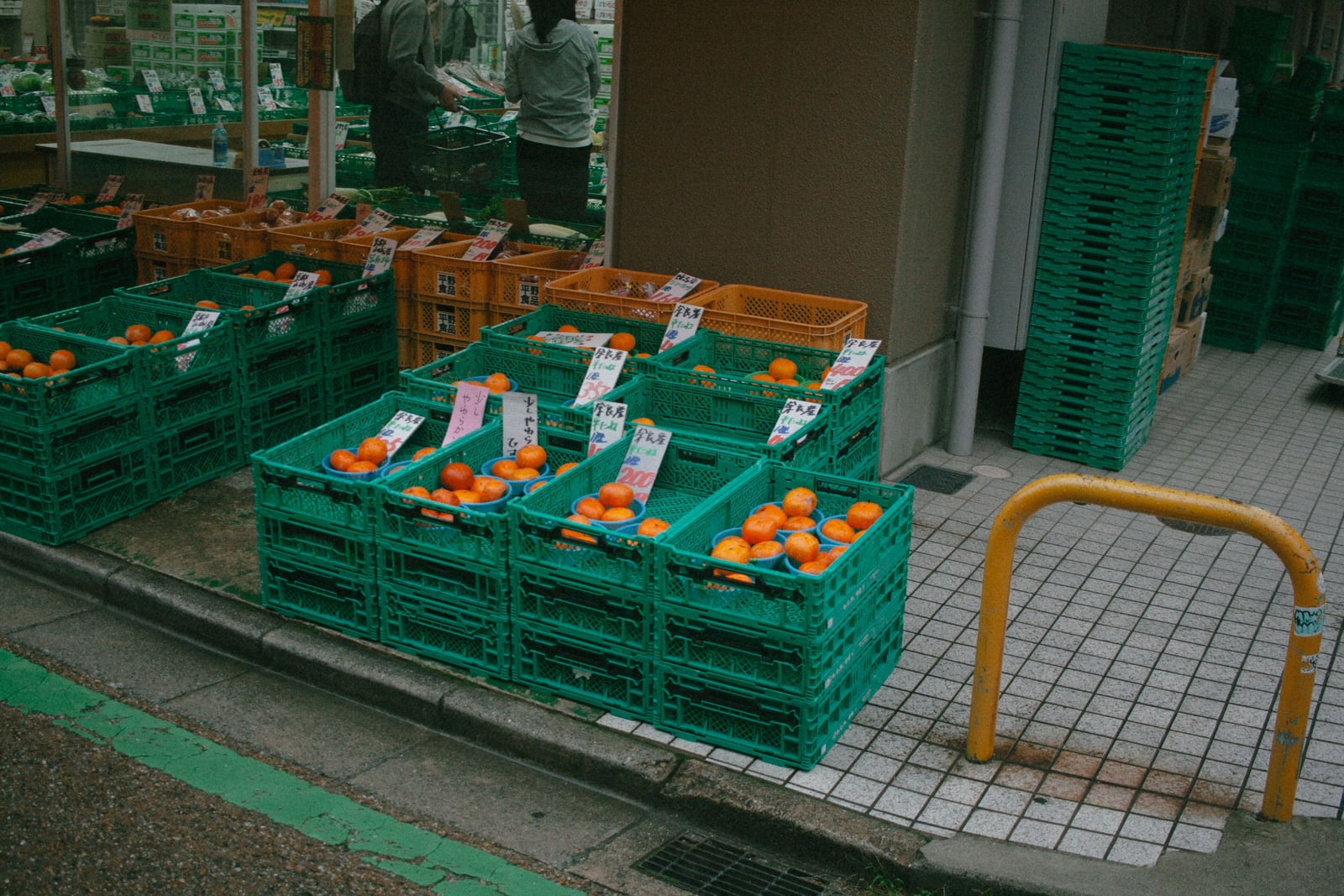
What goes on the board is its own purchase: mikan in winter, and the tea. And if the first kotatsu you ever sat at was in an inn, that room is its own decision.
JBJ'S TAKE
Carry home the shape. Leave the heater on the Japanese shelf.
The unit is the only part built for a socket, and that socket is 100 V. JbJ wouldn't ship it anywhere that isn't.
The shape is the purchase: a low table, a quilt that reaches the floor, a board on top. That much travels.
Your sockets are 100 V? Then buy the set, a quilt to its size, and read the plate anyway.
Information checked 17 September 2026. The mains from JNTO and Hokkaido Electric; the appliance safety law and the PSE mark from Saitama Prefecture and JET; ratings, set composition, sizes, the thermostat, the Japan-only statement and the cost examples from Metro Denki, Yamazen and Koizumi’s own pages; the 31 ¥/kWh reference price from 全国家庭電気製品公正取引協議会; the burn, sleeping and fire warnings and the FY2017–2021 figures from NITE; the 2014–2018 fire count from Kochi Prefecture citing the Fire and Disaster Management Agency; the scorch description from Nitori’s FAQ.