Two questions, one shelf. Which Japanese whisky to buy first — and whether the expensive bottle is a different whisky from the cheap one, or the same idea with a queue in front of it.
Since April 2021 the words “Japanese whisky” have had a definition, written by the producers’ own association: water from Japan, mashed, fermented, distilled, matured for three years and bottled in Japan. Producers print a sentence about it on their own product pages — or, in one case, print that their bottle does not meet it. That line sorts the shelf better than the price does.
Below: nine bottles side by side, what the label has to mean and what it does not, what the price moved on, the bottles to leave, and the one to buy first.
The shelf: nine names side by side
Nine bottles, three producers, and for each one the line its own maker prints about where the whisky comes from. The sake shelf has its own page; this is the whisky one.
| Bottle | Producer | What it is | Strength | Age on the label | The origin line on the producer’s page |
|---|---|---|---|---|---|
| Suntory Kakubin | Suntory | Blended, malt and grain, 700 ml | 40% | None | Compliance sentence printed |
| Suntory Toki | Suntory | Blended — malt and grain from Yamazaki, Hakushu and Chita | — | None | Meets the standard, per House of Suntory |
| Hibiki Japanese Harmony | Suntory | Blended, 700 ml | 43% | None | Compliance sentence printed |
| Yamazaki 12 | Suntory | Single malt, 700 ml | 43% | 12 years | Compliance sentence printed |
| Hakushu 12 | Suntory | Single malt, 700 ml | 43% | 12 years | Compliance sentence printed |
| Nikka From the Barrel | Nikka | Blended, 500 ml | 51.4% | None | Discloses some imported whisky; no compliance sentence |
| Nikka Days | Nikka | Blended, 700 ml | 40% | None | “Does not meet all the criteria” — Nikka’s own words |
| Nikka Coffey Grain | Nikka | Grain whisky, Coffey still, 700 ml | 45% | None | “Meets all the criteria” — Nikka’s own words |
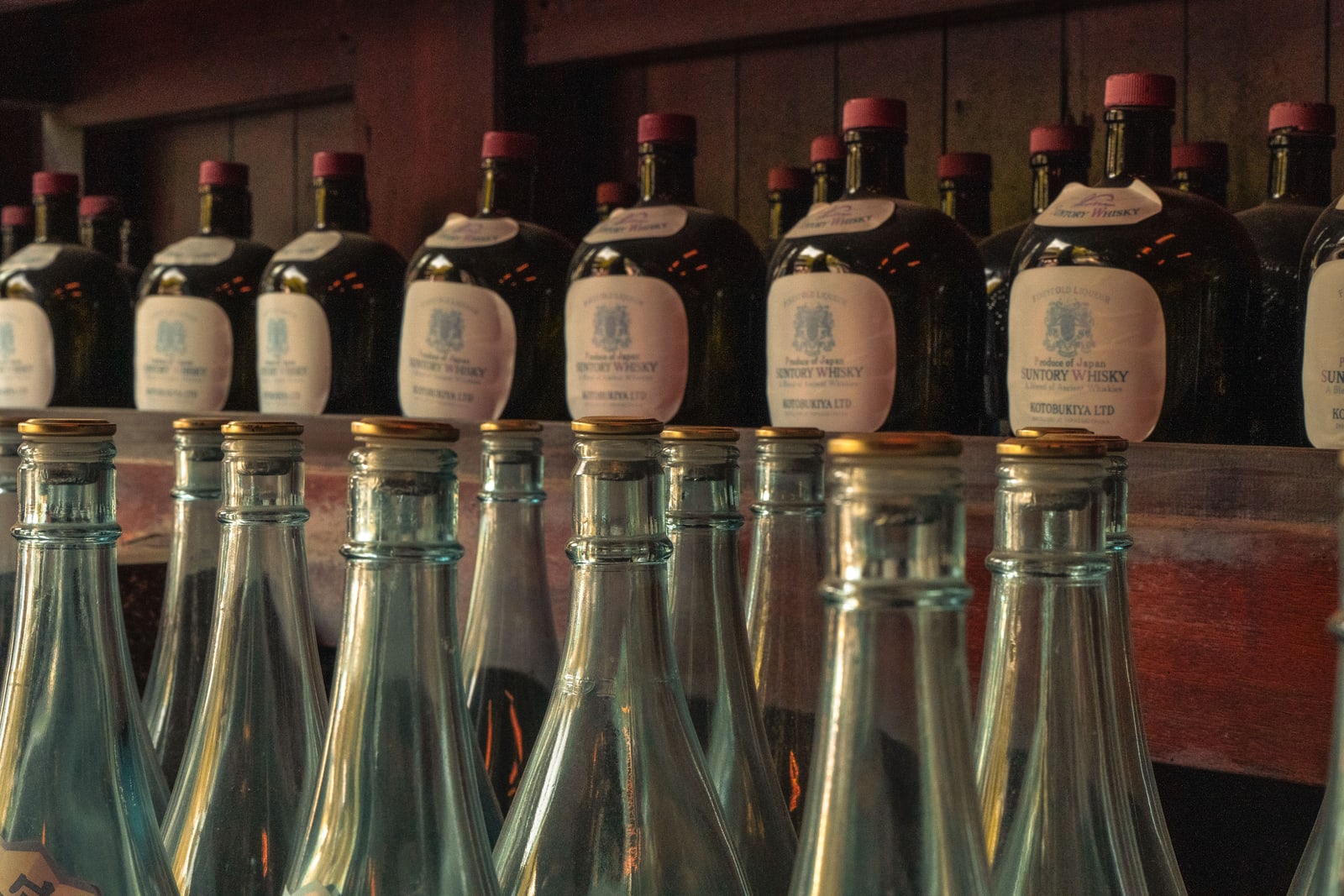
| Mars Iwai Tradition | Hombo Shuzo | Blended, malt and grain, 750 ml | 40% | None | Grain whisky “Produced in UK, Japan”; no compliance sentence |
Read the last column first. Suntory prints the same compliance sentence on all five of its bottles here, cheapest to dearest. Nikka prints a sentence per bottle, and it runs both ways: Coffey Grain meets the criteria, Nikka Days does not, and From the Barrel carries a disclosure about imported whisky instead. Hombo prints where the grain whisky was made and no sentence at all. The split on this shelf is not Suntory against Nikka. It is bottle by bottle.
What the label says, and what it does not have to
The definition belongs to the Japan Spirits & Liqueur Makers Association — the producers’ own body. Its Standards for Labeling Japanese Whisky were established in February 2021 and took effect on 1 April 2021, with a grace period for products already on sale that ended on 31 March 2024. A voluntary industry standard, not a law; the association administers it.
To carry the words, a bottle has to meet all of this:
- malted grain, always; the raw ingredients only malted grain, other cereal grains, and water extracted in Japan;
- mashing, fermentation and distillation at a distillery in Japan, distilled to under 95% alcohol;
- matured in Japan for at least three years, in wooden casks of 700 litres or less;
- bottled in Japan at 40% or more. Plain caramel colouring is permitted.
A bottle that fails may not be called Japanese whisky, and unless it is clearly labeled as not qualifying it may not borrow the trappings either — a Japanese person’s name, a Japanese place, mountain or river, the flag, an era name. There is also a mark, “JW” on a barrel end ringed with JAPANESE WHISKY and JSLMA, trademarked in Japan.
Now what it does not ask for. Nothing about where the grain was grown: the water has to come from Japan; the barley does not. No number on the label: the floor is three years, and an age statement is the producer’s choice. And nothing about quality. It is a pass or a fail on origin and process, and the cheapest bottle on this page and the dearest pass it in the same words.
The number that does not sort the way you were told
The producers’ own suggested retail prices, checked 17 September 2026. Suntory and Nikka list theirs before tax; Hombo lists Iwai with tax included, so that one figure sits a step apart from the rest.
- Suntory Kakubin, 700 ml — ¥1,910 before tax
- Mars Iwai Tradition, 750 ml — ¥2,420 including tax
- Nikka From the Barrel, 500 ml — ¥3,200 before tax
- Nikka Coffey Grain, 700 ml — ¥6,000 before tax
- Hibiki Japanese Harmony, 700 ml — ¥8,000 before tax
- Yamazaki 12, 700 ml — ¥16,000 before tax
- Hakushu 12, 700 ml — ¥16,000 before tax
How the top of the ladder got there is in Suntory’s own releases. Yamazaki 12 and Hakushu 12 were ¥10,000 before tax until the revision of 1 April 2024 took them to ¥15,000; Hibiki Japanese Harmony went from ¥5,500 to ¥7,500 the same day. Suntory’s stated reason: supply that could not keep up with demand. A second revision, effective 1 April 2026, covered 39 brands, Hibiki, Yamazaki and Hakushu among them, and this time the reason was the cost of packaging, raw materials and procurement. That is where ¥16,000 and ¥8,000 come from. Kakubin was not on the 2026 list. For scale: when Suntory re-released Hakushu 12 nationwide in limited quantities in March 2021, it listed it at ¥8,500 before tax.
So the price moved on demand and on costs — the producer’s own two reasons. Neither is a statement that the whisky changed. And the other number, the 12, is one the standard never asked for. The floor is three years. Hibiki Japanese Harmony, at half the list price, carries the same compliance sentence and no age at all.
JBJ'S TAKE
Scarce is not better. Suntory told you which one it was.
Two reasons, both Suntory's: demand, then costs. Not a word about the liquid.
Is it a different whisky? Yes. Single malt, twelve years in the cask. Is that what the price is measuring? No. That's the queue.
JbJ would not pay for the queue on a first bottle. On a third, maybe. If you still want to.
The nine, by seat
Cheapest first, on the producers’ own list prices — checked 17 September 2026, tax basis as marked. That is the order a first-bottle decision runs in, and it is the only order these nine facts support; nothing here ranks taste. Toki carries no price on this page, so it takes the seat after Kakubin, the Suntory blend it is closest to.
1. Suntory Kakubin
700 ml, 40%, malt and grain, no age statement, and Suntory’s compliance sentence on its page. ¥1,910 before tax — and Kakubin was not among the brands in Suntory’s April 2026 revision. The cheapest bottle on the page, and it passes the definition in the same words as the dearest.
2. Suntory Toki
House of Suntory presents it as Blended Japanese Whisky — malt and grain from Yamazaki, Hakushu and Chita — with no age statement, and says it meets the labeling standard. Suntory’s other no-age blend, seated beside Kakubin because it carries no price on this page.
3. Mars Iwai Tradition
Hombo Shuzo, Mars Komagatake Distillery. 750 ml, 40%, malt and grain, no age statement. The origin line is Hombo’s own: the grain whisky is “Produced in UK, Japan.” No compliance sentence. ¥2,420 including tax — the one after-tax figure on this page.
4. Nikka From the Barrel
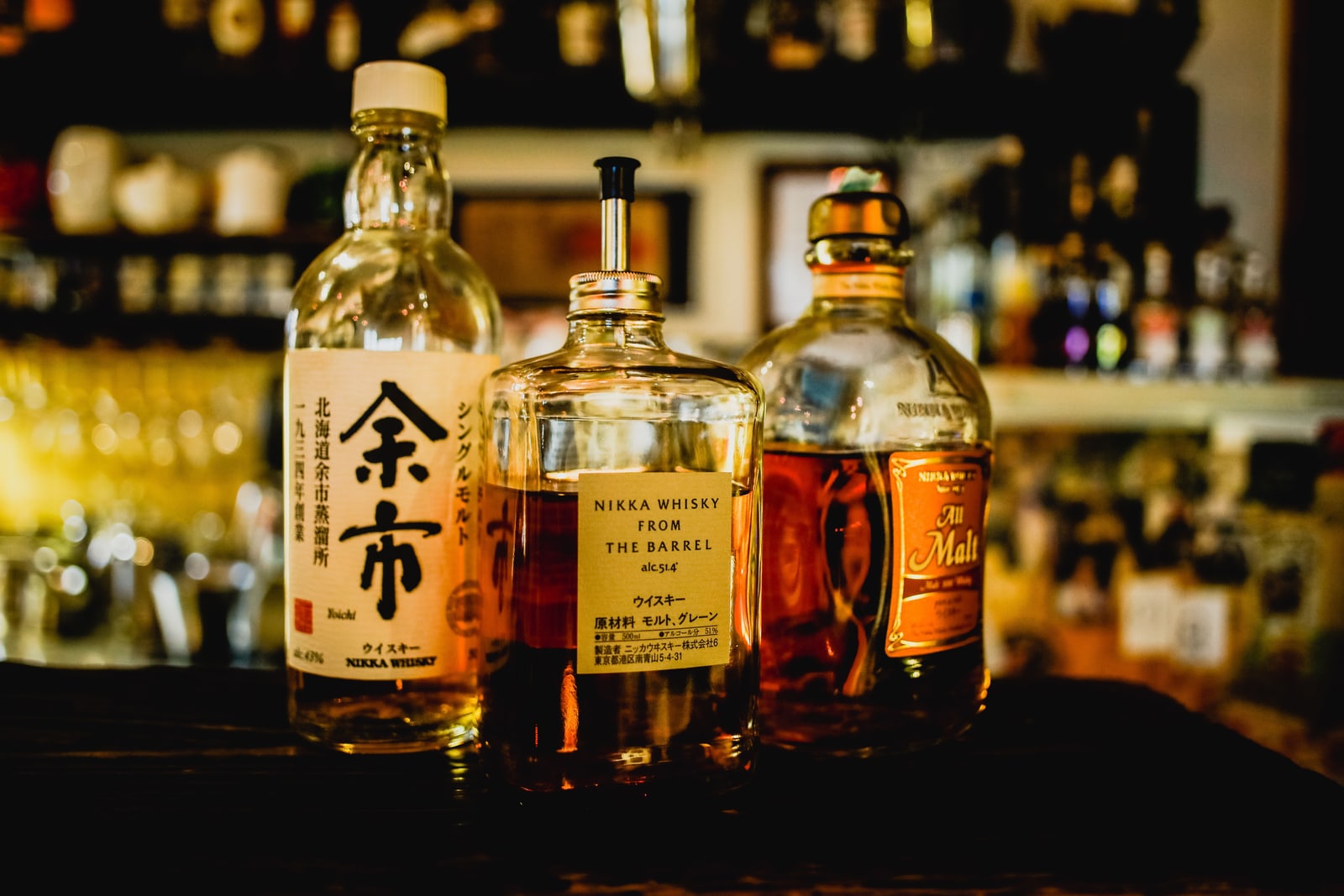
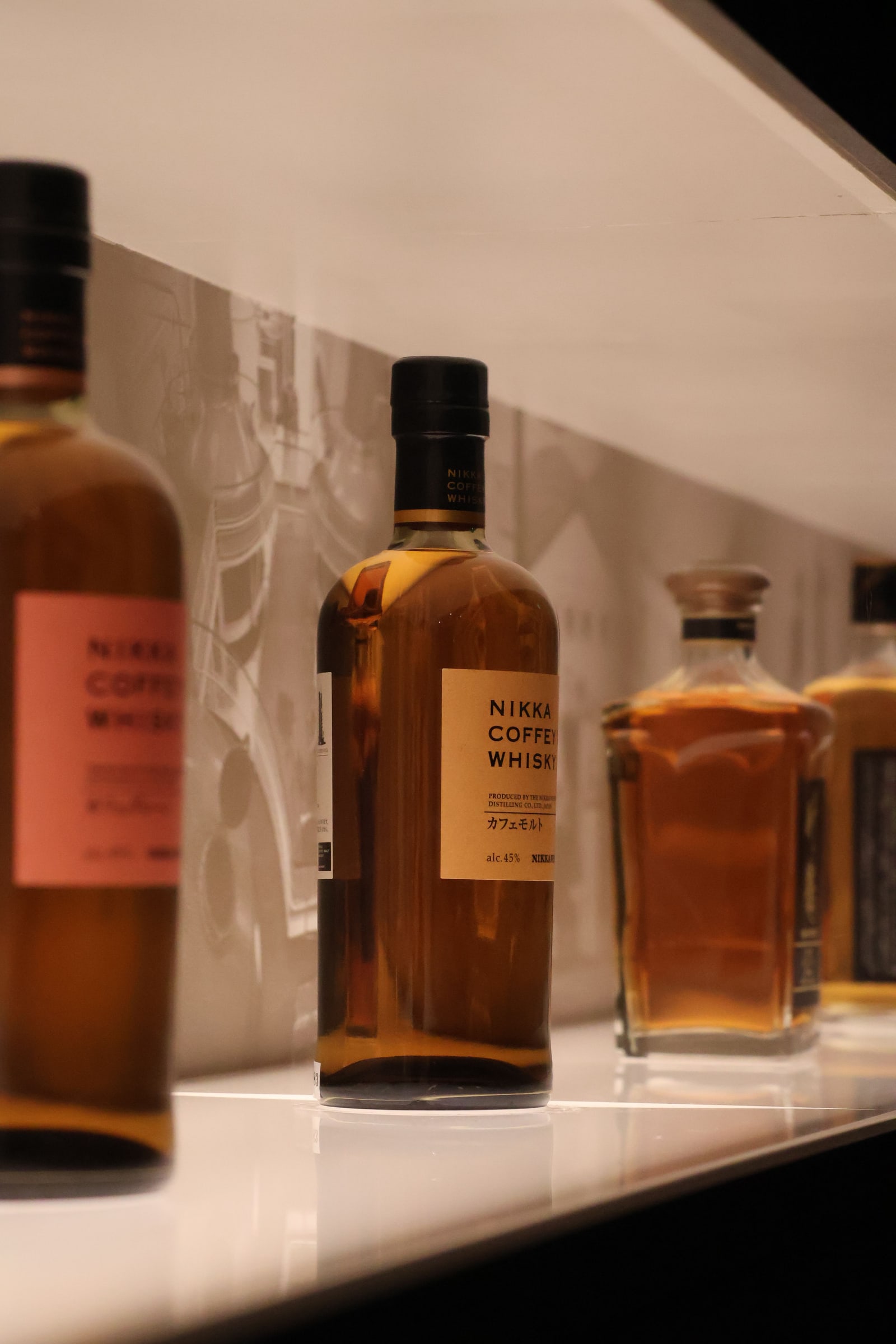
Blended, 500 ml, 51.4%, no age statement. Nikka’s own line is a disclosure: some carefully selected imported whisky is used. No compliance sentence. ¥3,200 before tax, on Asahi’s reference price. Also the bottle in the middle of the photograph at the top of this page.
5. Nikka Days
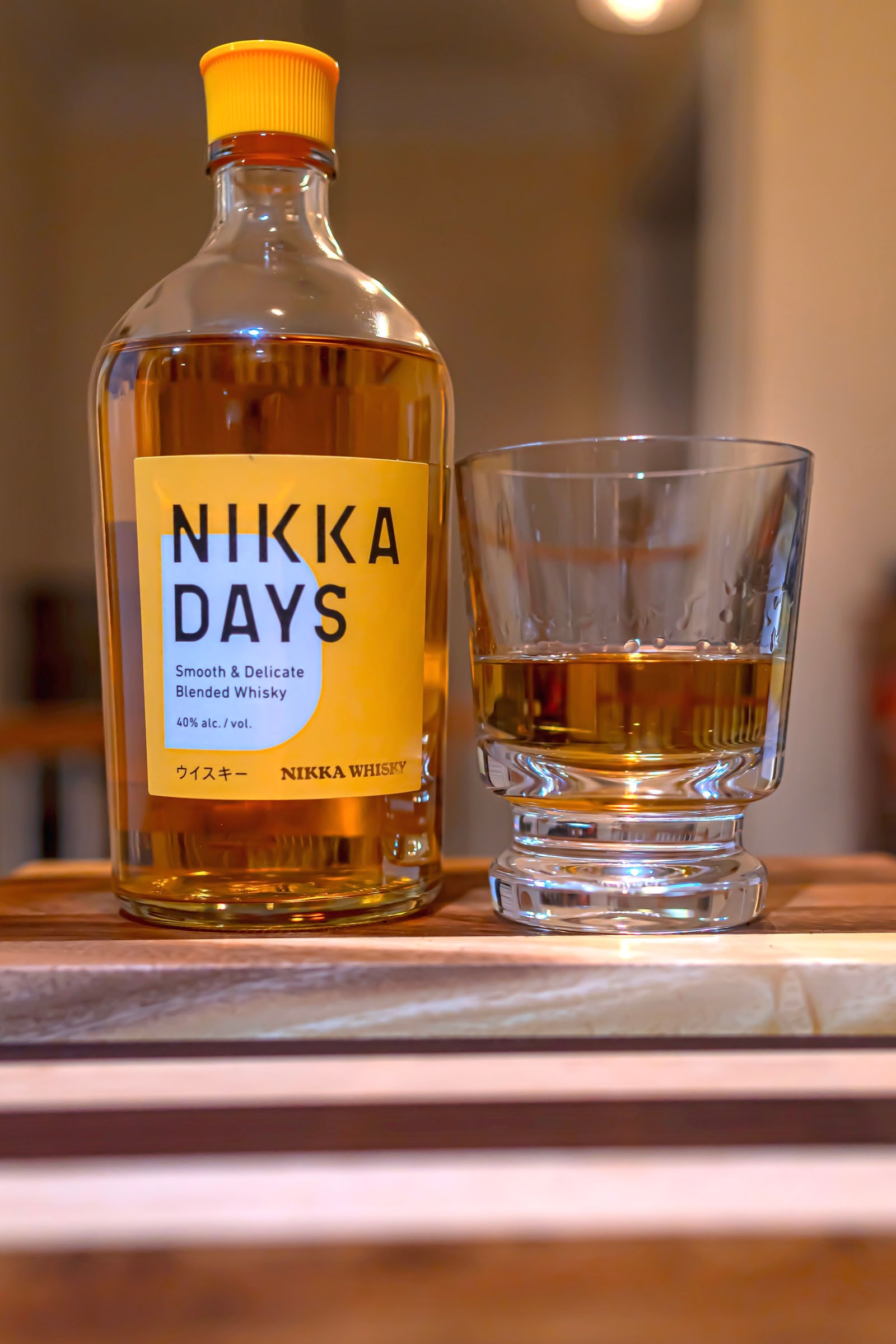
Blended, 700 ml, 40%, no age statement. Nikka’s page says it in full: “This product does not meet all the criteria of ‘Japanese whisky’ defined by the Japan Spirits & Liqueur Makers Association.” The only bottle on the page whose maker says so.
6. Nikka Coffey Grain
A grain whisky from the Coffey still at Miyagikyo. 700 ml, 45%, no age statement. Nikka’s line: it meets all the criteria. ¥6,000 before tax. Same producer as the bottle above; the opposite sentence.
7. Hibiki Japanese Harmony
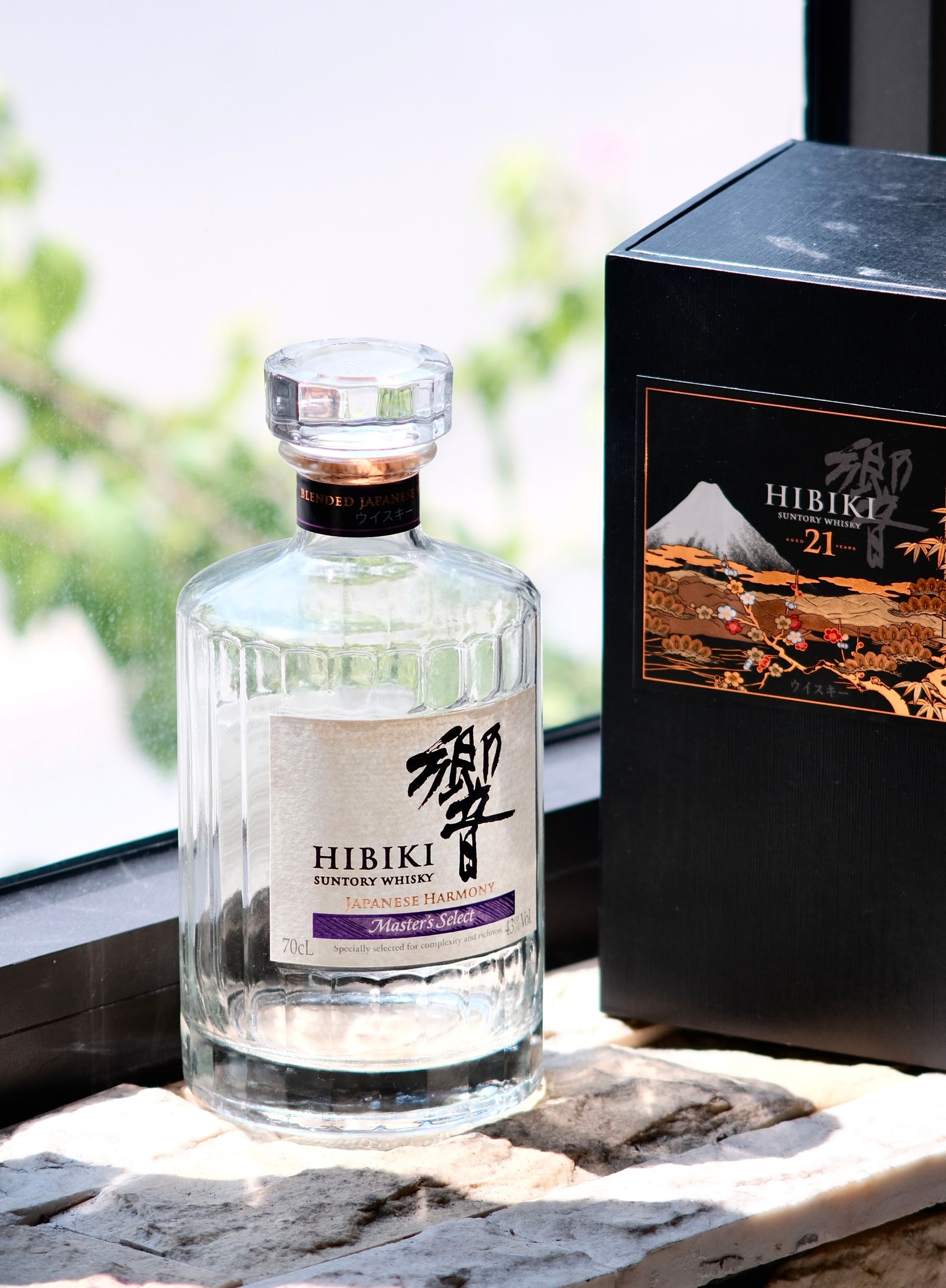
Blended, 700 ml, 43%, no age statement — Suntory calls it the peak of its blended whiskies and says it is made without regard to years of maturation. Compliance sentence. ¥8,000 before tax.
8. Yamazaki 12
Single malt, 700 ml, 43%, twelve years on the label. Compliance sentence. ¥16,000 before tax.
9. Hakushu 12
Single malt, 700 ml, 43%, twelve years on the label. Compliance sentence. ¥16,000 before tax. The March 2021 re-release price is in the section above.
Leave it on the shelf
Three of the nine, by name. None is a bad whisky. A first bottle is a specific job, and these three are not it.
Yamazaki 12 and Hakushu 12. ¥16,000 before tax is a number Suntory itself explained twice — demand in 2024, costs in 2026. A first bottle’s job is to teach you what the definition tastes like, and Kakubin carries the same sentence for a fraction of it. Come back for the 12 when you know what you are comparing it with.
Nikka Days. Nikka prints the honest sentence: this one does not meet the criteria. If the first bottle is meant to be Japanese whisky as the label now defines it, this is not the bottle to learn from. A fine second bottle.
Nikka From the Barrel. 51.4% in a 500 ml bottle, and a disclosure of imported whisky. For a drinker who already has a reference point, not the drinker looking for one.
JBJ'S TAKE
Both 12s stay on the shelf. So does the bottle that says it isn't one.
Not because Yamazaki 12 is a bad whisky. Because you have nothing to hold it up against yet. Buy it later, with a reference in the cupboard.
Nikka Days? Nikka wrote the honest line. Respect it — and buy it second, once you know what it isn't.
Buy the sentence first. Then the exceptions.
Which one to buy first
Everything above comes down to one line and one number. The line is the compliance sentence, and the cheapest bottle on the page carries it. The number is the price, and the producer’s own reasons for it were a queue and a cost sheet.
How you drink it is decided at home — neat, over ice, or long with soda — and nothing on any of the nine labels settles that for you. If you buy in Japan rather than at home, bringing a bottle back and tax-free at the till have their own pages.
JBJ'S TAKE
Kakubin. Then soda — more than you think.
Same sentence as the dearest bottle on the page, bottom of the price ladder. That is the whole argument. Start there.
Can't get it where you live? Hibiki Japanese Harmony. Same sentence, no age number, half the list price of the 12.
The expensive one is worth it exactly once: after you know what the cheap one tastes like.
Information checked 17 September 2026. The labeling standard, its dates and the logo mark come from the Japan Spirits & Liqueur Makers Association’s own pages and its published text of the standard; each bottle’s type, strength, size, age statement, origin line and suggested retail price from the producer’s own product page — Suntory, Nikka and Asahi, Hombo Shuzo; the price revisions and the reasons given for them from Suntory’s own news releases.