You are at a gate. The people ahead of you bow before they walk through it, and further in there is a stone basin with wooden ladles that everyone seems to know how to use. The whole visit is five moves — gate, path, basin, hall, and whatever you do after — and nobody is watching you make them.
One step changes depending on where you are. At a Shinto shrine you clap; at a Buddhist temple you don’t. Everything else — the bow at the gate, the basin, the coin, the quiet — is the same at both.
So: how to tell which one you’re standing at, what it costs, the sequence in the order you’ll walk it, and the one step to settle before you reach the hall.
Shrine or temple: how to tell from the gate
Look at the gate before you look at anything else.
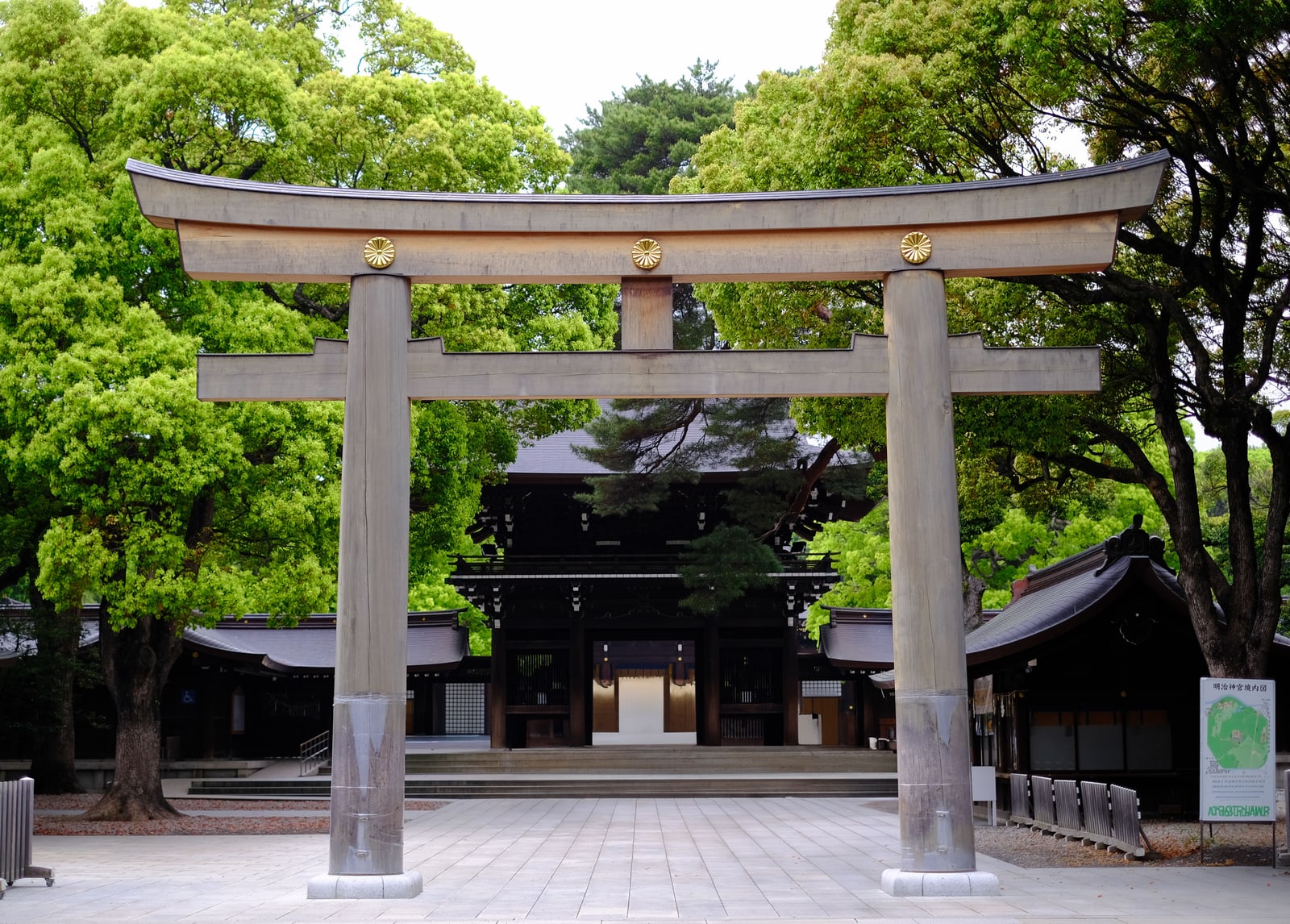
A shrine is Shinto, and it begins with a torii: two upright posts, two crossbeams, no roof and no door. Vermilion at some, plain wood at others. It marks a threshold, not an entrance anyone could close.
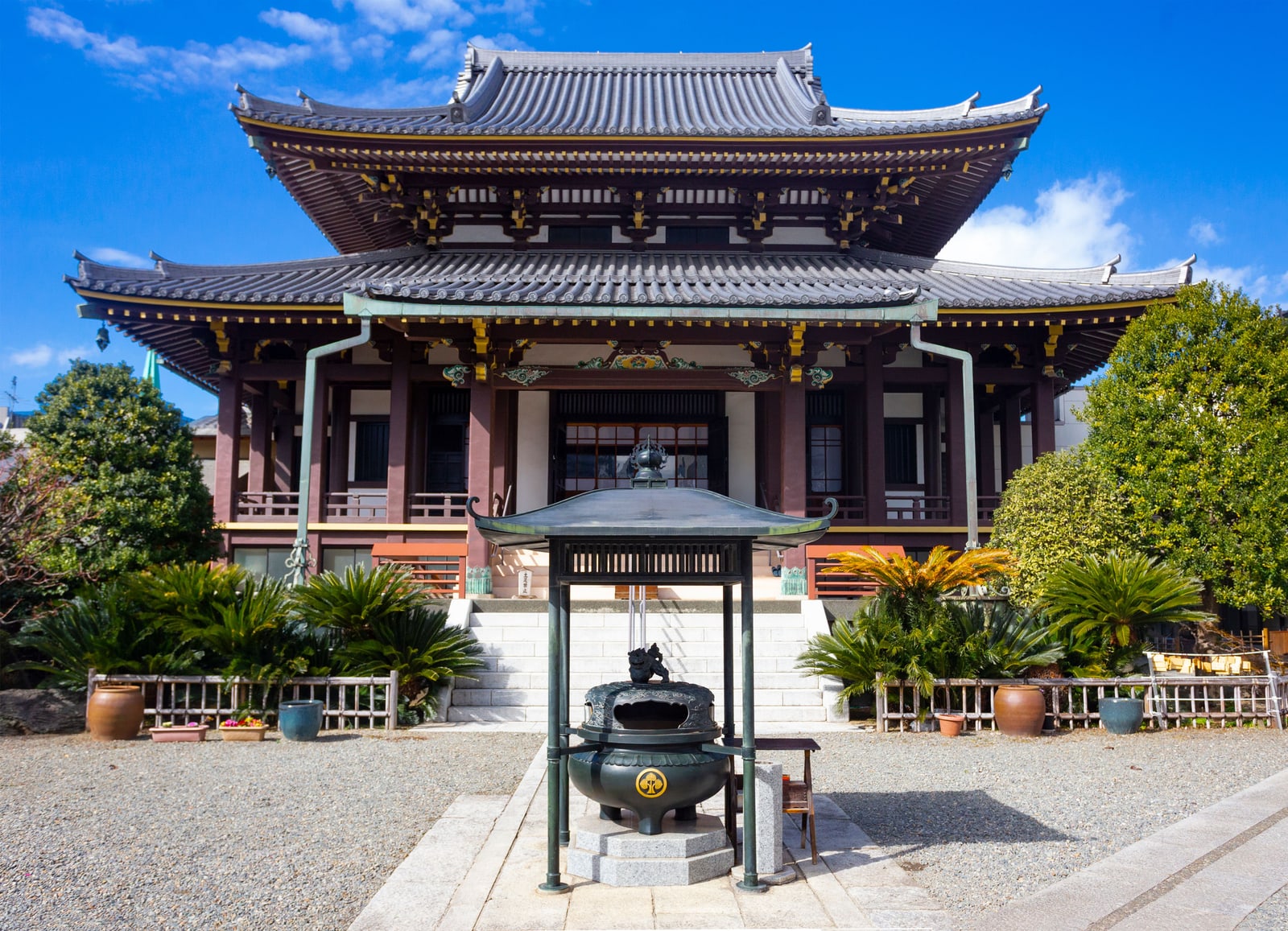
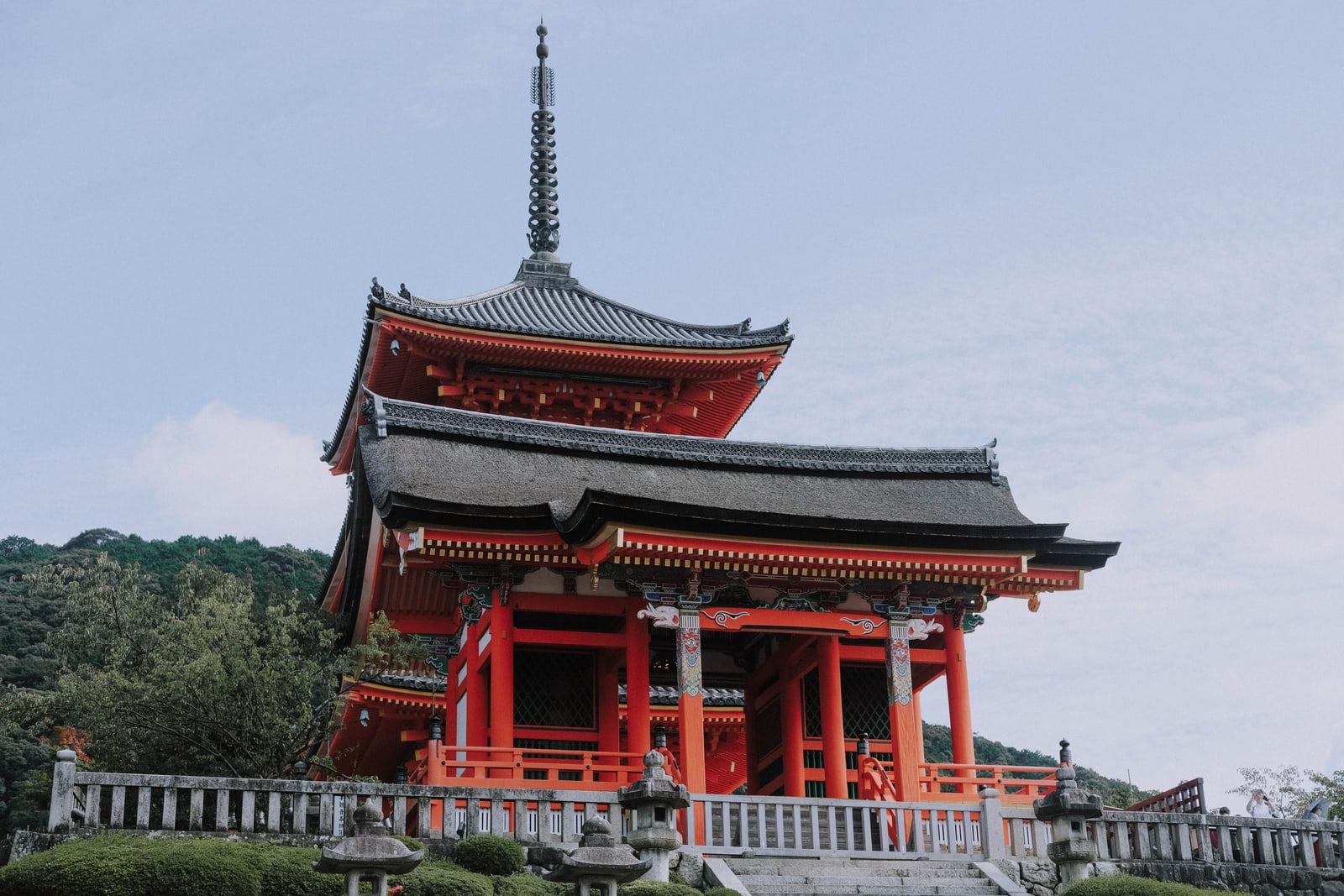
A temple is Buddhist, and it begins with a sanmon: a roofed wooden gate with a tiled top, usually on a stone step, often with a pair of fierce guardian statues — the Nio — standing at it.
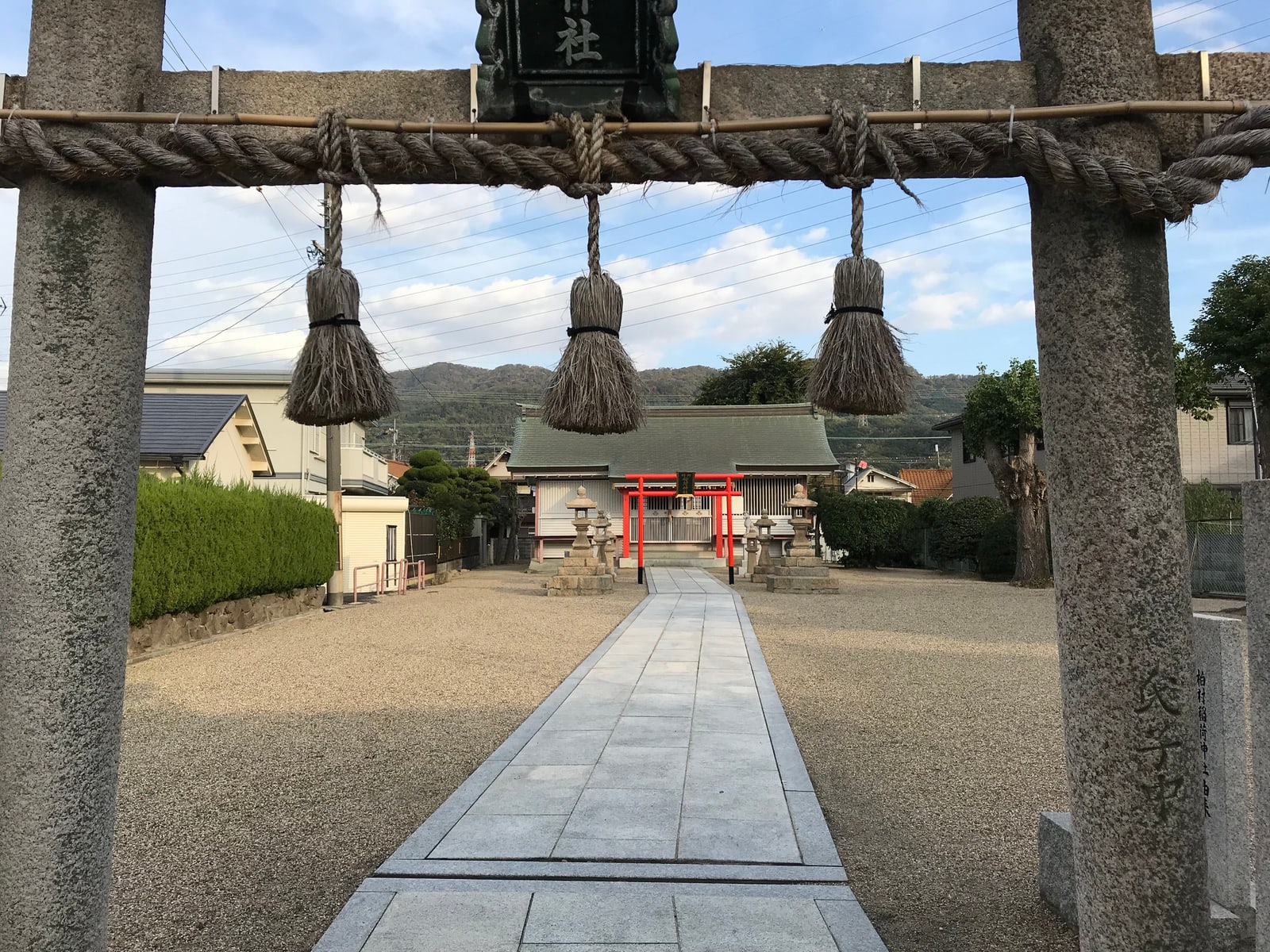
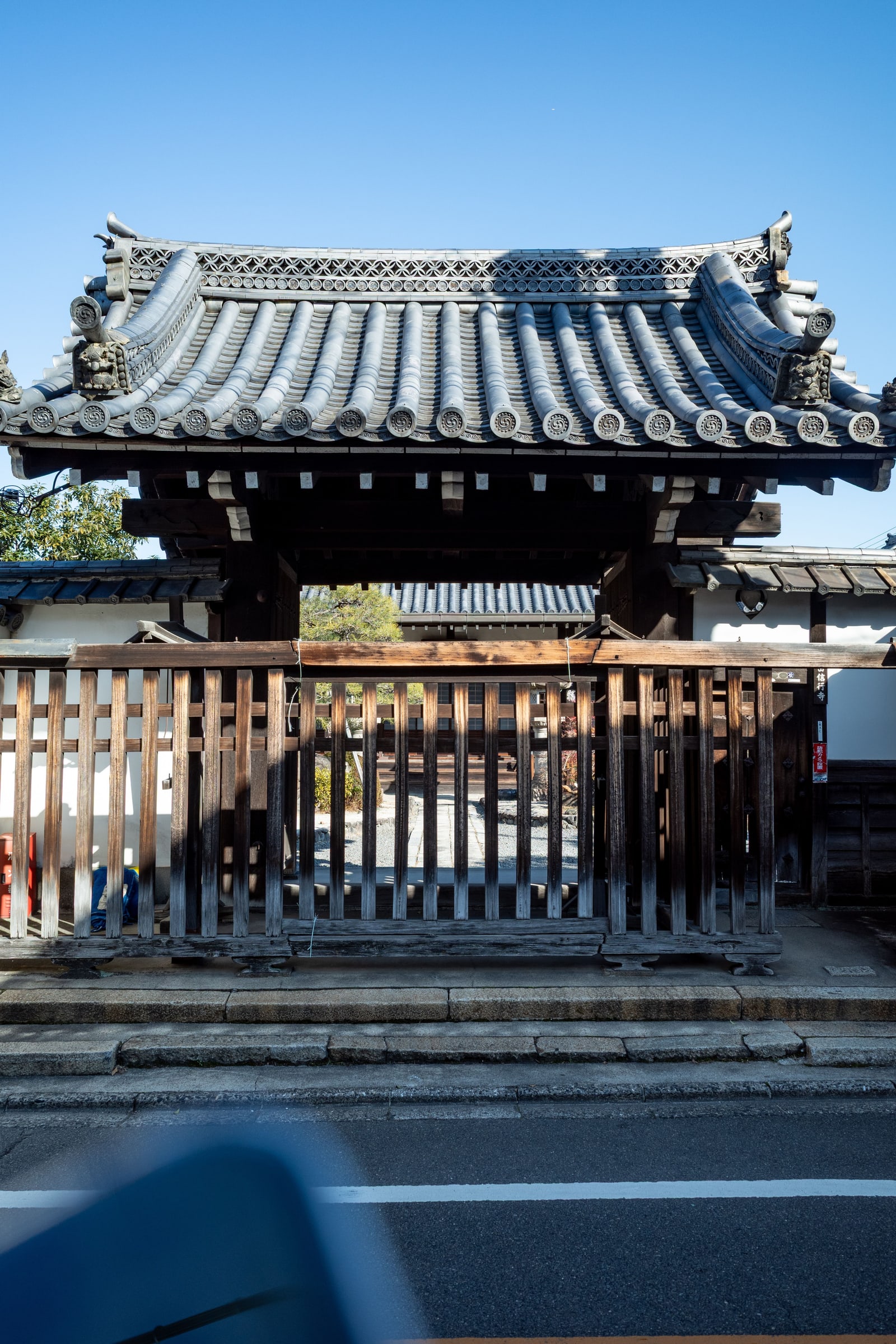
| Shrine | Temple | |
|---|---|---|
| For | Kami — Shinto deities | The Buddha |
| The gate | A torii: posts and beams, no roof | A sanmon: a roofed gate, often with Nio guardians |
| The prayer | Two bows, two claps, one bow | Hands together in silence, then a bow. No claps |
| Incense | Not part of the sequence | Sometimes — a burner in front of the hall |
| The name | Usually ends -jinja, -jingu or -taisha | Usually ends -ji, -dera or -in |
The name row is a pattern you’ll notice, not a rule you can lean on. The gate is the reliable tell.
What a visit costs
Close to nothing, and almost none of it fixed.
- Getting in. Meiji Shrine, for one, charges nothing to enter — it says so on its own site. Some temples charge admission, paid at the entrance on the day; Kiyomizu-dera in Kyoto does. That’s a ticket, not a reservation.
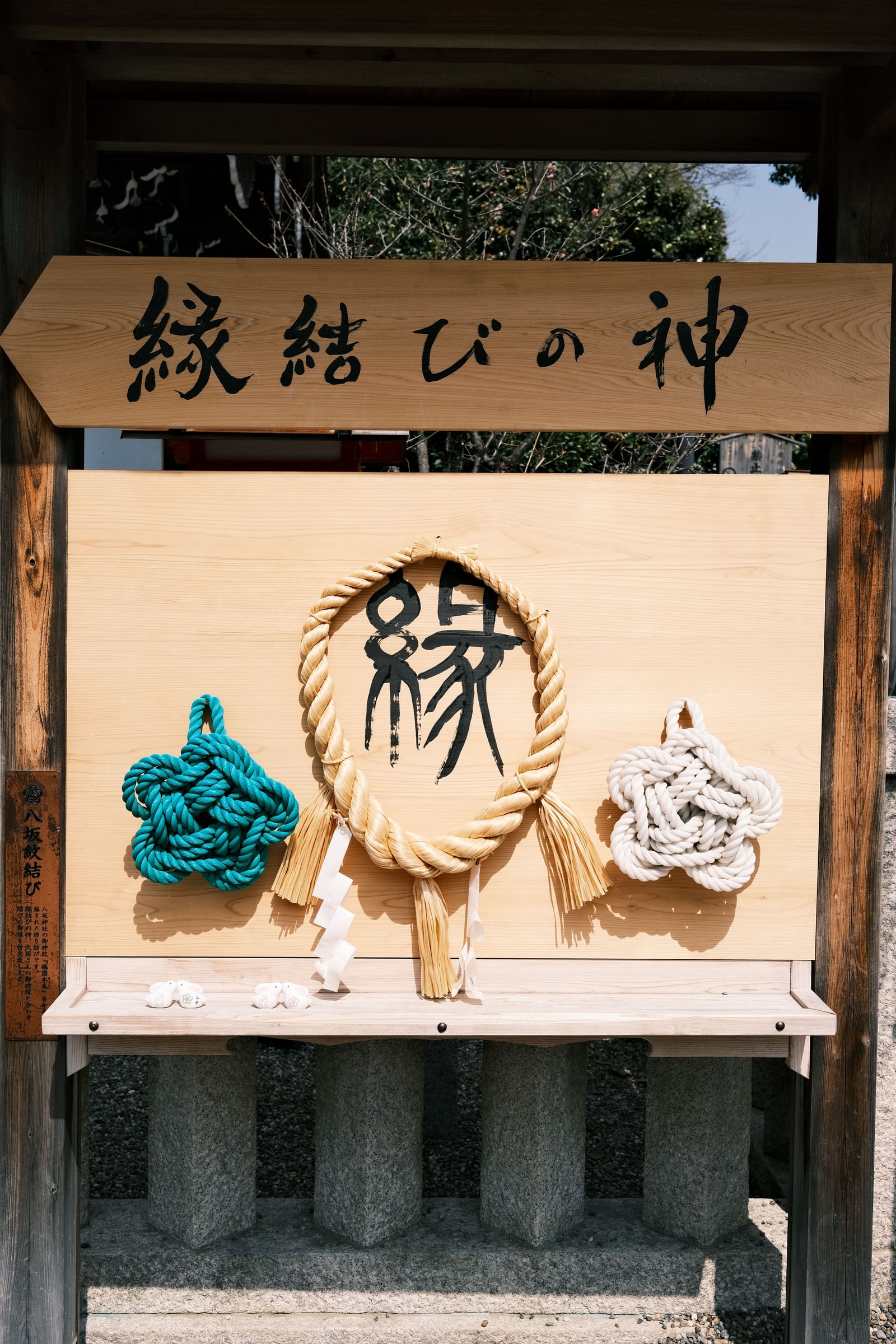
- The offering. A coin. Any coin. There is no set amount, and the story that it has to be five yen — because go-en, five yen, sounds like goen, a fortunate connection — is a pun. Izumo Taisha, one of the oldest shrines in the country, says so in its own FAQ: wordplay for entertainment, no spiritual basis.
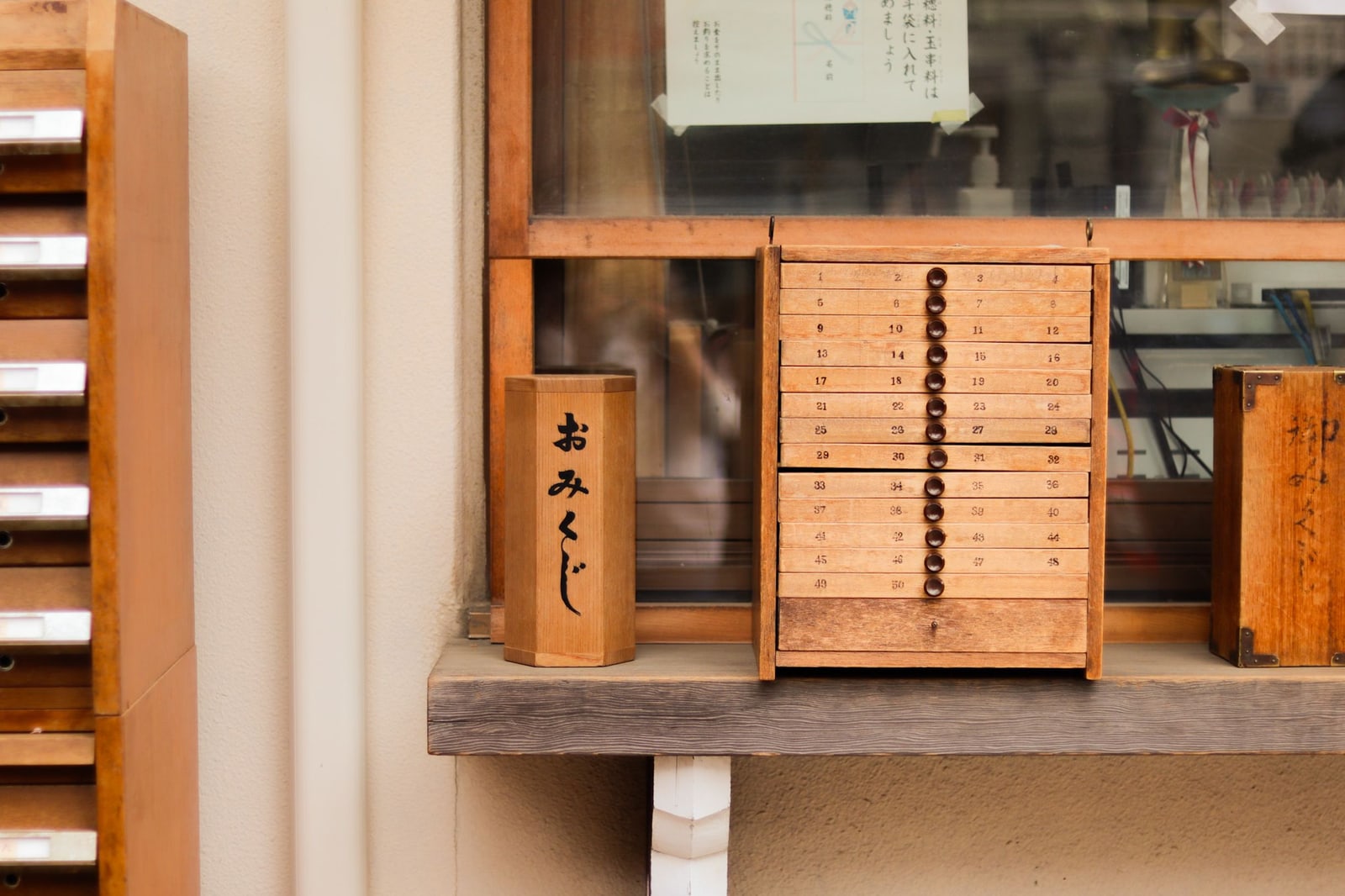
- Omikuji, the folded paper fortune: typically ¥100–200.
- Goshuin, the stamp brushed into your book at the office: typically a donation of ¥300–500.
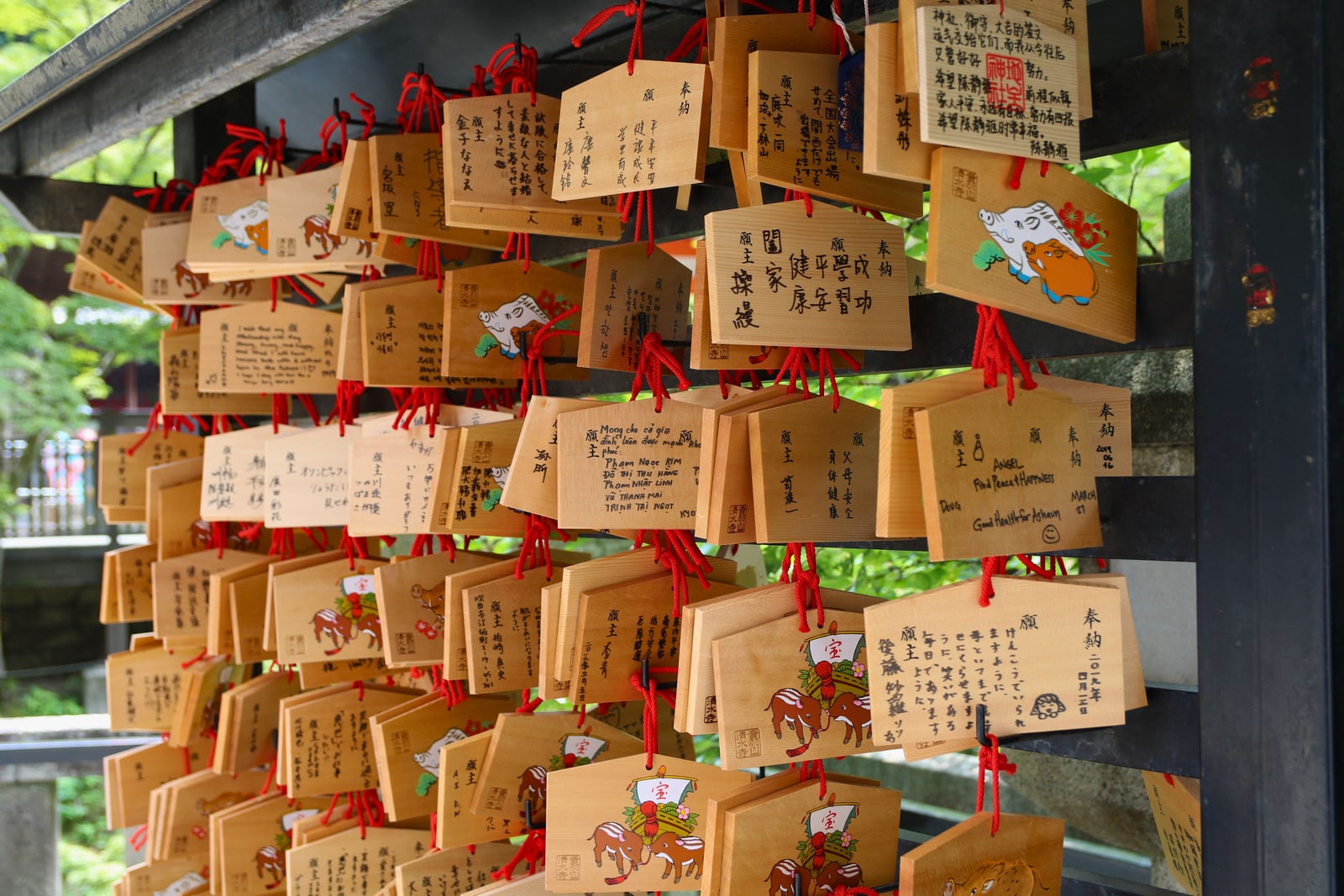
- Ema, the wooden plaque you write a wish on: priced by the site.
The ranges move from place to place, and nothing on this list is required.
JBJ'S TAKE
Bring coins. Don't bring a rule.
The coin isn't a fee and it isn't a bet. Drop what's in your pocket and stop thinking about it.
If you're going to spend, spend on the stamp book. One brushed page for every hall you actually stood in, done while you watch. That's the souvenir of this visit.
The fortune slip is a coin for a laugh. Take it.
Against what you were told
Three things that travel with first-time visitors and don’t hold up.
That the coin has to be five yen. Above. A pun, on a shrine’s own account.
That shrines stay open all night and temples lock their gates. Hours belong to the site, not the category. Meiji Shrine opens at sunrise and closes at sunset, on times that change by month. Kiyomizu-dera opens at six in the morning and closes at a time that changes with the season. A handful of shrines are widely reported to have grounds that never close — Fushimi Inari is the usual example — but that is a fact about one shrine. Check the one you’re going to.
That someone is checking. Nobody is. The bows, the claps, the order at the basin are what the shrine association and the temples themselves teach, and they are also things visitors get slightly wrong all day long. Nobody turns round.
The sequence, in the order it happens
At a shrine, from the street to the hall. It is the same at a large shrine in Tokyo and at the one at the end of a residential lane.
The gate
Stop just short of the torii, bow once, and walk through.
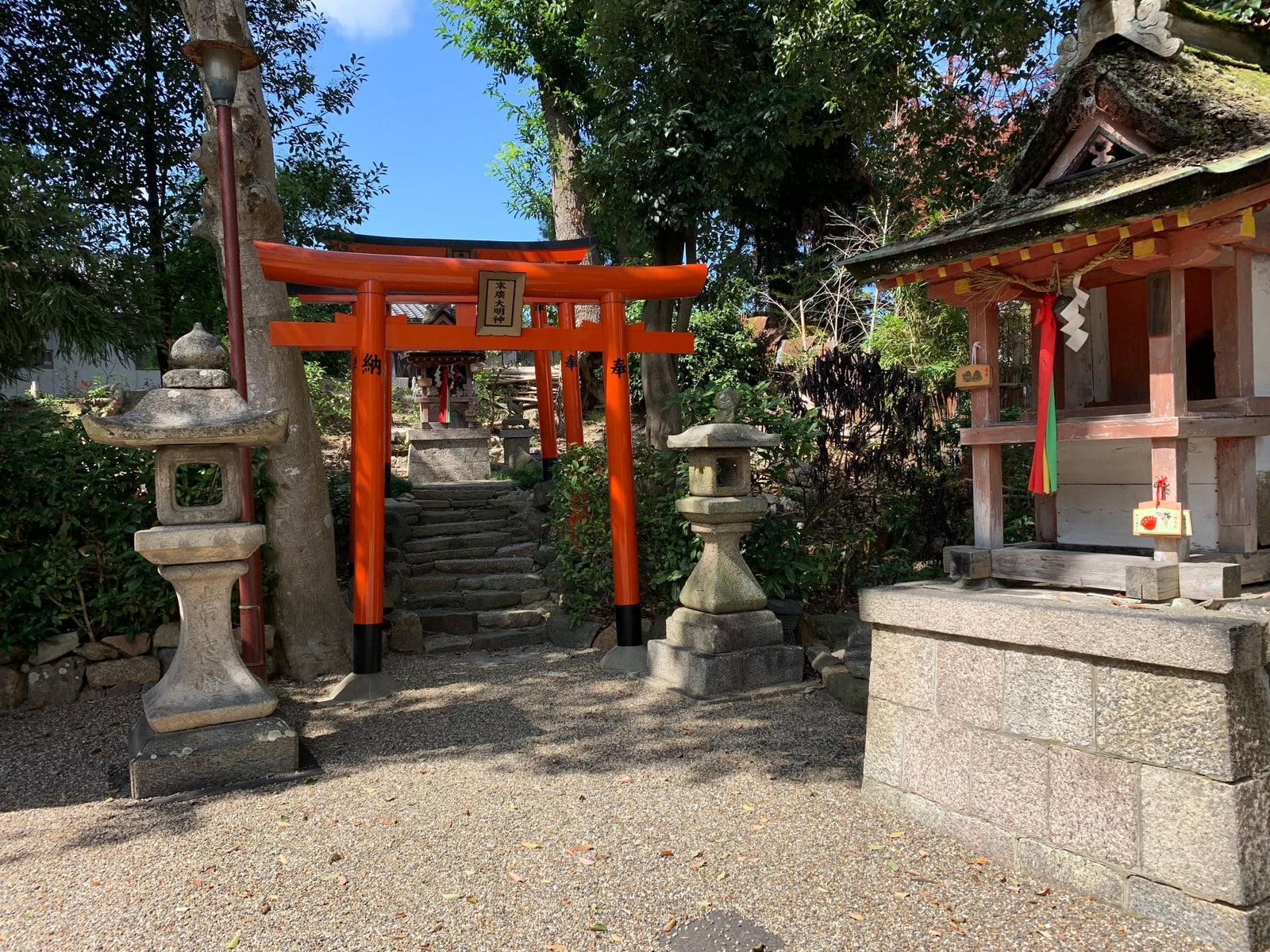
The path
Walk to one side of the path, not down the middle. The center is kept for the kami — that is the whole reason — and you’ll notice everyone ahead of you keeping to the edges.
The basin
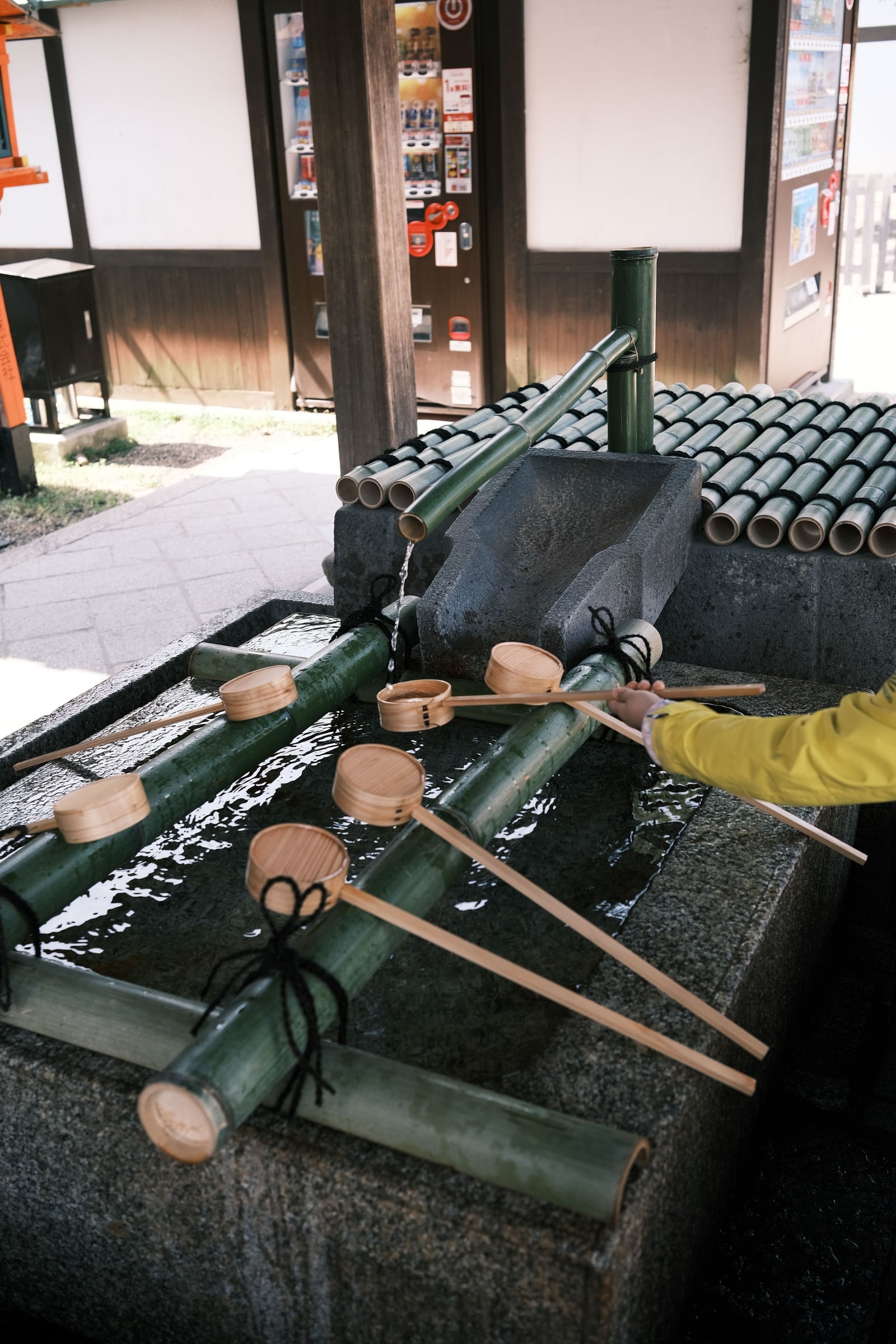
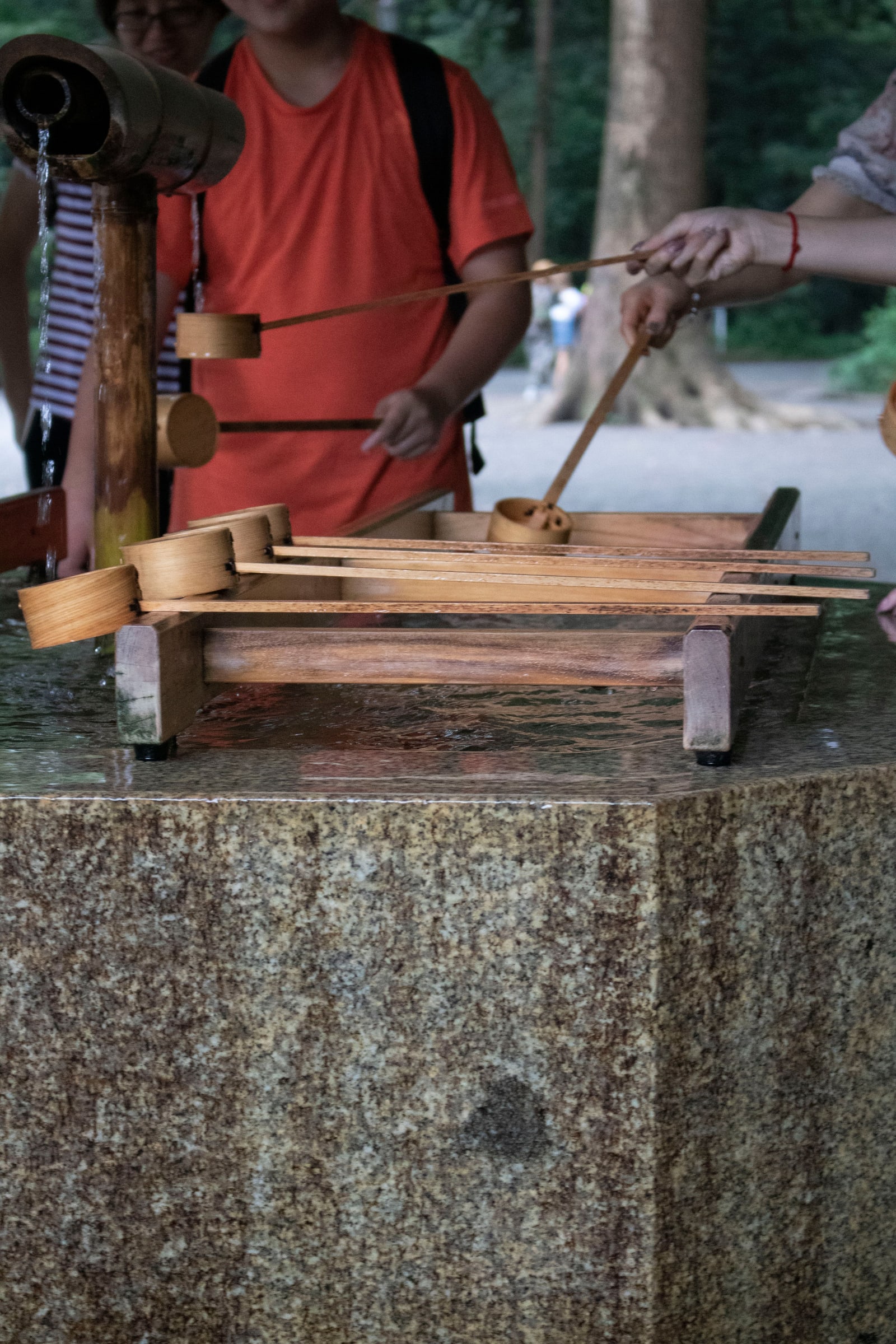
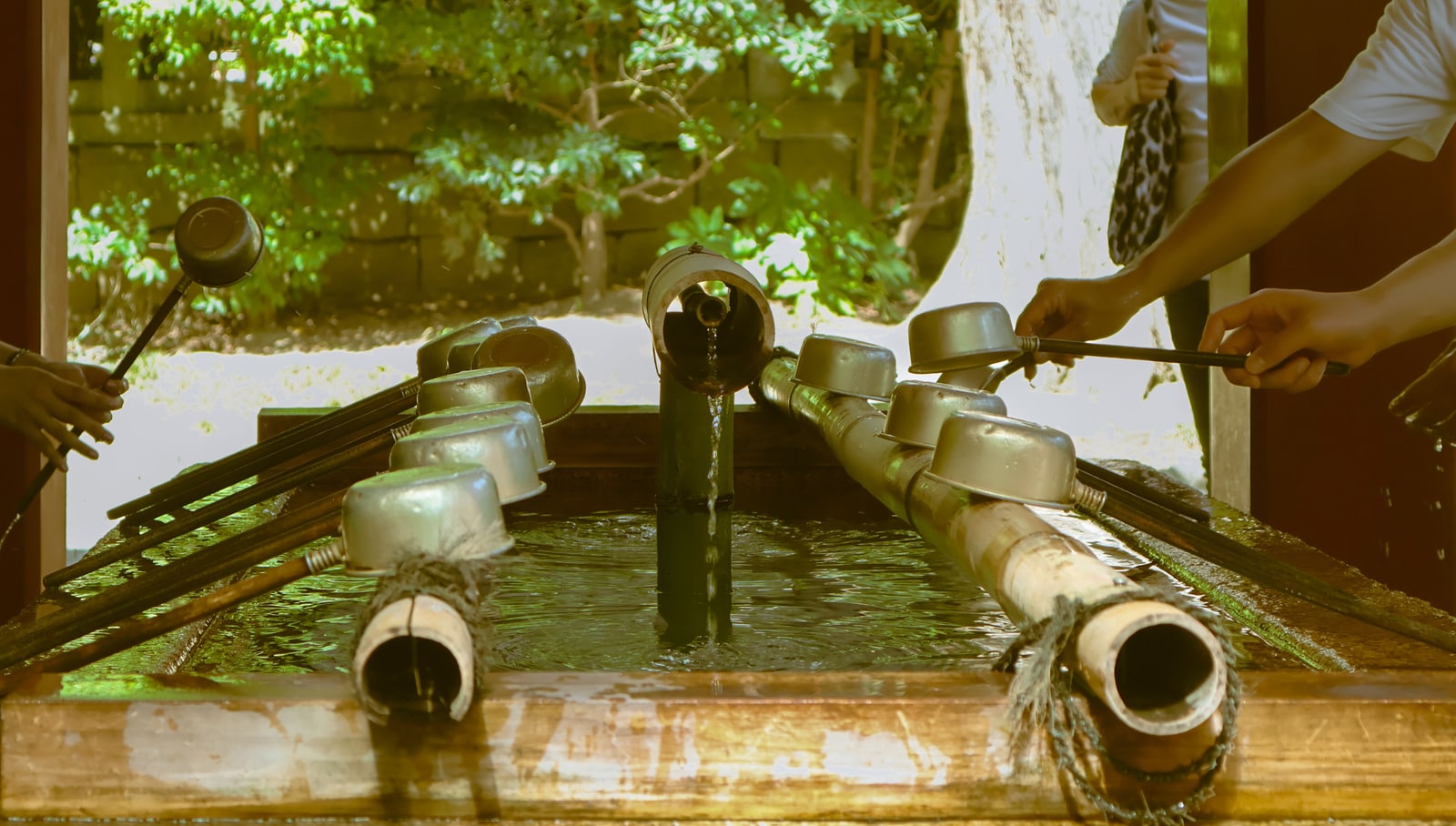
The temizuya, or chozuya, is the stone basin with the ladles. You rinse hands and mouth before you approach the hall, and there is a fixed order:
- Take a ladle in your right hand, scoop water, and rinse your left hand.
- Switch hands and rinse your right.
- Ladle back in the right hand. Pour a little water into your cupped left palm and rinse your mouth from that — the ladle never touches your lips. Spit the water out on the ground at the base of the basin, not back into it.
- Tip the ladle upright so the last of the water runs down the handle, then put it back.
The hall
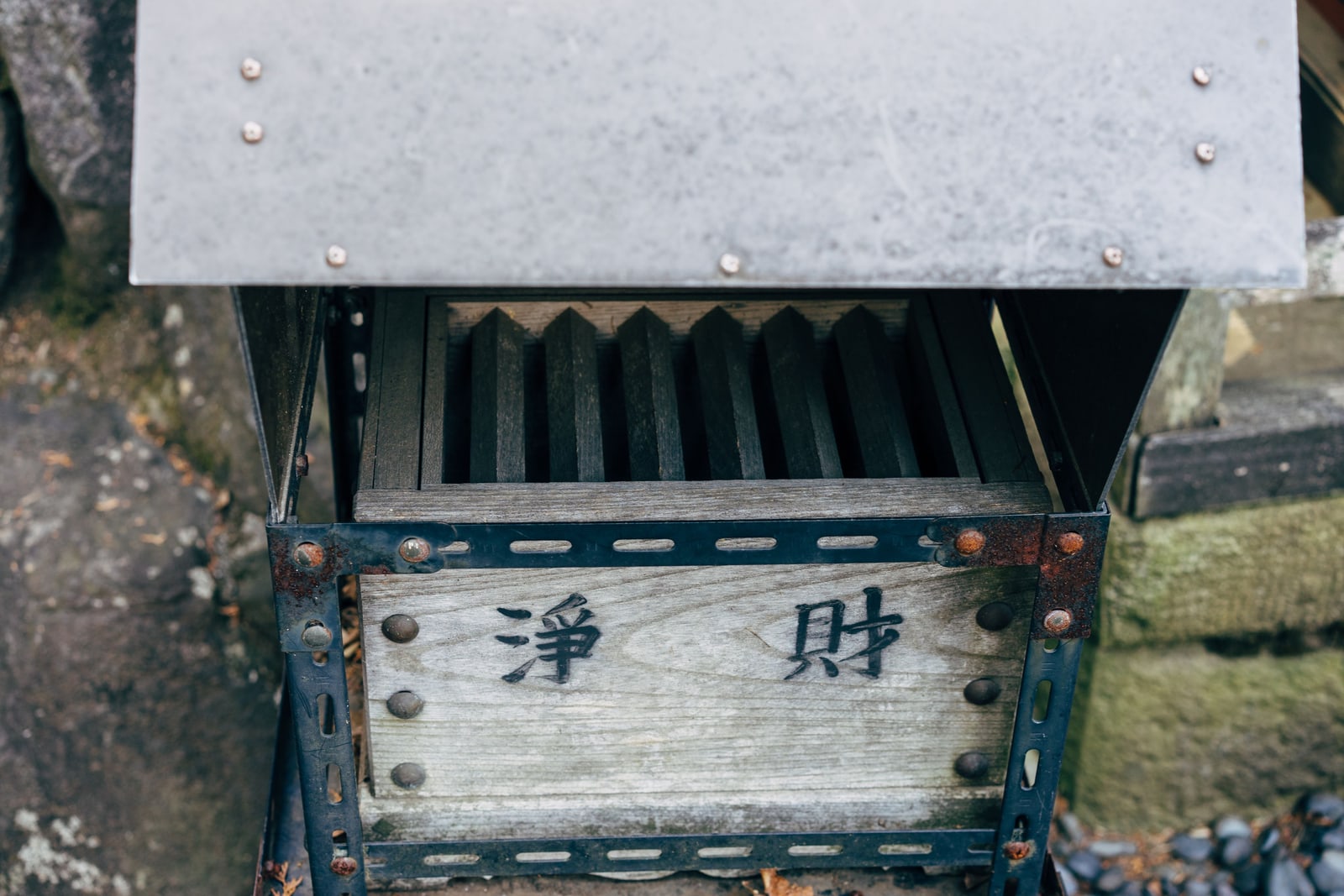
At the front of the hall there is a wooden box with a slatted top — the offering box — and usually a thick rope with a bell above it.
- Put your coin in the box.
- If there is a bell, ring it: take the rope and swing.
- Bow deeply, twice.
- Clap twice, hands at chest height.
- Bow deeply, once.
That’s it. Step aside so the next person can come forward.
JBJ'S TAKE
Slow at the basin. Quick at the hall.
The basin is where people freeze — ladle, hands, mouth, which order. Freeze, then. Nobody behind you minds a slow ladle.
The hall is the opposite. It's a greeting, not a ceremony. Coin, bell, bows, claps, bow, done.
Thirty seconds. Then step aside — someone is behind you.
After
Beside or behind the hall there is usually a counter for omikuji, ema and goshuin. Draw a fortune. Write a wish on a plaque and hang it with the others. Hand your book across for a stamp. Or don’t — none of it is part of the prayer.
At a temple, where it diverges
Same bow at the gate — the sanmon this time. Same side of the path. Same basin, if there is one. Then:
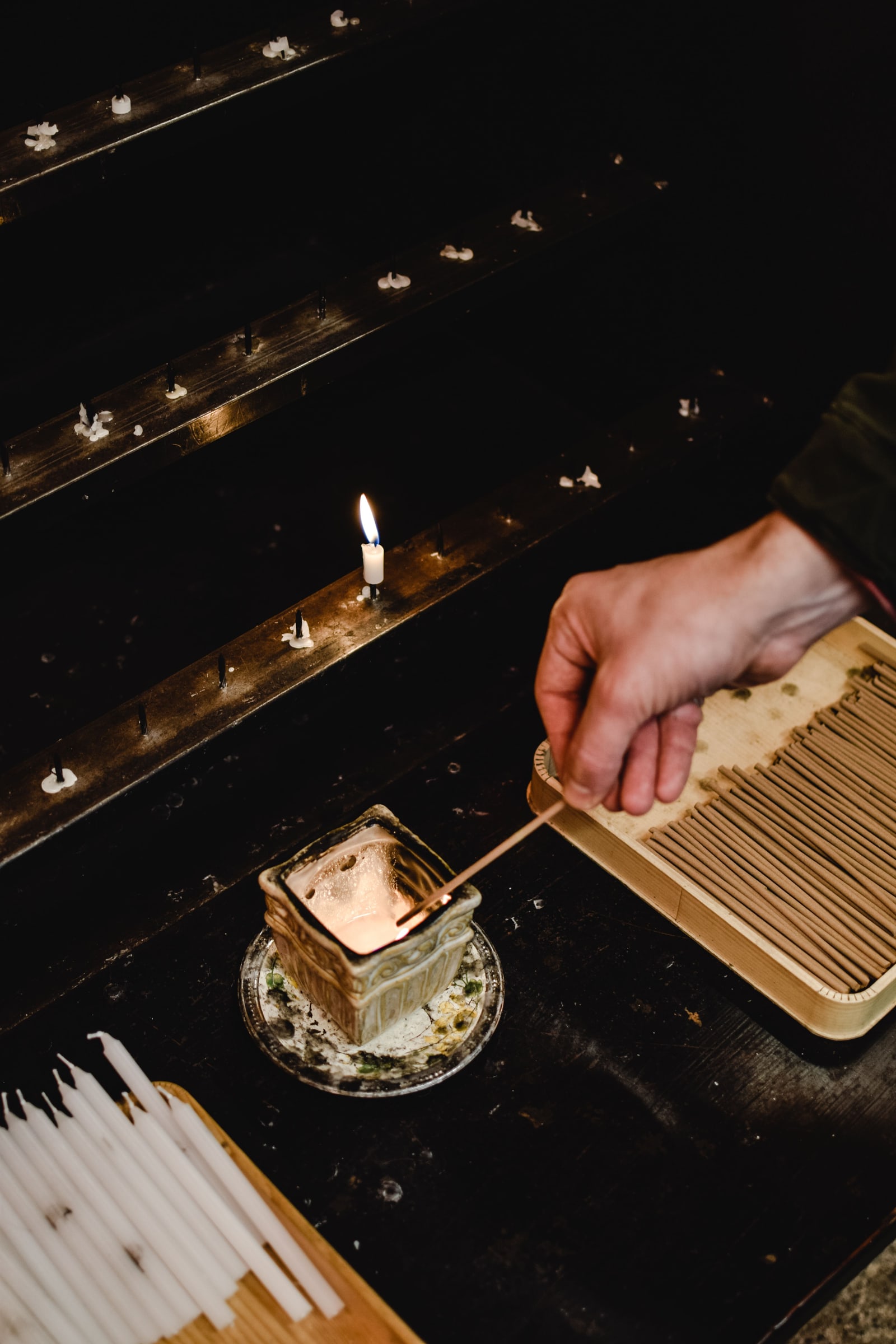
- If there is an incense burner in front of the hall, you can light a stick there. Put the flame out by waving your hand across it — never by blowing on it — and set the stick in the burner. This part is optional.
- At the hall, coin in the box.
- Hands pressed together, in silence. No clapping.
- Bow.
Individual temples and schools of Buddhism have their own finer points for the hands and the incense; the version above is the public one.
The one thing that actually differs — and where it doesn’t matter
Clapping. A shrine gets two claps between the bows. A temple gets none: hands pressed together, silence, a bow. Chion-in, the head temple of the Jodo Shu school, puts it in a sentence on its own site — customary at a shrine, not done at a temple.
Where it doesn’t matter: nearly everywhere else. The gate bow, the side of the path, the basin, the coin — the same at both, and none of them is a test. The finer points you’ll read about — which hand holds the incense, how high the palms go — are a school’s own practice. You’re a visitor. Skip them. Get the clap right. The rest of the visit forgives you.
Two things are posted, and meant. Meiji Shrine asks that you not photograph or film at the main sanctuary, where people are praying. Many temples post a no-photography sign at the main hall — look for it, or ask. Why a sign in Japan means what it says is on the rules that actually matter.
Before you go
Nothing needs booking. There is no advance ticket for a shrine visit or a temple prayer; where a temple charges admission, you pay at the gate on the day. So preparation is three things: coins in a pocket, the hours of the site you’ve chosen, and the clap question settled before you reach the hall.
JBJ'S TAKE
Look at the gate. Then copy the person in front.
You will forget the basin order the second you're standing at it. Everyone does. So let one person go first — there's always one — and do what they do.
The only thing to settle in advance is the clap. Torii behind you: clap. Roofed gate behind you: don't.
That's the whole exam, and nobody is grading it.
Going in a rented kimono? Kimono rental in Japan covers the day around it. The one venue in Japan where the etiquette genuinely is strict is the onsen, and that is a different page. For everything else on the trip, the three rules that matter.
Information checked September 2026. The shrine sequence from Jinja Honcho (the Association of Shinto Shrines), Meiji Shrine and JNTO; the temple procedure from Chion-in and JNTO; the gate and guardian distinction from JNTO; the five-yen answer from Izumo Taisha’s own FAQ; omikuji and goshuin ranges from JNTO; hours, admission and the photography request from Meiji Shrine’s and Kiyomizu-dera’s own pages.