Most onsen guides hand you a list of rules. The list is usually correct and almost never in the order you meet them, which is why people still freeze at the curtain.
So here it is as it actually happens: what you do, when, and — the part the lists skip — which rule is manners and which one is the reason the bath works at all.
The order
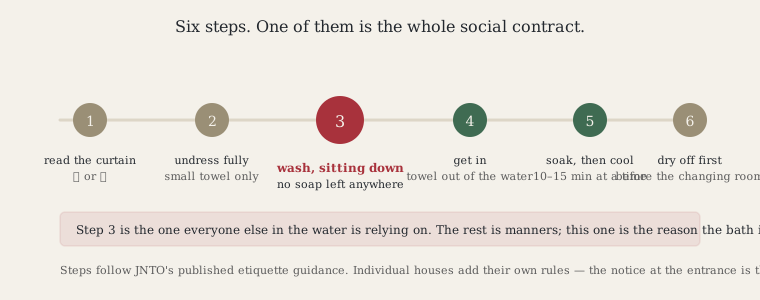
1. Read the curtain before you walk through it
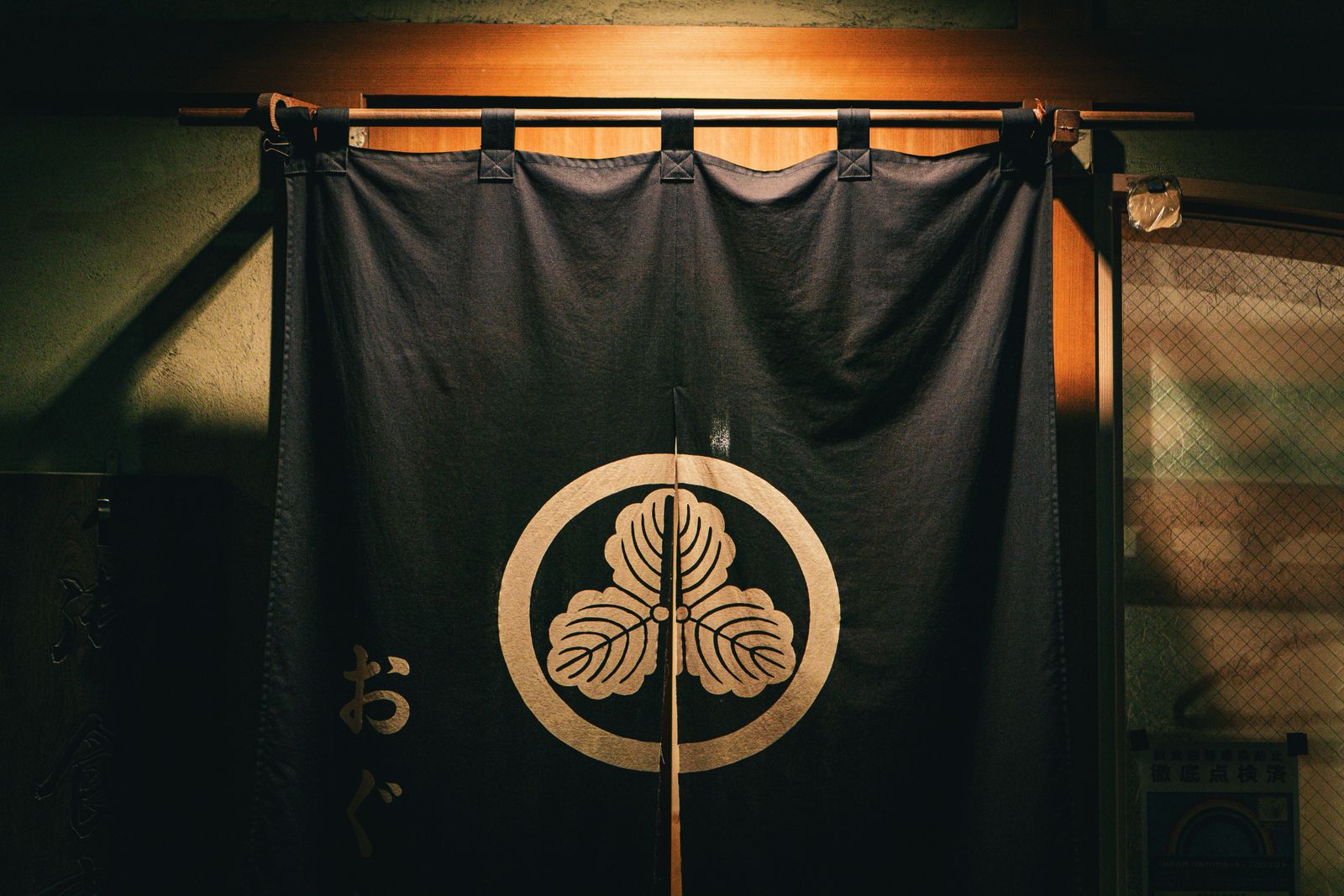
The bathing areas are separated by gender, and the split curtain at the entrance is how you tell them apart. Color is the usual shorthand — red for women, blue for men — but color is a convention, not a rule, and it does get swapped.
The characters are the reliable signal: 女 for women, 男 for men.
Worth knowing before you need it: at some houses the two baths swap over during the night, so the curtain you walked through in the evening may be the other one in the morning. Read it again. Every time.
2. Undress completely
All of it, in the changing room, into a basket or locker.
Swimsuits and underwear are not worn in the bath. This is not a modesty preference that varies by establishment — it is how the bath is used, and arriving in swim shorts is the one mistake that will get you stopped.
The exception proves the rule rather than softening it: a small number of mixed-gender baths ask you to wear a bathing garment, and where that is the case the notice at the entrance says so. If the notice does not say so, the answer is no.
The only thing that travels with you into the bathing room is the small towel.
3. Wash before you get in — and this is the one that matters
Between the changing room and the bath there is a row of low showers with stools. You sit down, and you wash.
Properly. JNTO’s own wording is to make sure there is no trace of soap left, and that is the standard: rinse until you are genuinely clean, not until you have performed cleanliness.
Here is why this one is different from the other five. The water is shared, and nobody drains and scrubs it between guests.
Japan does regulate it, and the regulation is worth knowing precisely rather than by rumor: under the health ministry’s bath-facility management guidance, a tub that recirculates its water has to be disinfected and held within a set free-chlorine range, while one that is emptied and refilled for each guest without recirculating is exempt from that requirement. So “onsen water is never treated” is a myth, and so is “it is chlorinated like a pool” — which of the two you are sitting in depends on the house.
What no version of that changes is the part that depends on you. Treatment does not undo a person who got in unwashed. That is why this is not etiquette in the sense of politeness. It is the arrangement itself.
Get the others slightly wrong and you look like a visitor. Get this one wrong and you have taken something from everyone else in the water.
JBJ'S TAKE
Wash longer than feels necessary.
If JbJ could put one line on the wall of every changing room, it would be this: spend longer washing than you think you need to.
The mistake worth guarding against is not carelessness, it is a transferred habit: treating this as a rinse before a swim, because a shower before a pool is a formality in most of the world. Here it is the thing that makes the bath work at all.
Two minutes of proper washing costs you nothing and settles the only question anyone in that room might have about you.
Everything else on this page you can get slightly wrong and be fine. Not this.
4. Get in, and keep the towel out of the water
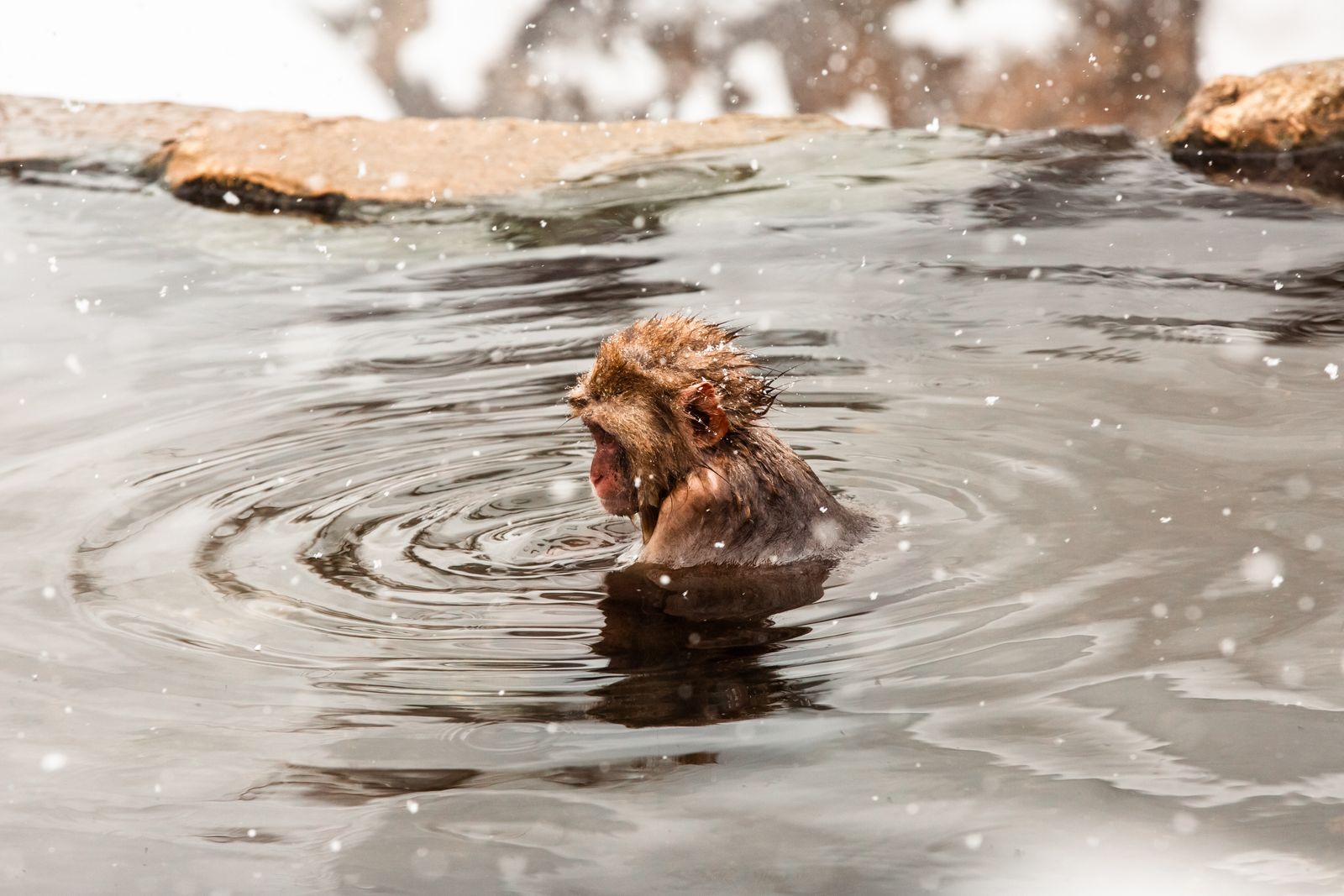
The small towel does not go in the bath. Fold it and rest it on your head, or leave it on the rim — both are normal, and the head is not a joke.
Then get in slowly. The water is usually hotter than it looks.
5. Soak, cool down, repeat
Ten to fifteen minutes is a sensible first stretch. Get out, cool off, drink something, and go back in if you want to.
Hot water plus dehydration is the actual risk here, not embarrassment. Drink water before you start. And if you have been drinking alcohol, skip the bath — the combination is genuinely dangerous, not merely frowned upon.
6. Dry off before you go back in
Wipe yourself down with the small towel — the one that has been on your head — before stepping back into the changing room. The floor there stays dry because everyone does this.
Your big towel is waiting where you left it.
The rule that is not etiquette
No phones in the bathing area. Not for photos, not for music, not to check the time.
Two separate things sit behind that, and they are worth keeping apart.
The rule you follow is the house’s: bathing areas are no-phone areas. It is posted, it is not negotiable, and it applies whether or not anyone else is in the room. Leave the phone in the locker with everything else and there is nothing further to think about.
The law underneath it is narrower than the rule and much heavier. It is not about cameras in general — it is about photographing a person. Since 13 July 2023 Japan has had a national offense covering the non-consensual photographing of someone’s private areas or of a person undressed, carrying up to three years’ imprisonment or a fine of up to ¥3 million; before that, prefectural nuisance ordinances covered the same ground unevenly. A bathing area is precisely the setting that law was written for.
You are not going to run into that by following the house rule. The reason to state it plainly is that “I was only photographing the view” is a much worse position to be in than most visitors assume.
That is also why there are no photographs of a bathing area on this page.
Tattoos: the honest answer
The honest answer is that it depends, and that the situation is changing but has not changed.
JNTO’s own guidance is direct: the majority of onsen in Japan prohibit tattooed guests from entering, while noting some have relaxed and advising visitors to ask in advance. That is still the state of play — not a myth, not universally enforced.
What actually works:
- Ask before you book. A phone call or an email settles it. Turning up and hoping is how the evening goes wrong.
- Look for the ones that say so. A growing number of houses advertise themselves as tattoo-friendly, and they mean it.
- A private bath removes the question entirely. Many ryokan have kashikiri — a bath you reserve for your group — and some rooms have their own. This is the reliable route, and it is the one JbJ would take rather than gamble.
- Covering a small tattoo with a patch is accepted at some places and not others. It is not a universal workaround.
JBJ'S TAKE
Don't test it on the night.
The tattoo rule is the one place where guides most often tell foreign readers what they want to hear — that attitudes are softening, that nobody really checks any more.
Attitudes are softening. Plenty of places still check.
JbJ's position is not to argue about whether the rule should exist. It is that a first onsen is a bad night to find out. Book a private bath, or ask before you pay, and the question never becomes a scene at a reception desk in a language you don't speak.
That is not caution about tattoos. It is caution about being turned away at the one thing you were looking forward to.
What people worry about, and shouldn’t
Nobody is looking at you. This is the fear that stops most first-timers, and it does not survive five minutes in the room. Everyone is doing their own thing.
You do not need to be silent. Quiet conversation is normal. It is a bath, not a library.
You will not be tested on the vocabulary. Wash, get in, keep the towel dry. That is the whole examination.
Before you go
One last thing that outranks everything above: the notice at the entrance is the rule that governs. Individual houses add their own — on tattoos, on children, on opening hours for day visitors, on whether the baths swap overnight. Where a house’s notice and a guide disagree, the house wins.
Planning the trip around it? When to visit Japan covers the seasons — and deep winter is when an onsen earns its reputation. If the rest of the trip isn’t settled, start here.
FAQ
Do I really have to be naked?
Yes. Swimsuits and underwear are not worn in the bath, and this is consistent across establishments. If it is a dealbreaker, book a private bath instead — that is a normal thing to do, not a workaround.
What do I do with the small towel?
Everything except put it in the water. Wash with it, carry it, rest it on your head or the rim while you soak, and dry off with it before returning to the changing room.
How long should I stay in?
Ten to fifteen minutes, then cool down. Go back in if you want. Drink water first, and don’t bathe after drinking alcohol.
Can I go to an onsen with tattoos?
Sometimes. JNTO states that most onsen prohibit tattooed guests, though some have relaxed. Ask before you book, look for houses that advertise as tattoo-friendly, or reserve a private bath — the last one settles it completely.
Can I take my phone in for photos?
No. The house rule is simply that bathing areas are no-phone areas, and that is the one you have to follow. Separately, photographing a person undressed without their consent is a criminal offense in Japan under a national law in force since July 2023 — that is about photographing people, not about cameras as such, and it is a far heavier matter than a breach of manners. The phone stays in the locker.