Nagasaki · Things to do
Things to Do in Nagasaki: 19 Places with Hours, Prices and Access
19 things to do · checked October 20, 2026
19 things to do in Nagasaki, from the peace sites outward
Hours, prices and access checked against each place's own page on October 20, 2026. They change; check before you go.
1Nagasaki Peace Park平和公園
Memorial park · Urakami
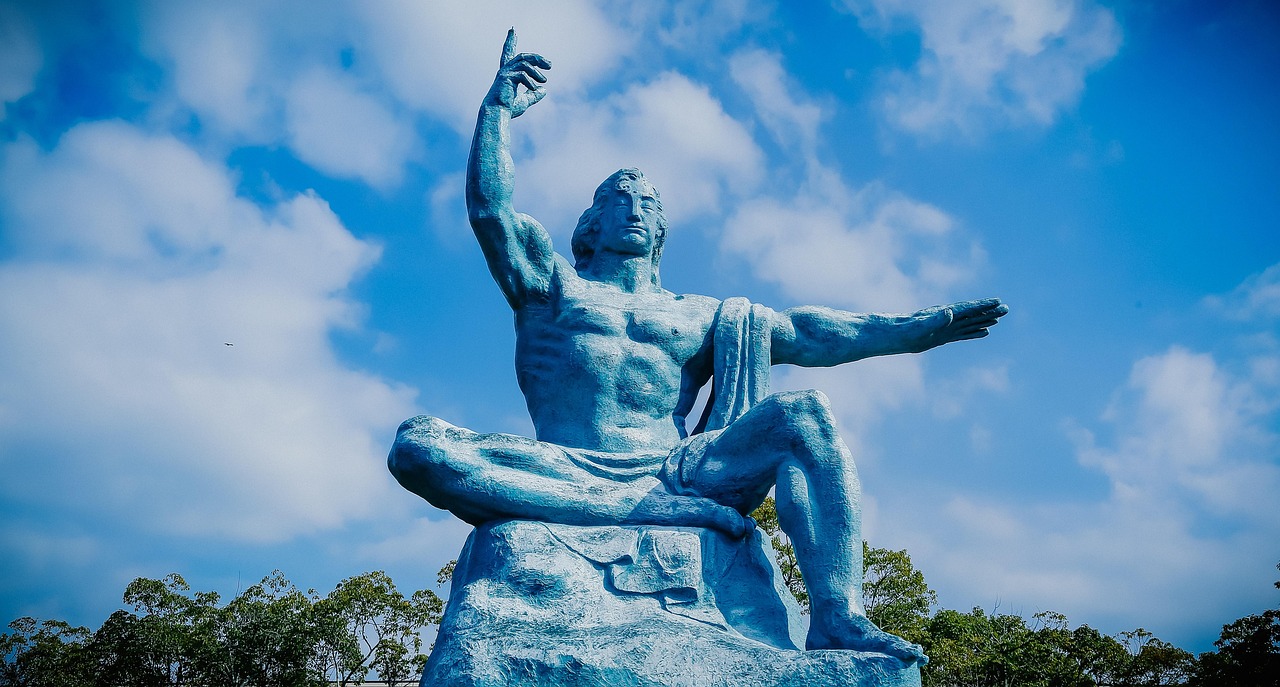
A park on the rise north of the hypocenter, built to commemorate the atomic bombing and to pray for peace. The Peace Statue stands here, and the Fountain of Peace sits in front of it, completed in 1969 for those who died calling for water.
- Access
- Tram (lines 1 and 3, toward Akasako) from Nagasaki Ekimae to Heiwa-koen, about 15 minutes, then about 3 minutes on foot. Buses 1 and 2 from Nagasaki Ekimae take about 8 minutes to Heiwa-koen stop, 3 minutes on foot.
2Atomic Bomb Hypocenter Park平和公園(原爆落下中心地)
Memorial park · Urakami
The site above which the bomb exploded at 11:02 on 9 August 1945, about 500 m over Matsuyama-machi. A black granite marker stands at the hypocenter, and the ground layer from that day is preserved with roof tiles, bricks and melted glass still buried in it. A section of the ruined south wall of the old Urakami Cathedral was moved here.
- Access
- Tram (lines 1 and 3, toward Akasako) from Nagasaki Ekimae to Heiwa-koen, about 15 minutes, then about 1 minute on foot. Buses 1 and 2 take about 8 minutes to Heiwa-koen stop, 1 minute on foot.
3Nagasaki Atomic Bomb Museum長崎原爆資料館
Museum · Urakami
A museum opened in 1996 with a story-led exhibition on the bombing, how it came about, the history of nuclear weapons and the wish for peace. Exhibit labels are in Japanese, English, Chinese and Korean, and the permanent exhibition is a single low fee.
- Access
- Tram (toward Akasako) from JR Nagasaki Station to Genbaku Shiryokan stop, about 5 minutes on foot. Bus to Hamaguchi-machi or Heiwa-koen stop, about 5 minutes on foot.
- Hours
- 8:30–17:30, last entry 17:00 (April and September to March); 8:30–18:30, last entry 18:00 (May to August); 8:30–20:00, last entry 19:30 (7–9 August)
- Closed on
- 29–31 December
- Price
- Permanent exhibition ¥200 (the group rate was abolished from 1 April 2026)
4Urakami Cathedral浦上教会(浦上天主堂)
Cathedral · Urakami
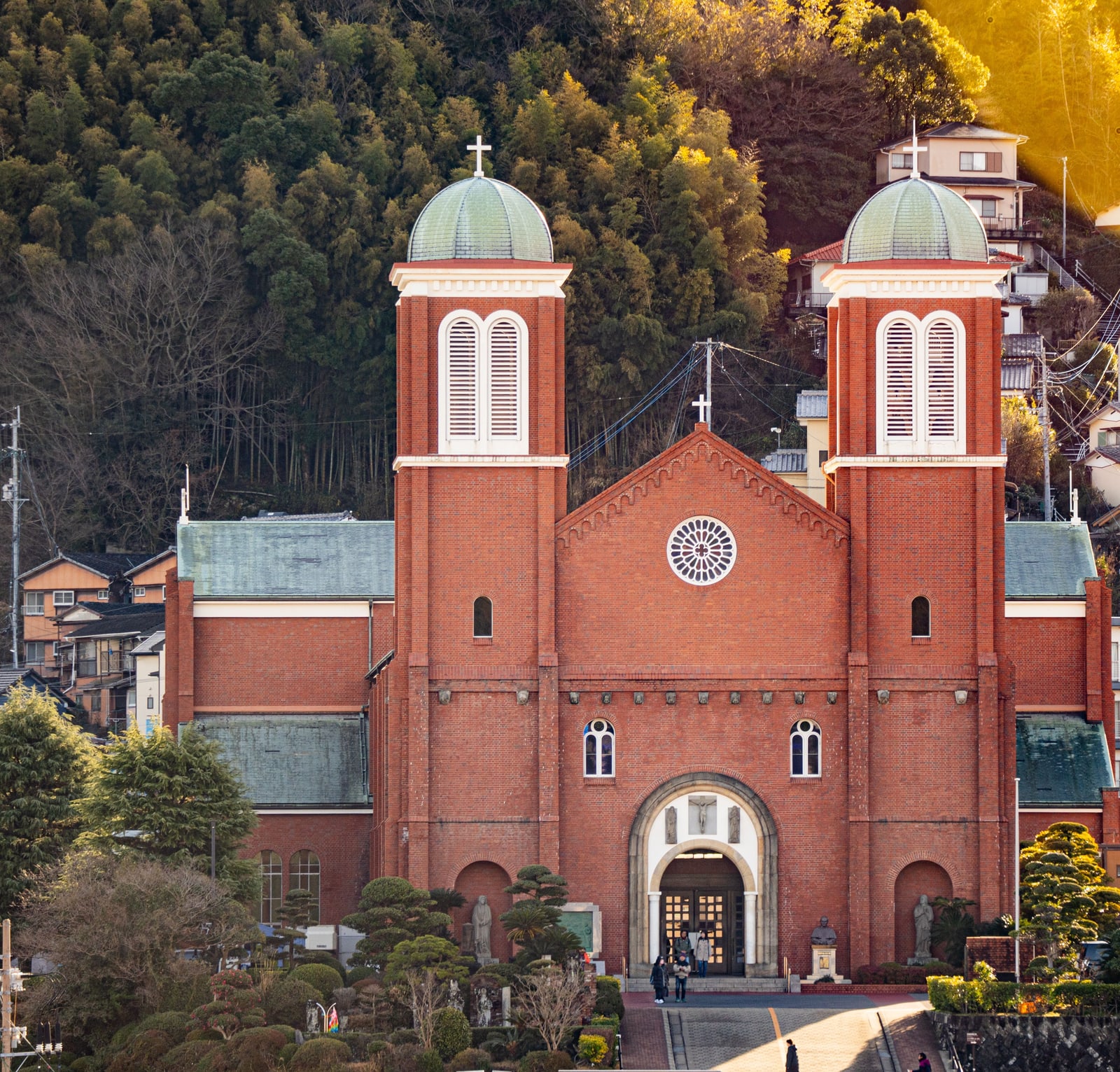
The Catholic church of the Urakami district, rebuilt after the original twin-tower brick cathedral was destroyed in the bombing. Visitors can look inside from 9:00 to 17:00; there is no admission fee and a donation box is provided.
- Access
- Tram (toward Akasako) from Nagasaki Ekimae to Heiwa-koen, about 13 minutes, then about 8 minutes on foot. Bus 8 from Nagasaki Ekimae to Urakami Tenshudo-mae, 11 minutes, then 3 minutes on foot.
- Hours
- Viewing 9:00–17:00
- Price
- No admission fee (a donation box is provided)
5Nishizaka Park (Site of the Martyrdom of the 26 Saints)日本二十六聖人殉教地(西坂公園)
Historic site · Nagasaki Station
The hill where 6 Franciscan missionaries and 20 Japanese believers were executed on 5 February 1597. The Vatican designated it an official pilgrimage site in 1950, and the prefecture designated it a historic site in 1956. A relief of the saints and a memorial museum stand on it.
- Access
- About 6 minutes on foot from JR Nagasaki Station, up the slope beside the NHK Nagasaki station building.
6Dejima出島
Historic site and museum · Dejima
The fan-shaped trading post where the Dutch traded with Japan from 1641. The restored area aims to show Dejima as it looked in the early 19th century, with 16 restored buildings, plus Meiji-period Western-style buildings. It is open every day, and a restaurant in the former Nagasaki International Club serves toruko rice.
- Access
- Tram toward Sofukuji from Nagasaki Ekimae to Dejima or Shinchi Chinatown stop, about 6 minutes from JR Nagasaki Station; about 1 minute from the Dejima Tallway exit. Bus 17 or 27 from Nagasaki Station South to Dejima stop, about 1 minute on foot.
- Hours
- 8:00–21:00 (entrance closes 20:40)
- Closed on
- Open all year (some facilities may be unavailable for maintenance)
- Price
- Adults ¥1,100; elementary, junior high and senior high students ¥550; no group discounts; no re-entry
7Nagasaki Shinchi Chinatown長崎新地中華街
Chinatown · Shinchi
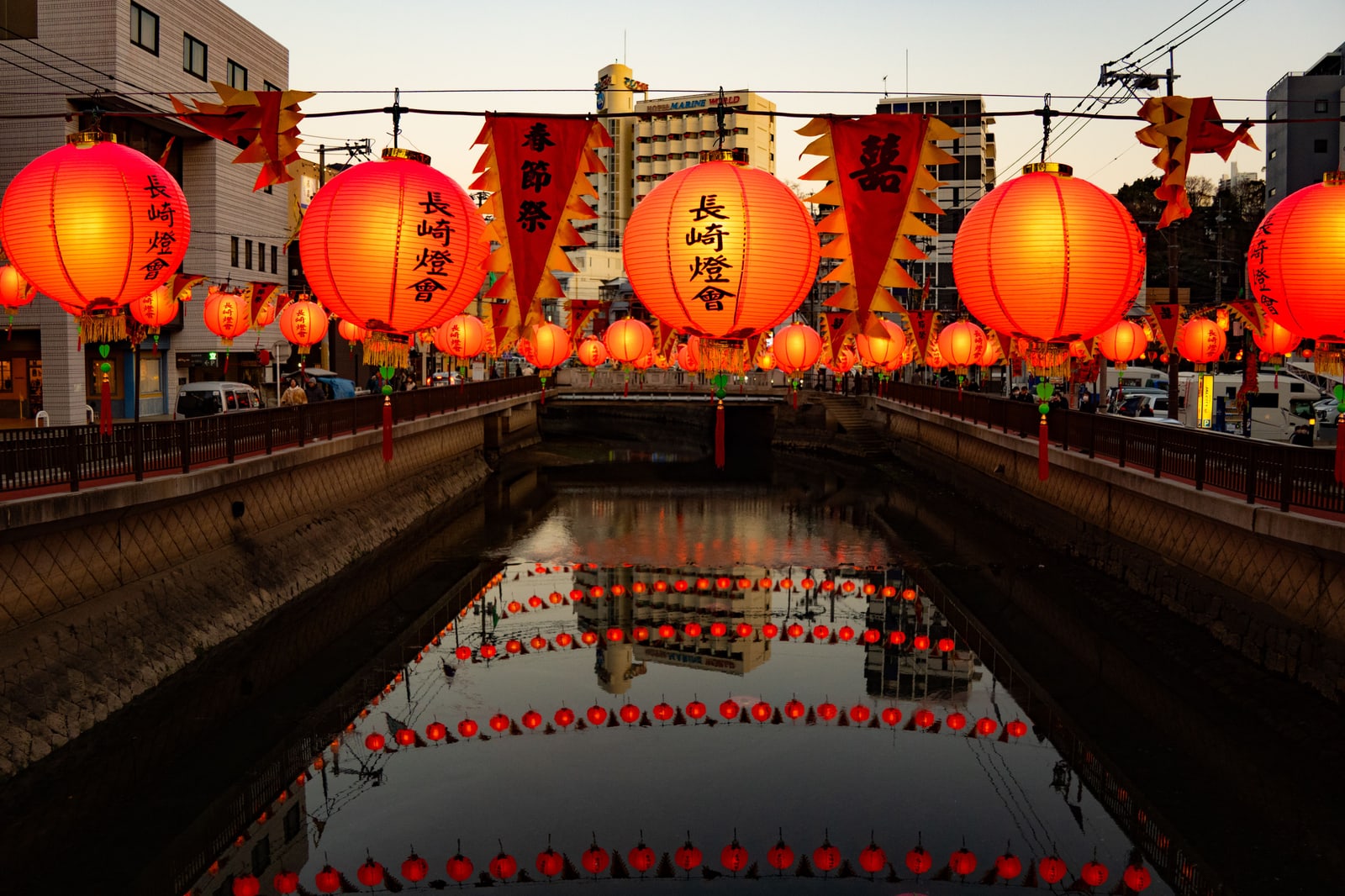
A Chinatown of about 40 restaurants, sweets shops and Chinese goods stores on the site where Chinese ships once unloaded cargo. It is the centre of the winter Lantern Festival, which grew out of the Chinese community’s Spring Festival celebration. The 2027 festival is planned for 5–21 February, as announced by the city tourism site.
- Access
- Tram toward Sofukuji from Nagasaki Ekimae to Shinchi Chinatown, about 7 minutes, then about 1 minute on foot. Bus 17, 30 or 35 from Nagasaki Station South, about 7 minutes.
8Nagasaki Confucius Shrine and Historical Museum of China長崎孔子廟 中国歴代博物館
Shrine and museum · Oura
A Chinese-style mausoleum built in 1893 by the Qing government and overseas Chinese, said to be the only full Chinese-style one in Japan. The Taisei Hall holds the largest seated statue of Confucius in Japan, and the grounds have stone statues of 72 sages.
- Access
- Tram toward Sofukuji from Nagasaki Ekimae to Shinchi Chinatown, about 7 minutes, change to the Ishibashi line for about 4 minutes, then about 3 minutes on foot from Ishibashi. Bus from Nagasaki Station South to Glover-en, about 10 minutes, then about 5 minutes on foot.
- Hours
- 9:30–18:00 (last entry 17:30)
- Closed on
- Open all year (exhibits may change or close for special reasons)
- Price
- Adults ¥880; high school ¥550; elementary and junior high ¥440
9Glover Gardenグラバー園
Historic houses and garden · Minami-Yamate
A hillside garden built around the former Glover House, with nine historic buildings from the Meiji period moved and restored there, set on a slope above the harbour. A free inclined elevator, the Glover Skyroad, runs from near Ishibashi tram stop from 6:00 to 23:30.
- Access
- Tram toward Sofukuji from Nagasaki Ekimae to Shinchi Chinatown, about 7 minutes, change to the Ishibashi line to Oura Cathedral stop (about 4 minutes), then about 7 minutes on foot. The Glover Skyroad boarding point is about 3 minutes from Ishibashi stop.
- Hours
- 8:00–20:00, last entry 19:40, until 31 December 2026; 8:00–21:30, last entry 21:10, on 23, 24, 30 and 31 October; 8:00–18:00, last entry 17:40, from 1 January to 31 March 2027
- Price
- Adults ¥1,300; elementary, junior high and high school ¥650 (fees revised from 1 April 2026); the second gate does not take cards
10Oura Cathedral大浦天主堂
Cathedral · Minami-Yamate
A National Treasure and a World Heritage component, with a Christian museum on the same ticket. Admission hours change at the start of November. The cathedral may close on church feast days.
- Access
- Tram toward Sofukuji from Nagasaki Ekimae to Shinchi Chinatown, about 7 minutes, change to the Ishibashi line to Oura Cathedral stop (about 4 minutes), then about 5 minutes on foot.
- Hours
- 8:30–18:00 from March to October; 8:30–17:30 from November to February (last admission 30 minutes before closing)
- Closed on
- May close because of church events
- Price
- Adults ¥1,000; secondary school students ¥400; elementary school students ¥300 (group rates are lower)
11Dutch Slope (Oranda-zaka)オランダ坂
Stone-paved slope · Higashi-Yamate
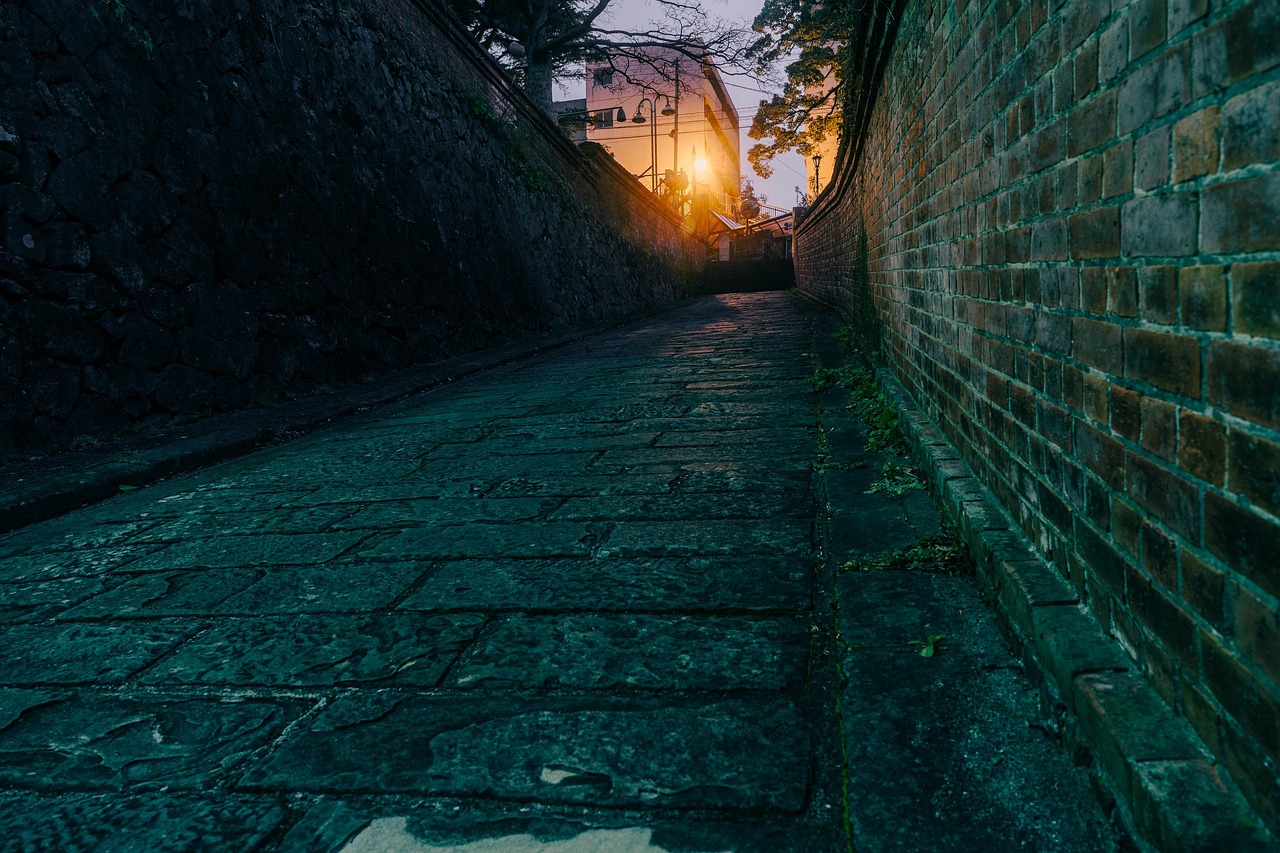
A stone-paved slope in the Higashi-Yamate district of the former foreign settlement, lined with Western-style houses. After Japan opened, Westerners were still called “Oranda-san”, and so every slope in the settlement came to be called Oranda-zaka.
- Access
- Tram toward Sofukuji from Nagasaki Ekimae to Shinchi Chinatown, about 7 minutes, change to the Ishibashi line to Medical Center stop (about 2 minutes), then about 4 minutes on foot.
12Megane Bridge (Spectacles Bridge)眼鏡橋
Stone arch bridge · Nakashima River
A stone arch bridge said to have been built in 1634 by the monk Mokushi Nyojo of Kofukuji, named for the double circle it makes with its reflection. It is an Important Cultural Property. Part of it collapsed in the 1982 Nagasaki flood and was restored the following year.
- Access
- Tram toward Hotarujaya from Nagasaki Ekimae to Shiyakusho (City Hall), about 4 minutes, then about 4 minutes on foot. Bus 26 or 60 from the east exit bus stop to Megane-bashi stop, about 6 minutes, 3 minutes on foot.
13Hamanomachi Arcade浜町アーケード
Shopping arcade · Hamanomachi
Nagasaki’s main shopping and entertainment district, nicknamed Hamanmachi Shotengai. Nagasaki’s city tourism site notes it is one of only two arcade national roads in Japan. Nakadori shopping street runs north-east from it, and Tsukimachi Nagasaki Yokocho is about 2 minutes from the Hamanomachi Arcade tram stop.
- Access
- Hamanomachi Arcade tram stop (Tsukimachi Nagasaki Yokocho is about 2 minutes on foot from it).
14Sofukuji崇福寺
Zen temple · Teramachi
A temple founded in 1629 for Chinese from Fuzhou, with a main gate reminiscent of a Dragon Palace gate and the Daiichi-hōmon gate, a National Treasure. Its halls and altar fittings were made by Chinese craftsmen of the late Ming period. On the third Sunday of each month, admission is free for children in Nagasaki city.
- Access
- Tram toward Sofukuji from Nagasaki Ekimae to the terminus Sofukuji, about 13 minutes, then about 3 minutes on foot. Bus 50, 55 or 80 to Sofukuji-iriguchi, about 8 minutes, 3 minutes on foot.
- Hours
- 8:00–17:00 (the closing time can change for temple reasons)
- Closed on
- Open all year
- Price
- Adults ¥500; junior high and high school ¥400; elementary ¥300
15Kofukuji東明山 興福寺
Zen temple · Teramachi
Japan’s first Chinese temple and the birthplace of the Japanese Obaku sect, founded in 1620 by people from the Nanjing area. It is known for its vermilion gate on Teramachi street, and it has a Mazu hall.
- Access
- Tram toward Hotarujaya from Nagasaki Ekimae to Shiyakusho (City Hall), about 4 minutes, then about 5 minutes on foot. Bus from the east exit bus stop to Shiyakusho-kami, about 4 minutes, 9 minutes on foot.
- Hours
- 8:00–17:00
- Closed on
- Open all year
- Price
- Adults ¥500; junior high and high school ¥200; elementary ¥100 (revised 1 November 2025)
16Suwa Shrine鎮西大社 諏訪神社
Shinto shrine · Kamiya-nishiyama
The guardian shrine of Nagasaki, founded in 1625 and the home of the Nagasaki Kunchi autumn festival. Visiting the grounds is free, and there is a free multi-storey car park.
- Access
- Tram toward Hotarujaya from Nagasaki Ekimae to Suwa-jinja stop, about 6 minutes, then about 5 minutes on foot. Bus from the east exit bus stop to Rekishi Bunka Hakubutsukan, about 3 minutes, then 10 minutes on foot.
- Closed on
- Open all year
- Price
- Free to visit
17Mt Inasa observatory and ropeway稲佐山展望台・長崎ロープウェイ
Night view · Inasa
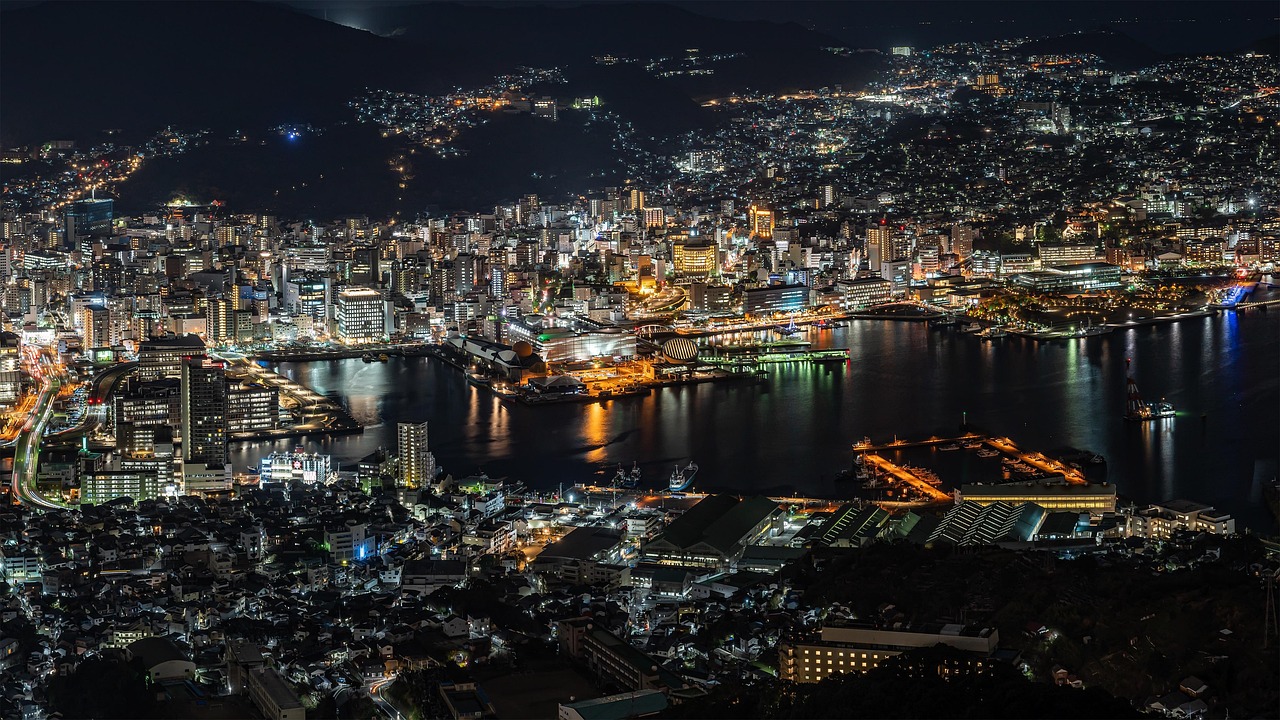
The 333 m peak above the harbour, reached by a 5-minute ropeway (1,090 m) from Fuchi Shrine station with 31-person cabins designed by KEN OKUYAMA DESIGN. The observatory has a 360-degree view, and its rooftop terrace is open 24 hours. In the evening a free shuttle runs from six pickup points in town.
- Access
- Bus 3 or 4 from Nagasaki Ekimae to Ropeway-mae stop, about 6–8 minutes, then about 2 minutes on foot to Fuchi Shrine station. A free evening shuttle runs from 19:00 (two trips up, four down) between the ropeway and Hotel Belleview Dejima, the Medical Center stop, ANA Crowne Plaza Gloverhill, Hotel New Nagasaki, JR Nagasaki Station and The Global View Nagasaki; the ropeway site has a reservation page for it.
- Hours
- Ropeway and observatory 9:00–22:00, last ropeway up 21:00 (the ropeway may stop in bad weather)
- Price
- Ropeway: round trip adults and junior/senior high ¥1,900, elementary ¥950; one way ¥1,040 and ¥520 (fares revised 1 April 2026)
18Gunkanjima (Hashima) landing cruises軍艦島(端島)上陸クルーズ
Boat tour · Nagasaki Port
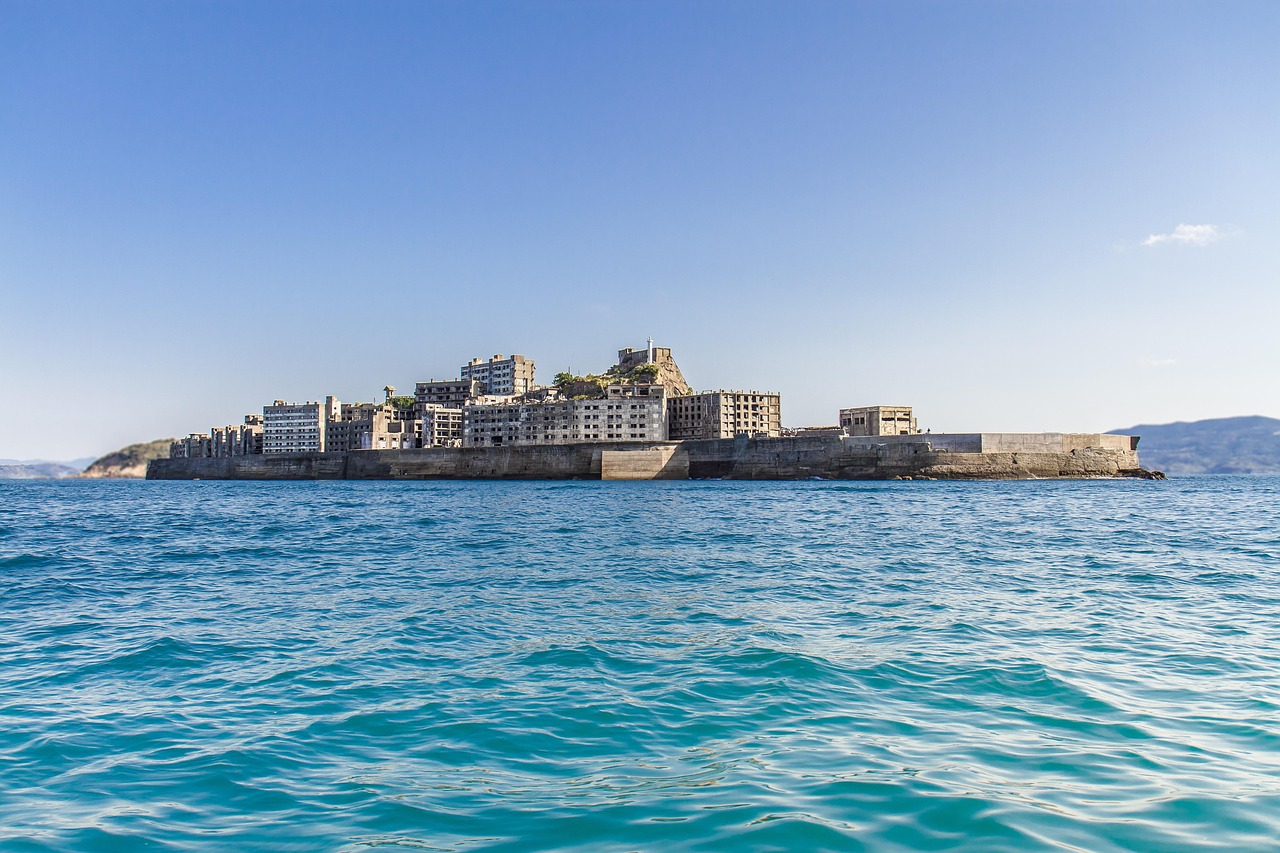
Landing on the World Heritage coal-mining island is possible only on a guided cruise by one of five approved operators, each with morning and afternoon departures. The boat takes about 40 minutes each way, and the visit includes a trip around the island by sea. Landing needs waves within 0.5 m and wind within 5 m/s.
Boat tour only, with morning and afternoon departures from each operator. Landing can be cancelled by the sea.
- Access
- Boat from Nagasaki Port. The five operators are Yamasa Kaiun, Gunkanjima Concierge, Takashima Kaijo Kotsu, Seaman Shokai and Dai-nana Ebisu Maru; each sets its own meeting place, so check the operator before booking.
- Hours
- Yamasa Kaiun: departures at 9:00 and 13:00 daily, about 2 hours 30 minutes from port to port
- Price
- Facility fee paid on top of the boat fare: ¥650 for ages 15 and over, ¥320 for children (boat fares are set by each operator)
19Huis Ten Boschハウステンボス
Theme park (day trip to Sasebo) · Sasebo
A resort and theme park in Sasebo built as a Dutch town, with attractions, shows and hotels. Ticket prices change by date and by passport type, and the ticket page lists a change to specific-day pricing from 1 May, so check the official ticket page for the day you go.
- Access
- JR Huis Ten Bosch Station, about 7 minutes on foot to the entrance building. From Nagasaki Airport about 60 minutes by bus or about 50 minutes by high-speed boat.
Good to know
Do Nagasaki in two tram clusters. The peace sites are one group about 15 minutes north of Nagasaki Station: Peace Park, Hypocenter Park, the Atomic Bomb Museum (¥200) and Urakami Cathedral. Dejima, Shinchi Chinatown, Confucius Shrine, Glover Garden and Oura Cathedral are the other, on the Sofukuji and Ishibashi lines, with Megane Bridge, Sofukuji, Kofukuji and Suwa Shrine on the Hotarujaya and Sofukuji lines.
For the evening, Mt Inasa’s ropeway and observatory run 9:00–22:00 (last ropeway up at 21:00). Dejima stays open to 21:00, and Glover Garden opens until 21:30 on 23, 24, 30 and 31 October, then until 20:00 through 31 December. Gunkanjima can be landed on only through one of five approved operators, and the landing depends on the sea: waves within 0.5 m and wind within 5 m/s. Huis Ten Bosch is a separate trip out to Sasebo.
Dates to plan around: the Atomic Bomb Museum is closed 29–31 December and opens until 20:00 on 7–9 August; Oura Cathedral closes at 17:30 from November to February; Glover Garden drops to 18:00 from 1 January to 31 March. The 2027 Nagasaki Lantern Festival is planned for 5–21 February, according to the city tourism site.
By area: how to get there, what it costs, how late it opens
Times are from Nagasaki Station. Adult prices; where a source gives no fee, none is printed.
| Where | Getting there | Entry (adult) | Opening hours |
|---|---|---|---|
| Peace Park, Hypocenter Park, Atomic Bomb Museum, Urakami Cathedral | Tram toward Akasako, about 13–15 minutes, then 1–8 minutes on foot (museum: Genbaku Shiryokan stop, about 5 minutes) | Museum ¥200 · Urakami Cathedral free (donation box) · park fee not stated | Museum 8:30–17:30 (to 18:30 May–Aug) · Urakami Cathedral 9:00–17:00 |
| Dejima and Shinchi Chinatown | Tram toward Sofukuji, about 6–7 minutes (Dejima stop or Shinchi Chinatown stop) | Dejima ¥1,100 · Chinatown not stated | Dejima 8:00–21:00 (entrance closes 20:40) · shops set their own hours |
| Confucius Shrine, Glover Garden, Oura Cathedral, Dutch Slope | Tram to Shinchi Chinatown (about 7 minutes), change to the Ishibashi line (2–4 minutes), then 3–7 minutes on foot | Confucius Shrine ¥880 · Glover Garden ¥1,300 · Oura Cathedral ¥1,000 | Confucius Shrine 9:30–18:00 · Glover Garden 8:00–20:00 (to 21:30 on some October evenings) · Oura Cathedral 8:30–18:00 (17:30 Nov–Feb) |
| Megane Bridge, Sofukuji, Kofukuji, Suwa Shrine, Hamanomachi Arcade | Tram toward Hotarujaya or Sofukuji, about 4–13 minutes | Sofukuji ¥500 · Kofukuji ¥500 · Suwa Shrine free · bridge and arcade not stated | Temples 8:00–17:00 |
| Mt Inasa ropeway and observatory | Bus 3 or 4 about 6–8 minutes, then 2 minutes on foot to Fuchi Shrine station | Ropeway round trip ¥1,900 | 9:00–22:00, last ropeway up 21:00 |
| Gunkanjima | Boat from Nagasaki Port, about 40 minutes each way | Landing facility fee ¥650 plus the operator’s boat fare | Yamasa Kaiun departs 9:00 and 13:00; each operator sets its own |
| Huis Ten Bosch (Sasebo) | JR Huis Ten Bosch Station, 7 minutes on foot to the entrance; airport bus about 60 minutes | Varies by date; see the official ticket page | Not confirmed on the sources |
By kind of trip
Peace and history, half a day
The four peace sites sit on one tram line. The Atomic Bomb Museum takes last entry at 17:00 (18:00 May to August), and its school-trip rush falls around noon and after 16:00 in May–June and September–November.
Nagasaki Peace Park · Atomic Bomb Hypocenter Park · Nagasaki Atomic Bomb Museum · Urakami Cathedral
After dark
Mt Inasa runs to 22:00 with a free evening shuttle from town, Dejima is open to 21:00, and Glover Garden opens until 21:30 on four October evenings.
Chinese Nagasaki
Shinchi Chinatown, Confucius Shrine, Sofukuji and Kofukuji trace the Chinese community in the city. Sofukuji admission is free for Nagasaki city children on the third Sunday of each month.
Nagasaki Shinchi Chinatown · Nagasaki Confucius Shrine and Historical Museum of China · Sofukuji · Kofukuji
Western houses and churches on the slopes
Glover Garden, Oura Cathedral and the Dutch Slope are within a few minutes of each other. Oura Cathedral’s hours change in November.
Glover Garden · Oura Cathedral · Dutch Slope (Oranda-zaka) · Urakami Cathedral
Free or low cost
Suwa Shrine is free to visit and Urakami Cathedral has no admission fee. The Atomic Bomb Museum’s permanent exhibition is ¥200.
Suwa Shrine · Urakami Cathedral · Nagasaki Atomic Bomb Museum · Megane Bridge (Spectacles Bridge)
Questions
How do I get around Nagasaki?
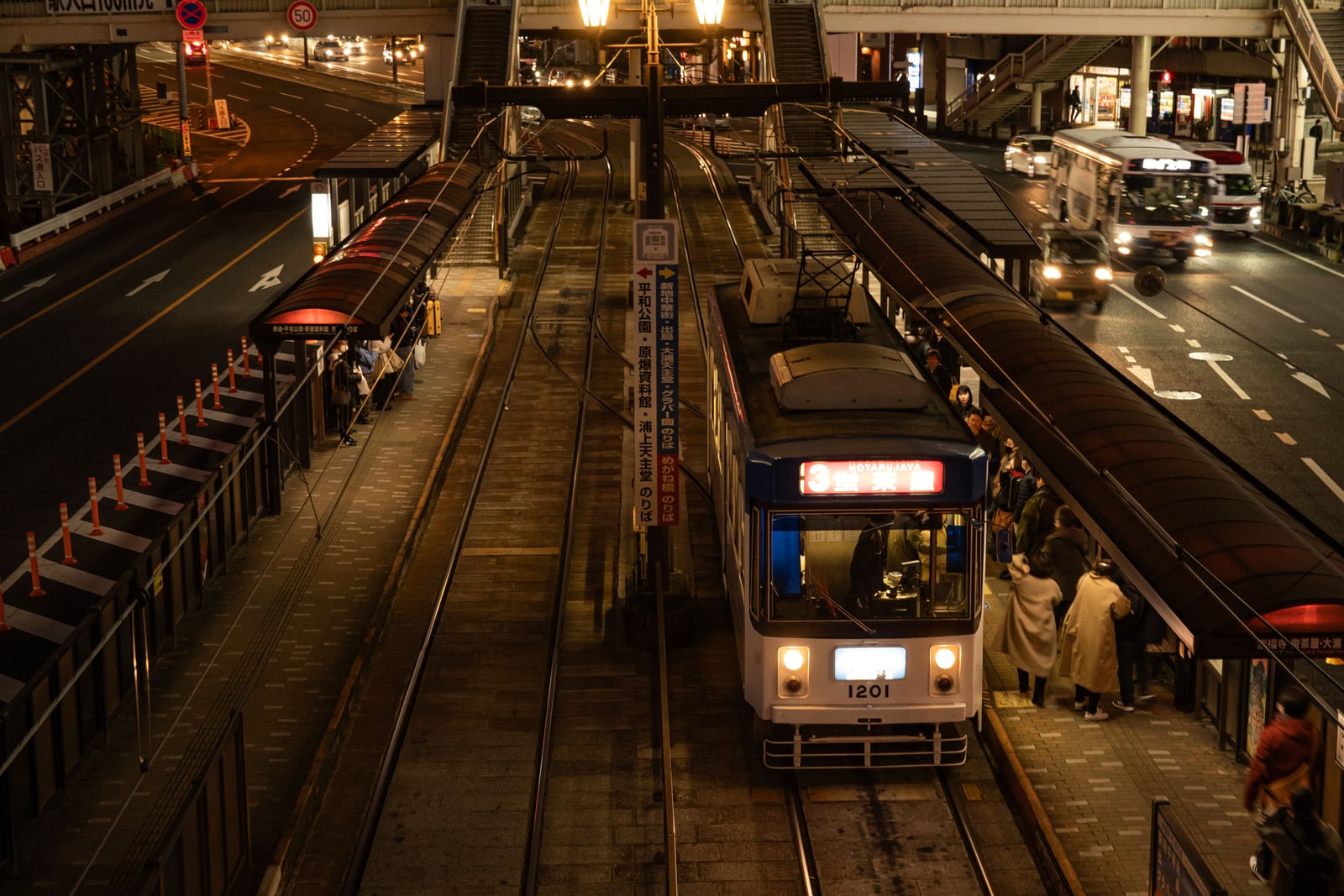
Most of the sights are on the city tram. From Nagasaki Ekimae, toward Akasako for the peace sites, toward Sofukuji for Dejima, Chinatown and the temples, toward Hotarujaya for Megane Bridge and Suwa Shrine, and change at Shinchi Chinatown to the Ishibashi line for Glover Garden and Oura Cathedral. Mt Inasa uses city bus 3 or 4 to the ropeway.
How do I visit Gunkanjima?
You must join a guided cruise by one of five approved operators: Yamasa Kaiun, Gunkanjima Concierge, Takashima Kaijo Kotsu, Seaman Shokai or Dai-nana Ebisu Maru. All need advance booking, and the crossing takes about 40 minutes. A landing fee of ¥650 (adults) is paid on top of the boat fare, and landing is only possible within wave and wind limits.
What is open late in Nagasaki?
The Mt Inasa ropeway and observatory run until 22:00, Dejima is open until 21:00 (entrance closes 20:40), and Glover Garden opens until 21:30 on 23, 24, 30 and 31 October 2026, and until 20:00 from 1 November to 31 December.
When is the Nagasaki Lantern Festival?
The city tourism site gave the 2027 dates as 5–21 February, planned, in a notice posted on 21 May 2026. The festival started as the Spring Festival of the Chinese community around Shinchi Chinatown.
How much is the Atomic Bomb Museum?
The permanent exhibition is ¥200. From 1 April 2026 the group rate was abolished and all general visitors pay the same. It is open 8:30–17:30 (to 18:30 from May to August) and closed 29–31 December.