You are holding an empty coffee can and you have been holding it for twenty minutes. Here is where it goes, in the order you will actually encounter them.
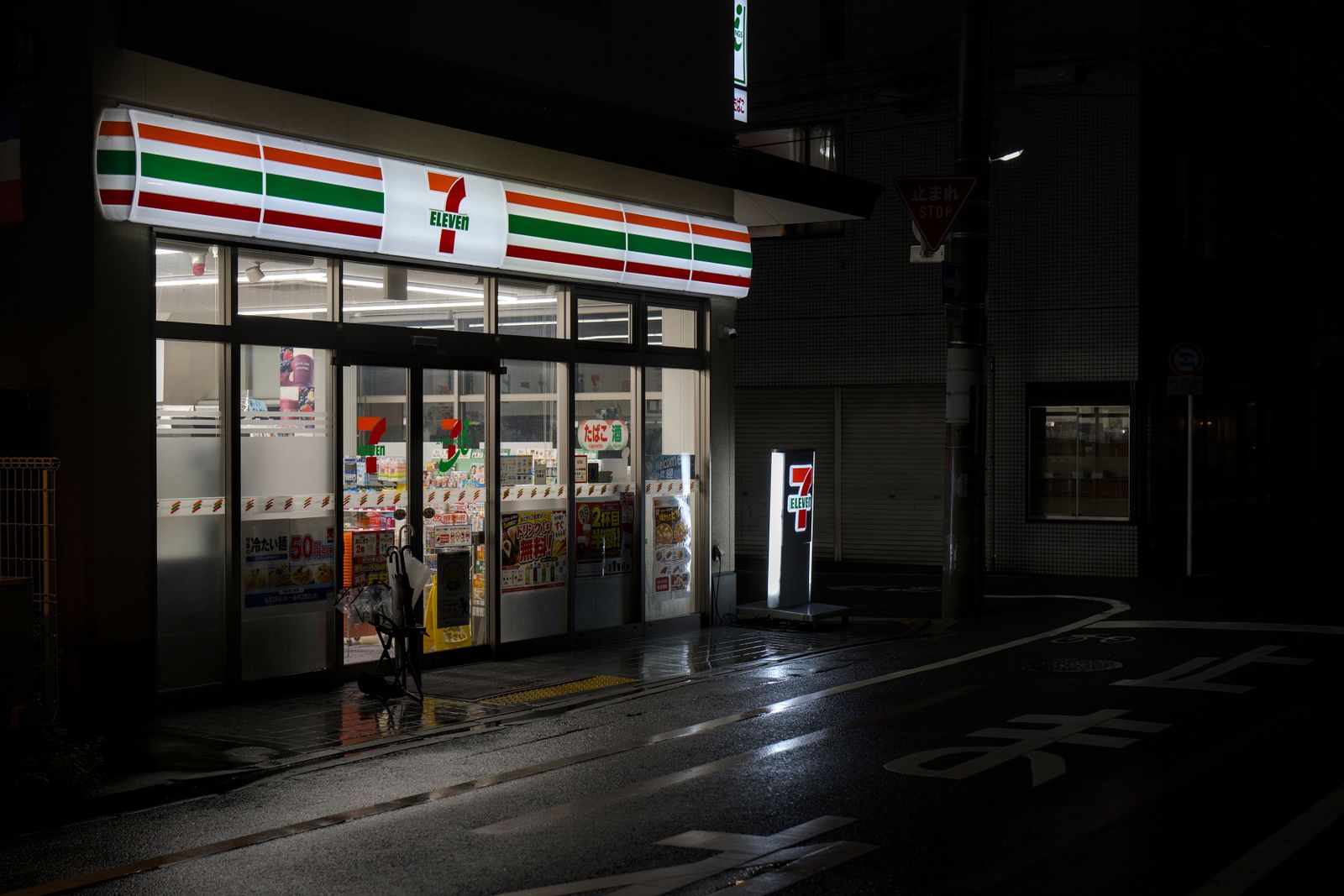
- A convenience store. Most have kept their bins — moved inside, near the counter, where staff can see them. This is the reliable answer.
- A JR station. JR East still installs separated bins at its stations and says so on its own environmental pages. The subways are the ones that removed theirs, and people generalize from the subway.
- Your hotel. The end-of-day answer for anything you have accumulated.
- The box beside a vending machine — for the drink container only. Not for the rest of it. More on this below, because it is the one people get wrong.
That is the practical answer. The rest of this page is about the explanation you have probably been given for the bins’ absence, which turns out to carry less of the weight than it is asked to.
The 1995 story, and what the record actually says
The claim is everywhere: bins vanished after the 1995 Tokyo subway sarin attack, and that is why there are none today.
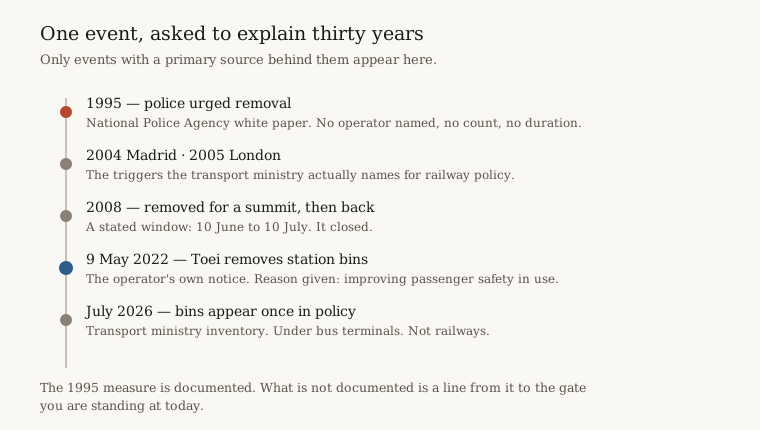
The first half of that is real. The second half is doing more work than the record supports. The National Police Agency’s white paper covering that year records that police convened liaison councils with railway and subway operators and underground-mall managers, and urged measures including the removal of vending machines and bins.
So something genuinely happened in 1995, and anyone who tells you otherwise is overcorrecting. The question is whether it explains the station you are standing in thirty-one years later.
Read what that source does and does not say. Police urged — they did not order. It does not name which operators complied. It gives no number of bins. And it states no duration, so nothing in it describes a permanent condition.
Now the part that actually settles it. Japan’s transport ministry publishes a current inventory of its principal counter-terrorism measures, stated as of July 2026. In that document bins are mentioned exactly once — under bus terminals. The railway section does not mention bins at all. And when the ministry lists what triggered Japanese railway counter-terrorism policy, it names September 2001, the March 2004 Madrid train bombings and the July 2005 London bombings.
It does not name 1995.
So the causal claim is not primary-sourced. No railway operator states the sarin attack as its reason for removing bins. Tokyo Metro’s own railway-terrorism page does not mention bins, and does not mention 1995.
That is a narrower finding than “1995 is a myth,” and we mean the narrower one. A 1995 measure is documented. What is not documented is the line from it to the empty gate in front of you.
The bins you are actually looking for went in 2022
Tokyo’s metropolitan transport bureau published a notice in April 2022: bins near the ticket gates at every Toei Subway station, plus two stations on the Nippori-Toneri Liner, removed effective 9 May 2022.
Look at the reason they gave. Not terrorism. Not 1995. Improving passenger safety in use.
Tokyo Metro is reported to have cleared its bins in January 2022, and that removal is not documented on Tokyo Metro’s own site. Its news index for that month carries seven releases and none concerns bins. So the date, the scope and the reason rest on contemporaneous news reporting.
JBJ'S TAKE
One event got handed a thirty-year job.
1995 is dramatic and memorable. A 2022 safety notice from a transport bureau is neither. So the big story absorbed the small one and kept the credit.
Believe the 1995 part. Just don't let it carry the whole explanation — that version tells a visitor the situation is settled history, when it changed four years ago and is still moving.
Practically: stop looking for a public bin and stop feeling bad about carrying things. Aim for a convenience store, use its bin when you buy something there, and empty your bag at the hotel each night. That is the whole system, and it is the one people who live here actually run.
Bins also come back, which the story cannot accommodate
The removals people describe as permanent are frequently windows with end dates.
Tokyo Metro removed station bins for the 2008 G8 summit at Toyako — from 10 June to 10 July 2008, stated in advance, with the lockers and drink machines suspended for shorter periods inside that. Osaka Monorail did the same at Osaka Airport Station for the G7 Hiroshima summit in May 2023, for three days.
Both of those windows closed. That is a different mechanism from permanent removal, and a story anchored on a single 1995 event has nowhere to put it.
The vending machine box is not a bin
This is the one that will actually cost you.
The Japan Soft Drink Association puts it on stickers, in as many words: it is not a trash bin, it is a recycling box. The association reports that roughly 30% of what it collects is foreign objects — things that are not drink containers.
So the box beside the machine takes the bottle or the can. Not the wrapper, not the tissue, not the coffee cup from somewhere else.
What is actually enforced, and what merely exists
These two get flattened together constantly, and they are not the same.
Street smoking is enforced, visibly and at scale. Chiyoda Ward in Tokyo has had its ordinance since 2002, charges ¥2,000, and publishes its enforcement counts: 8,862 charges in the last fiscal year, and 146,676 cumulatively by the end of March 2026, with Akihabara alone accounting for 46,747. Osaka City extended its street-smoking ban to the whole city in January 2025, ¥1,000, in public places the city manages. Kyoto charges ¥1,000 but only inside designated zones — city-wide it is a request, not a penalty.
Littering is a different case. It is prohibited, it appears in the same Chiyoda ordinance, and a penalty is provided for. But the published enforcement series is titled street smoking, and no enforcement figures for littering are published at all.
So: one of these is a rule with a documented history of being charged. The other is just a rule. Treat them accordingly — and when you see “Japan fines litterers” repeated online, notice that it never comes with a case attached.
We are also not printing a figure for the national waste law, and there is a specific reason. Japan abolished 懲役 and replaced it with a new custodial penalty in June 2025. Many still-live pages — including government ones — carry the old wording. A page that looks correctly sourced may simply be describing superseded law.
Nobody counts the bins
One more absence worth stating, because it is load-bearing for how you read everything else on this subject.
Not one Japanese authority publishes how many public bins exist. The environment ministry’s waste statistics measure volumes and treatment, not bins. Railway operators do not publish inventories. The transport ministry and the police agency hold no number either. Plan for the bin not being there — nobody can tell you whether it is.
Which means every “bins have fallen by X%” figure you meet is unsourced. Every single one.
And the separation rules are not a national system
If you are staying somewhere with household trash, the rules are set by the municipality, and they vary more than visitors expect.
Shinjuku runs four household streams with a set-out deadline of 8 a.m. at an assigned collection point. Kamikatsu in Tokushima runs 13 categories with 43 sub-separations, has no collection vehicles at all, and requires residents to drive their own waste to the town’s single station.
You will see Kamikatsu described as 45 categories. The town’s own portal says 43, from 2024. It is a small thing, and it is the same failure as the 1995 story in miniature: a number that got repeated past its expiry date.
JBJ'S TAKE
Carry a bag. But that is not the answer, it is the fallback.
Every guide ends by telling you to carry a bag, because a bag is what you suggest when you cannot say where the bins are.
JbJ would skip that advice and go straight to the three that work: buy something at a konbini and use its bin, check the JR station you are already passing through, and empty everything at the hotel at night. Take the bag for the gap between those three, not instead of them.
Before you go
Carry a small bag, and plan your day around convenience stores rather than around bins. That is the whole adjustment, and it takes about a day to become automatic.
Two things pair with this. The konbini guide covers what else that counter does for you, which is a great deal more than most visitors realize. And if this is your first trip, start here.
Checked September 2026. The 1995 measures come from the National Police Agency’s own white paper; the current counter-terrorism inventory and the policy triggers from the Ministry of Land, Infrastructure, Transport and Tourism; the 2022 removal from the Tokyo Metropolitan Bureau of Transportation’s own notice; the summit windows from Tokyo Metro’s and Osaka Monorail’s own releases; the recycling-box position from the Japan Soft Drink Association; the convenience-store bin position from that chain’s own published FAQ and covering that chain only; ordinance details and enforcement counts from Chiyoda Ward, Osaka City and Kyoto City. Tokyo Metro’s January 2022 removal rests on contemporaneous news reporting. Ordinance zones, penalty amounts and operator bin policies vary locally and change.