Yamaguchi
Yamaguchi: Places to Visit
Food · Things to do · Where to stay
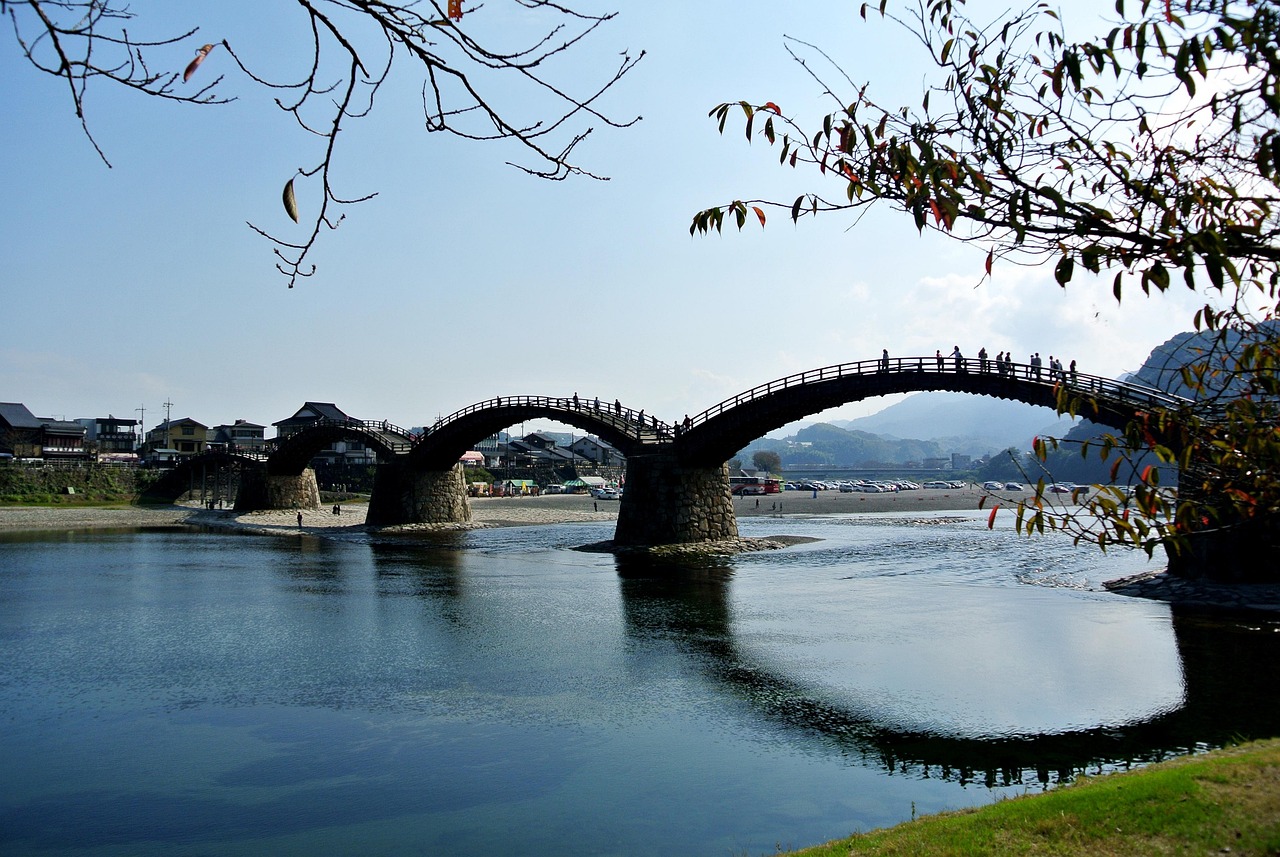
The places most visitors look for in Yamaguchi are Kintaikyo in Iwakuni, one of the best-known wooden bridges in Japan; the 123 red torii of Motonosumi Shrine in Nagato; the Akiyoshidai Plateau and Akiyoshido, the largest limestone cave in Japan; the castle town of Hagi; and the seafood of Shimonoseki.
The Sanyo Shinkansen between Osaka and Fukuoka stops at Shin-Yamaguchi and Shin-Shimonoseki. Iwakuni is close to Hiroshima: 16 minutes by Shinkansen to Shin-Iwakuni, or 50 minutes on the JR Sanyo Line to Iwakuni. Motonosumi Shrine has no bus from the nearest station; the Nagato tourism association gives about 20 minutes by taxi from JR Nagato-Furuichi.
Places in Yamaguchi
- Iwakuni (Kintaikyo) — Kintaikyo, a wooden bridge over the Nishiki River; Shin-Iwakuni is 16 minutes from Hiroshima by Shinkansen.
- Motonosumi Shrine (Nagato) — 123 red torii lined up for more than 100 m facing the sea; about 20 minutes by taxi from JR Nagato-Furuichi Station.
- Akiyoshidai and Akiyoshido — A limestone plateau and Akiyoshido, the largest limestone cave in Japan.
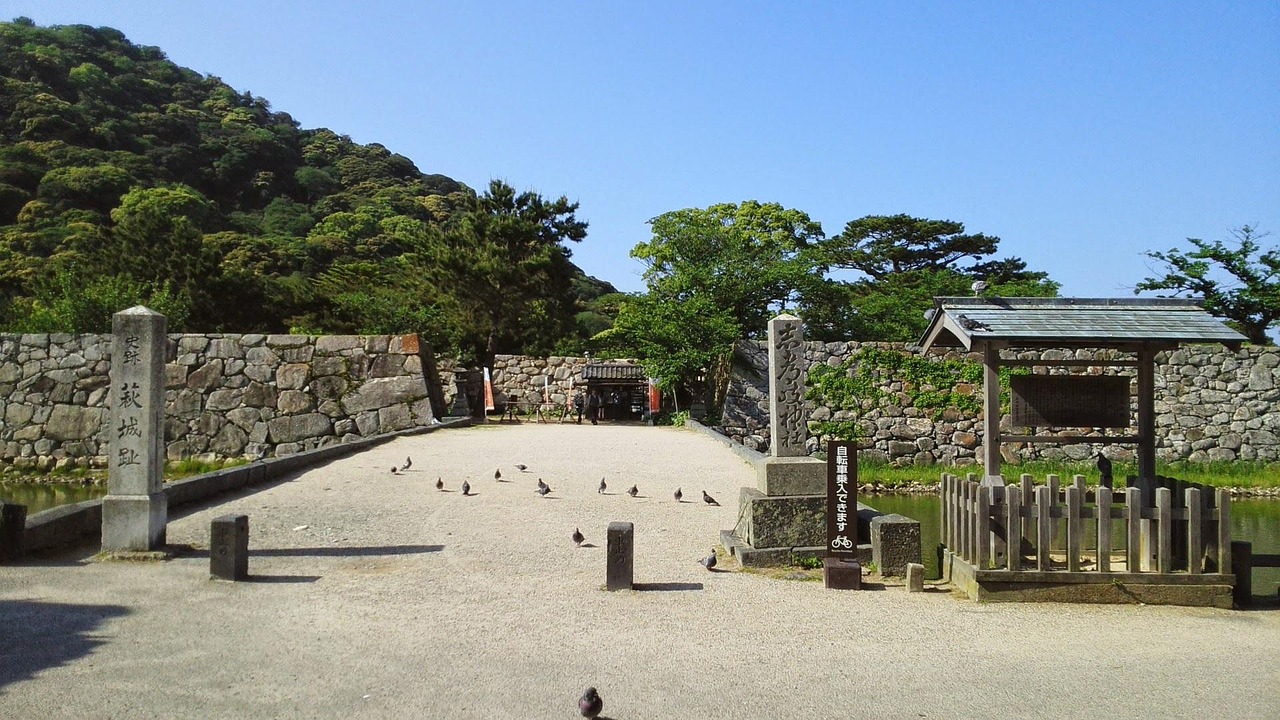
- Hagi — The capital of a major samurai domain, with a preserved castle town and Hagi ware pottery.
- Shimonoseki — Known for seafood, blowfish above all, and Karato Ichiba market; Shin-Shimonoseki is on the Sanyo Shinkansen.