Tottori · Things to do
Things to Do in Tottori: 15 Places with Hours, Prices and Access
15 things to do · checked October 23, 2026
15 things to do in Tottori, from east to west
Hours, prices and access checked against each place's own page on October 23, 2026. They change; check before you go.
1Tottori Sand Dunes鳥取砂丘
Sand dunes · Tottori City
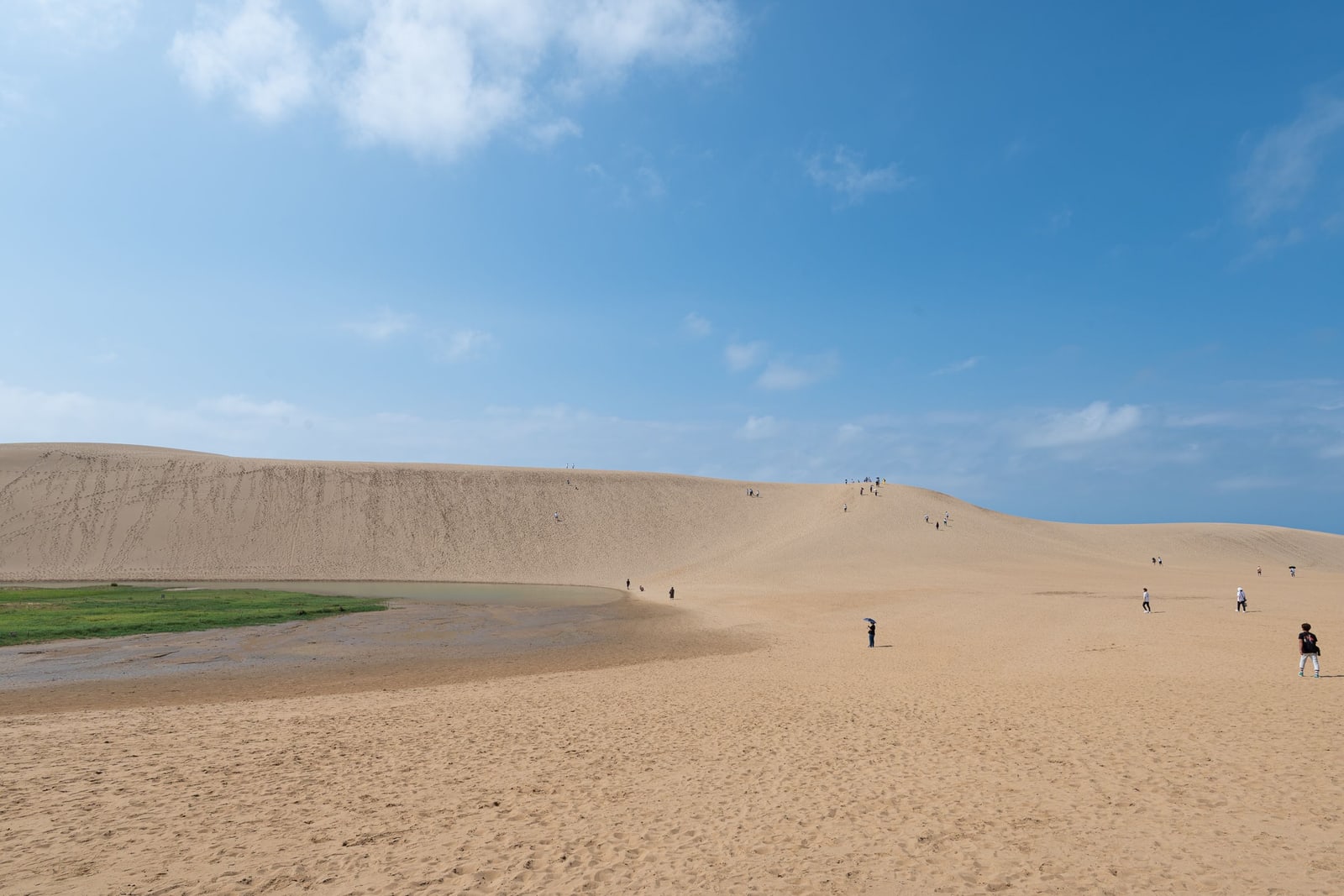
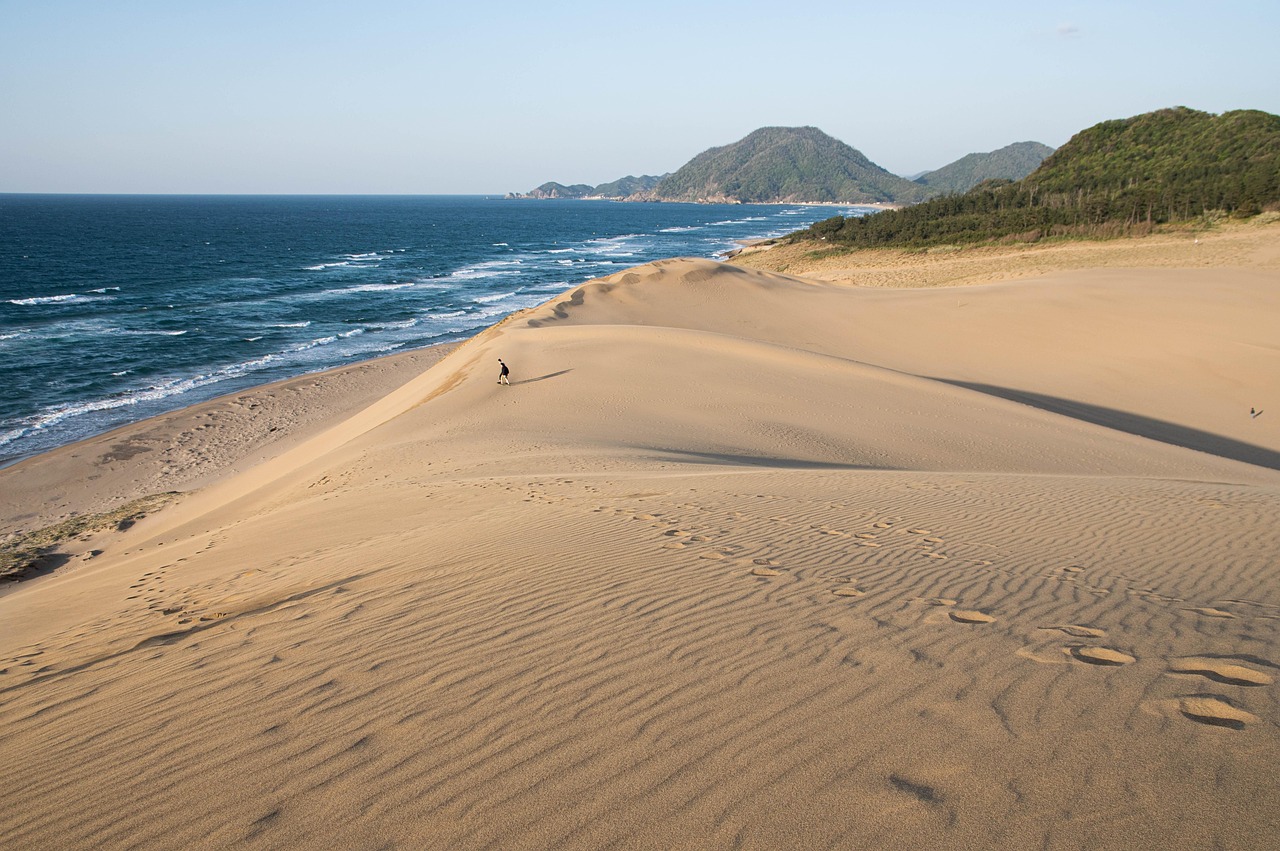
Sand dunes on the Sea of Japan coast, about 2.4 km north to south and 16 km east to west, inside the San'in Kaigan Geopark. Camel rides, sandboarding, paragliding and a lift from the Sand Dune Centre operate around them, and the Park Information Centre has a foot-washing area.
- Access
- Nihon Kotsu or Hinomaru buses bound for Tottori Sakyu leave from the JR Tottori Station bus terminal; the Sand Museum next to the dunes gives about 21 minutes to its stop. The Loop Kirin sightseeing bus also runs there on Saturdays, Sundays and holidays.
- Hours
- Tottori Sand Dunes Visitor Center 9:00–17:00
2Sand Museum砂の美術館
Museum of sand sculptures · Tottori Sand Dunes
Sculptures made only of sand, shown as one themed exhibition at a time. The 17th exhibition, "Travel Around the World in Sand: Spain", runs 24 April 2026 to 3 January 2027; the next theme announced is the Silk Road.
The Spain exhibition ends 3 January 2027; the museum closes between exhibitions.
- Access
- Route bus from the JR Tottori Station bus terminal, about 21 minutes on the Tottori Sakyu line to Suna no Bijutsukan-mae, then 1 minute on foot. Free parking.
- Hours
- 9:00–18:00 (last entry 17:30)
- Closed on
- Closed between exhibitions while the next one is built; the timing changes every year
- Price
- Adults ¥800; elementary to high school ¥400; preschool free
3Uradome Coast sightseeing boat浦富海岸 島めぐり遊覧船
Coast and sightseeing boat · Iwami Town
A rocky stretch of coast east of the dunes, seen from the water on the Island Tour boat, a trip of about 40 minutes. No reservation is needed; tickets are sold at least 10 minutes before each departure.
March to November only.
- Access
- Nihon Kotsu bus (Iwami–Iwai line) from Tottori Station, about 40 minutes to Shimameguri Yuransen Noriba-mae, 30 seconds on foot; about 15 minutes from JR Iwami Station. About 10 minutes by car from the dunes.
- Hours
- March–November, departures hourly 9:30–15:30; may not sail in bad weather
- Closed on
- December to February (outside the season)
- Price
- Adults ¥1,800; elementary age ¥900
4Hakuto Shrine白兎神社
Shinto shrine · Hakuto coast, Tottori City
The shrine of the hare in the myth of the White Hare of Inaba, recorded in the Kojiki. The shrine presents the story as the origin of medicine and as Japan's oldest love story.
- Access
- About 40 minutes by Hinomaru bus from JR Tottori Station to Hakuto Jinja-mae. About 20 minutes by car from Tottori IC; parking is shared with the Michi-no-Eki Shinwa no Sato Shirousagi.
- Hours
- Shrine office 9:00–16:00
5Jinpu-kaku and Horyuin Garden仁風閣・宝隆院庭園
Historic residence (closed) and garden · Tottori Castle ruins
A Western-style villa of the Ikeda family completed in 1907 to a design by Katayama Tokuma, at the foot of the Tottori Castle ruins. The building is closed for cultural-property repair work, with reopening planned within fiscal 2029; the Horyuin Garden stays open free, and an exhibition hall on the site introduces the castle ruins and Jinpu-kaku.
Building closed for repair; the garden is open and free.
- Access
- 2-121 Higashi-machi, Tottori City. Bus routes and times were not given on the pages read.
- Hours
- 9:00–17:00 (last entry 16:30)
- Closed on
- Mondays (next weekday if Monday is a holiday), the day after a public holiday, and the New Year period; the garden cannot be entered on closed days
- Price
- Horyuin Garden free; the Jinpu-kaku interior cannot be visited during the repair
6Kurayoshi white-walled storehouses倉吉白壁土蔵群
Historic townscape · Kurayoshi
White-plastered storehouses with red Sekishu roof tiles and charred cedar lower walls along the Tamagawa stream, many from the Edo and Meiji periods; the area is a national Important Preservation District for Groups of Traditional Buildings. Some storehouses and townhouses are now shops, cafes and workshops.
- Access
- Route buses (Nikko Bus, Hinomaru Bus) from the JR Kurayoshi Station bus terminal; about 1 hour by car from the Tottori or Yonago station areas. Tourist information inside Akagawara No. 10, 2568-1 Uomachi.
7Tottori Prefectural Museum of Art鳥取県立美術館
Art museum · Kurayoshi
The prefecture's art museum, in Kurayoshi. Entering the building is free; the collection exhibition and special exhibitions charge.
- Access
- About 10 minutes by bus from JR Kurayoshi Station to Kenritsu Bijutsukan-mae, right by the stop (or Kurayoshi Park Square Kitaguchi, 8 minutes on foot); about 9 minutes by taxi.
- Hours
- 9:00–17:00 (last entry 16:30)
- Closed on
- Mondays (next weekday if Monday is a holiday); 29 December–3 January
- Price
- Collection exhibition: adults ¥400; students and 70 and over ¥200; high school age and under free. Special exhibitions priced separately
8Misasa Onsen三朝温泉
Hot spring town · Misasa
A hot spring town whose water is among the highest in radon in the world. The town says the spring has been in use for more than 850 years and has public baths, footbaths and drinking fountains as well as inns that take day bathers.
- Access
- About 20 minutes by route bus from JR Kurayoshi Station.
9Mitokusan Sanbutsuji (Nageiredo)三徳山三佛寺(投入堂)
Mountain temple and climbing path · Misasa
A mountain temple whose Nageiredo hall sits in a cliff-face hollow; tree-ring dating puts it in the late Heian period (1086–1184). The way up is a training path over roots and rock, and every climber's clothes and shoes are checked before entry.
Climb in pairs or more. Mountain shoes without metal studs; no sticks or poles; preschool children cannot climb.
- Access
- About 40 minutes by bus from JR Kurayoshi Station (prefectural tourism site). 1010 Mitoku, Misasa Town.
- Hours
- Nageiredo climb reception 8:00–15:00; be back down by 16:30. The gate closes outside these hours
- Closed on
- No climbing when rain or snow makes the path dangerous; usually closed for snow from December to about March
- Price
- Nageiredo climb: adults ¥1,200; elementary and junior high ¥600 (includes the ¥400 / ¥200 entry, which covers the treasure hall)
10Mt. Daisen大山
Mountain · Daisen
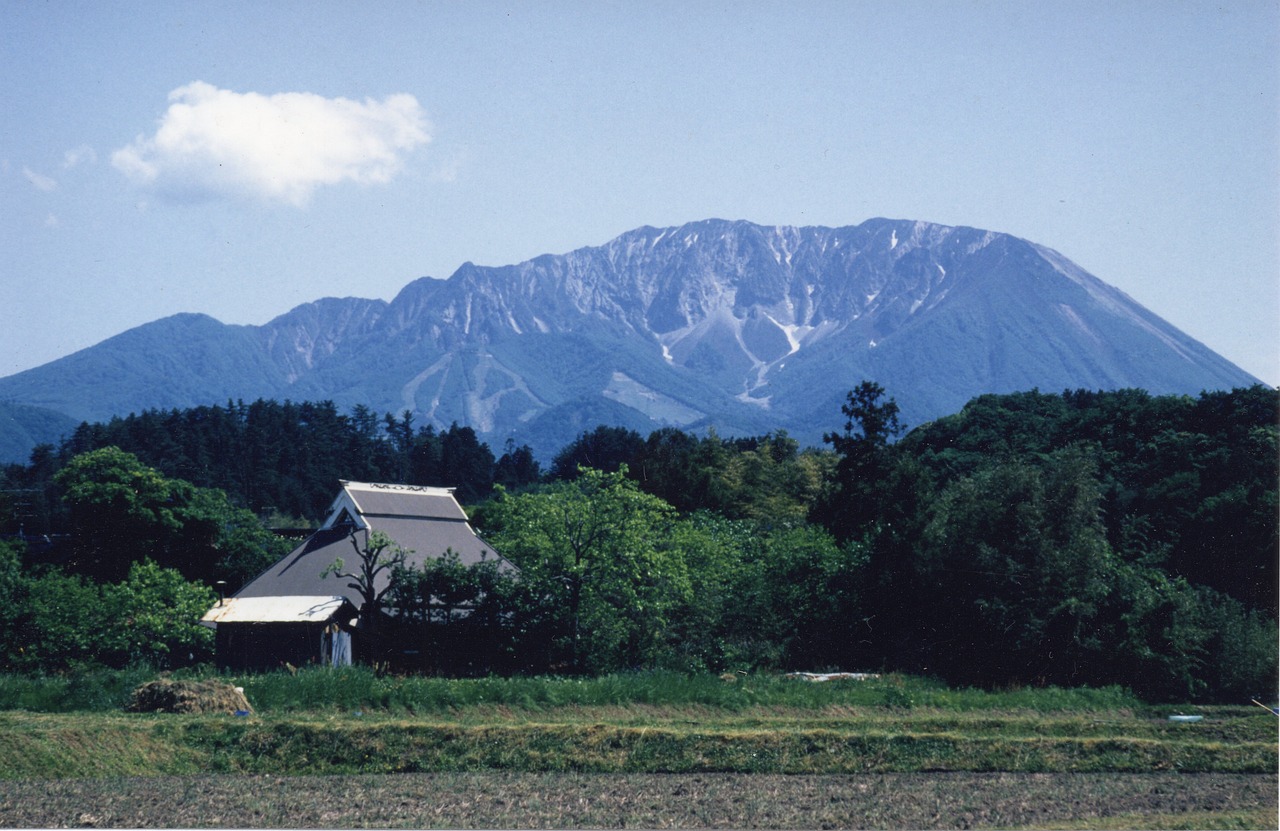
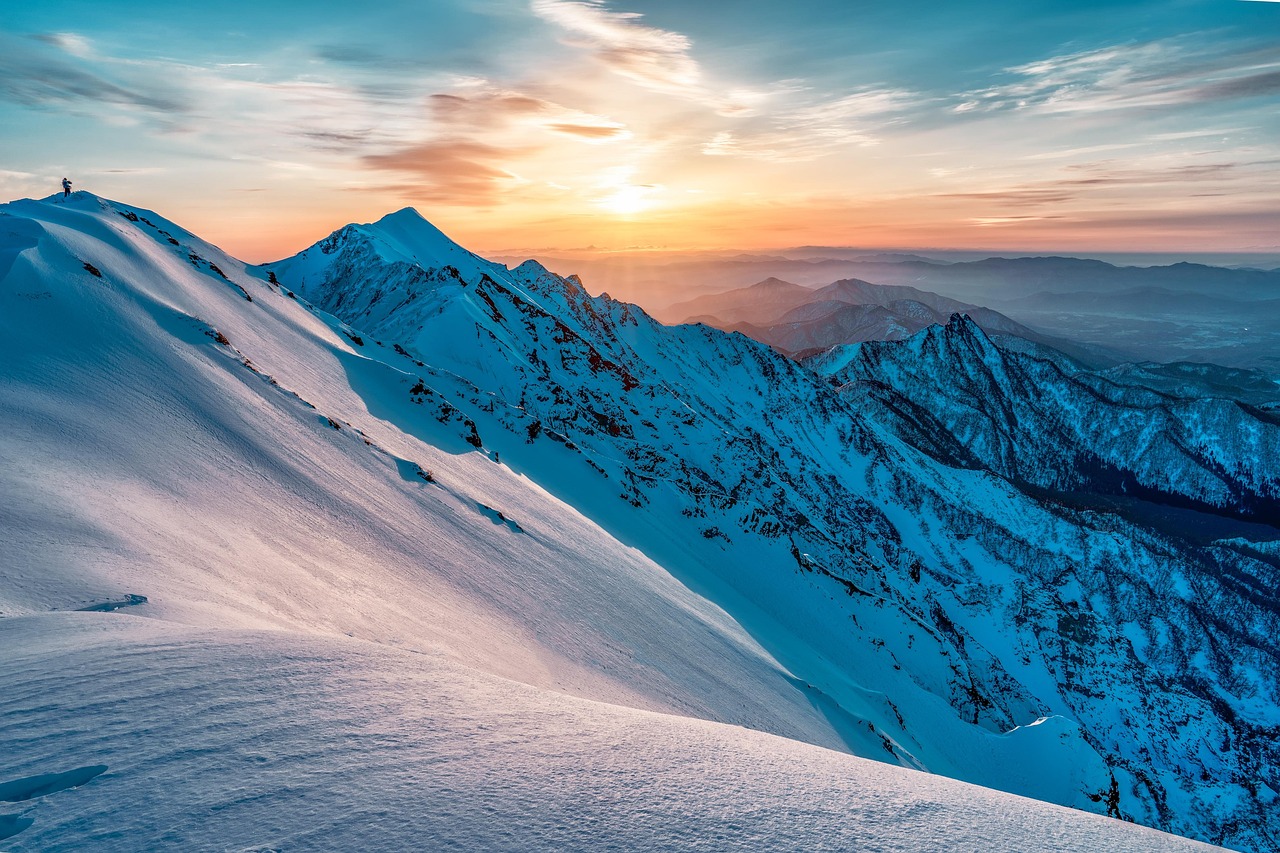
At 1,709 m the highest peak in the Chugoku region. Walking courses run through beech forest, a 700 m path of natural stones leads to Ogamiyama Shrine, and guided climbs need a reservation.
- Access
- About 50 minutes by bus from Yonago Station to the Daisenji stop.
11Daisen-ji Temple大山寺
Buddhist temple · Daisen
The temple on the slopes of Mt. Daisen that once drew worshippers from across the region. The visiting fee includes the Reihokaku treasure hall.
- Access
- Daisenji bus stop, about 50 minutes by bus from Yonago Station. Address: 9 Daisen, Daisen Town.
- Hours
- 1 April–30 November 9:00–16:00 (varies with the season). Visits are possible the rest of the year
- Closed on
- Reihokaku treasure hall closed 1 December–31 March
- Price
- Adults ¥300; children ¥200
12Yonago Castle Ruins米子城跡
Castle ruins and viewpoint · Yonago
Stone walls are all that remain of a castle completed in 1601 and dismantled in the early Meiji years; it is a national historic site. From the top, about 90 m above sea level, the view takes in Mt. Daisen to the east and the Nakaumi lagoon to the west.
- Access
- About 20 minutes on foot or 5 minutes by car from JR Yonago Station, or the Danda Bus (Rekishi course) from bay 1 at the Yonago Station bus terminal to Yonago-jo-mae. Free parking.
13Kaike Onsen皆生温泉
Seaside hot spring town · Yonago
A hot spring on the Yonago coast, found by a fisherman in 1900 when hot water was welling up in the shallows; the water rises from under the sea and is known locally as a salt spring. The Yonago City Tourism Center in Kaike rents bicycles for the coastal cycling road toward Sakaiminato.
- Access
- About 20 minutes by Kaike Onsen bus from bay 2 at the Yonago Station bus terminal to the Kaike Onsen Kanko Center stop; about 15 minutes by car.
14Mizuki Shigeru Road水木しげるロード
Street of shops and bronze statues · Sakaiminato
A street of about 800 m running from JR Sakaiminato Station to the Mizuki Shigeru Memorial Museum, lined with 177 bronze statues of yokai from the manga artist's work. Every day from sunset to 22:00 the statues are lit and yokai shadow pictures are projected on the pavement.
- Access
- Starts in front of JR Sakaiminato Station.
- Hours
- Night lighting daily from sunset to 22:00
15Mizuki Shigeru Memorial Museum水木しげる記念館
Museum · Sakaiminato
A museum about the manga artist Mizuki Shigeru at the far end of Mizuki Shigeru Road. It reopened after renovation on 20 April 2024.
- Access
- About 10 minutes on foot from JR Sakaiminato Station.
- Hours
- 9:30–17:00 (last entry 16:30)
- Closed on
- Open every day
- Price
- Adults ¥1,000; junior high and high school ¥500; elementary ¥300; preschool free
Good to know
Plan Tottori by area, because the prefecture is long from east to west. In the east, the Sand Dunes, the Sand Museum, the Uradome Coast boat and Hakuto Shrine are all reached by bus from JR Tottori Station, about 21 to 40 minutes. The middle runs from JR Kurayoshi Station: the white-walled storehouses, the prefectural art museum, Misasa Onsen (about 20 minutes by bus) and Mitokusan (about 40). The west runs from Yonago: Mt. Daisen (about 50 minutes by bus), Kaike Onsen, the Yonago Castle ruins and Mizuki Shigeru Road in Sakaiminato.
By train, the Super Hakuto limited express runs from Kyoto, Osaka, Sannomiya and Himeji to Kurayoshi, and the Super Inaba runs from Okayama to Tottori. The prefecture's two airports are Tottori Sakyu Conan Airport and Yonago Kitaro Airport.
Dates to plan around: the Sand Museum's Spain exhibition ends on 3 January 2027, and the museum then closes while the next one is built. The Nageiredo climb usually closes for snow from December to about March, the Uradome Island Tour boat sails March to November, and the Daisen-ji treasure hall closes 1 December to 31 March. Jinpu-kaku's interior stays closed for repair, with reopening planned within fiscal 2029.
East, middle or west Tottori
Which station each area starts from, what it costs to get in, and how late you can still start. Adult prices; children's prices are on each card above.
| Area | Start from | Entry (adult) | Latest start |
|---|---|---|---|
| East: Sand Dunes, Sand Museum, Uradome Coast, Hakuto Shrine, Jinpu-kaku garden | JR Tottori Station bus terminal: Sand Museum about 21 min, Uradome boat and Hakuto Shrine about 40 min by bus | Sand Museum ¥800 · Island Tour boat ¥1,800 · Horyuin Garden free | Sand Museum 17:30 · last boat 15:30 · garden 16:30 |
| Middle: Kurayoshi storehouses, Museum of Art, Misasa Onsen, Mitokusan | JR Kurayoshi Station: Museum of Art about 10 min, Misasa about 20 min, Mitokusan about 40 min by bus | Museum of Art collection ¥400 · Nageiredo climb ¥1,200 | Nageiredo reception 15:00 (down by 16:30) · Museum of Art 16:30 |
| West: Mt. Daisen, Daisen-ji, Yonago Castle ruins, Kaike Onsen | Yonago Station: Daisenji stop about 50 min and Kaike Onsen about 20 min by bus; castle ruins about 20 min on foot | Daisen-ji ¥300 · castle ruins: no fee stated | Daisen-ji 16:00 (April–November) |
| West: Mizuki Shigeru Road and Memorial Museum | JR Sakaiminato Station: the road starts at the station, the museum is about 10 min on foot | Memorial Museum ¥1,000 | Museum 16:30 · road lit until 22:00 |
By kind of trip
First trip, a day from Tottori Station
All four are reached by bus from JR Tottori Station: about 21 minutes to the Sand Museum stop, about 40 to the Uradome boat pier and to Hakuto Shrine. The last Island Tour boat leaves at 15:30; the Sand Museum takes its last visitors at 17:30.
Tottori Sand Dunes · Sand Museum · Uradome Coast sightseeing boat · Hakuto Shrine
Rain or cold
These three are indoors. The Mizuki Shigeru Memorial Museum is open every day; the Museum of Art closes on Mondays; the Sand Museum closes between exhibitions.
Sand Museum · Tottori Prefectural Museum of Art · Mizuki Shigeru Memorial Museum
Hot springs
Misasa Onsen is about 20 minutes by bus from JR Kurayoshi Station and lists public baths, footbaths and inns that take day bathers. Kaike Onsen is about 20 minutes by bus from Yonago Station, on the coast.
Climbing and mountain walks
The Nageiredo path is a climb over roots and rock: go in twos or more, wear mountain shoes without metal studs, and arrive by 15:00. Sneakers may be refused; straw sandals are sold to pass the check. On Mt. Daisen, guided climbs need a reservation.
Mitokusan Sanbutsuji (Nageiredo) · Mt. Daisen · Daisen-ji Temple
December to March
The Nageiredo climb usually closes for snow and the Uradome boat does not sail until March. Daisen-ji can still be visited, though its treasure hall is closed. The Mizuki Shigeru Memorial Museum is open every day.
Mt. Daisen · Daisen-ji Temple · Misasa Onsen · Mizuki Shigeru Memorial Museum
Questions
How do I get to the Tottori Sand Dunes from Tottori Station?
Take a Nihon Kotsu or Hinomaru bus bound for Tottori Sakyu from the JR Tottori Station bus terminal. The Sand Museum, next to the dunes, gives about 21 minutes to its stop. The Loop Kirin sightseeing bus also runs there on Saturdays, Sundays and holidays.
What are the rules for climbing to Nageiredo at Mitokusan?
Climb in pairs or more. Every climber's clothes and shoes are checked: mountain shoes without metal studs are the surest; skirts, heels, leather shoes, sandals, studded soles, sticks and poles are refused, and preschool children cannot climb. Reception is 8:00–15:00 and you must be down by 16:30. The fee is ¥1,200 for adults. The path closes in rain or snow and usually from December to about March.
What is on at the Sand Museum, and until when?
The 17th exhibition, "Travel Around the World in Sand: Spain", runs 24 April 2026 to 3 January 2027, 9:00–18:00 (last entry 17:30). Adults ¥800. The museum then closes while the next exhibition, on the Silk Road, is built; opening dates for it were not yet given.
Can I go inside Jinpu-kaku?
No. Jinpu-kaku is closed for cultural-property repair work, with reopening planned within fiscal 2029. The Horyuin Garden behind it stays open free, 9:00–17:00, and an exhibition hall on the site introduces the Tottori Castle ruins and the building.
What can I do in Tottori in the evening?
Mizuki Shigeru Road in Sakaiminato is lit every day from sunset to 22:00, with yokai shadow pictures projected on the street. Most other places on this list close between 16:00 and 18:00.